10
Jorge Eielson
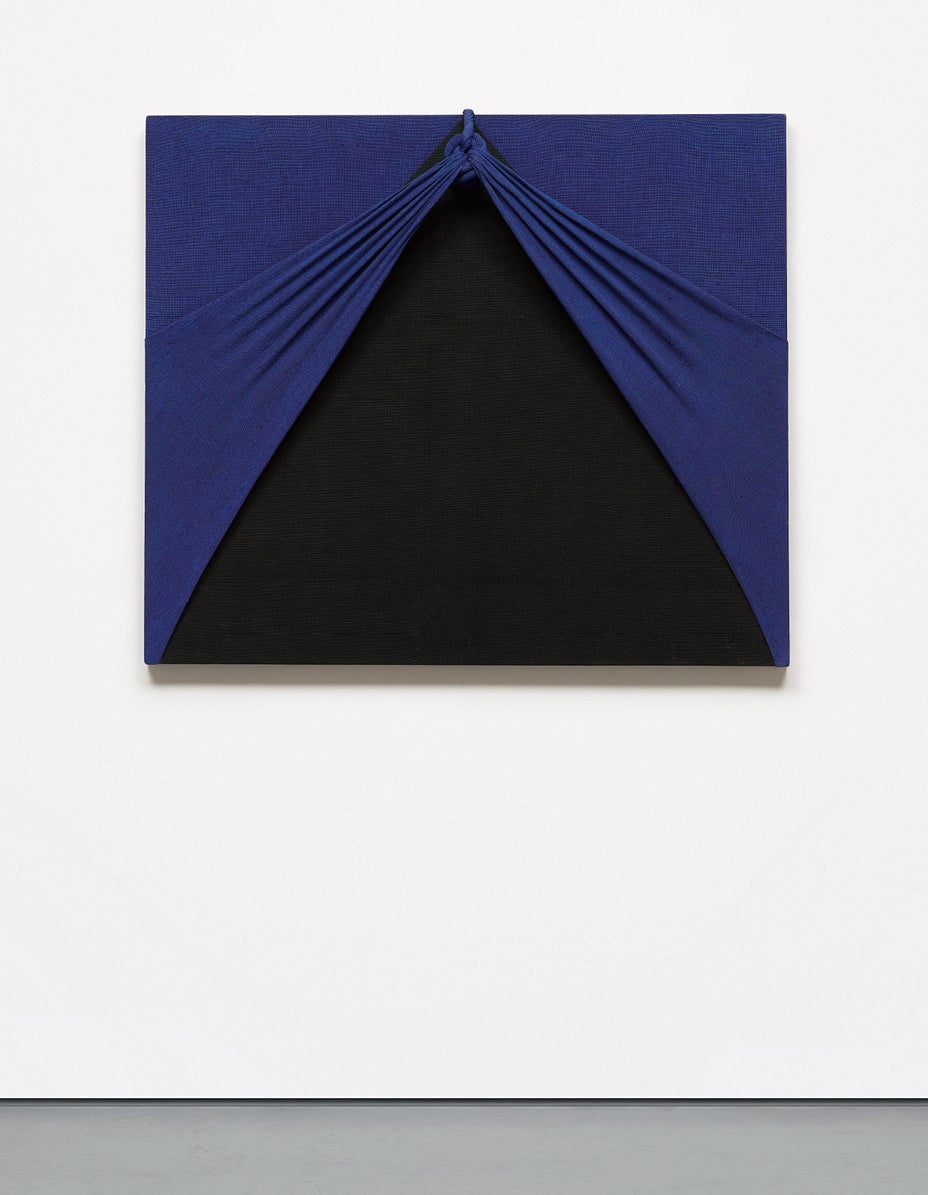
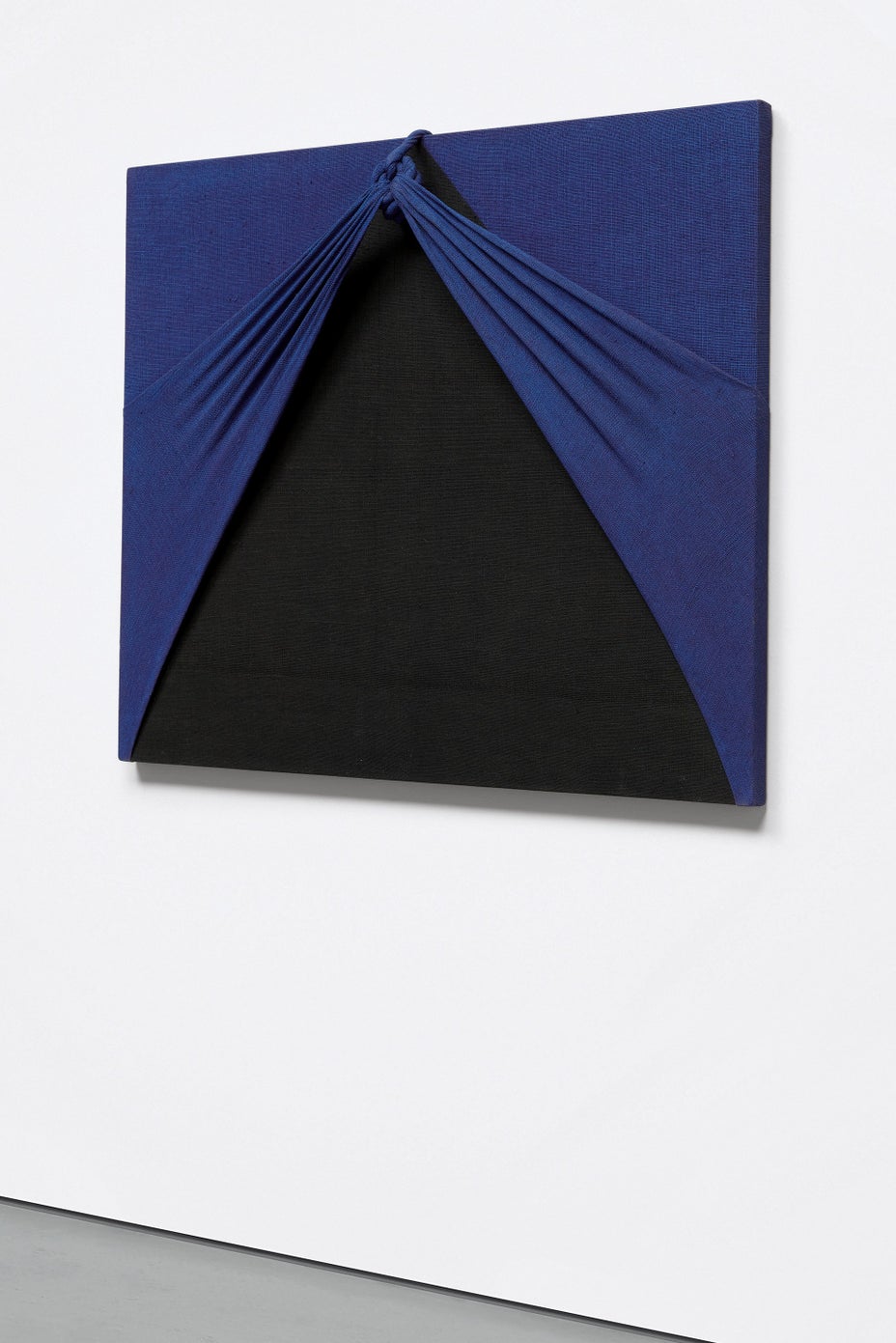
Quipus 30B
Estimate
$50,000–70,000
Sold For
$81,250
acrylic on burlap
48 x 55 1/4 x 7 in. (121.9 x 140.3 x 17.8 cm)
Executed in 1991, this work is accompanied by a certificate of authenticity issued by Archivio Jorge Eielson.
Full-Cataloguing
Jorge Eielson studied Pre-Columbian art and archaeology in Lima, where he became associated with Agrupación Espacio, a group of experimental architects and artists formed in 1947 that sought to create work in dialogue with their ancient Incan ancestors. However, as Peru was relatively isolated at the time, Eielson eagerly accepted a grant to study in Paris, eventually bringing him to Rome where he would permanently settle. During this seminal period in Eielson’s career, he became closely acquainted with artists like Cy Twombly, Alberto Burri and Mimmo Rotella, yet his own work never fully aligned with any one movement, eschewing formal association with Minimalism and Conceptualism, while simultaneously containing elements of both.
In 1963, Eielson would begin his seminal body of work: the quipus. The name quipu harkens back to Eielson’s Peruvian identity and literally references an ancient Incan recording system in which various types of knots were used to measure and record data. In this series—of which the present lot is an important example—Eielson would knot, twist and braid pieces of fabric that he would use to overlay or incorporate with traditional stretched canvas. Here we witness a two-fold preoccupation in Eielson’s work: an undeniable sense of nostalgia for his homeland and concurrently a formal desire to break away from the two-dimensional picture plane. Eielson’s development of an independent visual lexicon would catch the attention of the international art community, leading to an invitation to exhibit his quipus in the 1964 Venice Biennales. Quipus 30B brilliantly embodies the central tenets of this series, presenting a work that is at once both painting and sculpture. The elaborately twisted knot unites two forcefully stretched swaths of deep blue burlap, creating strong diagonals and imbuing the work with a dynamic sense of energy. The simple geometric forms contrast the three-dimensional quipu that juts off the picture plane and into space. There is an undeniable connection to the Spatial Concepts of Lucio Fontana, a fellow Latin American artist who chose Italy as his adopted country and whose iconic cuts would forever change the landscape of painting. Begun just a few years later, Eielson’s quipus were conversely relatively unrecognized until recently. However, a major retrospective opening at the Museo de Arte de Lima on November 16, 2017 will catapult Eielson to his deserved place within art history by finally investigating and acknowledging his groundbreaking contributions to modern art.
In 1963, Eielson would begin his seminal body of work: the quipus. The name quipu harkens back to Eielson’s Peruvian identity and literally references an ancient Incan recording system in which various types of knots were used to measure and record data. In this series—of which the present lot is an important example—Eielson would knot, twist and braid pieces of fabric that he would use to overlay or incorporate with traditional stretched canvas. Here we witness a two-fold preoccupation in Eielson’s work: an undeniable sense of nostalgia for his homeland and concurrently a formal desire to break away from the two-dimensional picture plane. Eielson’s development of an independent visual lexicon would catch the attention of the international art community, leading to an invitation to exhibit his quipus in the 1964 Venice Biennales. Quipus 30B brilliantly embodies the central tenets of this series, presenting a work that is at once both painting and sculpture. The elaborately twisted knot unites two forcefully stretched swaths of deep blue burlap, creating strong diagonals and imbuing the work with a dynamic sense of energy. The simple geometric forms contrast the three-dimensional quipu that juts off the picture plane and into space. There is an undeniable connection to the Spatial Concepts of Lucio Fontana, a fellow Latin American artist who chose Italy as his adopted country and whose iconic cuts would forever change the landscape of painting. Begun just a few years later, Eielson’s quipus were conversely relatively unrecognized until recently. However, a major retrospective opening at the Museo de Arte de Lima on November 16, 2017 will catapult Eielson to his deserved place within art history by finally investigating and acknowledging his groundbreaking contributions to modern art.