148
Alvar Aalto
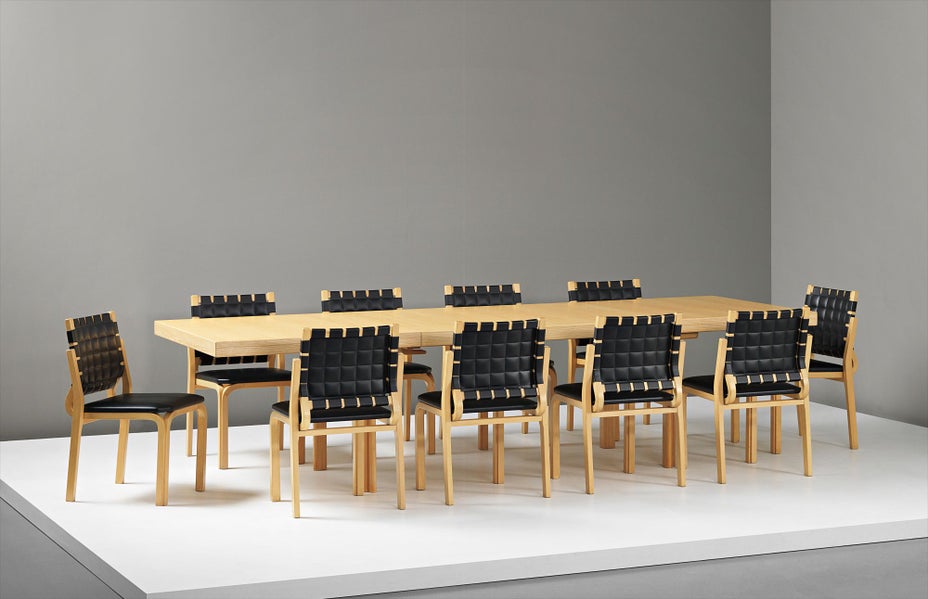
Extendable 'H Leg' dining table, circa 1956 and ten dining chairs, model no. 612
Each chair: 78.7 x 49.2 x 49.8 cm (30 7/8 x 19 3/8 x 19 5/8 in.)
Full-Cataloguing
Alvar Aalto
Finnish | B. 1898 D. 1976In contrast with the functionalism of the International Style (as well the neoclassicism put forward by the Nazi and Soviet regimes), Alvar Aalto brought a refreshing breath of humanism to modern design: "True architecture exists only where man stands in the center," he wrote. Aalto designed furniture in stack-laminated plywood composed of Finnish birch, which was cost-effective and lent warmth to his interiors. Aalto also revived Finnish glass design with his entries in the various Karhula-Iitala glassworks competitions throughout the 1930s.
In 1936 he won first place for a collection of colorful, wavy vases in various sizes titled Eskimoerindens skinnbuxa (The Eskimo Woman’s Leather Breeches). The vases were an immediate success and the most popular size, now known as the "Savoy" vase, is still in production today. Aalto's freeform designs, in harmony with human needs and nature, anticipated the organic modernism of the 1950s and 1960s; in particular, his innovations in bent plywood had a major impact on designers such as Charles and Ray Eames.