1089
Attributed to Piguet Meylan
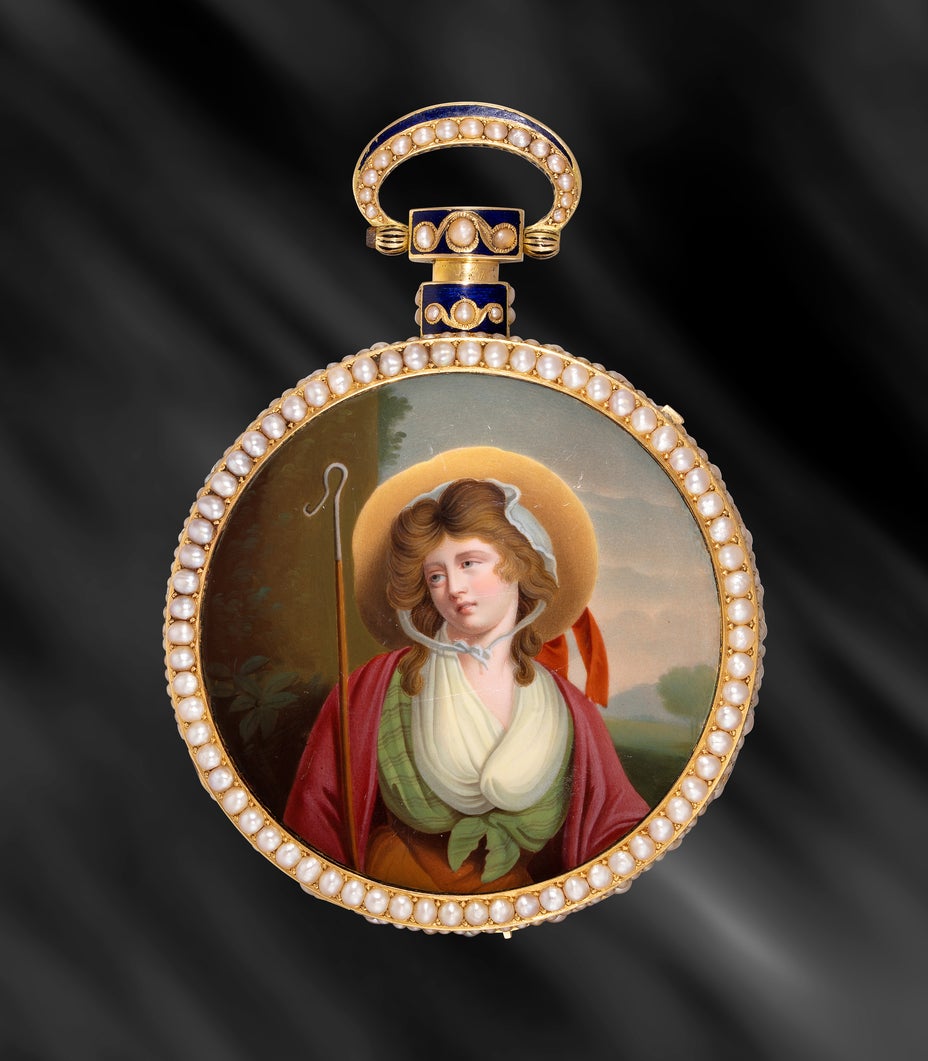
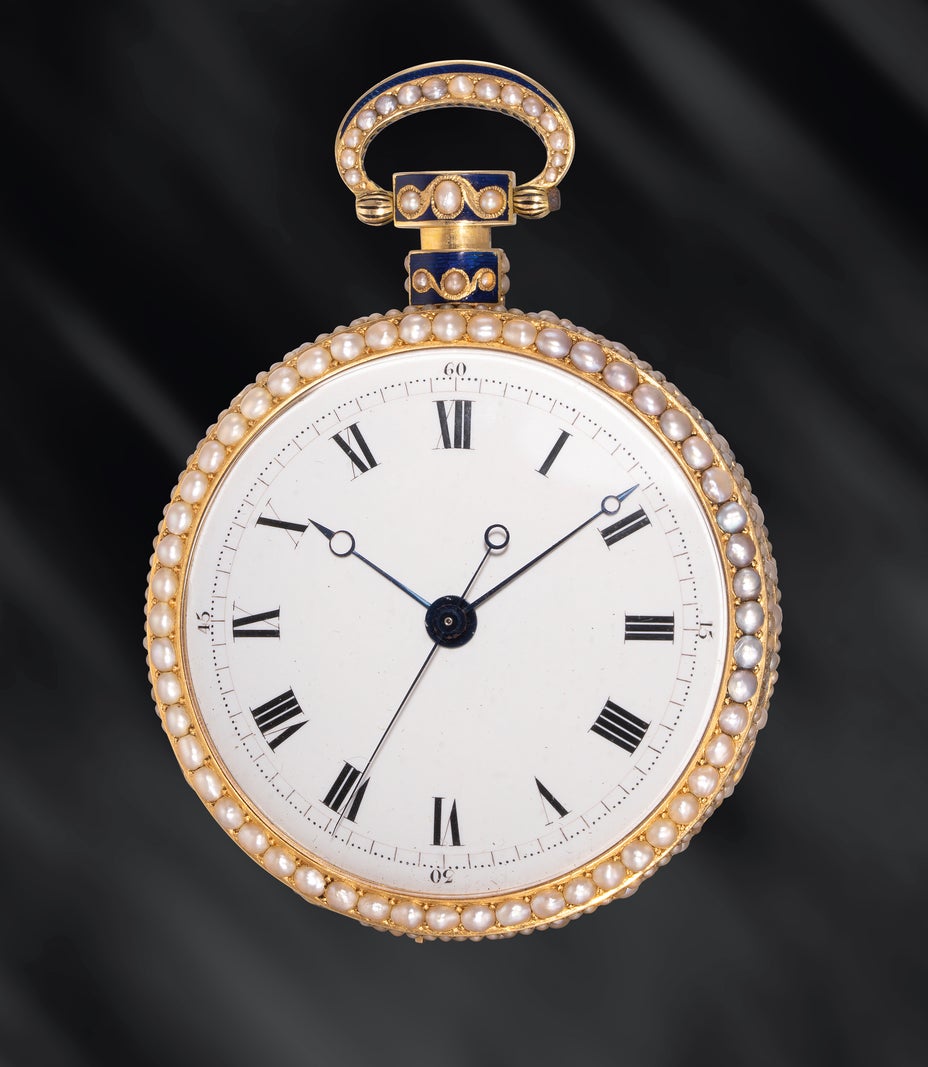
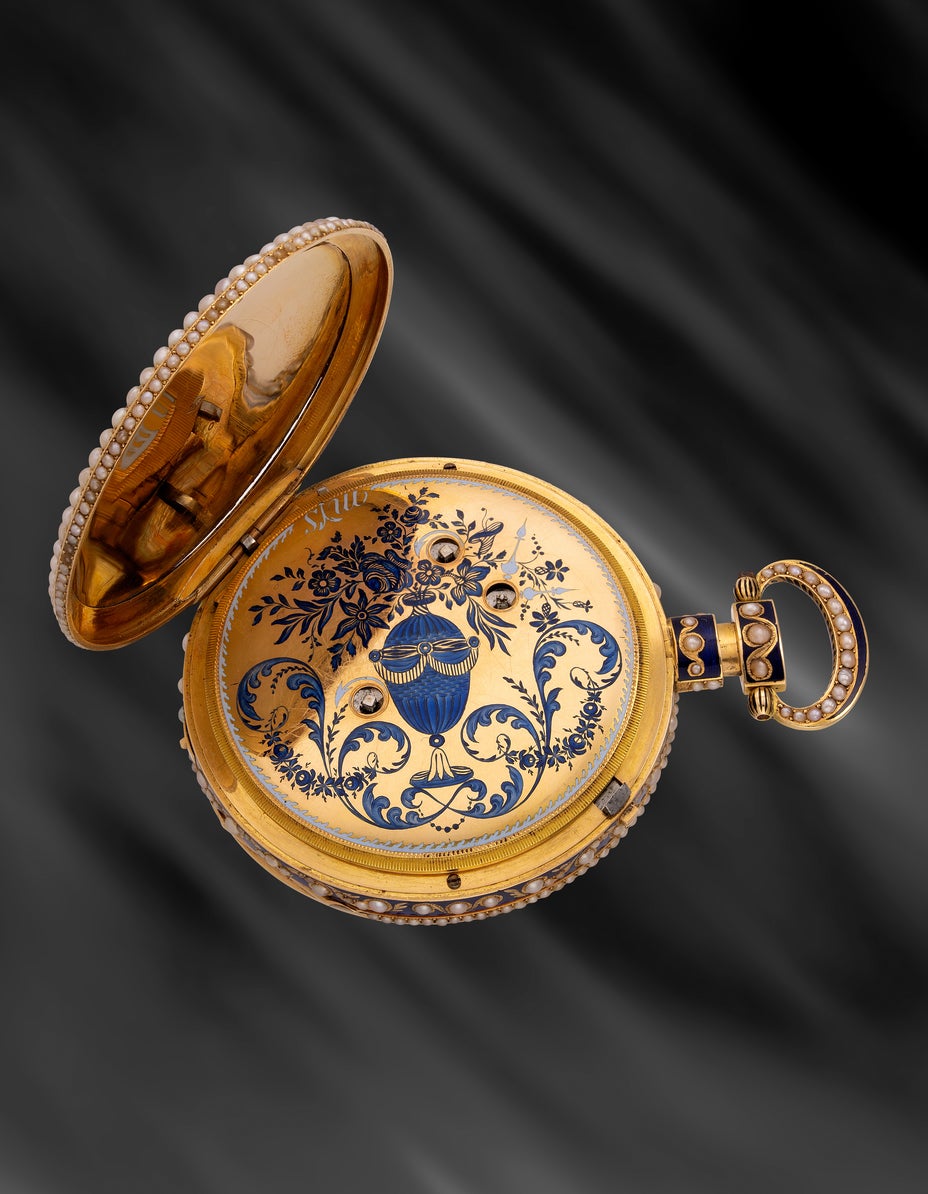
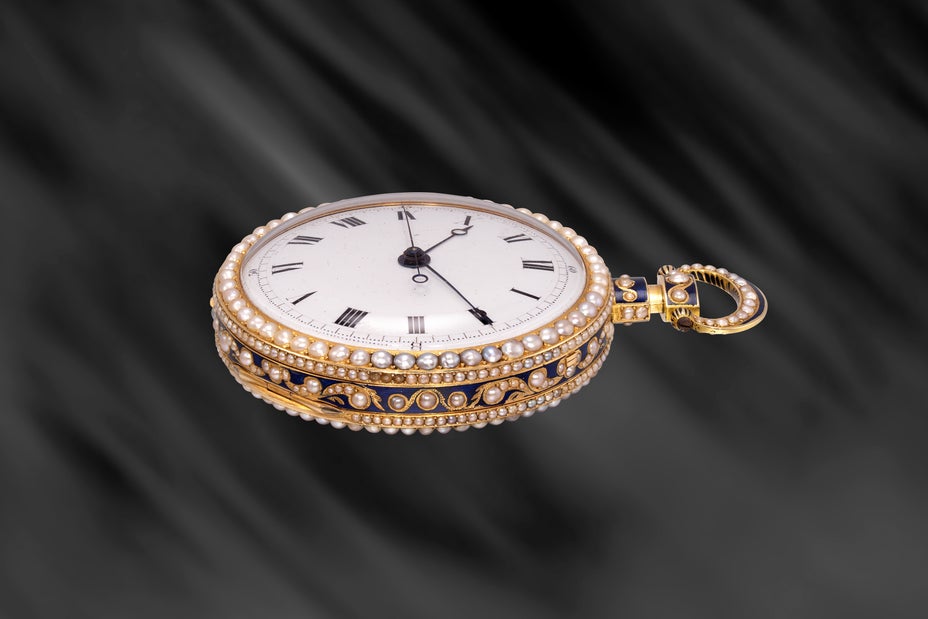
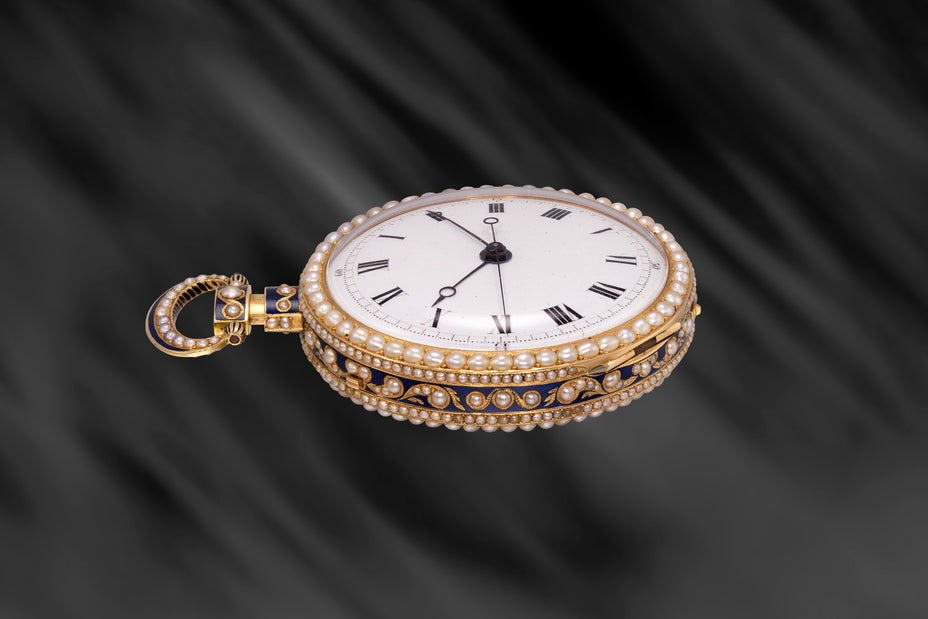
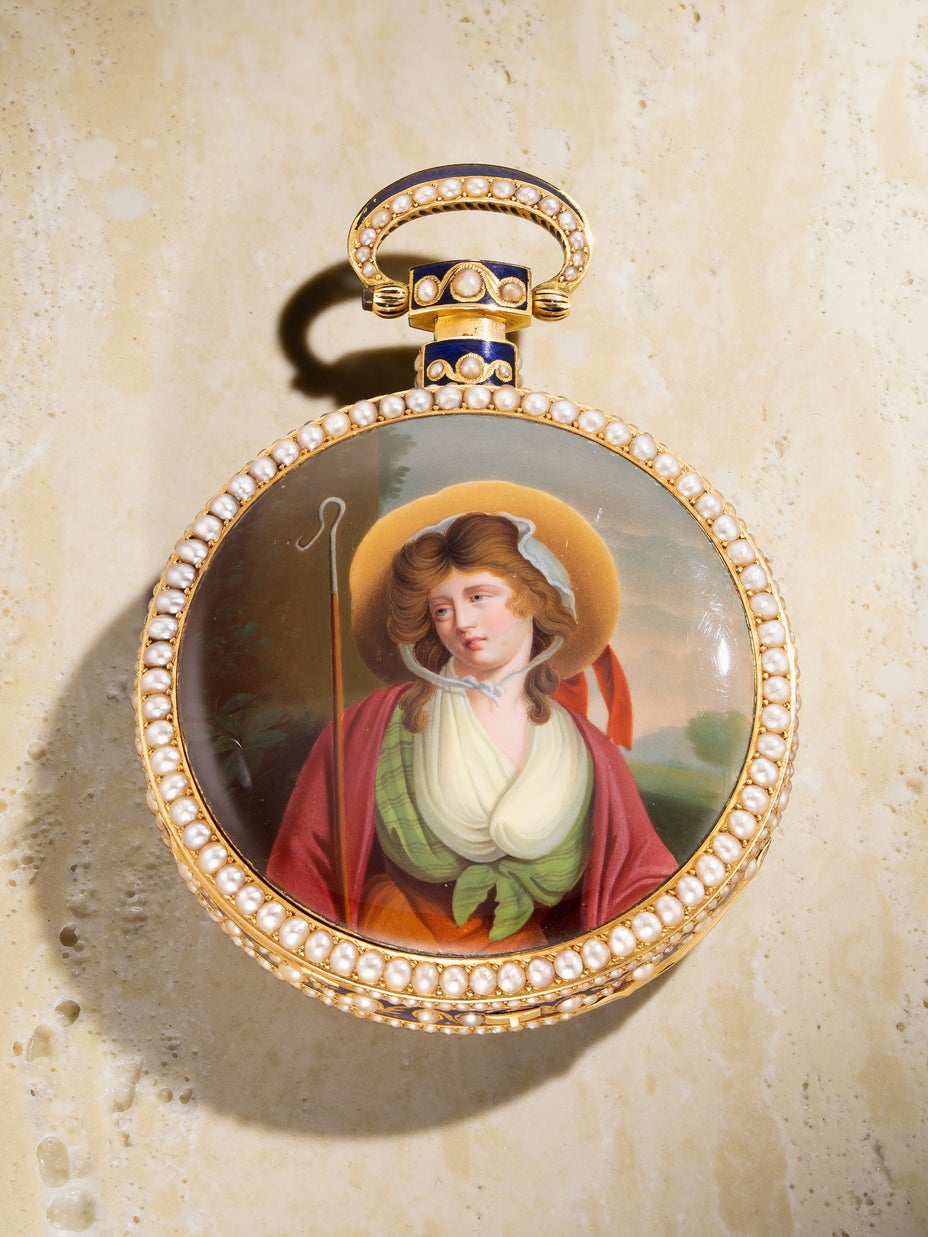
An exceptionally decorated and well-preserved yellow gold gilt and pearl-set open faced quarter repeating musical pocket watch with center seconds, miniature enamel painting and white enamel dial, case by Frères Oltramare, polychrome enamel painting back panel and cuvette possibly attributed Jean-Abraham Lissignol, made for the Chinese market
Estimate
HK$160,000–320,000
€17,400–34,900
$20,500–41,000
Sold For
HK$1,066,800
Manufacturer
Attributed to Piguet Meylan
Year
Circa 1800
Case No
5130
Material
Yellow gold, pearls and enamel
Calibre
Manual, cylinder movement
Dimensions
52mm diameter
Signed
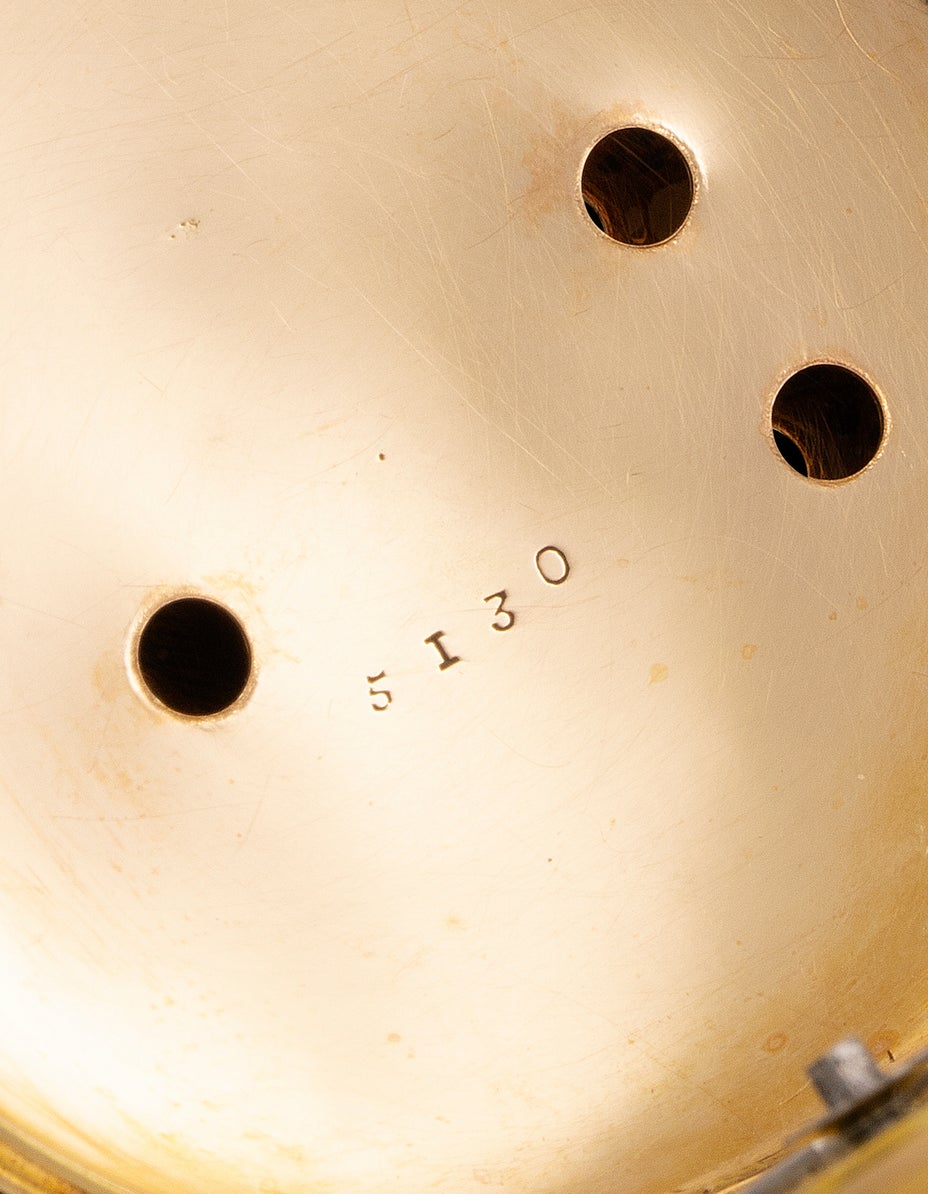
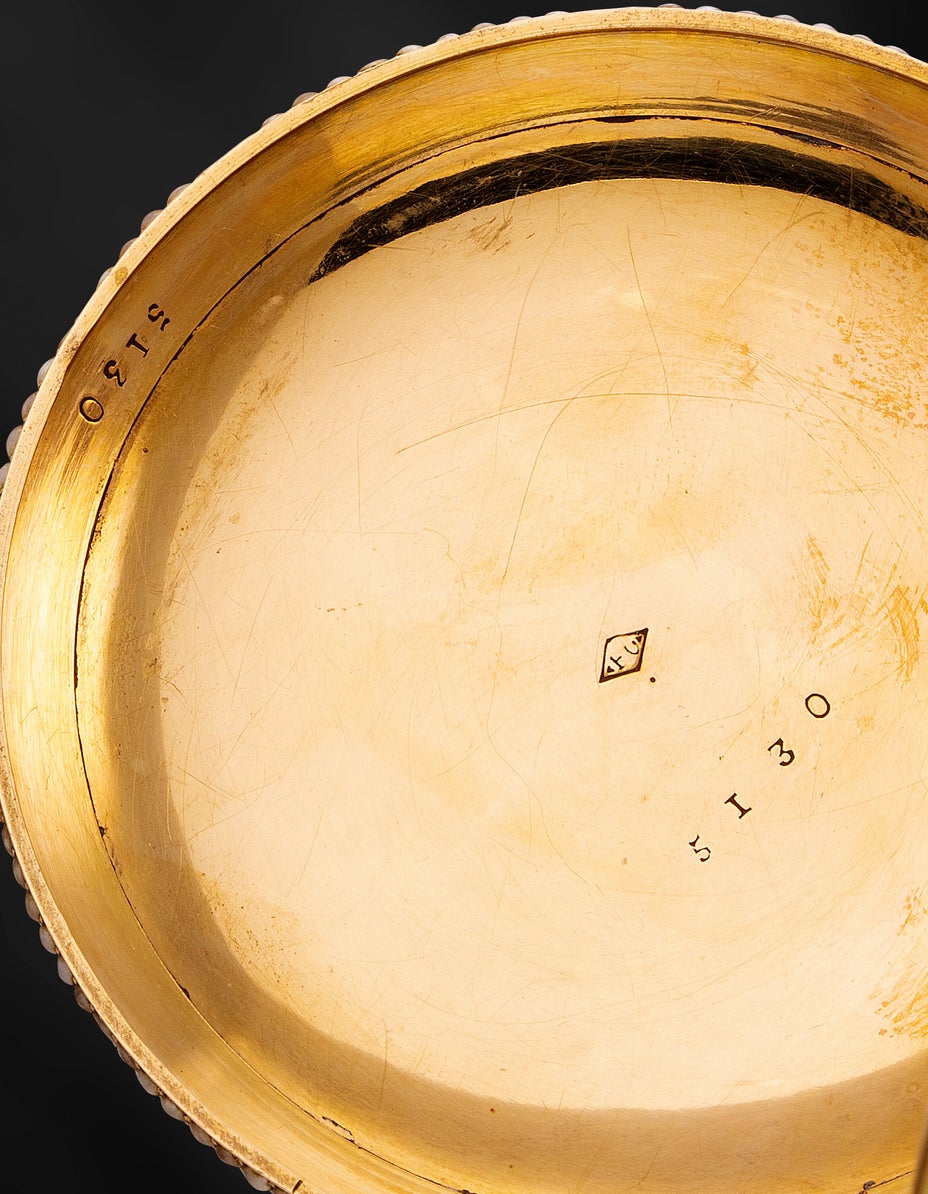
Case numbered and stamped “FO” for Frères Oltramare, cuvette numbered, underneath bezel also numbered ‘5130’
Full-Cataloguing
GOOD TO KNOW:
- Features a quarter repeating musical movement that still functions after more than two centuries
- Case maker Frères Oltramare, one of the best and most lavish case makers in the early 19th century
- Very well-preserved enamel work throughout the timepiece
- In the same collection for over 20 years
In striking contrast to its opulently adorned case, this distinguished timepiece reveals a dial of remarkable restraint. The white enamel surface is punctuated by Roman numerals formed with short, broad strokes, accompanied by a center seconds. This understated aesthetic is emblematic of pocket watches produced in the Empire style. The case, inspired by the whimsical design fashionable in the early nineteenth century, is highly distinctive and replete with charming embellishments.
This musical quarter-repeating Swiss pocket watch is a rare gem, distinguished by a beautifully hand-enamelled portrait of a shepherdess against a landscape background. The composition, with its finely rendered figure and rich palette, reflects the influence of Italian schools of painting, particularly those active in Tuscany during the nineteenth century or earlier, drawing inspiration from Renaissance masters. Housed in a gold gilt case, its bezel, pendant, and bow are set with half-pearls, while a finely executed enamelled cuvette adds to its decorative richness. Exceptionally executed, the enamel painting back panel and cuvette could possibly be attributed to Jean-Abraham Lissignol (1749-1819), one of the most important Geneva enamel miniature painters.
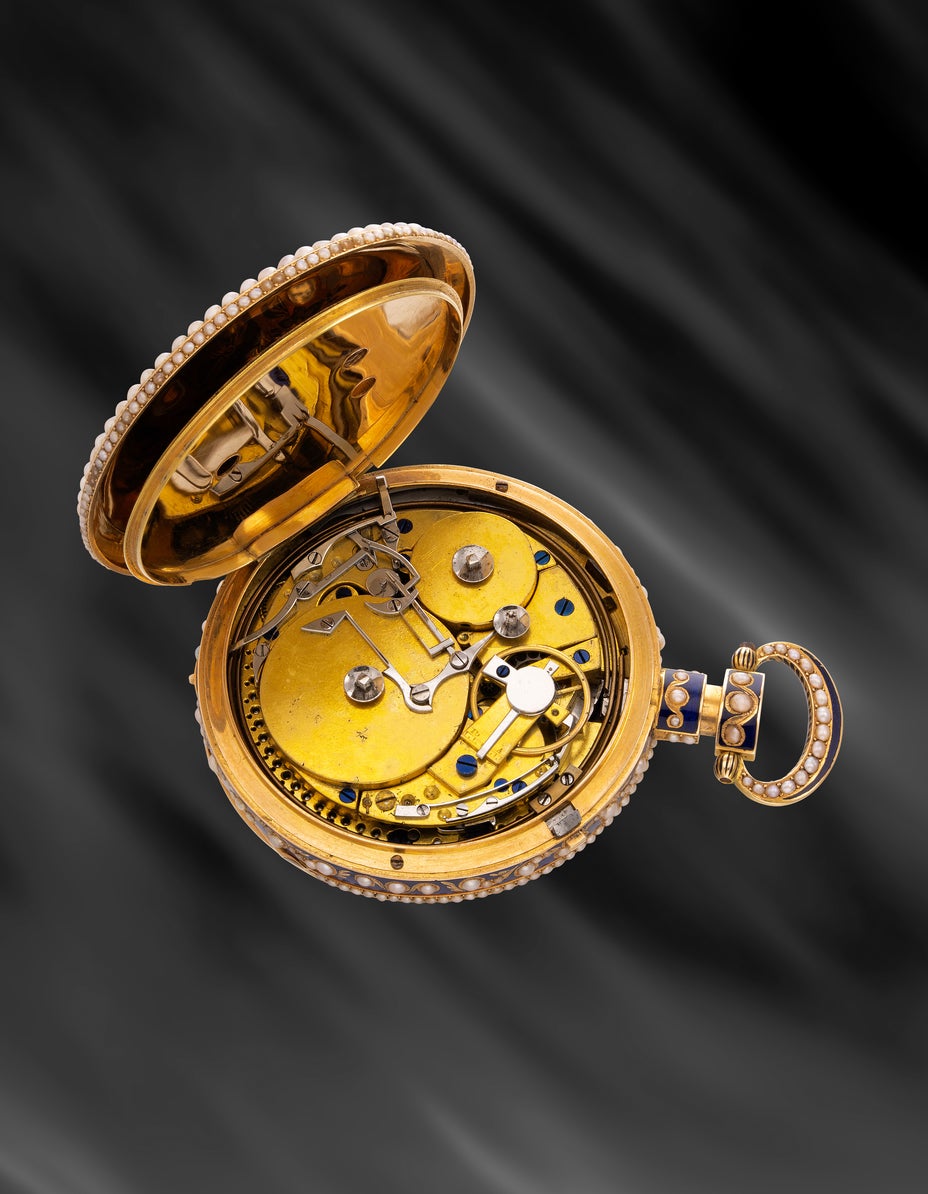
Beneath the richly decorated golden cuvette lies a movement preserved in exceptional condition for over two centuries. It comprises a gilt cylinder mechanism, featuring a three-arm balance and a pinned disc musical complication. The quarter repeater mechanism, activated by a gentle depression of the pendant, fills the air with melodious chimes, echoing the passage of time with grace.
The movement can be attributed to the workshop of the renowned watchmakers and goldsmiths Isaac-Daniel Piguet (1775-1841) and Philippe-Samuel Meylan (1772-1845), amongst Switzerland's foremost makers of musical and automaton watches mainly for the Chinese market. Within the caseback, the case maker’s mark “F.O.” is stamped inside a diamond-shaped cartouche, with the case number engraved beneath. Case maker Frères Oltramare is regarded as one of the best and most lavish case makers in the early 19th century.
This exceptionally circa 1800 timepiece was crafted for the Chinese market and remains remarkably well preserved. The case and cuvette retain crisp, legible numbers, even underneath the bezel, a testament to its careful preservation over more than two decades in a single collection. A significant artifact of early Swiss watchmaking, it embodies both the artistry and technical ambition of its era.
- Features a quarter repeating musical movement that still functions after more than two centuries
- Case maker Frères Oltramare, one of the best and most lavish case makers in the early 19th century
- Very well-preserved enamel work throughout the timepiece
- In the same collection for over 20 years
In striking contrast to its opulently adorned case, this distinguished timepiece reveals a dial of remarkable restraint. The white enamel surface is punctuated by Roman numerals formed with short, broad strokes, accompanied by a center seconds. This understated aesthetic is emblematic of pocket watches produced in the Empire style. The case, inspired by the whimsical design fashionable in the early nineteenth century, is highly distinctive and replete with charming embellishments.
This musical quarter-repeating Swiss pocket watch is a rare gem, distinguished by a beautifully hand-enamelled portrait of a shepherdess against a landscape background. The composition, with its finely rendered figure and rich palette, reflects the influence of Italian schools of painting, particularly those active in Tuscany during the nineteenth century or earlier, drawing inspiration from Renaissance masters. Housed in a gold gilt case, its bezel, pendant, and bow are set with half-pearls, while a finely executed enamelled cuvette adds to its decorative richness. Exceptionally executed, the enamel painting back panel and cuvette could possibly be attributed to Jean-Abraham Lissignol (1749-1819), one of the most important Geneva enamel miniature painters.
Beneath the richly decorated golden cuvette lies a movement preserved in exceptional condition for over two centuries. It comprises a gilt cylinder mechanism, featuring a three-arm balance and a pinned disc musical complication. The quarter repeater mechanism, activated by a gentle depression of the pendant, fills the air with melodious chimes, echoing the passage of time with grace.
The movement can be attributed to the workshop of the renowned watchmakers and goldsmiths Isaac-Daniel Piguet (1775-1841) and Philippe-Samuel Meylan (1772-1845), amongst Switzerland's foremost makers of musical and automaton watches mainly for the Chinese market. Within the caseback, the case maker’s mark “F.O.” is stamped inside a diamond-shaped cartouche, with the case number engraved beneath. Case maker Frères Oltramare is regarded as one of the best and most lavish case makers in the early 19th century.
This exceptionally circa 1800 timepiece was crafted for the Chinese market and remains remarkably well preserved. The case and cuvette retain crisp, legible numbers, even underneath the bezel, a testament to its careful preservation over more than two decades in a single collection. A significant artifact of early Swiss watchmaking, it embodies both the artistry and technical ambition of its era.