935
Barraud
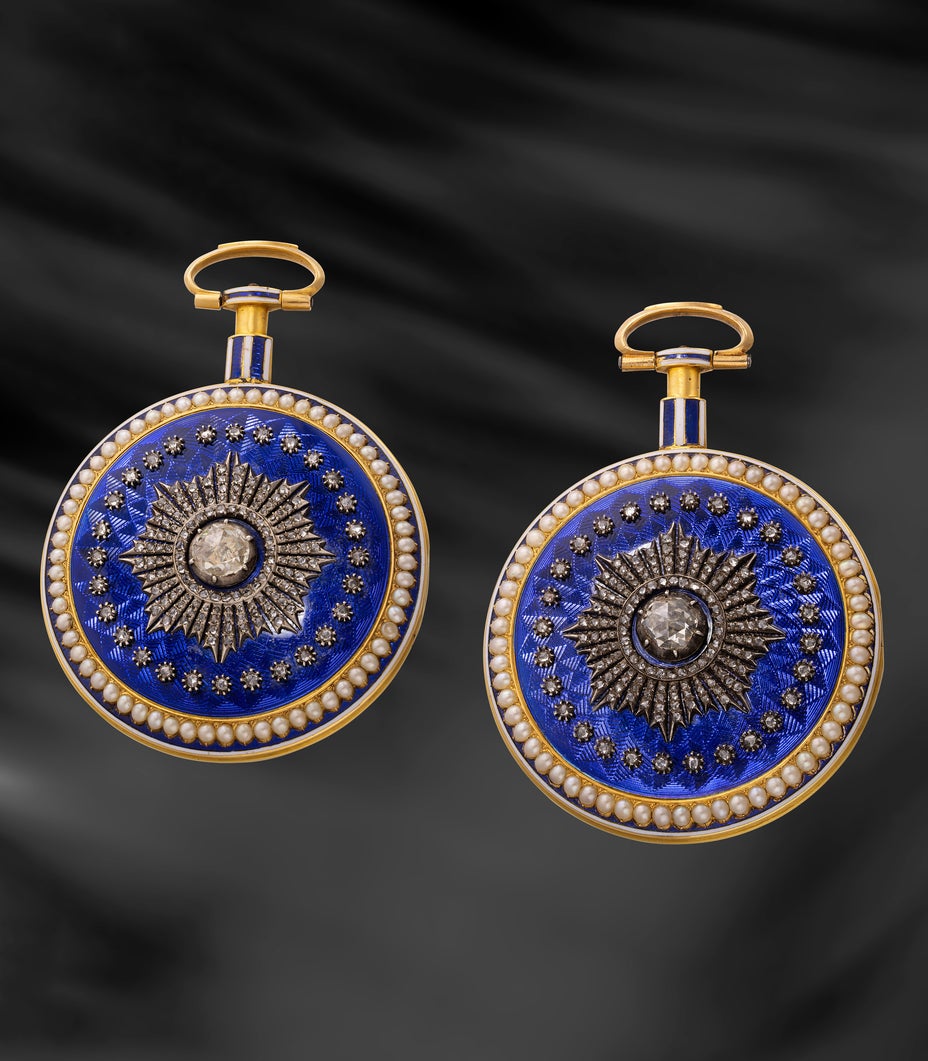
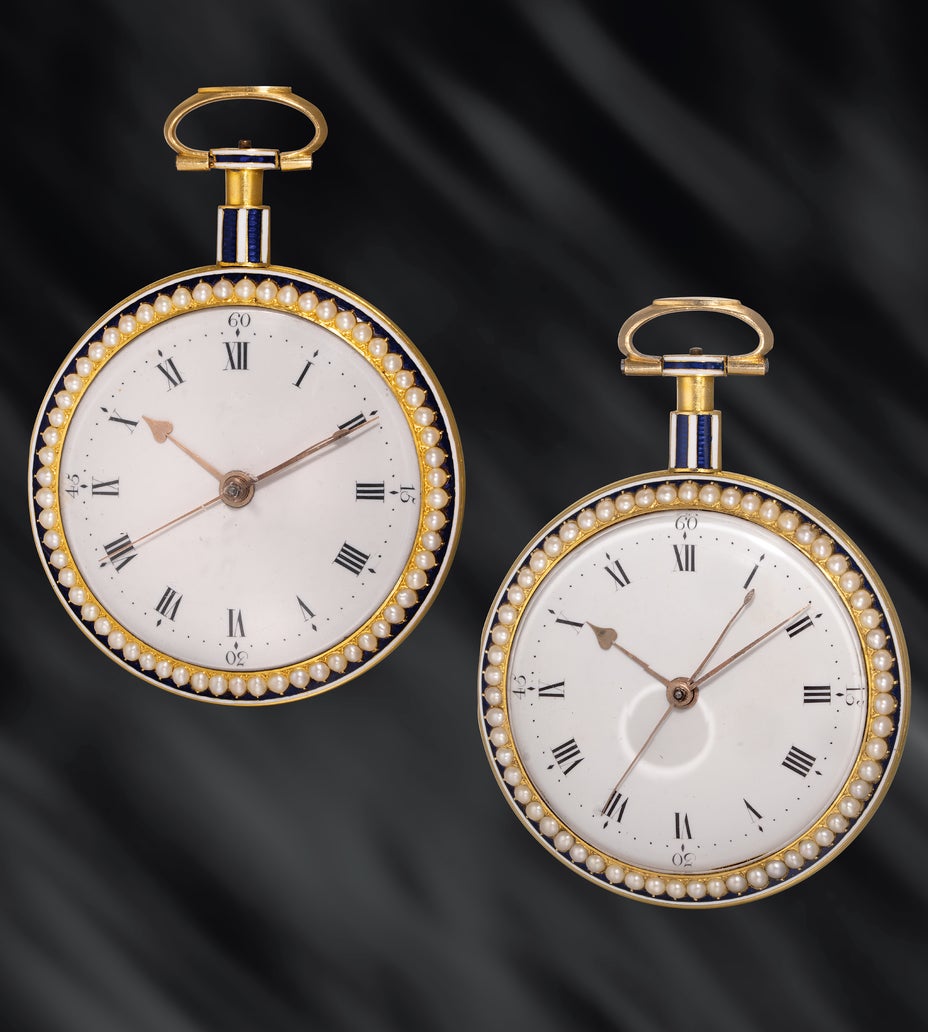
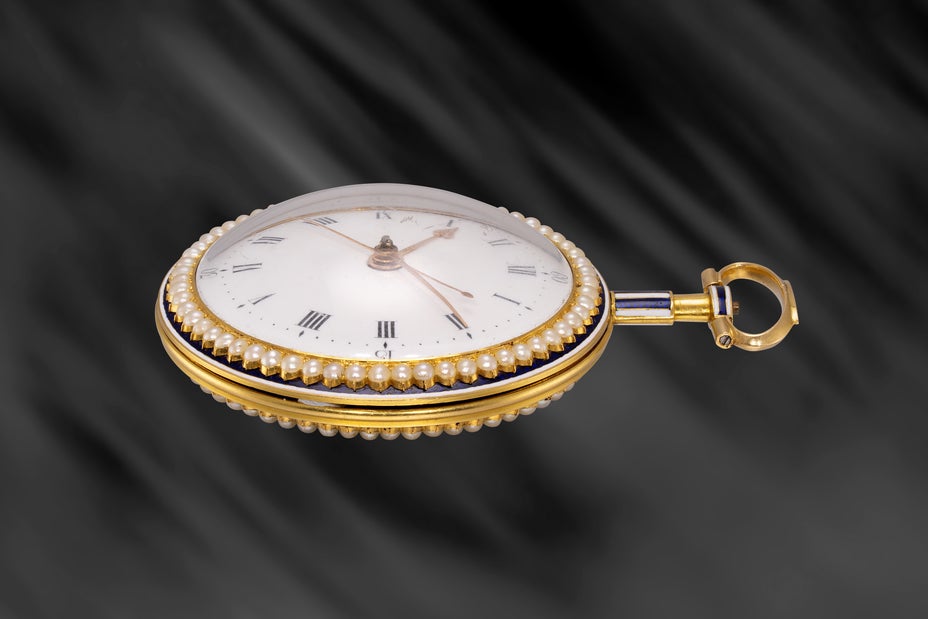
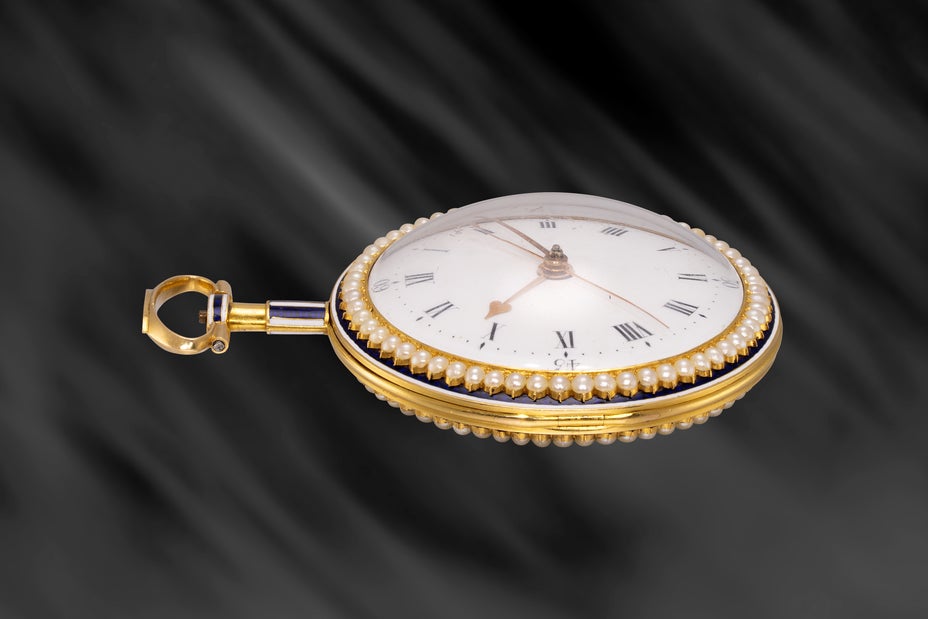
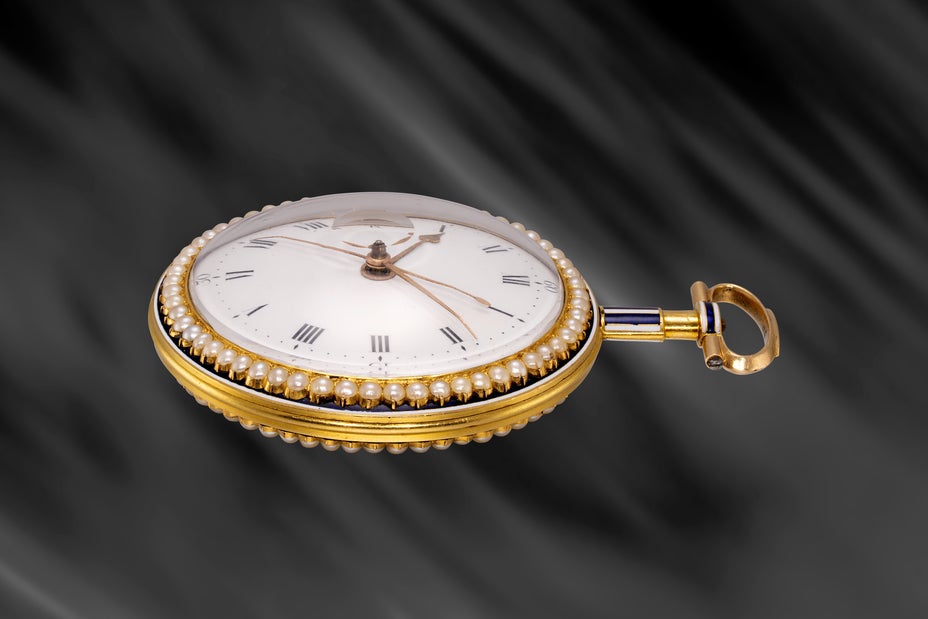
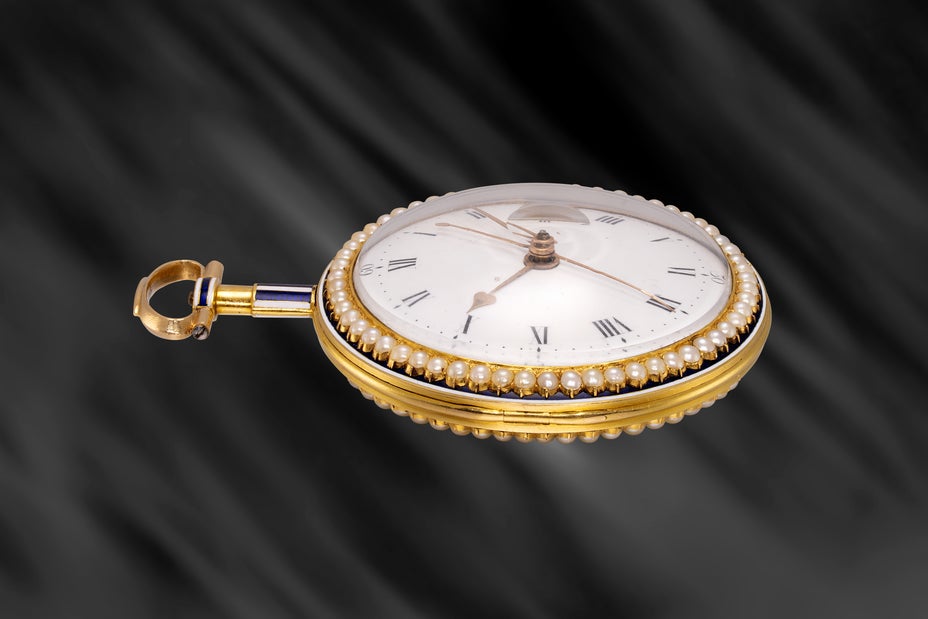
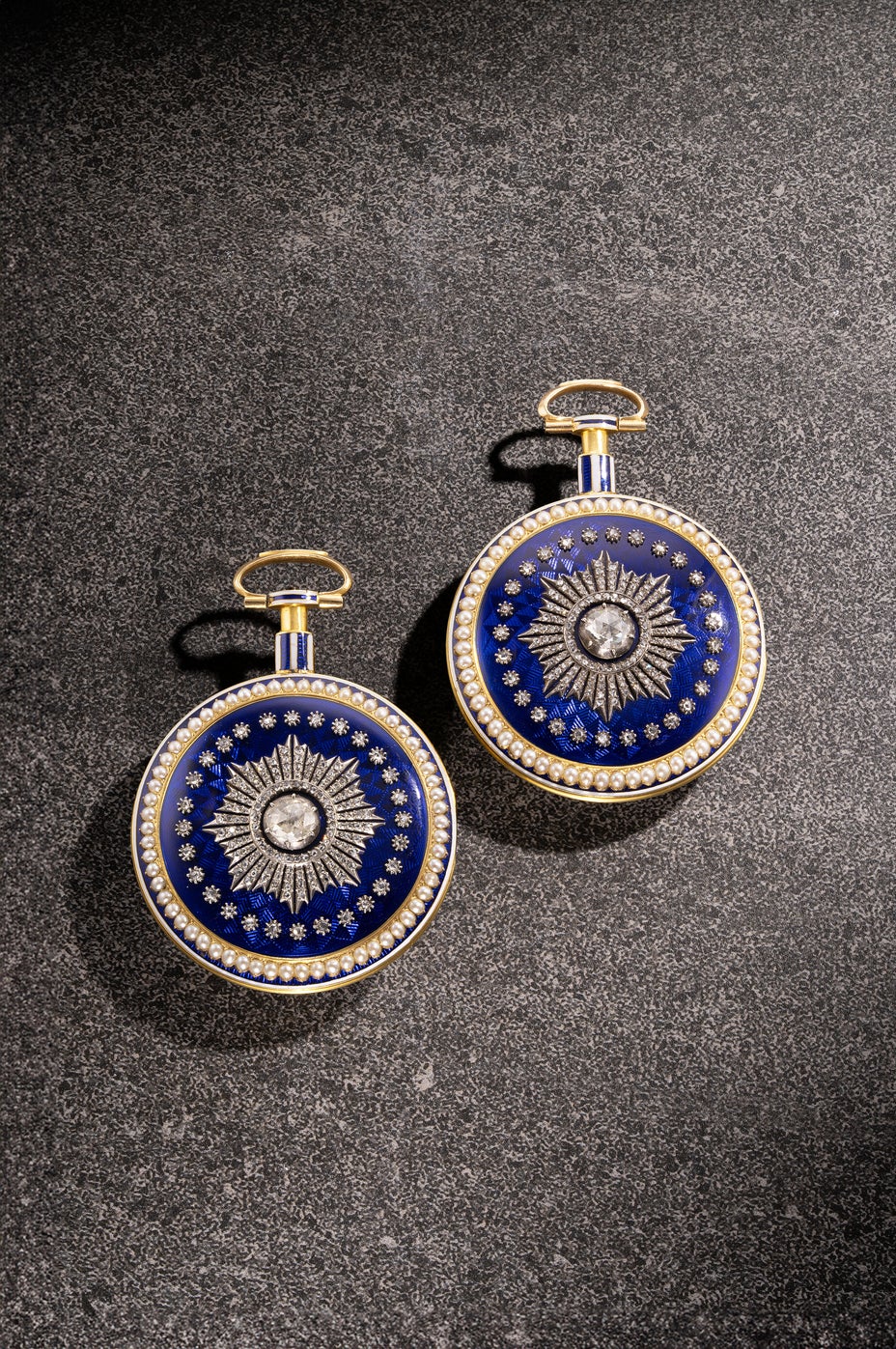
A pair of lavishly decorated and very well-preserved yellow gold, diamond-set and pearl-set enamelled open faced pocket watch with white enamel dial and fusée-and-chain mechanism, made for the Chinese market
Estimate
HK$160,000–320,000
€17,400–34,900
$20,500–41,000
Sold For
HK$355,600
Manufacturer
Barraud
Year
Both: Circa 1795
Movement No
First: 2835; Second: 2836
Material
Both: Yellow gold, pearls, diamonds, enamel
Calibre
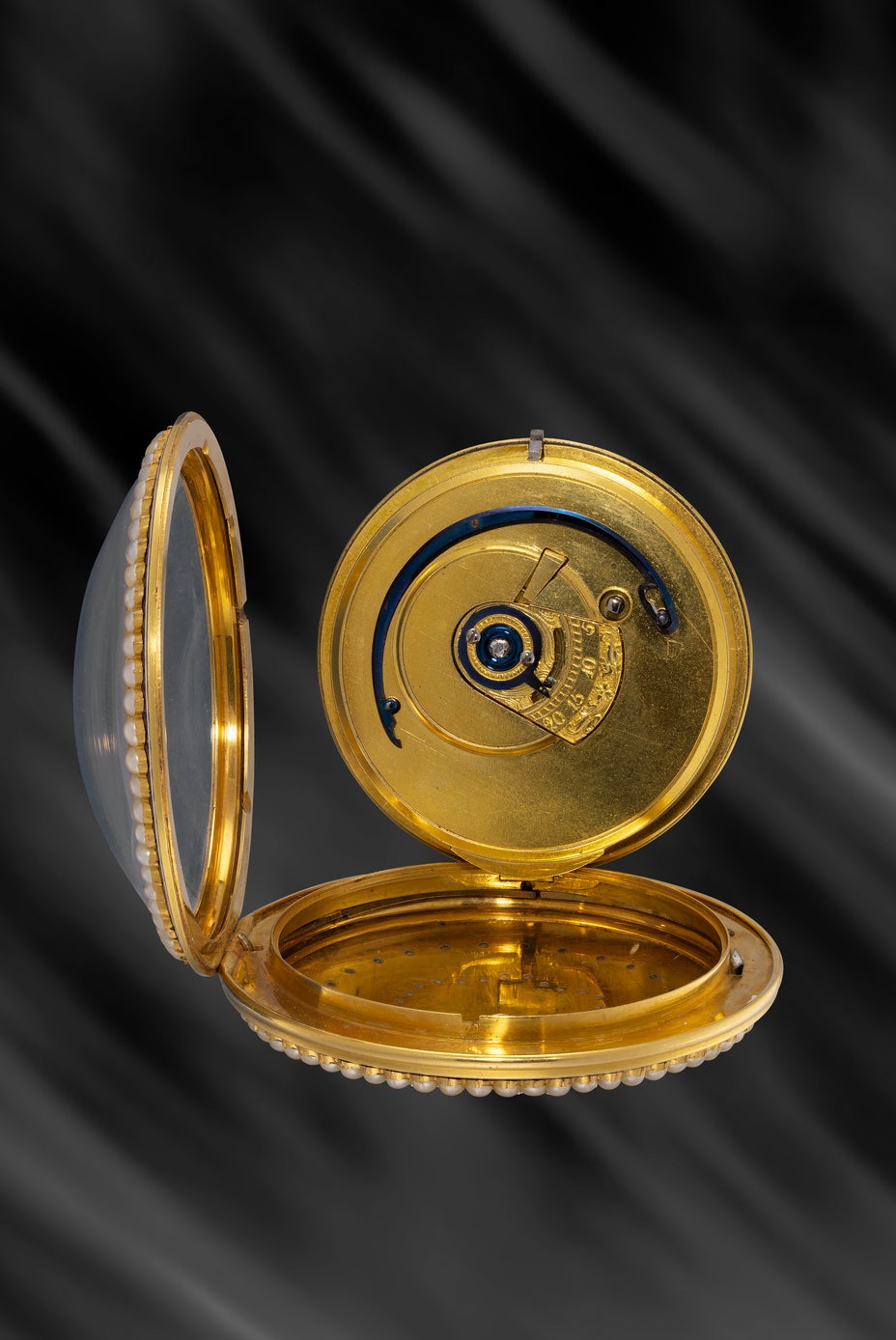
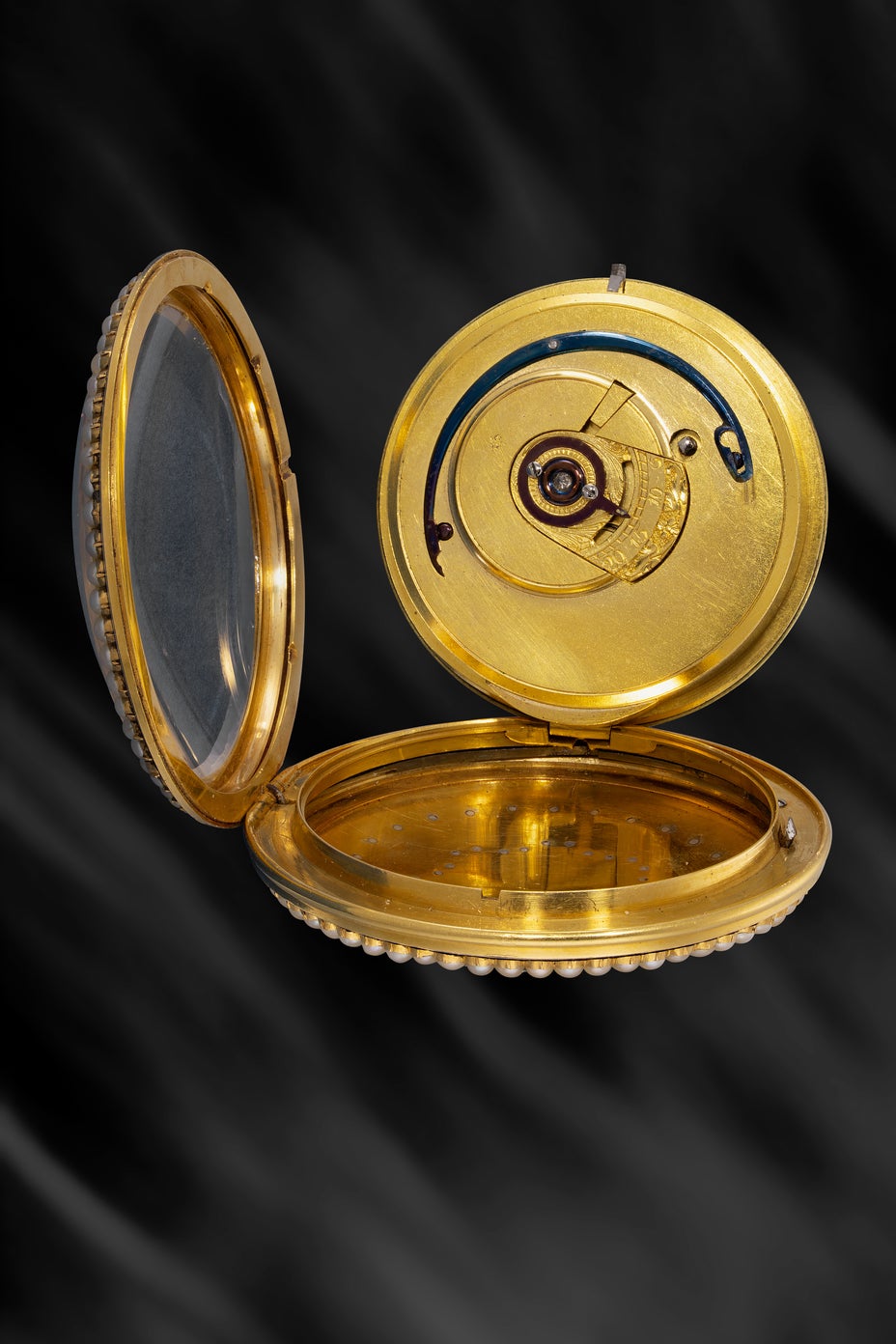
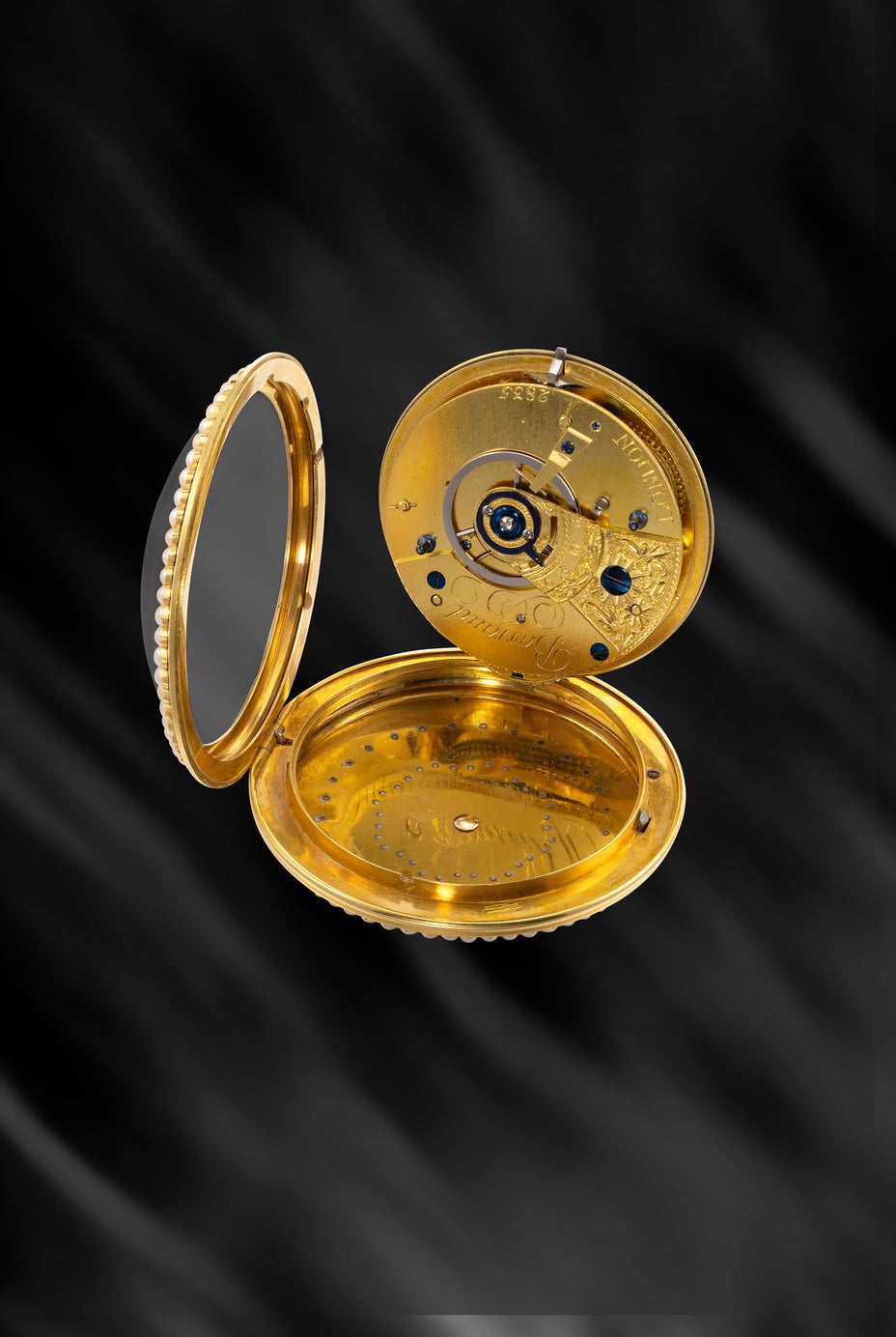
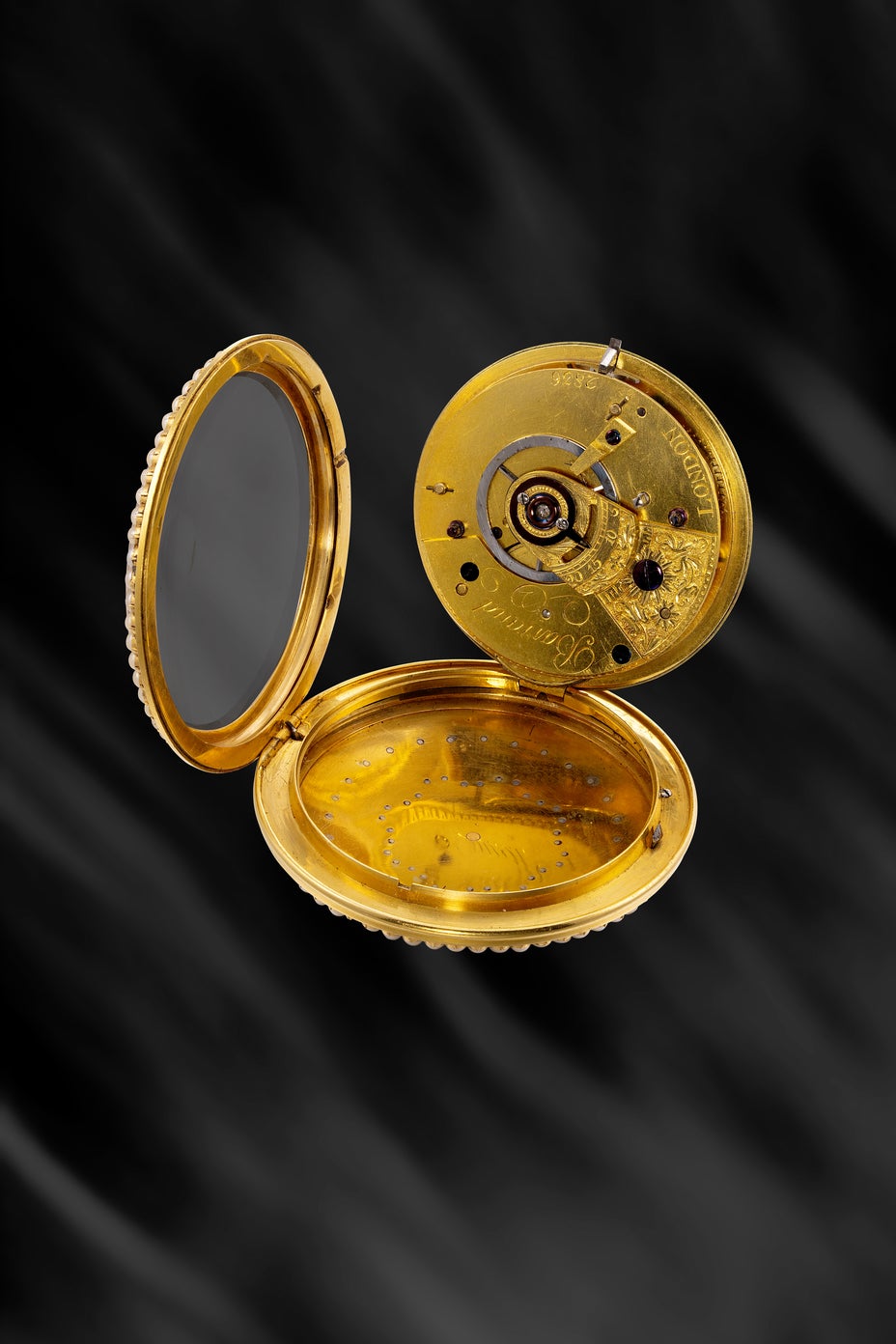
Both: Manual, fusée-and-chain gilt cylinder movement
Dimensions
Both: 52mm diameter
Signed
Both: Movement numbered and signed
Full-Cataloguing
Good To Know:
- A matching pair of watches from circa 1795 preserved in such remarkable condition is extremely rare to come across
- Remained in the same collection for over 30 years
- Fusée-and-chain gilt cylinder movement
Paul Philipp Barraud (1750-1820), an English chronometer maker in London, became a member of the Clockmakers' Company in 1796 and a master in 1811. During a time when accurate timekeeping was crucial for the United Kingdom—enabling ships to navigate the high seas with precision—Barraud's work contributed significantly to the expansion of the British Empire.
Barraud partnered with George Jamieson and William Howells; of his seven children, three sons—Frederick Joseph, John, and James—followed him into the business. From 1796 to 1820, they created over 1,000 chronometers and enjoyed a thriving enterprise in the Far East, crafting beautifully enamelled pocket watches for the Chinese market.
The present pair exemplifies these exquisitely decorated pocket watches. They feature a movement protected by a removable gilt metal dust cap. The watches have a sprung gold cuvette, with the bezel on both sides set with half-pearls bordered by blue and white enamel. The reverse sides showcase rich, engine-turned ground and overlaid with translucent blue enamel with diamond-set stars centered by a rose-cut diamond and further bordered by rings of small diamond-set florettes.
Executed with remarkable precision and beauty, this late-18th century pair of watches are preserved in stunning condition. The enamels show no signs of restoration and retain the vivid colors under various lighting, with all diamonds intact. The pearls are intact, with no material loss. This pair of watches represent a fascinating chapter in history, where English watchmaking was highly sought after by collectors all over the globe. Notably, this pair of watches last appeared publicly more than 30 years ago and the collector has kept them safely stored ever since. Phillips is honored to present them once again to the auction market.
- A matching pair of watches from circa 1795 preserved in such remarkable condition is extremely rare to come across
- Remained in the same collection for over 30 years
- Fusée-and-chain gilt cylinder movement
Paul Philipp Barraud (1750-1820), an English chronometer maker in London, became a member of the Clockmakers' Company in 1796 and a master in 1811. During a time when accurate timekeeping was crucial for the United Kingdom—enabling ships to navigate the high seas with precision—Barraud's work contributed significantly to the expansion of the British Empire.
Barraud partnered with George Jamieson and William Howells; of his seven children, three sons—Frederick Joseph, John, and James—followed him into the business. From 1796 to 1820, they created over 1,000 chronometers and enjoyed a thriving enterprise in the Far East, crafting beautifully enamelled pocket watches for the Chinese market.
The present pair exemplifies these exquisitely decorated pocket watches. They feature a movement protected by a removable gilt metal dust cap. The watches have a sprung gold cuvette, with the bezel on both sides set with half-pearls bordered by blue and white enamel. The reverse sides showcase rich, engine-turned ground and overlaid with translucent blue enamel with diamond-set stars centered by a rose-cut diamond and further bordered by rings of small diamond-set florettes.
Executed with remarkable precision and beauty, this late-18th century pair of watches are preserved in stunning condition. The enamels show no signs of restoration and retain the vivid colors under various lighting, with all diamonds intact. The pearls are intact, with no material loss. This pair of watches represent a fascinating chapter in history, where English watchmaking was highly sought after by collectors all over the globe. Notably, this pair of watches last appeared publicly more than 30 years ago and the collector has kept them safely stored ever since. Phillips is honored to present them once again to the auction market.