

910
Cartier
Modèle A
A unique, extremely rare and historically important rock crystal, mother-of-pearl, yellow gold, onyx, diamonds Art Deco mystery clock with original key and presentation box
Full-Cataloguing
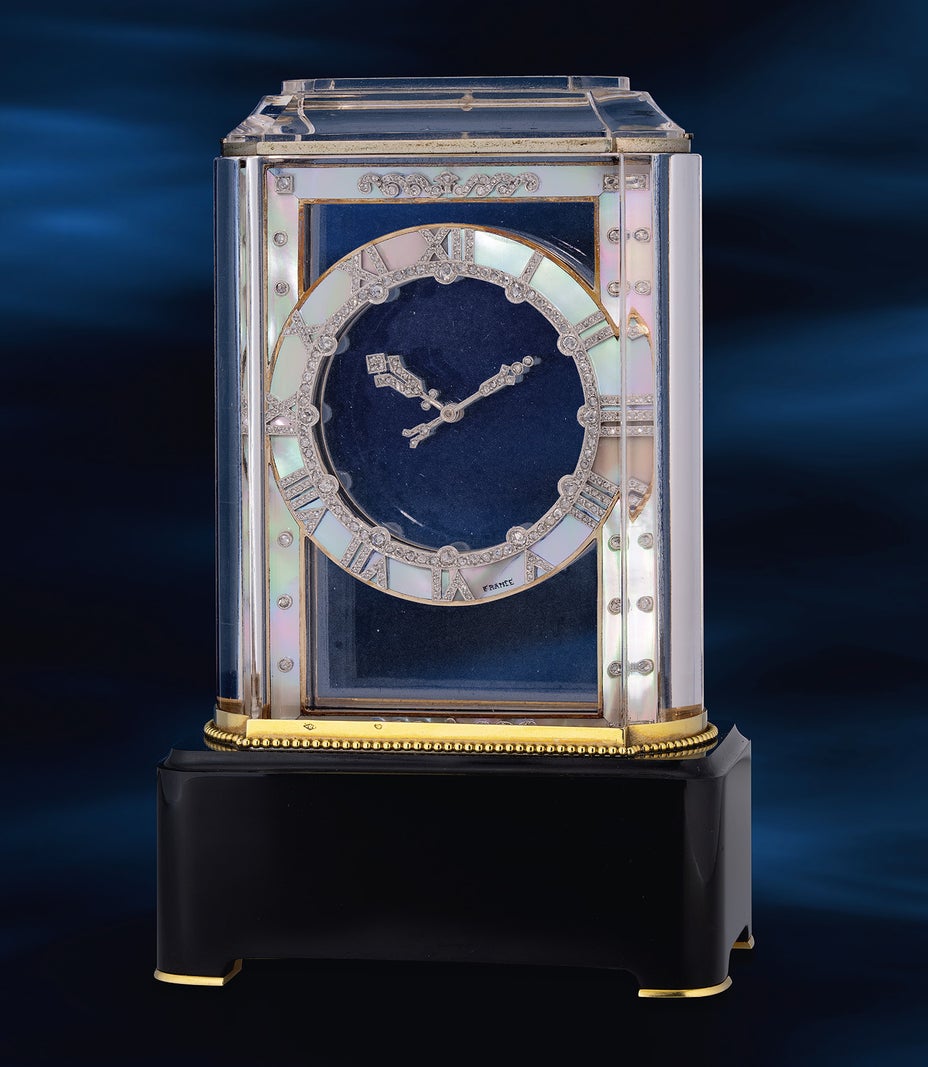
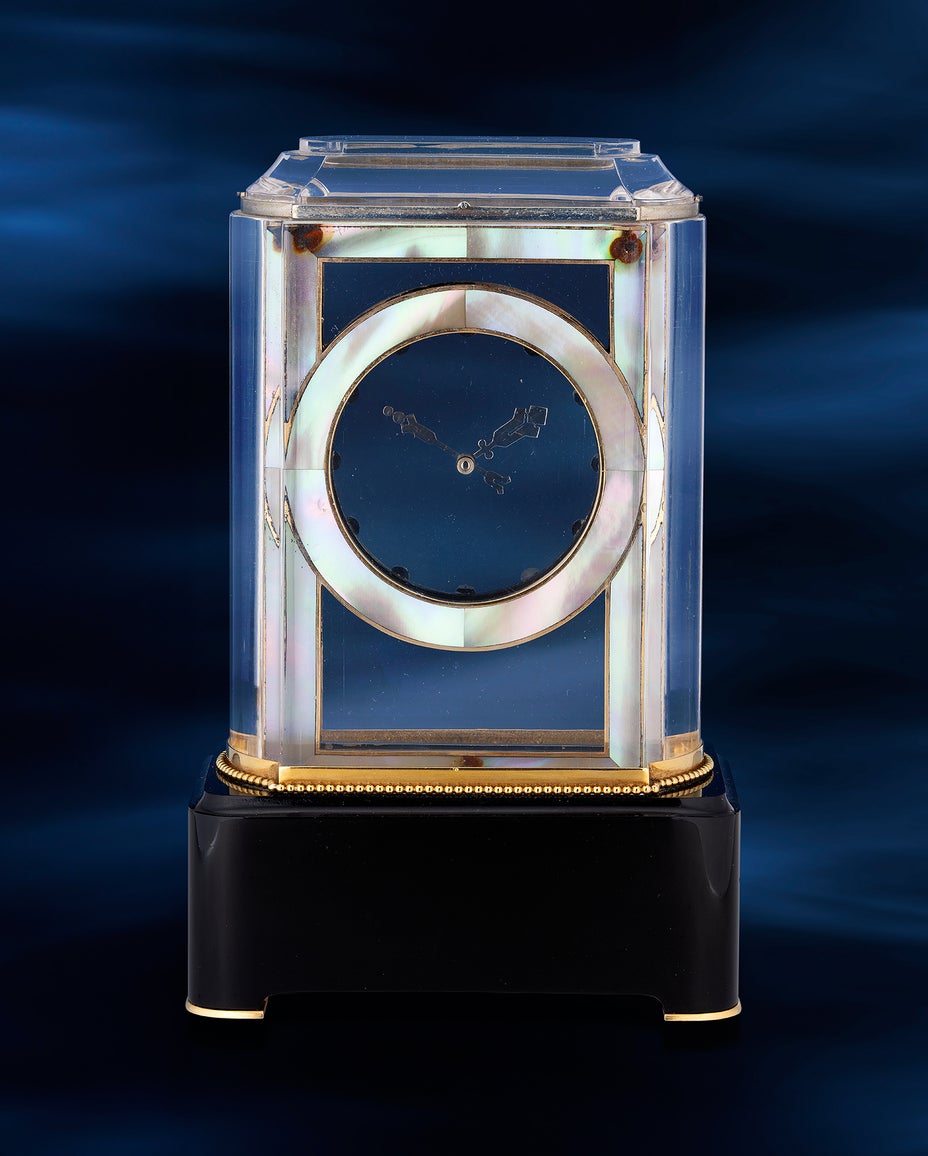
Truly first of its kind, the Modèle A Mystery clock captures the audience attention with its seemingly levitated hands within its pellucid block-shaped rock crystal. These early creations of the Modèle A were bejewelled art pieces that highlights the mastery of Cartier’s craftmenship and design skills. First devised with a double-axle mechanism and soon after single central axle, the “Mystery” is solved thanks to the separate crystal disc hidden within. These discs are each surrounded by a tooth-edged boarder and driven by screws fixed at the ends of the axles, working at the levels of 3 and 9 o’clock, the driving pinions of the hands are hidden in each column of the frame. The rotation of the axles is activated by the movement hidden in the base, therefore, it is not the hands which move but each disc on which they are individually set at two different speeds, one for the hours and one for the minutes.
A ground breaking timepiece, Modèle A Mystery Clocks were bought by glamourous celebrities and important figures of the society such as banker John Pierpont Morgan who bought the second clock created in 1913, Count Greffulhe (in 1914), Sir Bhupindra Singh, the maharajah of Patiala (in 1921). Each unique with sophistication, these handmade clocks boast variations on the type of base: agate, onyx, obsidian, nephrite, lapis lazuli, gold and jade, while other difference involved the decorations on the frames and chapter rings.
Made by Cartier France, the present Modèle A is incredibly important as the original drawing is documented in The Cartier Collection: Timepiece by Franco Colongi and François Chaille – the official tome by Cartier for their extensive archives. Crafted in rock crystal, gold, mother-of-pearl, and diamonds, it states that it is from 1929 in the Cartier Archives.
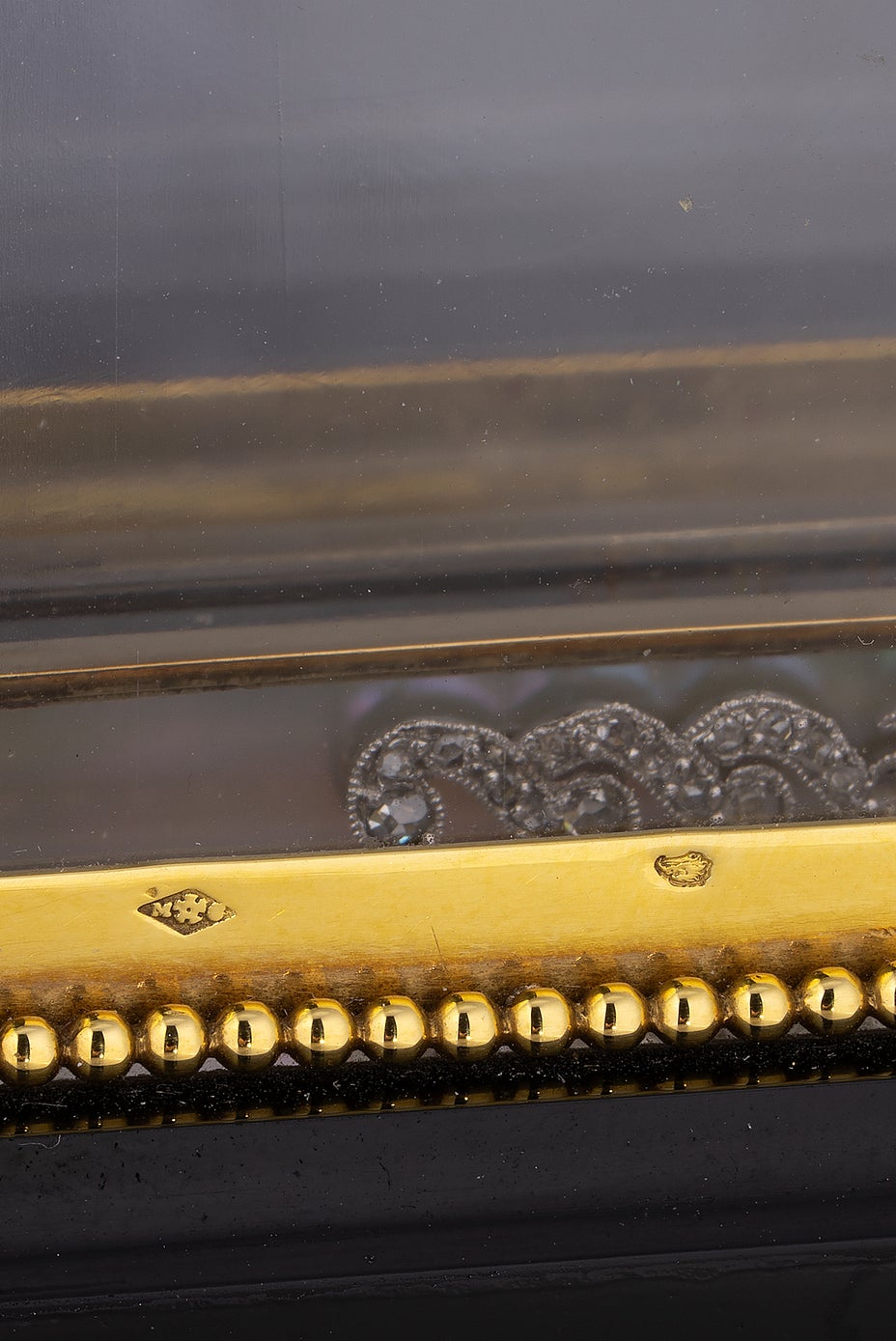
A matching one to one production to the Model A drawing, the radiant glow of the mother-of-pearl within the gold columns and chapter ring shines with elegance. The platinum hands are fully adorned with sparkling diamonds which sets balance together with the diamond-set Roman numerals and art deco motifs on its frame. Its black onyx base is also decorated with subtle row of gold beaded lining where two vivid and crisp hallmarks can be found: an eagle beak for its French origin and a diamond shaped MC hallmark.
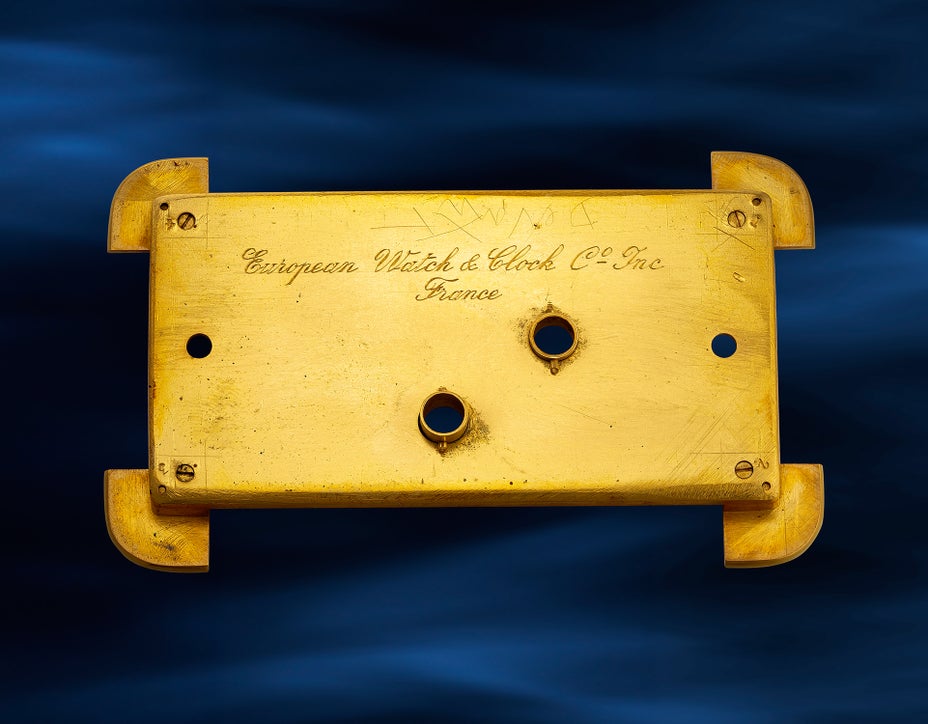
Powered by a European Watch & Clock Co Inc. 8-day movement with Swiss lever escapement, bimetallic balance, the hand-key-setting and winding mechanism is set underneath the base.
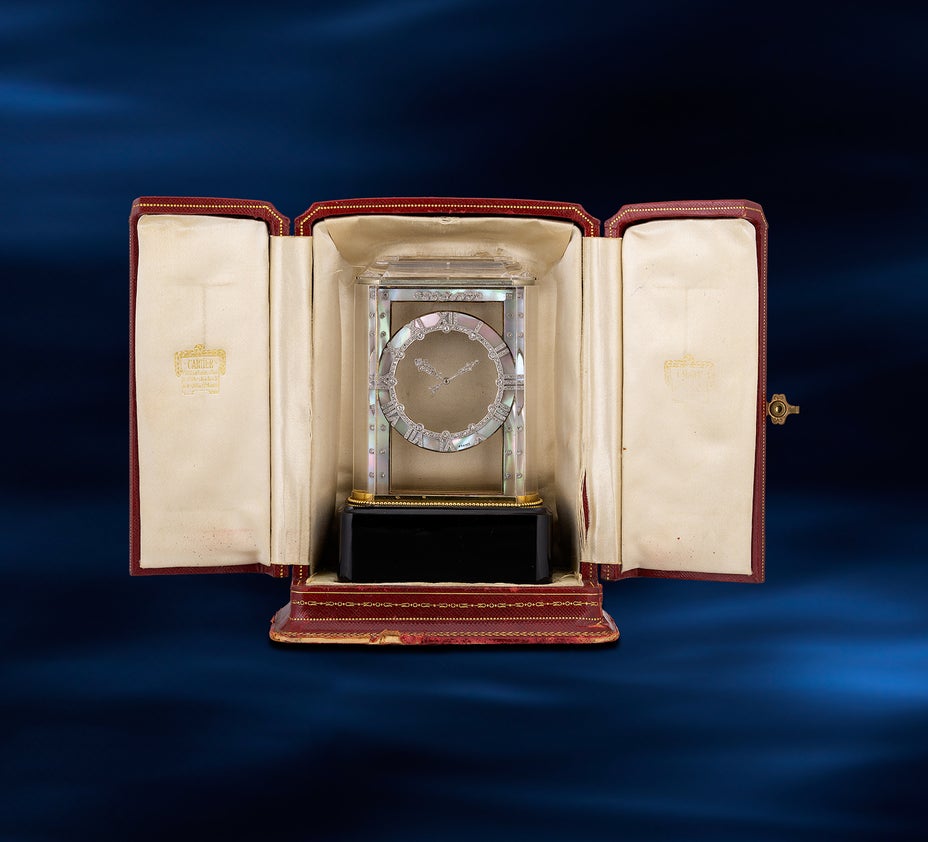
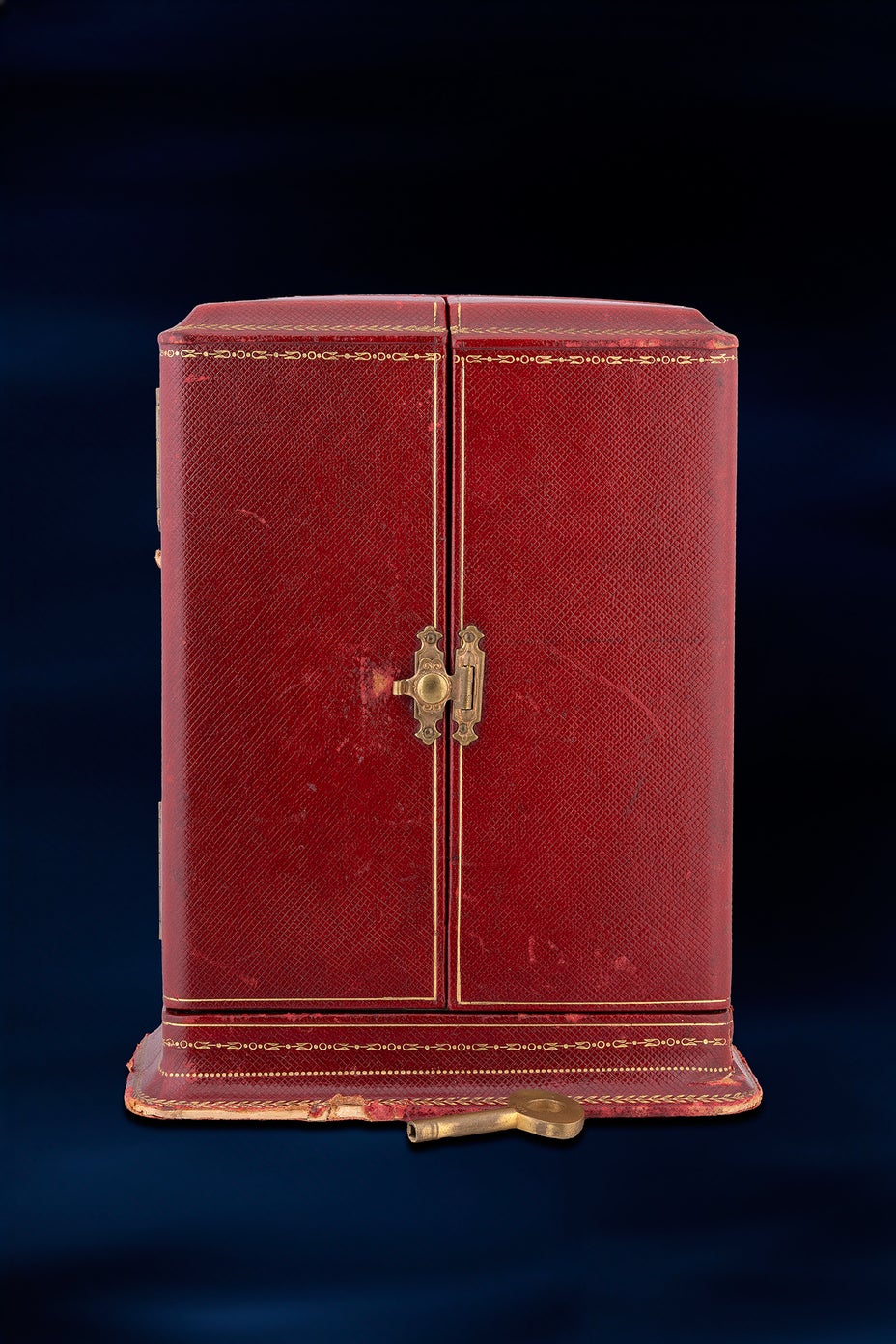
As an even nicer touch, the Modèle A retains its original fitted presentation box and original numbered key, with the Cartier hand stamped number corresponding to the one on the clock. A well-preserved objet d’art having first appeared on the market three decades ago, this historically significant Mystery clock will most likely remain hidden and cherished again for many years to come. Extremely limited in production according to scholarship only approximately 60 examples were made of the Modèle A. Its public sale at auction offers a unique chance for collections to acquire one of the greatest optical illusion of horological history. Not just all smoke and mirrors but a milestone for technical prowess of Cartier, this is also an historically significant museum-worthy Art Deco piece.
Cartier
FrenchWith the Constitution of 1848 came a new standard for luxury in France. Founded one year prior by Louis-Francois Cartier, the house of Cartier was one of the first to use platinum in jewelry making. This incredibly expensive material became the stepping-stone for Cartier to experiment in form, mechanisms and attitude. It helped men move from pocket watches to wristwatches, effectively making the watch much more functional and prominent in a man's overall wardrobe.
Cartier did not only touch on functionality. Inspired by a commissioned painting by George Barbier featuring a black panther at the feet of an elegantly bejeweled woman, Cartier began incorporating wild animals in his designs—most notably, Cartier Panthère rings, bangle bracelets and watches. Yet it wasn't until the late 1960s that the house of Cartier debuted their iconic yellow and rose gold LOVE collection, which includes the famous bracelet that only a special screwdriver can open.