13
Charles Frodsham
"Split Seconds Chronograph Tourbillon"
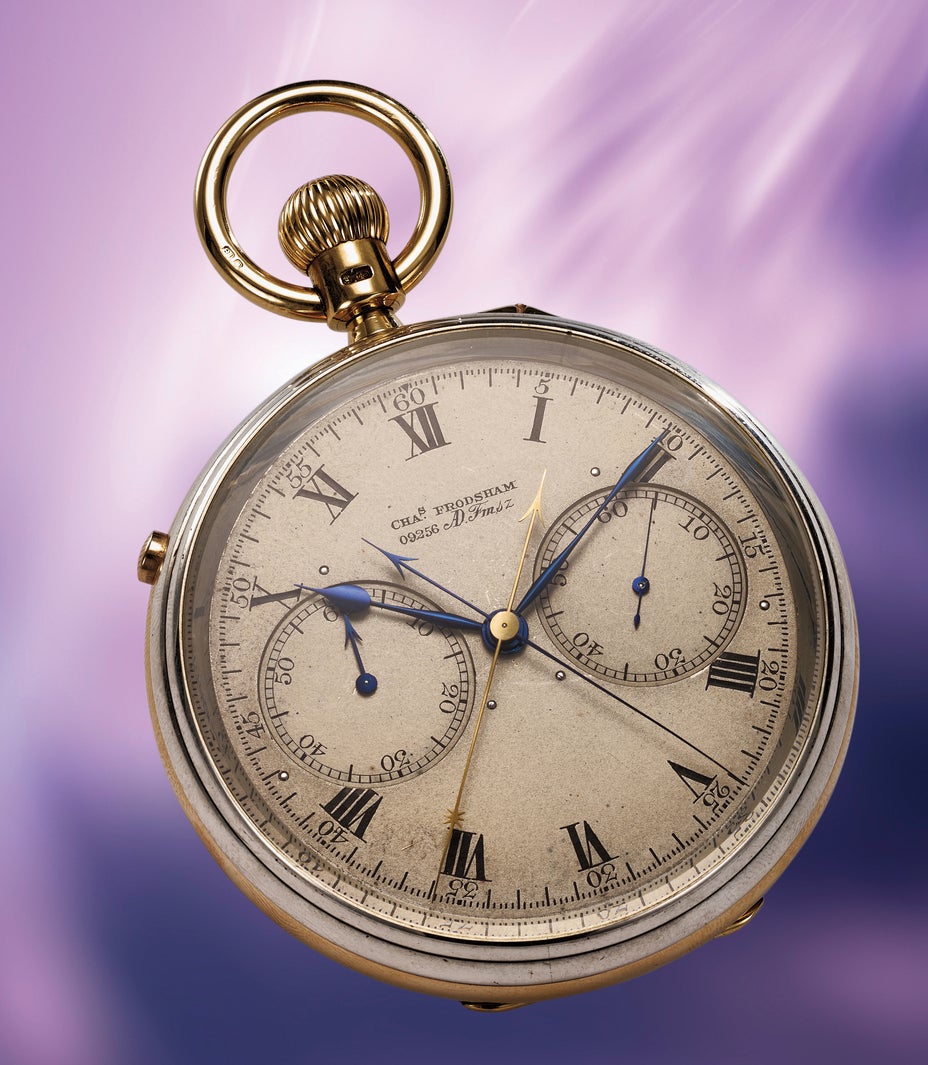
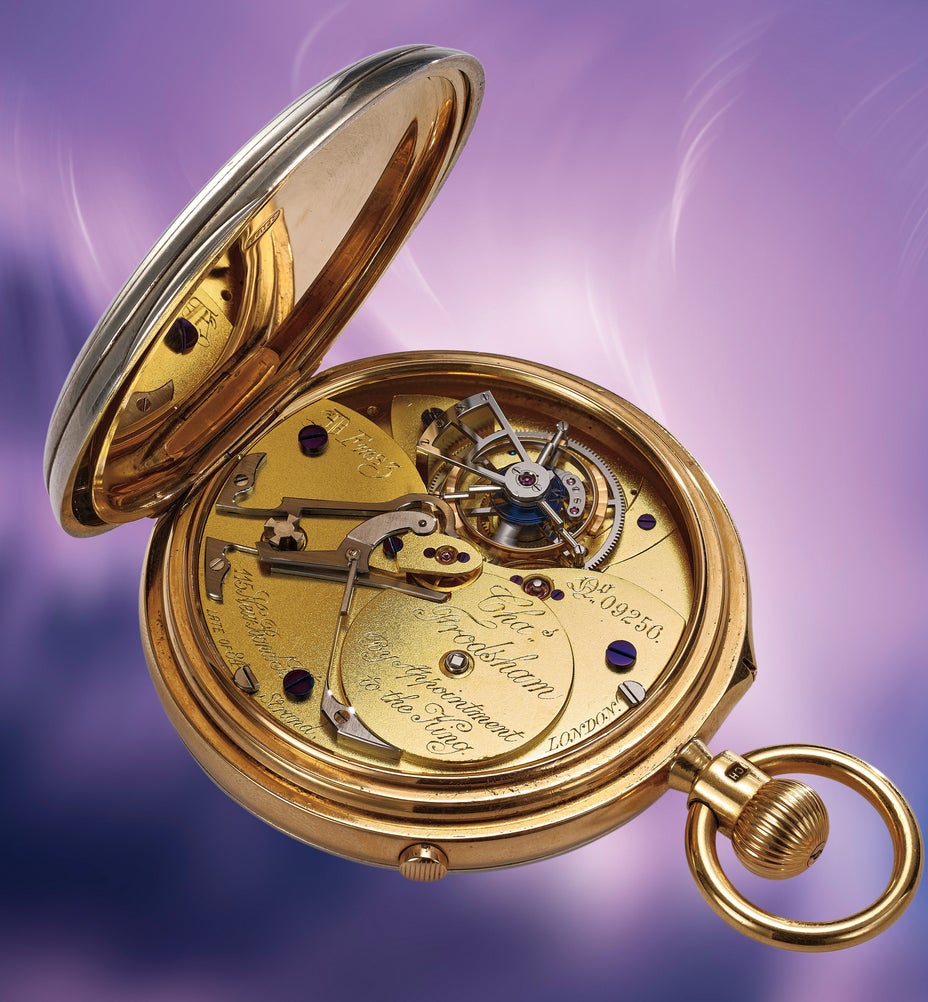
An impressive open face silver and pink gold split seconds chronograph tourbillon pocket watch
Estimate
CHF30,000–60,000
€32,700–65,400
$38,400–76,800
Sold For
CHF152,400
Manufacturer
Charles Frodsham
Year
1909
Movement No
09256
Case No
09256 case further stamped HMF (Harrison Mills Frodsham)
Model Name
"Split Seconds Chronograph Tourbillon"
Material
Silver & 18k pink gold
Calibre
Manual, jeweled
Dimensions
56mm diameter
Signed
Dial and movement signed
Accessories
Accompanied by fitted box, Charles Frodsham & Co. certificate confirming production of the present timepiece in 1909 with movement supplied by Nicole Nielsen & Co. and a manufacturing cost of £85, further accompanied by duplicate of National Physical Laboratory confirming the present chronometer was awarded Class A at Kew observatory trial in 1911.
Full-Cataloguing
Good To Know:
- Split seconds chronograph with tourbillon
- Very rare two-tone silver and pink gold case
- Participated in Kew Observatory trial and received Class A Certificate in 1911 with 79.7 marks
Founded in the latter half of the 19th century, Charles Frodsham ranks among the most revered names in English horology. In 1854, Charles Frodsham succeeded Benjamin Lewis Vulliamy as Superintendent and Keeper of Her Majesty’s Clocks at Buckingham Palace, serving the Sovereign and the Royal Household with distinction. Upon his passing, his son, Harrison Mill Frodsham, assumed leadership and formally incorporated the firm as Charles Frodsham & Co. Ltd. in 1893, ensuring the continuation of its reputation for precision, innovation, and uncompromising quality.
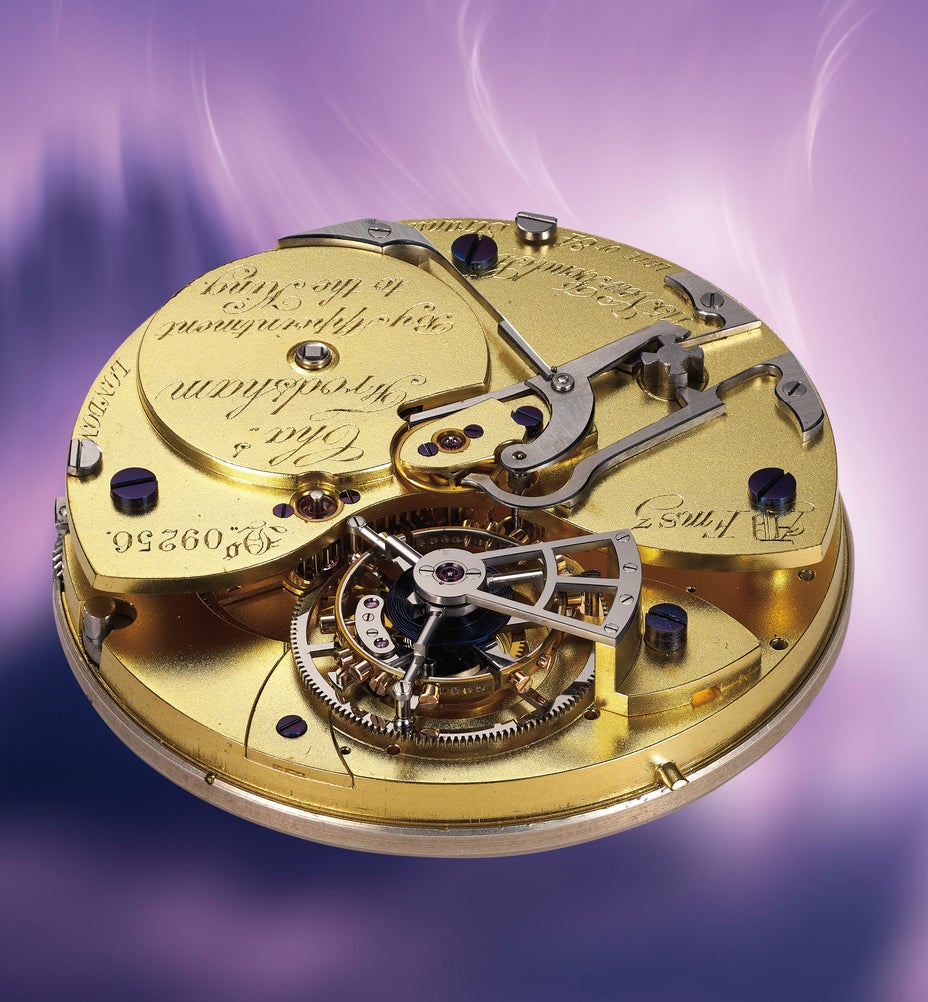
The present lot represents an outstanding example of Frodsham’s celebrated tourbillon pocket watches, combining a one-minute tourbillon with the rare and technically demanding split-seconds chronograph. At the time of manufacture, such watches were among the most complex and costly English timepieces available, with original retail prices ranging from £200 to £350 — a sum befitting only the most discerning clientele.
The three-quarter plate movement exemplifies the zenith of early 20th-century English watchmaking. Finely finished and confidently laid out, it bears engraved inscriptions referencing the firm’s premises at “115 New Bond Street, Late of 84 Strand,” proudly situating the watch within London’s most distinguished horological tradition.
Of exceptional rarity, the case is fashioned in an unusual and highly attractive combination of silver and pink gold, one of only a very small number known.
As often encountered on Frodsham’s finest productions, the dial and movement bear the cryptic letters “AD Fmsz” — a coded signature introduced circa 1850 to mark the firm’s superior-grade caliper watches and subsequently retained as a discreet emblem of excellence.
The present timepiece received a Class A Certificate at Kew Observatory in 1911 with an impressive 79.7 points and a daily error of merely 0.44 seconds.
- Split seconds chronograph with tourbillon
- Very rare two-tone silver and pink gold case
- Participated in Kew Observatory trial and received Class A Certificate in 1911 with 79.7 marks
Founded in the latter half of the 19th century, Charles Frodsham ranks among the most revered names in English horology. In 1854, Charles Frodsham succeeded Benjamin Lewis Vulliamy as Superintendent and Keeper of Her Majesty’s Clocks at Buckingham Palace, serving the Sovereign and the Royal Household with distinction. Upon his passing, his son, Harrison Mill Frodsham, assumed leadership and formally incorporated the firm as Charles Frodsham & Co. Ltd. in 1893, ensuring the continuation of its reputation for precision, innovation, and uncompromising quality.
The present lot represents an outstanding example of Frodsham’s celebrated tourbillon pocket watches, combining a one-minute tourbillon with the rare and technically demanding split-seconds chronograph. At the time of manufacture, such watches were among the most complex and costly English timepieces available, with original retail prices ranging from £200 to £350 — a sum befitting only the most discerning clientele.
The three-quarter plate movement exemplifies the zenith of early 20th-century English watchmaking. Finely finished and confidently laid out, it bears engraved inscriptions referencing the firm’s premises at “115 New Bond Street, Late of 84 Strand,” proudly situating the watch within London’s most distinguished horological tradition.
Of exceptional rarity, the case is fashioned in an unusual and highly attractive combination of silver and pink gold, one of only a very small number known.
As often encountered on Frodsham’s finest productions, the dial and movement bear the cryptic letters “AD Fmsz” — a coded signature introduced circa 1850 to mark the firm’s superior-grade caliper watches and subsequently retained as a discreet emblem of excellence.
The present timepiece received a Class A Certificate at Kew Observatory in 1911 with an impressive 79.7 points and a daily error of merely 0.44 seconds.