19
Cindy Sherman
Untitled #264
framed 130.2 x 193.7 cm (51 1/4 x 76 1/4 in.)
Full-Cataloguing
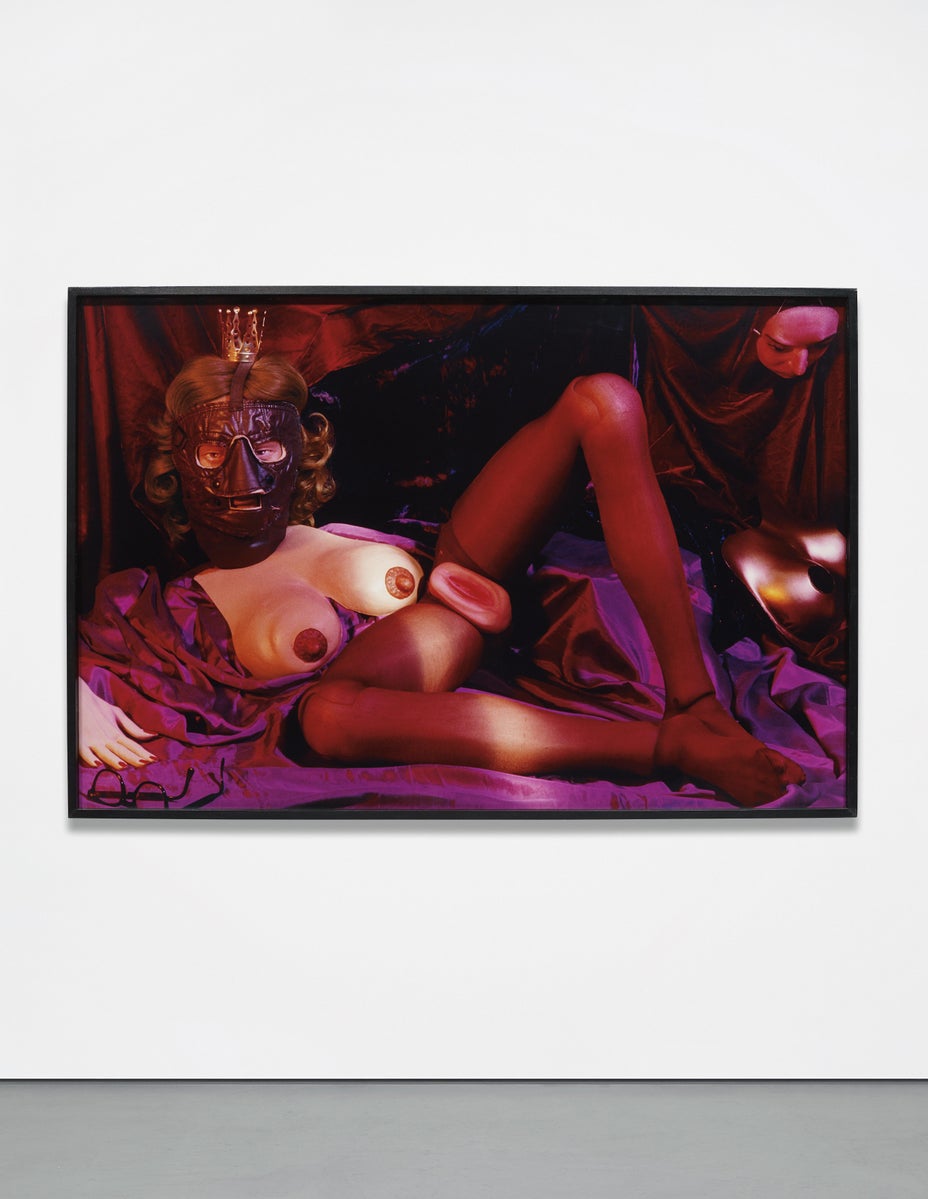
In 1992, Cindy Sherman created a series of photographs entitled Sex Pictures from which she was notably absent. Making extensive use of prosthetic body parts purchased from medical catalogues, she photographed a series of graphic tableaux. Lurid assemblages of plastic forms, the subjects’ artificiality is largely beyond doubt, save for one particular exception. As Cindy Sherman recounts, ‘there was one image in the show that a lot of people thought was me ... The mannequin that wears the crown — they swore it had my eyes. Everybody thought that I had placed my head behind the mask. I guess it's because I used a different mannequin head for that — one that had painted-in eyes. Maybe because it was so different from all the others, some people thought that I just had to put myself in there somewhere.’ (Cindy Sherman in conversation with Therese Lichtenstein, Journal of Contemporary Art).
The photograph in question is the present lot. The scene is one of surreal sexuality; using an array of anatomical models, Sherman pieces together a reclining figure, baring breasts and genitalia. Framed by a coiffed wig and decorated by a crown, a fetish mask covers much of the face. But it is the eyes that are most arresting; painted onto the mannequin, they are imbued with unusual vitality. Their gaze is penetrating, and their intensity unnerving. Yet, while they intimate a human presence, the rest of the body is plainly synthetic; joints are visible in the legs, and the overall arrangement disjunctive. In these respects, the work resonates with the series as a whole. Sherman’s approach to her sordid compositions was one of critical distance; as she relates, ‘I am always surprised when I read or hear somebody say that they are X-rated or pornographic because they are all obvious plastic parts’ (Cindy Sherman in conversation with Therese Lichtenstein, Journal of Contemporary Art). She reexamines figurations of sexuality, using artificial forms to deconstruct and to subvert.
Sherman explores setting as she explores the human figure, carefully considering both space and quality of light. In Untitled #264, she creates an ambiance of seedy opulence. A brooding gloom suffuses much of the photograph: swathes of shadow hang heavy in the folds of cloth which are draped about the space. However the darkness of the scene is not without interruption; a beam of light cuts diagonally across the figure, and a pair of disembodied breasts glistens in the right hand corner. The room is a space of artificial quietude: a phantasmagorical lair separated from the heat of the day. It draws heavily on aesthetics of sleaze, on the garish spaces imagined within the pages of top-shelf-magazines. But there are rather loftier influences at play too. In its masterful control of light and shadow, the work recalls practices from realist painting, not least the chiaroscuro of Caravaggio. The photograph is as dense with potential signification as it is with colour. Bodying forth a strange and unsettling underworld, it takes a searching and critical look at the lurid sexuality of the modern image.
Cindy Sherman
American | 1954Seminal to the Pictures Generation as well as contemporary photography and performance art, Cindy Sherman is a powerhouse art practitioner. Wily and beguiling, Sherman's signature mode of art making involves transforming herself into a litany of characters, historical and fictional, that cross the lines of gender and culture. She startled contemporary art when, in 1977, she published a series of untitled film stills.
Through mise-en-scène and movie-like make-up and costume, Sherman treats each photograph as a portrait, though never one of herself. She embodies her characters even if only for the image itself. Presenting subversion through mimicry, against tableaus of mass media and image-based messages of pop culture, Sherman takes on both art history and the art world.
Though a shape-shifter, Sherman has become an art world celebrity in her own right. The subject of solo retrospectives across the world, including a blockbuster showing at the Museum of Modern Art, New York, and a frequent exhibitor at the Venice Biennale among other biennials, Sherman holds an inextricable place in contemporary art history.