

4
Gio Ponti
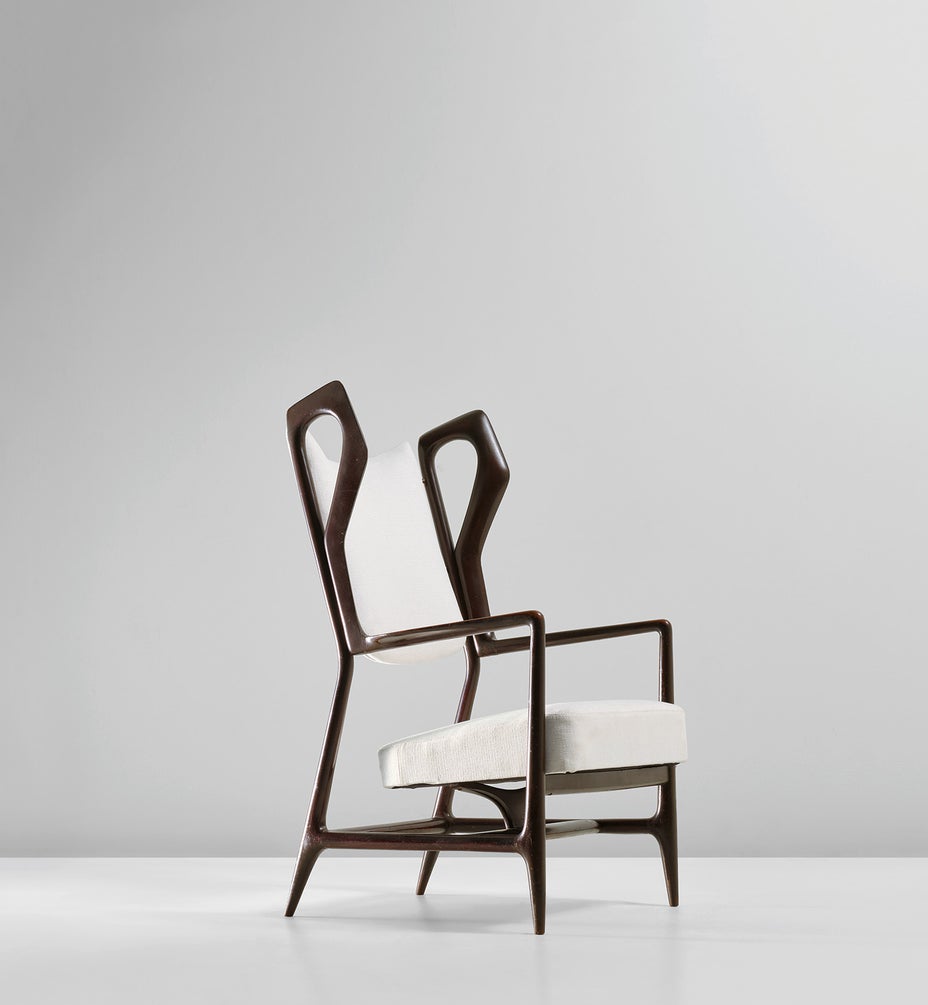
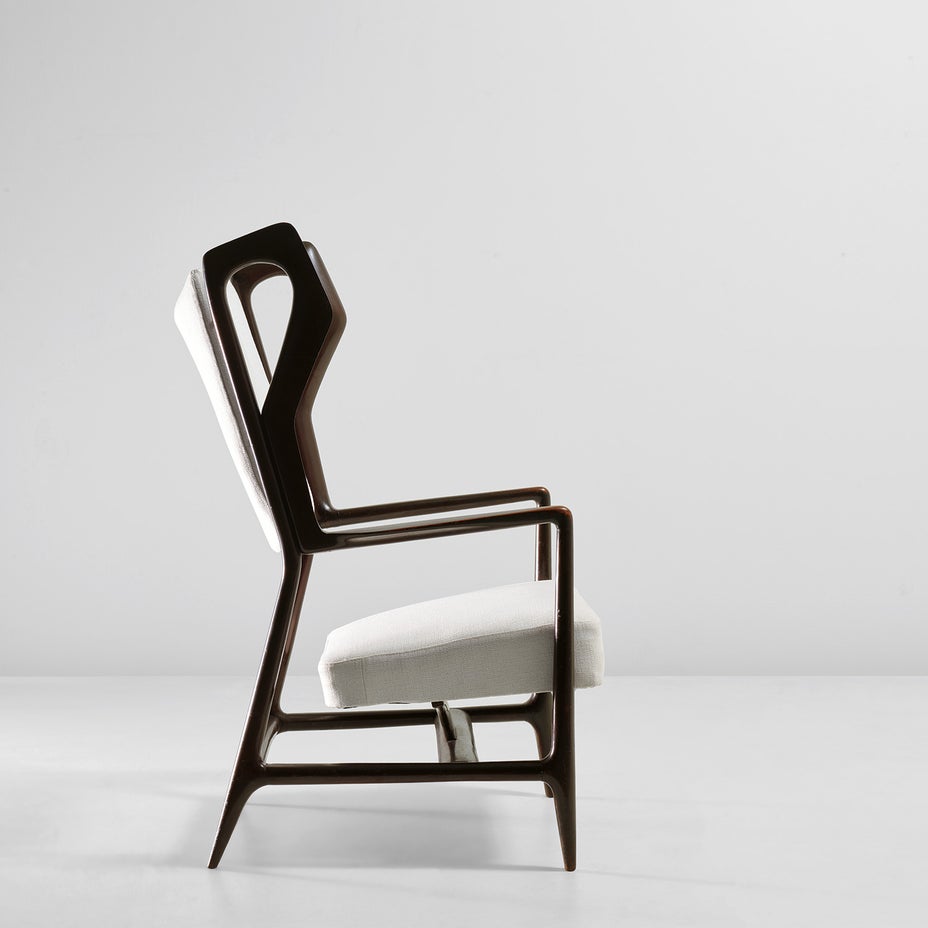
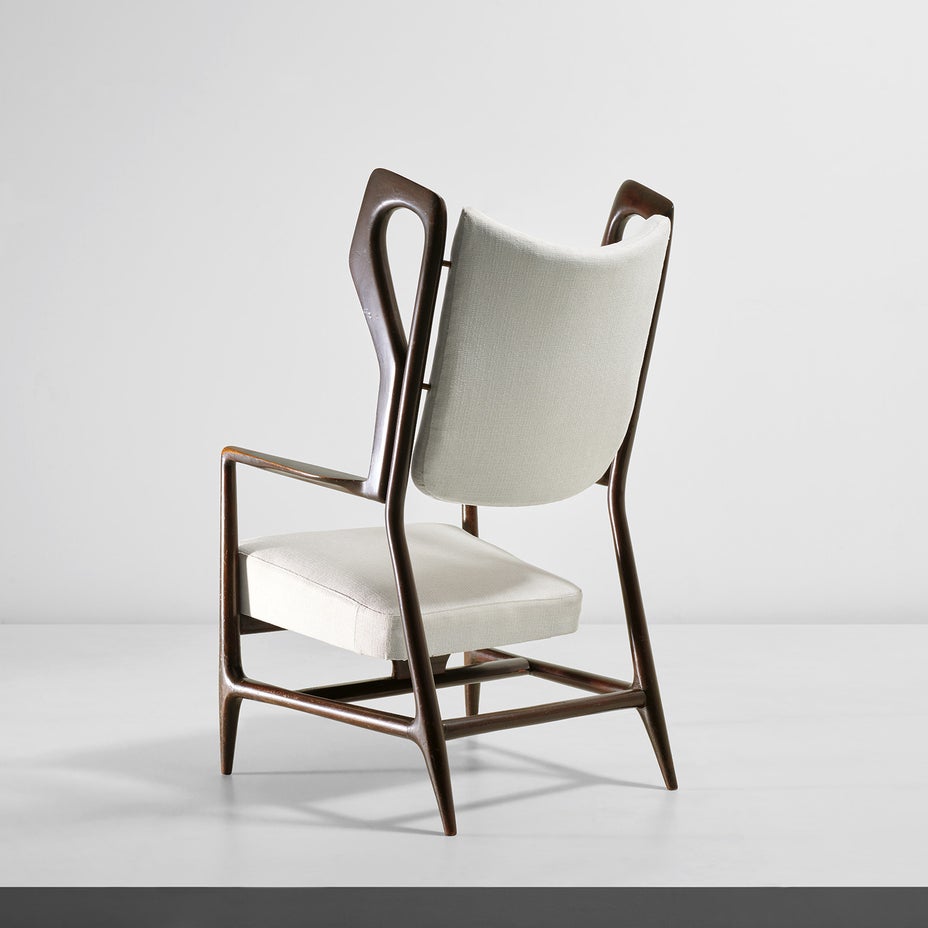
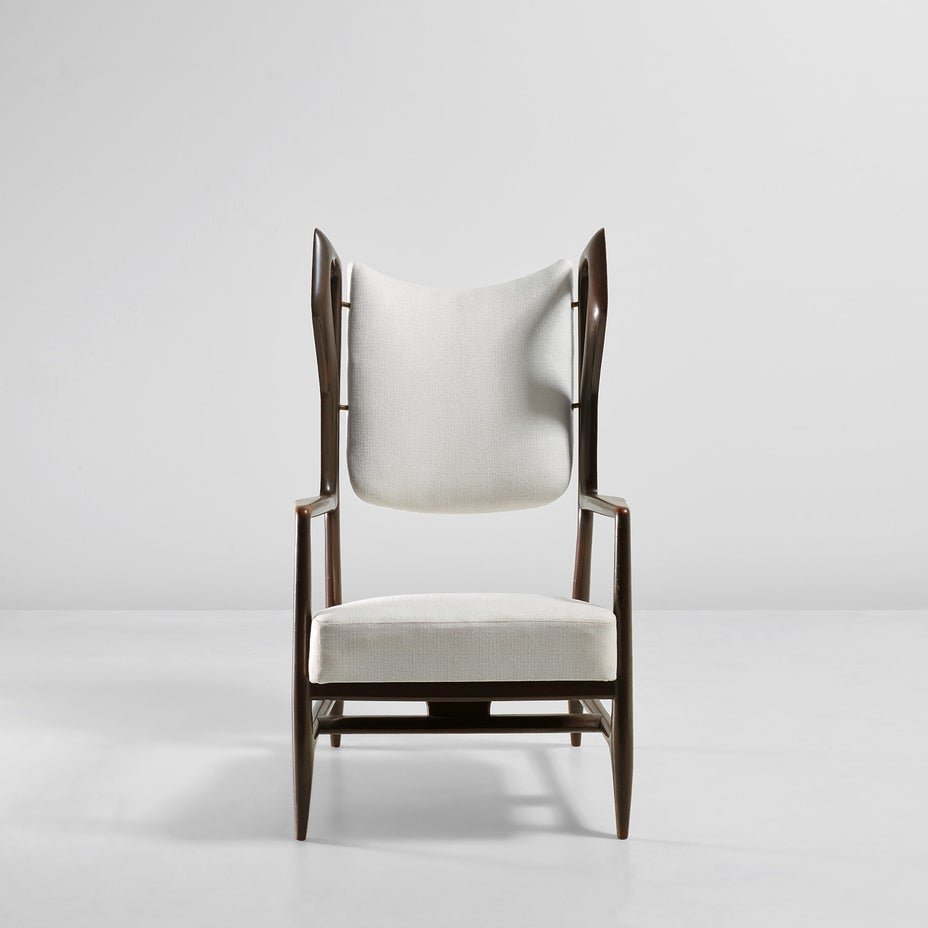
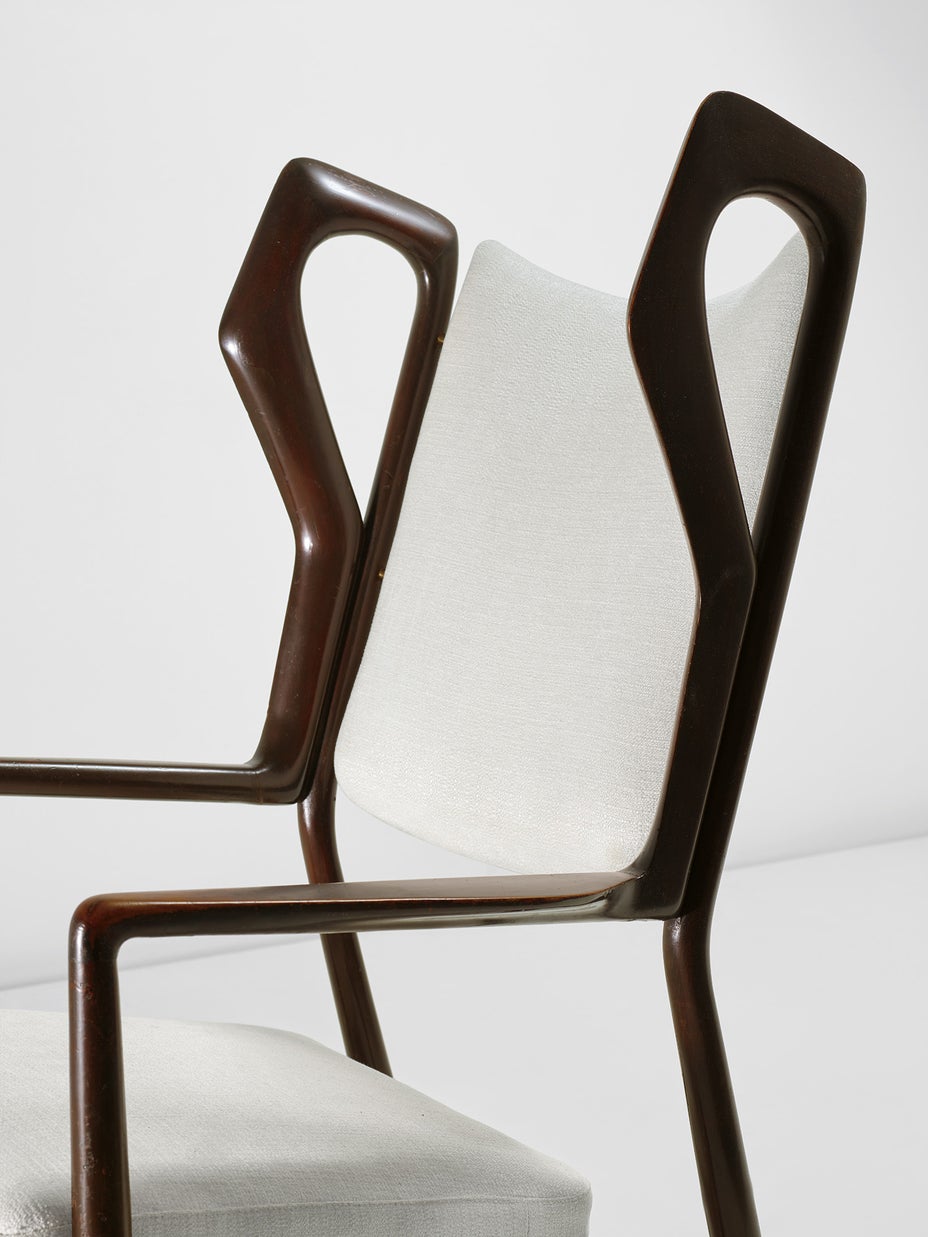
'Triennale' armchair
- Estimate
- £25,000 - 35,000Ω
£45,360
Lot Details
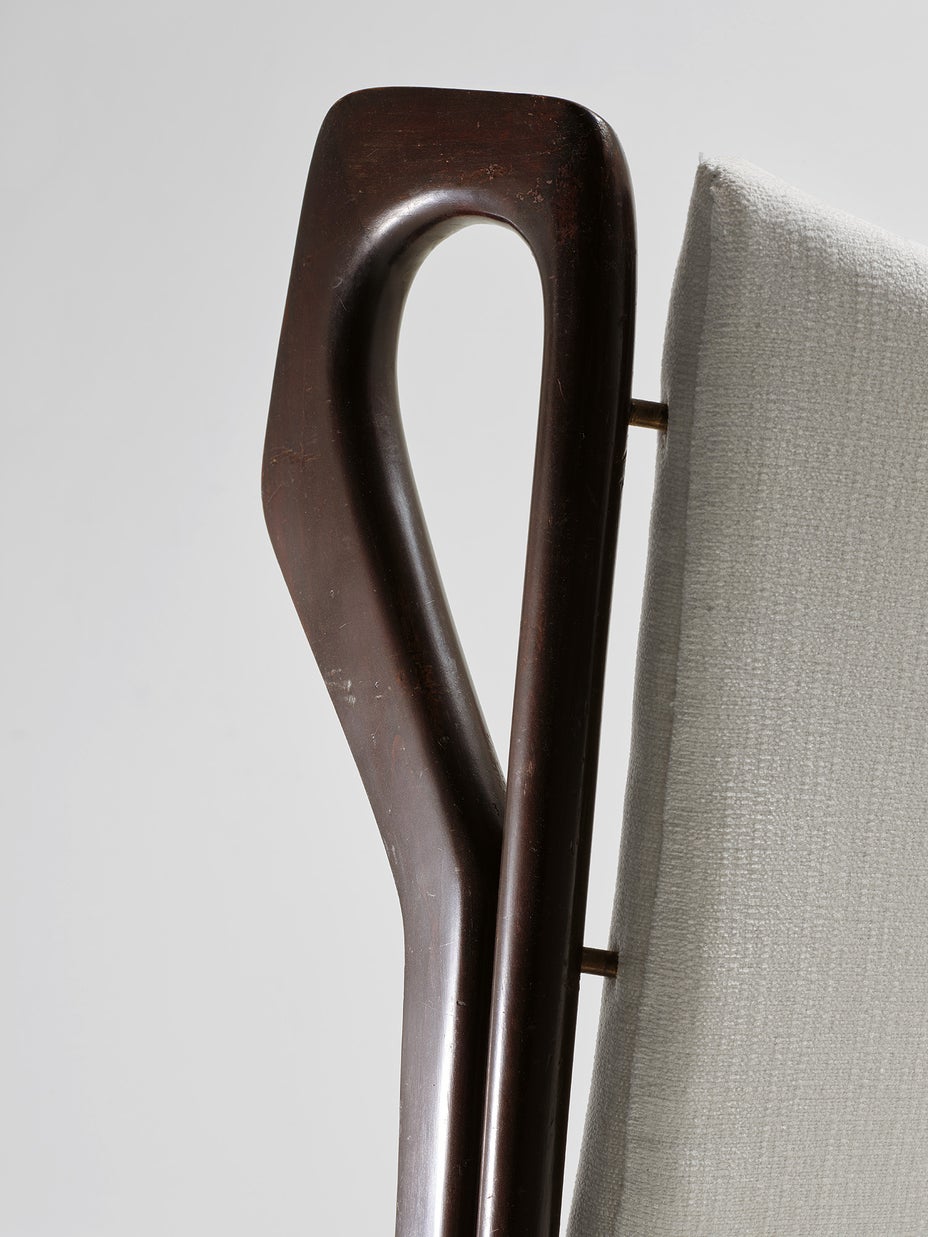
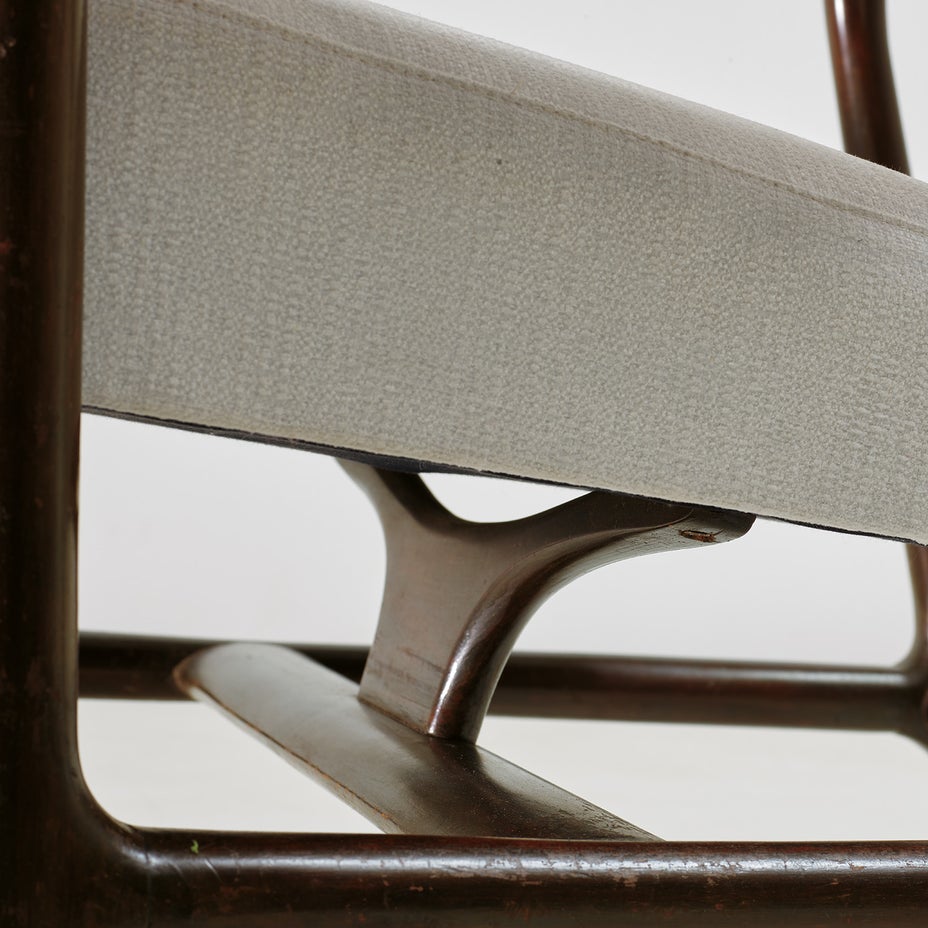
Stained wood, fabric, brass.
circa 1953
106.5 x 61.5 x 73.5 cm (41 7/8 x 24 1/4 x 28 7/8 in.)
Manufactured by ISA, Bergamo, Italy. Together with a certificate of expertise from the Gio Ponti Archives.
Specialist
Full-Cataloguing
Catalogue Essay
In his design of the present model armchair for ISA, Bergamo, Gio Ponti deconstructed the traditional form of the wing-back chair, achieving a greater visual lightness. Ponti’s inventive structure gives prominence to the void, dissolving the mass of the upholstered armchair to reveal a sculptural frame. The backrest, secured by brass pins, and seat appear suspended within the essential lines of the armchair’s frame. The organic shape acknowledges Scandinavian modernist design, in particular the furniture of Danish architect Finn Juhl who had exhibited his 'Chieftain' armchair at the IX Milan Triennale in 1951. Further exploiting the expressive potential of his traditional materials, Ponti inserted a metal frame within the wooden structure of the upholstered backrest, reinforcing the armchair’s visually weightless form.
Provenance
Literature
Gio Ponti
Italian | B. 1891 D. 1979Among the most prolific talents to grace twentieth-century design, Gio Ponti defied categorization. Though trained as an architect, he made major contributions to the decorative arts, designing in such disparate materials as ceramics, glass, wood and metal. A gale force of interdisciplinary creativity, Ponti embraced new materials like plastic and aluminum but employed traditional materials such as marble and wood in original, unconventional ways.In the industrial realm, he designed buildings, cars, machinery and appliances — notably, the La Cornuta espresso machine for La Pavoni — and founded the ADI (Industrial Designer Association). Among the most special works by Gio Ponti are those that he made in collaboration with master craftsmen such as the cabinetmaker Giordano Chiesa, the illustrator Piero Fornasetti and the enamellist Paolo de Poli.
Browse Artist