185
Gutkaes, Dresden
"Chronometer with Detent Escapement"
A stunning silver openface pocket chronometer with detent escapement and regulator dial
Estimate
CHF10,000–20,000
€10,900–21,700
$12,700–25,400
Sold For
CHF33,020
Manufacturer
Gutkaes, Dresden
Year
Circa 1840
Movement No
81
Case No
30679
Model Name
"Chronometer with Detent Escapement"
Material
Silver and gilt
Calibre
Key wind
Dimensions
66mm diameter
Signed
Movement signed
Full-Cataloguing
Good To Know:
- Pocket chronometer with detent escapement and fuséé/chain
- No more than 10 pocket chronometers are known and only 5 have appeared at auction in the past 40 years
Johann Christian Friedrich Gutkaes Sr. (16 June 1785 – 8 August 1845) stands among the pivotal figures of early German watchmaking. Based in Dresden, he became a master watchmaker in 1815 and, in the same year, married the daughter of court watchmaker Johann Friedrich Schumann. His reputation grew steadily, culminating in his appointment as Royal Court Watchmaker from 1842 to 1845.
Gutkaes earned particular acclaim for his remarkable five-minute digital clock installed in the original Semperoper in Dresden — an ingenious display indicating the time in precise five-minute intervals and the clock that has inspired the large date featured in modern A. Lange & Söhne wristwatches. Though the opera house was tragically destroyed by fire in 1869, the clock secured his legacy. Equally notable were his unusually small pocket watches, rare technical achievements for the period and admired for their refinement.
Widely regarded as a founding force behind the Glashütte watchmaking tradition, Gutkaes’ influence extended through his apprentices and sons-in-law, Ferdinand Adolph Lange and Friedrich August Adolf Schneider, who would go on to firmly establish the region’s horological identity.
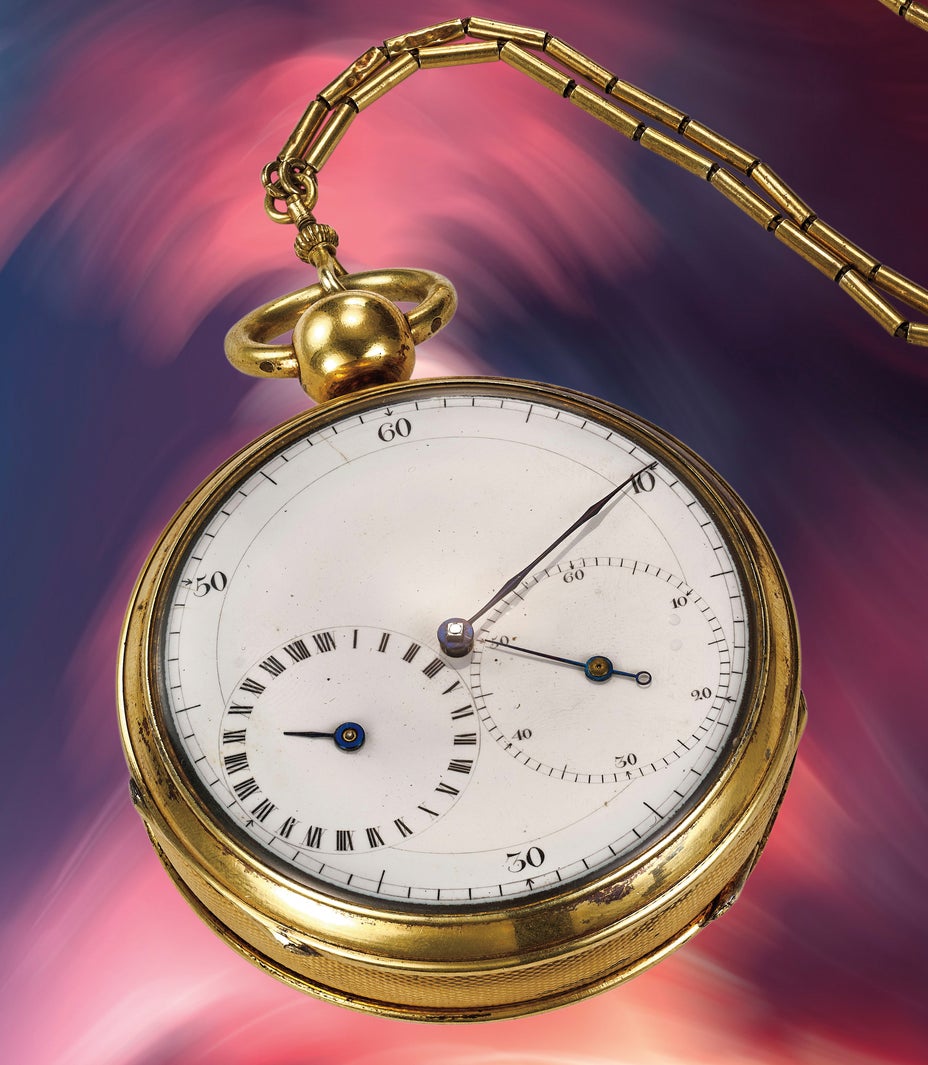
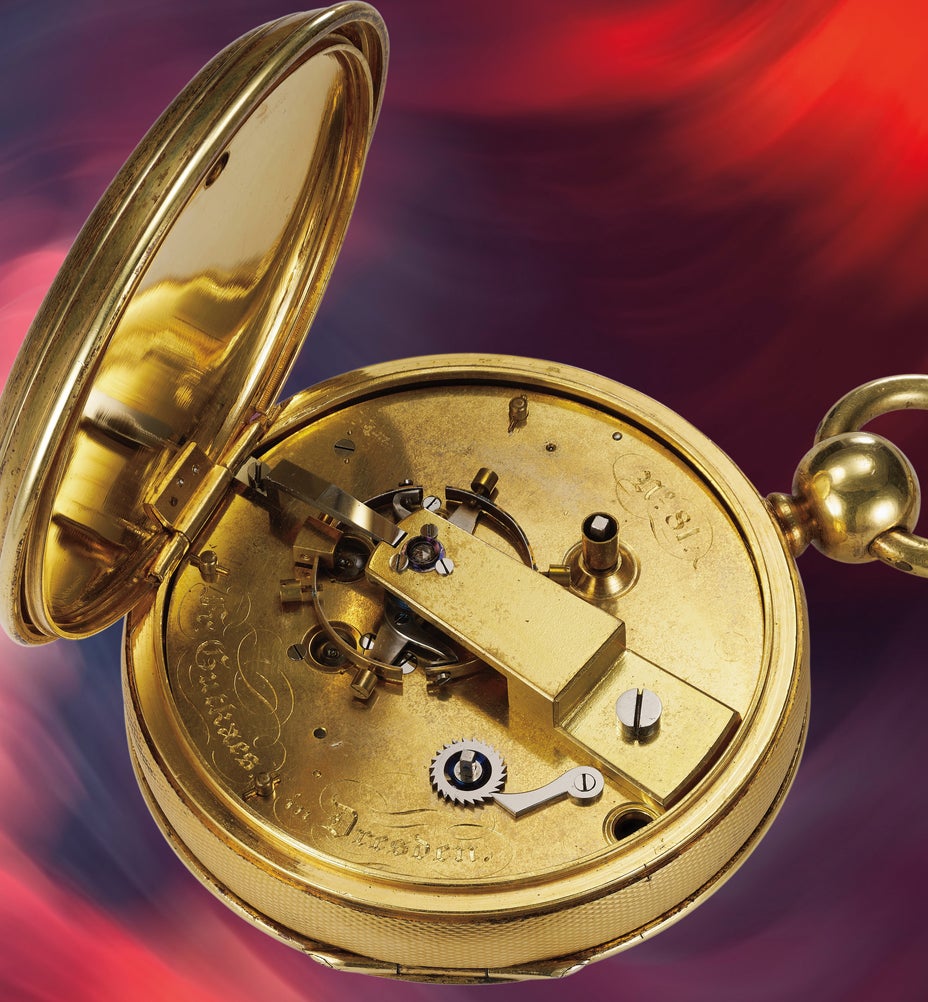
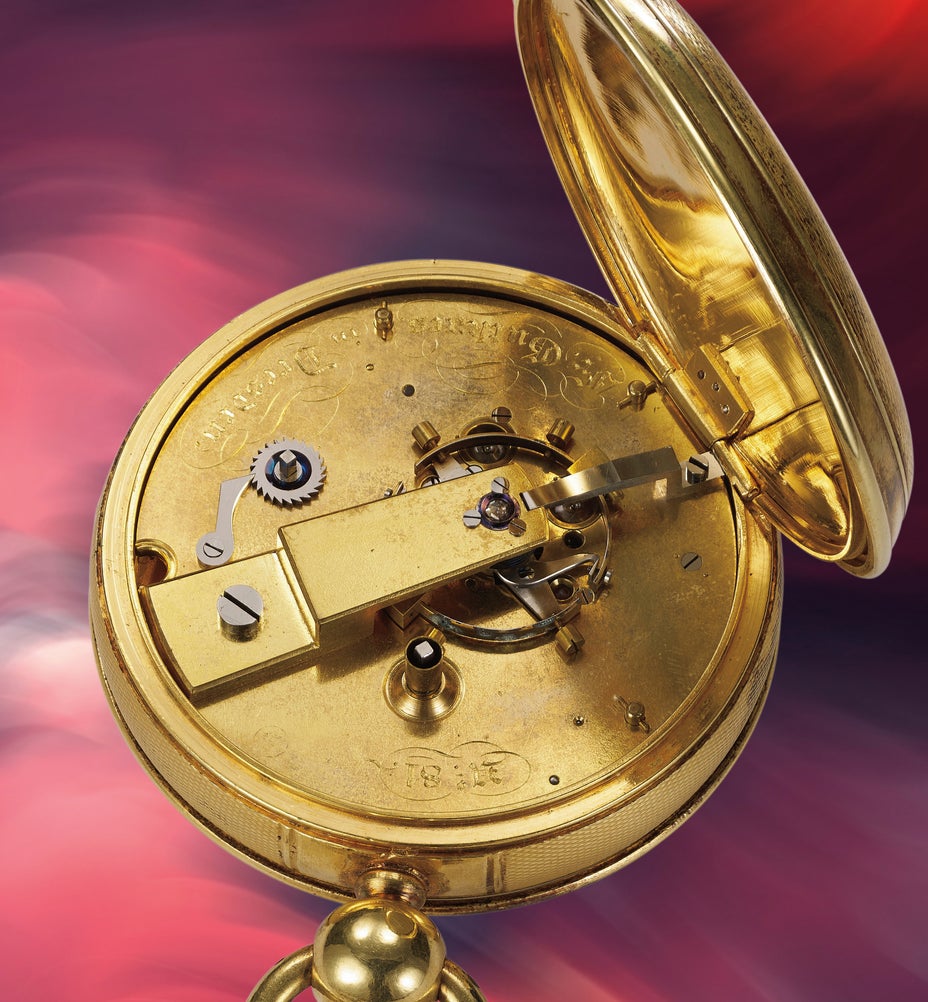
The present pocket chronometer reflects that lineage of precision. Its movement is fitted with an Earnshaw detent escapement, a fusée and chain ensuring constant transmission of energy, and a helical balance spring. In keeping with the purest German tradition, the balance is set with a diamond endstone. The regulator-style dial displays central minutes, subsidiary seconds at the lower right, and a 24-hour indication at the lower left -a highly legible and purposeful arrangement befitting a precision timekeeper.
So rare are Gutkaes pocket chronometers that in the past 40 years only 5 have appeared at public auction.
- Pocket chronometer with detent escapement and fuséé/chain
- No more than 10 pocket chronometers are known and only 5 have appeared at auction in the past 40 years
Johann Christian Friedrich Gutkaes Sr. (16 June 1785 – 8 August 1845) stands among the pivotal figures of early German watchmaking. Based in Dresden, he became a master watchmaker in 1815 and, in the same year, married the daughter of court watchmaker Johann Friedrich Schumann. His reputation grew steadily, culminating in his appointment as Royal Court Watchmaker from 1842 to 1845.
Gutkaes earned particular acclaim for his remarkable five-minute digital clock installed in the original Semperoper in Dresden — an ingenious display indicating the time in precise five-minute intervals and the clock that has inspired the large date featured in modern A. Lange & Söhne wristwatches. Though the opera house was tragically destroyed by fire in 1869, the clock secured his legacy. Equally notable were his unusually small pocket watches, rare technical achievements for the period and admired for their refinement.
Widely regarded as a founding force behind the Glashütte watchmaking tradition, Gutkaes’ influence extended through his apprentices and sons-in-law, Ferdinand Adolph Lange and Friedrich August Adolf Schneider, who would go on to firmly establish the region’s horological identity.
The present pocket chronometer reflects that lineage of precision. Its movement is fitted with an Earnshaw detent escapement, a fusée and chain ensuring constant transmission of energy, and a helical balance spring. In keeping with the purest German tradition, the balance is set with a diamond endstone. The regulator-style dial displays central minutes, subsidiary seconds at the lower right, and a 24-hour indication at the lower left -a highly legible and purposeful arrangement befitting a precision timekeeper.
So rare are Gutkaes pocket chronometers that in the past 40 years only 5 have appeared at public auction.