108
Louis Richard
"Triple Detent Constant Force One Minute Tourbillon Chronometer"
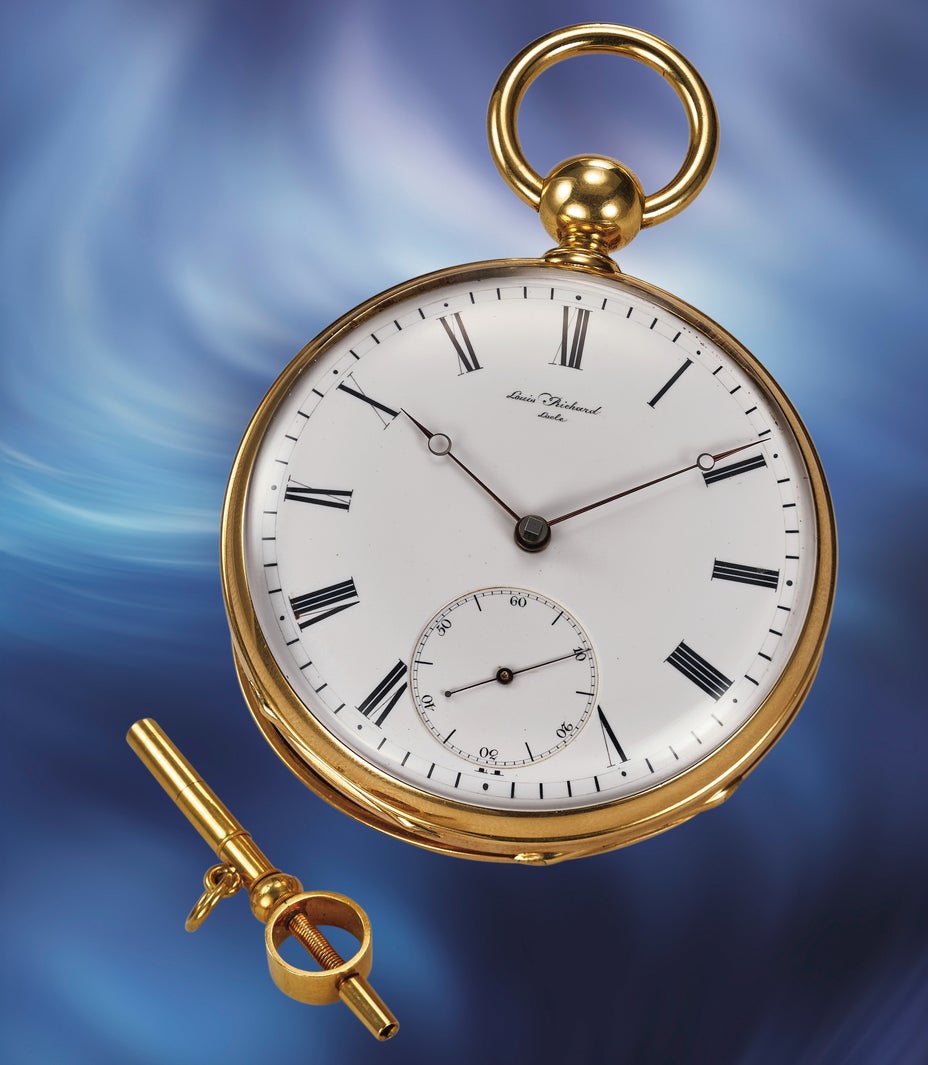
A ground breaking, historically important, yellow gold openface triple detent constant force one minute tourbillon pocket chronometer
Estimate
CHF100,000–200,000
€109,000–217,000
$127,000–254,000
Sold For
CHF3,968,000
Manufacturer
Louis Richard
Year
Circa 1860
Movement No
12
Case No
11846 12
Model Name
"Triple Detent Constant Force One Minute Tourbillon Chronometer"
Material
18k yellow gold
Calibre
Manual
Dimensions
56mm diameter
Signed
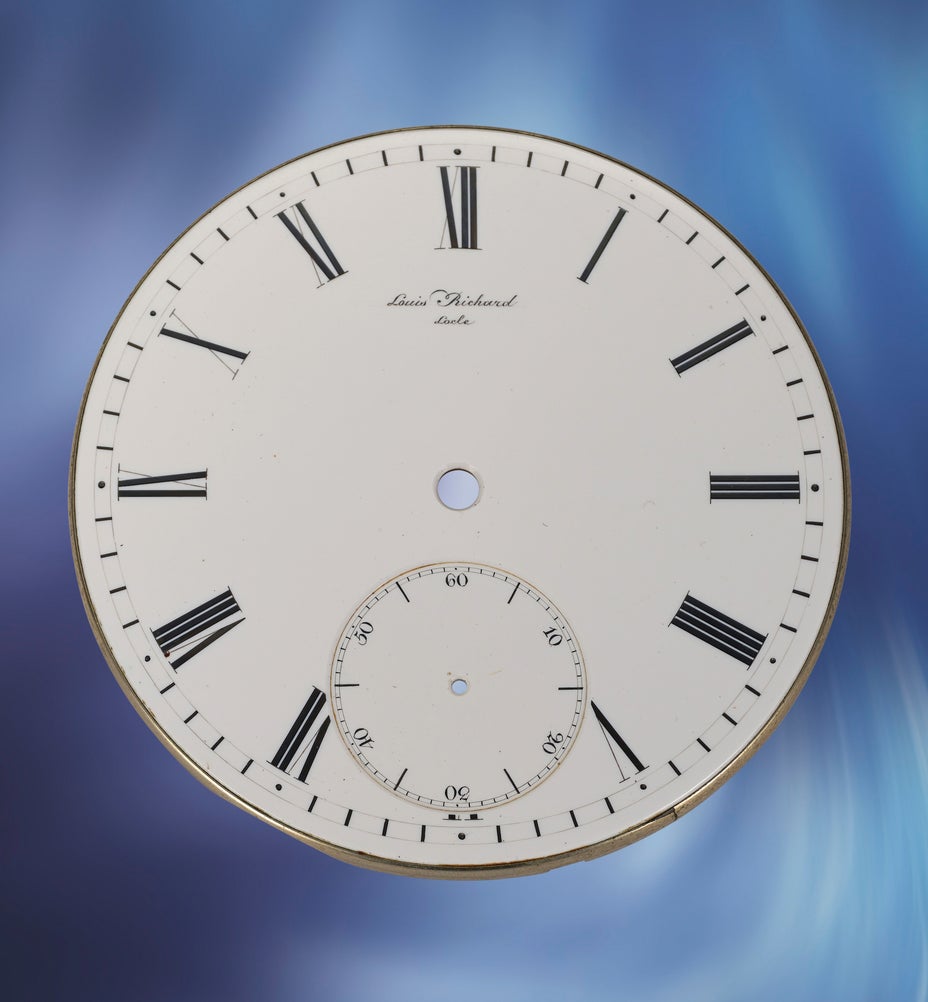
Dial and movement signed. movement further engraved "Invenit et Fecit"
Accessories
Accompanied by key and a detailed report on Louis Richard and his triple detent chronometer and the Revue Française de l'Horlogerie Ancienne n°8
Full-Cataloguing
Good To Know:
- Triple detent tourbillon chronometer
- The only one known in history of watchmaking
Born in Le Locle in 1812, Louis Jean Richard emerged from a distinguished watchmaking family. His first major achievement—a chronometer with free escapement and constant force—earned a gold medal from the Société d’Émulation in 1839. Obsessed with precision, Richard acquired astronomical instruments in Paris to conduct his own celestial observations, regulating his watches by stellar movement. His workshop became akin to an observatory, equipped with an ice chamber and oven to test performance under extreme temperatures.
He exhibited a marine chronometer at the Great Exhibition of 1851 in London’s Crystal Palace, where it was awarded A Prize Medal.
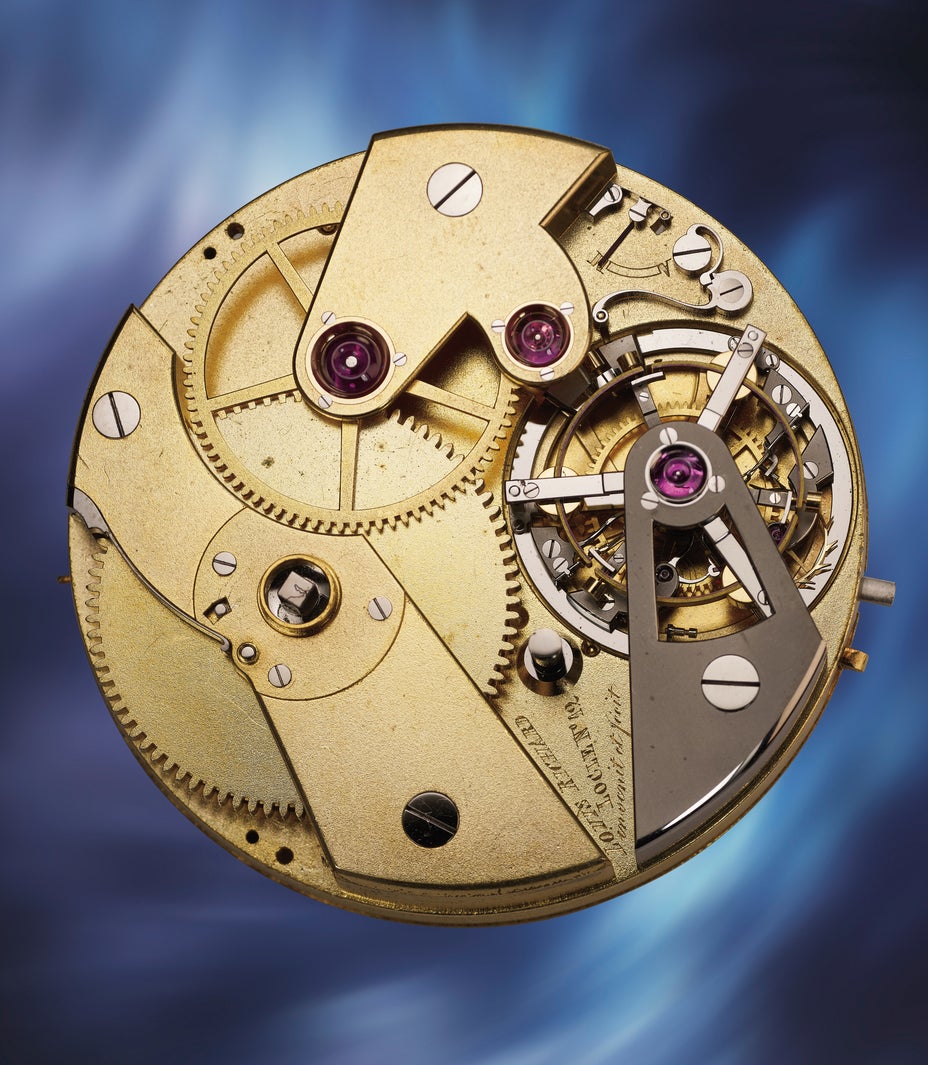
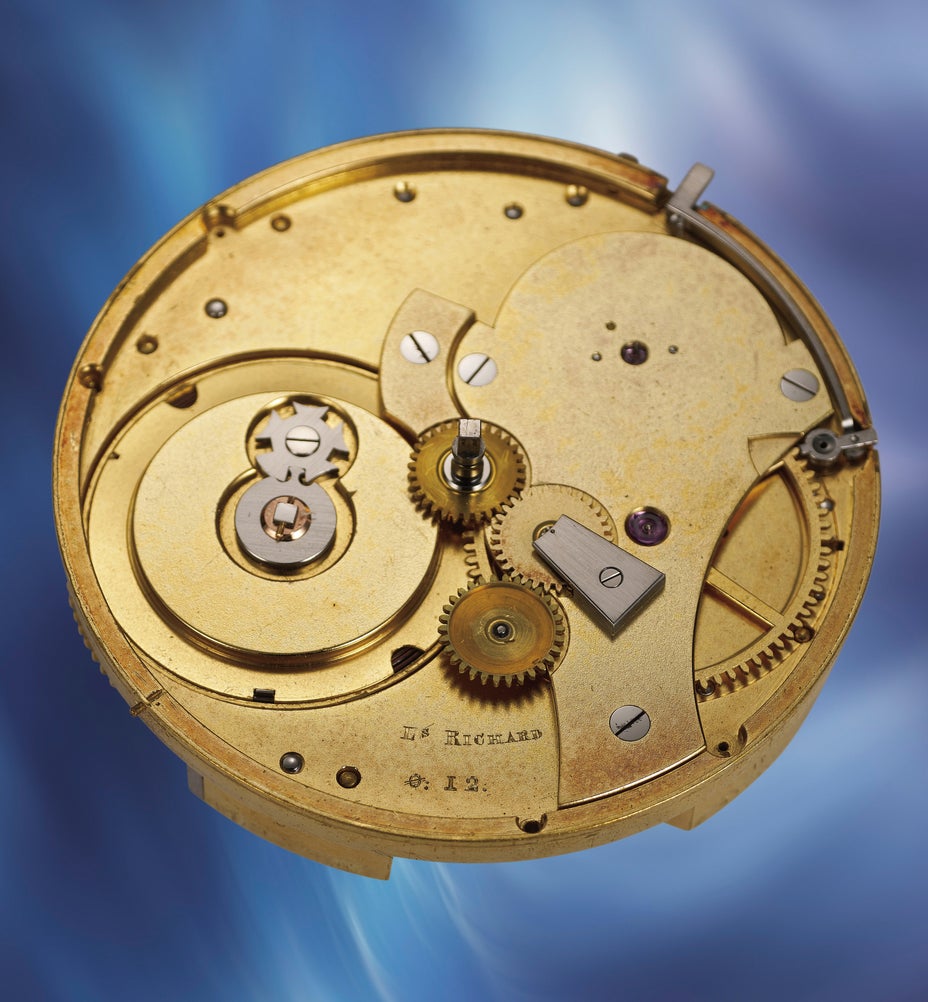
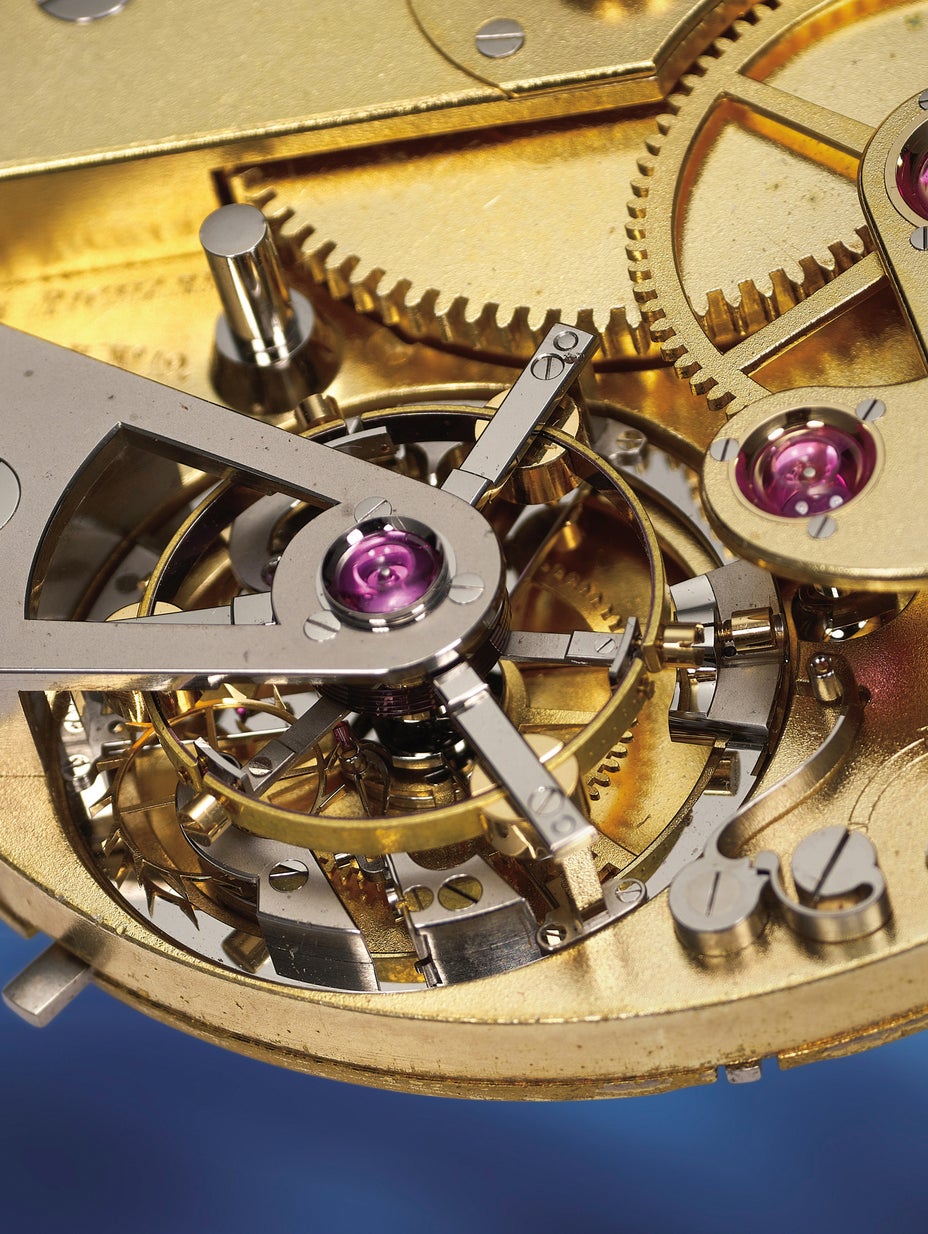
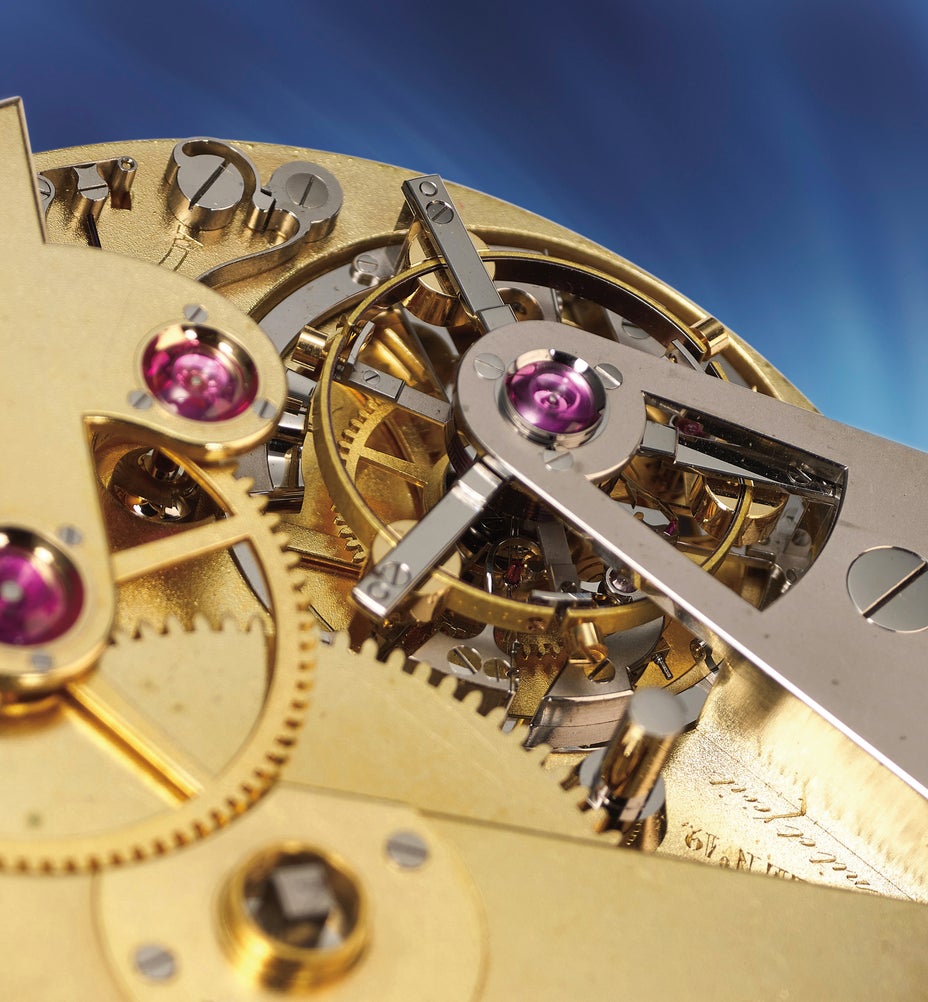
Made at the height of 19th-century chronometric innovation, this exceptional tourbillon with constant force escapement represents the pinnacle of precision watchmaking. The movement features a three-arm bimetallic compensation balance with gold timing screws, free-sprung and fitted with a helical hairspring. The tourbillon carriage—partially polished and partially matte—incorporates Richard’s patented three detents for rest, impulse, and disengagement. A pivoted constant force spiral ensures the regularity of impulse, enhancing isochronism to the highest standard attainable in its era. The matte steel bridge, fourteen large ruby jewels, frosted gilt plates, and polished steel screws attest to the watch’s technical and aesthetic refinement.
Of particular ingenuity, the tourbillon frame is secured by a latch linked to a slide lever positioned between 5 and 6 o’clock beneath the hinged front bezel. An additional lever, marked A–M (Arret-Marche stop and go in French), allows the tooth of the third wheel to be locked, permitting removal of the tourbillon for adjustment without releasing mainspring tension—an extraordinary technical refinement rarely encountered.
This watch is believed to be the only known example combining Richard’s constant force escapement with a tourbillon regulator. A finely finished regulator by Richard, dated 1842, is preserved at the Musée International d’Horlogerie.
Last offered in 1990, the watch was the property of Harlow Shapley, Director of the Harvard College Observatory and Emeritus Professor of Astronomy at Harvard University. Shapley was President of eight national scientific organizations, Honorary Foreign Member of ten national academies, recipient of seventeen honorary degrees, and laureate of numerous distinctions including the Pius XI Prize for Science and Humanity. Author of five books and nearly 500 scientific articles, his celebrated work Of Stars and Men cemented his legacy in modern astronomy.
- Triple detent tourbillon chronometer
- The only one known in history of watchmaking
Born in Le Locle in 1812, Louis Jean Richard emerged from a distinguished watchmaking family. His first major achievement—a chronometer with free escapement and constant force—earned a gold medal from the Société d’Émulation in 1839. Obsessed with precision, Richard acquired astronomical instruments in Paris to conduct his own celestial observations, regulating his watches by stellar movement. His workshop became akin to an observatory, equipped with an ice chamber and oven to test performance under extreme temperatures.
He exhibited a marine chronometer at the Great Exhibition of 1851 in London’s Crystal Palace, where it was awarded A Prize Medal.
Made at the height of 19th-century chronometric innovation, this exceptional tourbillon with constant force escapement represents the pinnacle of precision watchmaking. The movement features a three-arm bimetallic compensation balance with gold timing screws, free-sprung and fitted with a helical hairspring. The tourbillon carriage—partially polished and partially matte—incorporates Richard’s patented three detents for rest, impulse, and disengagement. A pivoted constant force spiral ensures the regularity of impulse, enhancing isochronism to the highest standard attainable in its era. The matte steel bridge, fourteen large ruby jewels, frosted gilt plates, and polished steel screws attest to the watch’s technical and aesthetic refinement.
Of particular ingenuity, the tourbillon frame is secured by a latch linked to a slide lever positioned between 5 and 6 o’clock beneath the hinged front bezel. An additional lever, marked A–M (Arret-Marche stop and go in French), allows the tooth of the third wheel to be locked, permitting removal of the tourbillon for adjustment without releasing mainspring tension—an extraordinary technical refinement rarely encountered.
This watch is believed to be the only known example combining Richard’s constant force escapement with a tourbillon regulator. A finely finished regulator by Richard, dated 1842, is preserved at the Musée International d’Horlogerie.
Last offered in 1990, the watch was the property of Harlow Shapley, Director of the Harvard College Observatory and Emeritus Professor of Astronomy at Harvard University. Shapley was President of eight national scientific organizations, Honorary Foreign Member of ten national academies, recipient of seventeen honorary degrees, and laureate of numerous distinctions including the Pius XI Prize for Science and Humanity. Author of five books and nearly 500 scientific articles, his celebrated work Of Stars and Men cemented his legacy in modern astronomy.