1015
Patek Philippe
Ref. 4239/1
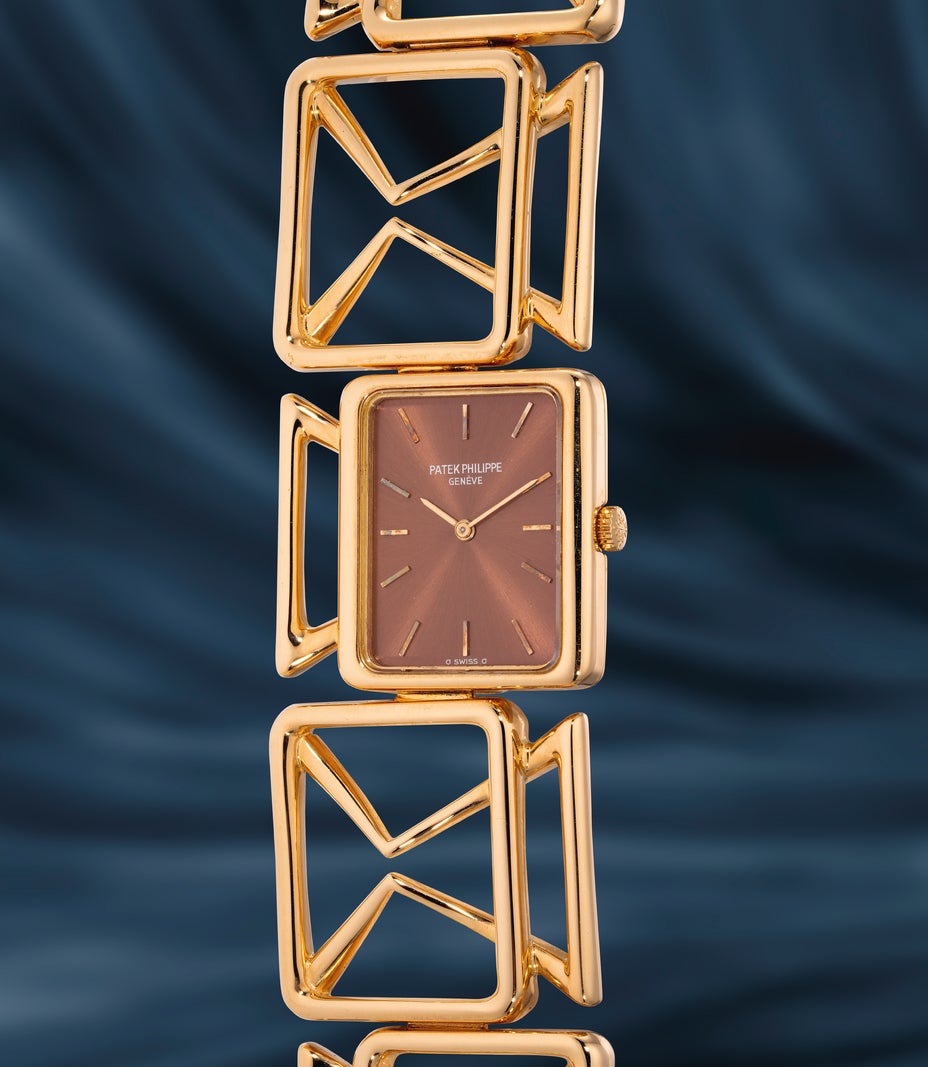
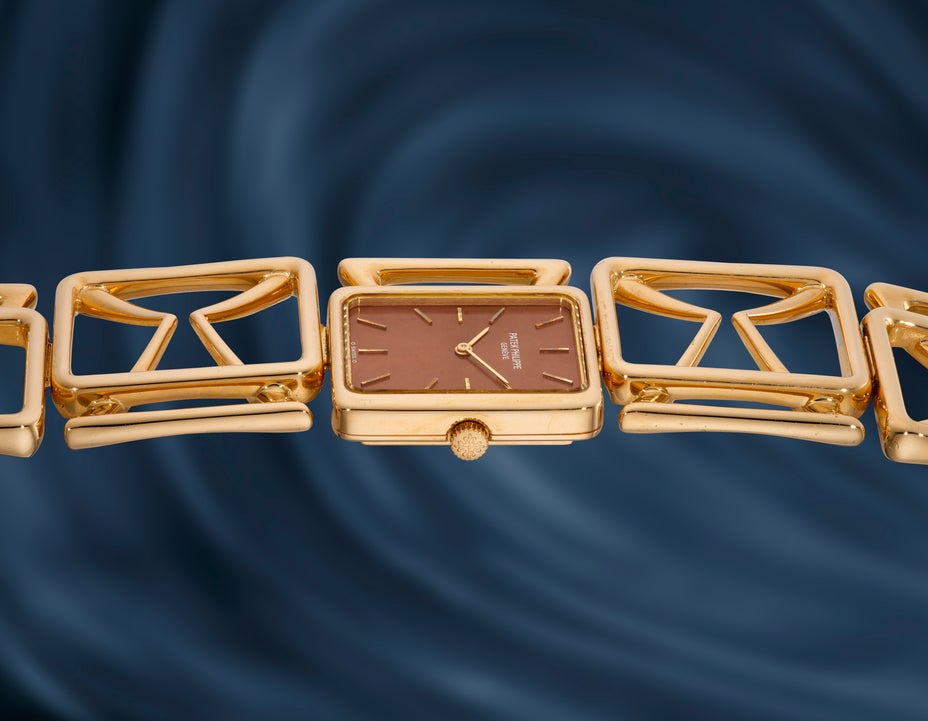
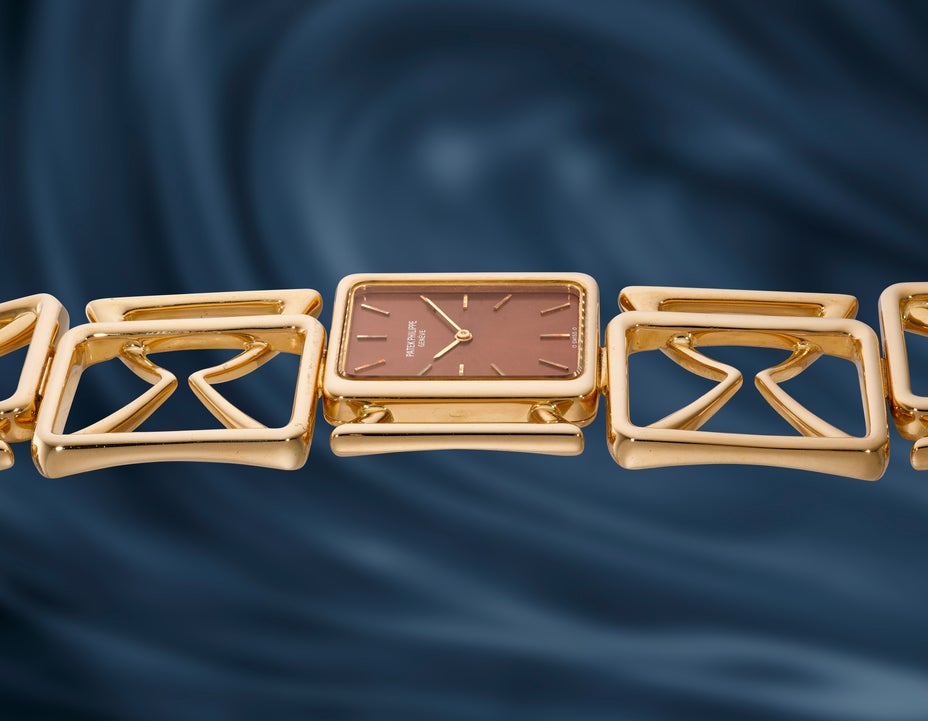
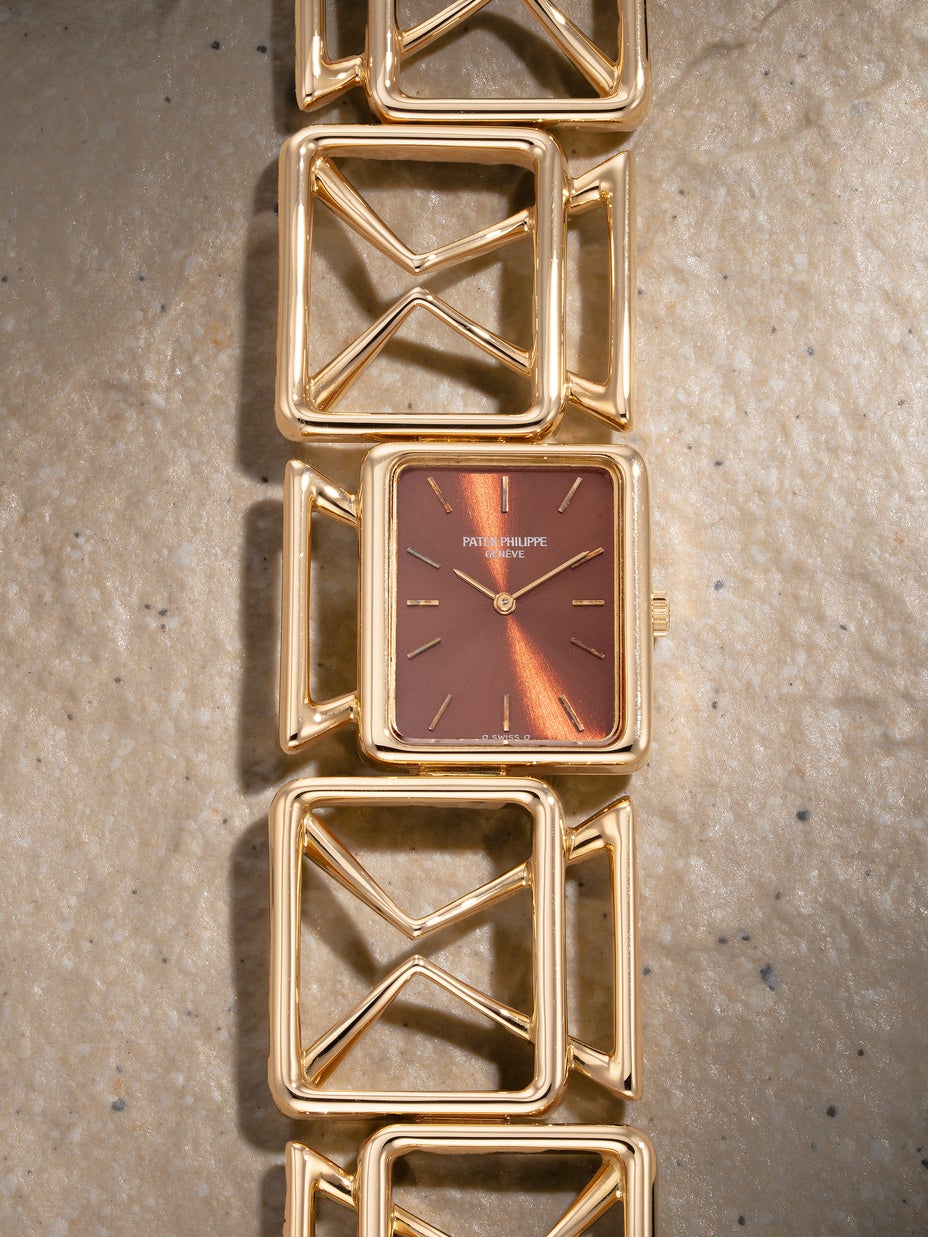
A very rare, well-preserved and attractive yellow gold square-shaped lady’s wristwatch with Vermeer dial, matching unusual yellow gold bracelet and Certificate of Origin
Full-Cataloguing
- Sunburst Vermeer dial and indexes with patina
- Unusual yellow gold bracelet forms a seamless look with the case
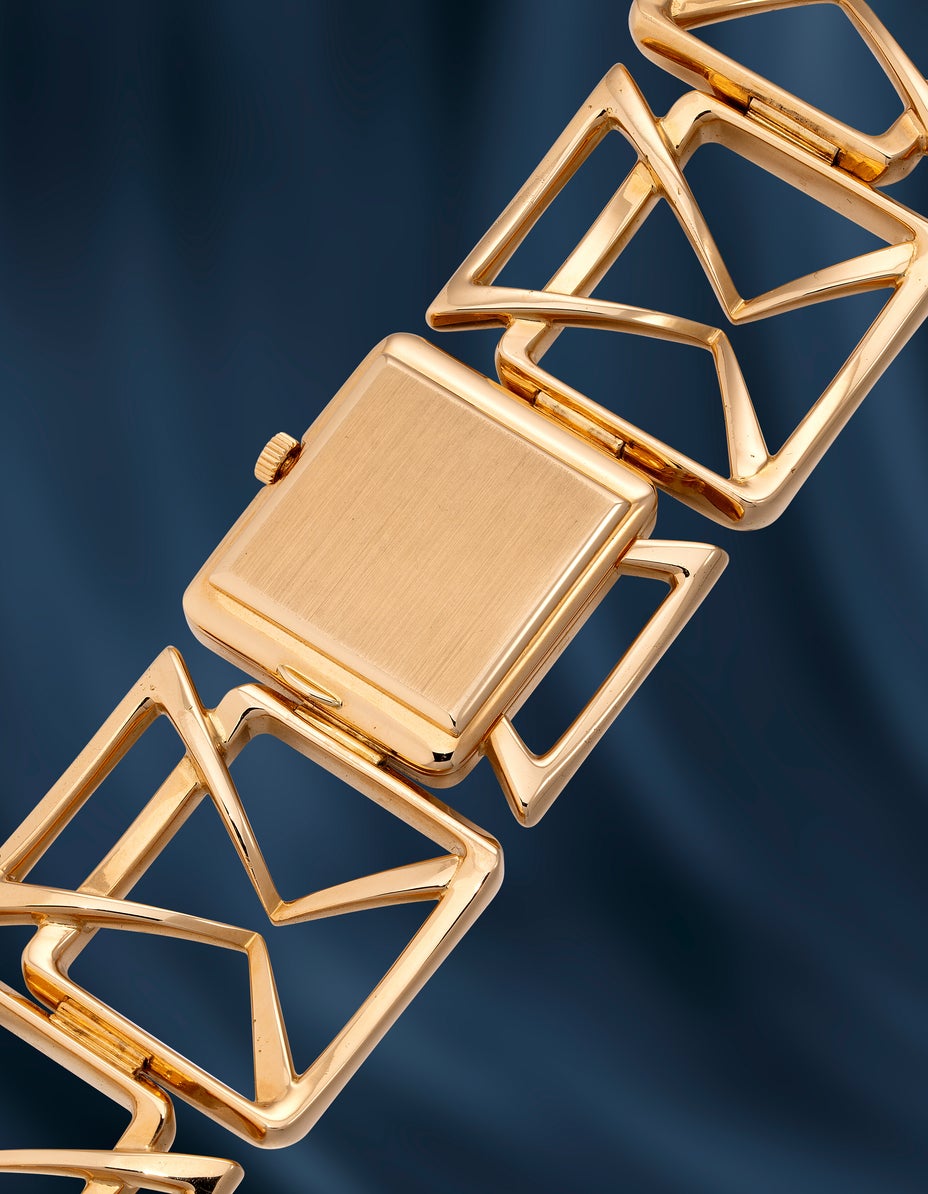
- Case made by renowned case maker George Croisier
- Ultra thin calibre 16-250 movement
The present ref. 4239/1 is fitted with a Vermeer dial, a sunburst dial in brownish and burgundy colour, which is typically found in Patek Philippe watches from the 70s and 80s. In certain angles, a hue of purple might even be seen. For a watch of such age, the hours stick indexes have developed a slight brownish patina, which pairs well with the overall gold appearance of the watch. The idea of “continuous design”, where the case and bracelet form a seamless visual unit, was a symbolic design of the period, and this watch has an unusual looking bracelet of 18K yellow gold frames linked together. By inspecting the caseback, the Case Maker Key Number 5 can be seen, indicating the case of this watch was made by the renowned George Croisier, who made the cases of three out of four legendary steel Patek Philippe ref. 1518. Patek Philippe experimented with ultra-thin movements in the 1970s, much like the Ellipse housing the calibre 240, the current ref. 4239/1 adopted one of the smallest movements the calibre 16-250.
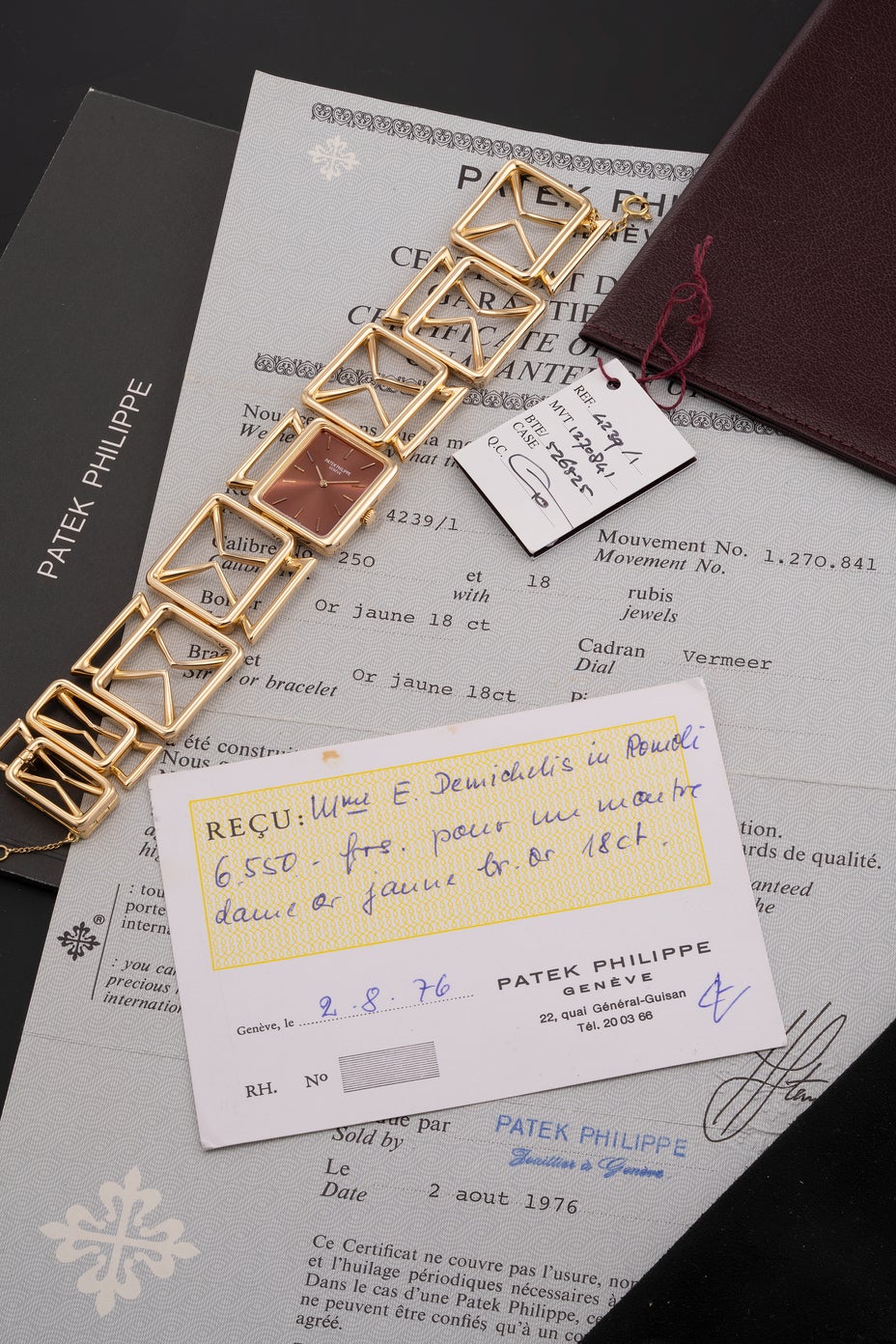
This lot comes with well-preserved accessories, including the Patek Philippe Certificate of Identity and Guarantee of Origin, the original receipt and a tag showing the watch was serviced by the atelier. A perfect merge of horology and jewellery, this watch represents the great attempts to expand their design perspectives into something new and maybe unconventional. It is, without doubt, a prized collection for watch connoisseurs that appreciate remarkable workmanship in watchmaking and craftsmanship in jewellery.
Patek Philippe
Swiss | 1839Since its founding in 1839, this famous Geneva-based firm has been surprising its clientele with superbly crafted timepieces fitted with watchmaking's most prestigious complications. Traditional and conservative designs are found across Patek Philippe's watches made throughout their history — the utmost in understated elegance.
Well-known for the Graves Supercomplication — a highly complicated pocket watch that was the world’s most complicated watch for 50 years — this family-owned brand has earned a reputation of excellence around the world. Patek's complicated vintage watches hold the highest number of world records for results achieved at auction compared with any other brand. For collectors, key models include the reference 1518, the world's first serially produced perpetual calendar chronograph, and its successor, the reference 2499. Other famous models include perpetual calendars such as the ref. 1526, ref. 3448 and 3450, chronographs such as the reference 130, 530 and 1463, as well as reference 1436 and 1563 split seconds chronographs. Patek is also well-known for their classically styled, time-only "Calatrava" dress watches, and the "Nautilus," an iconic luxury sports watch first introduced in 1976 as the reference 3700 that is still in production today.