138
Paul Ditisheim
"Minute Detent Escapement Tourbillon"
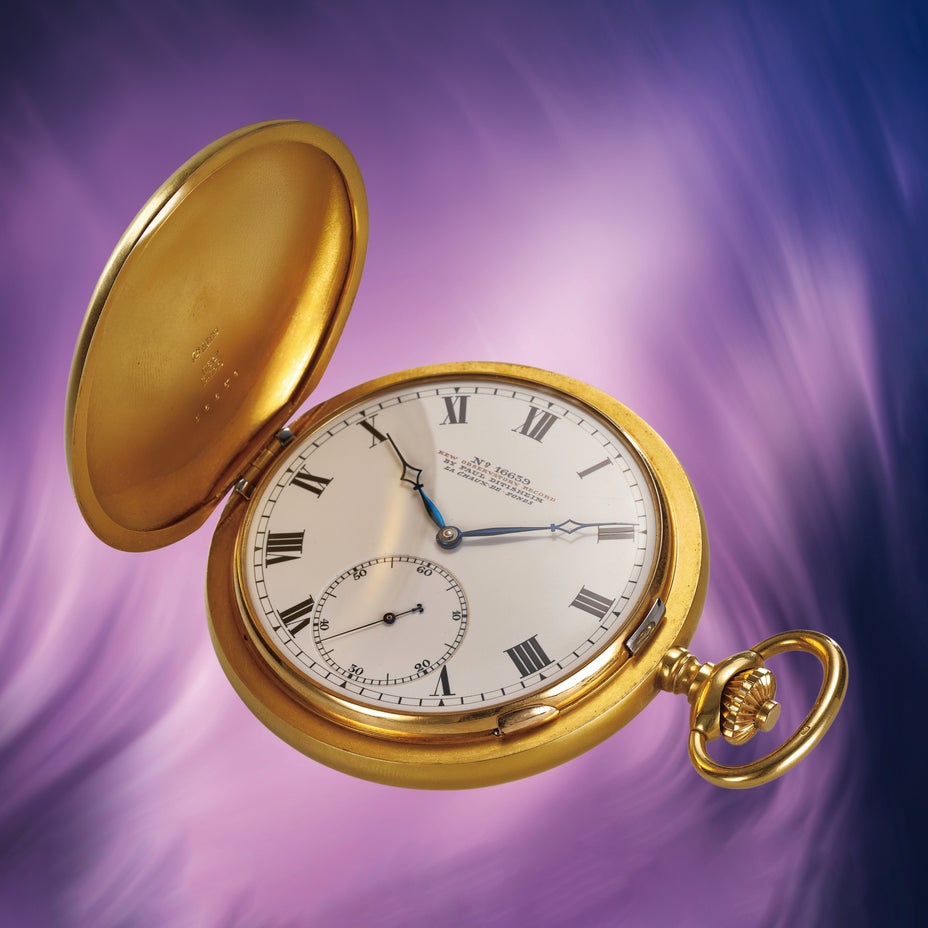
An impressive yellow gold hunter cased minute detent escapement tourbillon with Guillaume balance, record holder of Kew Observatory
Estimate
CHF60,000–120,000
€65,200–130,000
$76,200–152,000
Sold For
CHF1,270,000
Manufacturer
Paul Ditisheim
Year
1903
Movement No
16639
Case No
16639
Model Name
"Minute Detent Escapement Tourbillon"
Material
18k yellow gold
Calibre
Manual, jeweled
Dimensions
56mm diameter
Signed
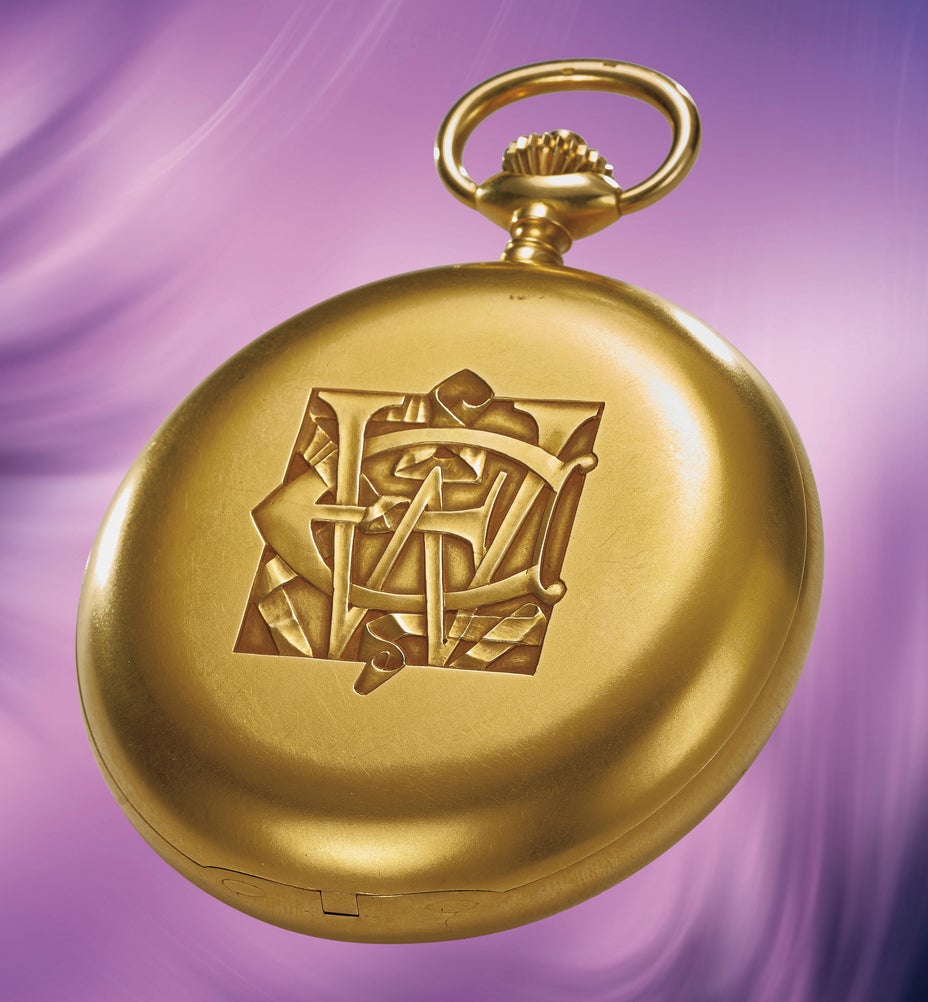
Case, dial and movement signed, casemaker stamp PD (Paul Ditisheim) and GS (George Stockwell) and date letter for 1909
Accessories
Accompanied by copy pages of Horological Journal March 1904 with Performance of top 50 watches on 1903 and description of the present piece
Full-Cataloguing
Good To Know:
- Tourbillon with detent escapement and Guillaume balance
- One of only 8 tourbillons made by Ditisheim
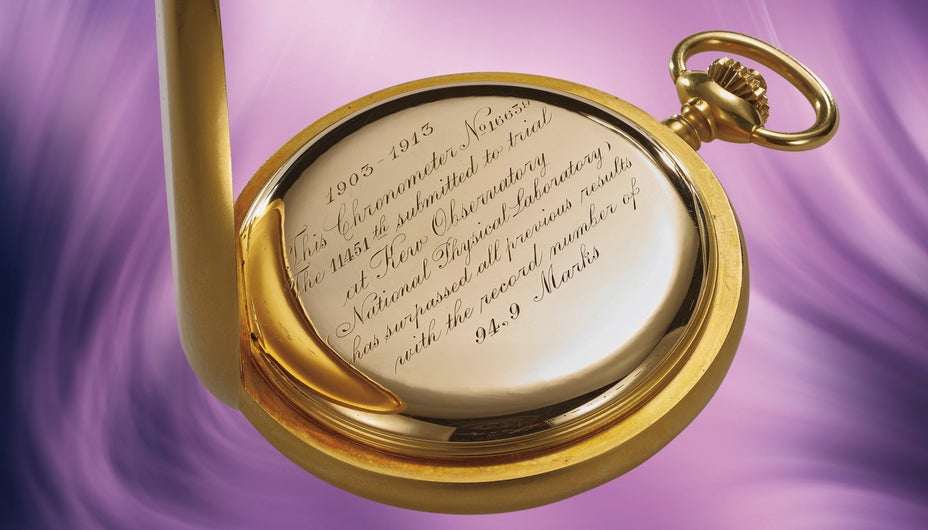
- The present example is a record setting piece, surpassing all previous results with the record number of 94.9 marks at Kew Observatory
Renowned Swiss watchmaker Paul Ditisheim (1868-1945) revolutionized precision timekeeping through his chronometer research and innovations like the affix balance. By 1903, his watches were honored by the Observatories of Kew and Neuchâtel. In 1912, he achieved the world chronometric record at the Royal Kew Observatory. Ditisheim's contributions to horology were immense. In 1892, he established his own manufactory in La Chaux-de-Fonds. Ditisheim tirelessly researched and published works on the effects of atmospheric pressure, temperature, and magnetism on chronometric performance. His pioneering improvements in chronometer design included overcoil springs, Guillaume balances, and pivoted detents. Ditisheim's meticulous refinements propelled timekeeping to new heights, as proven by his record-setting accuracy prizes.
Ditisheim produced very few tourbillons, with noted horology historian Reinhard Meis documenting merely 8 examples.
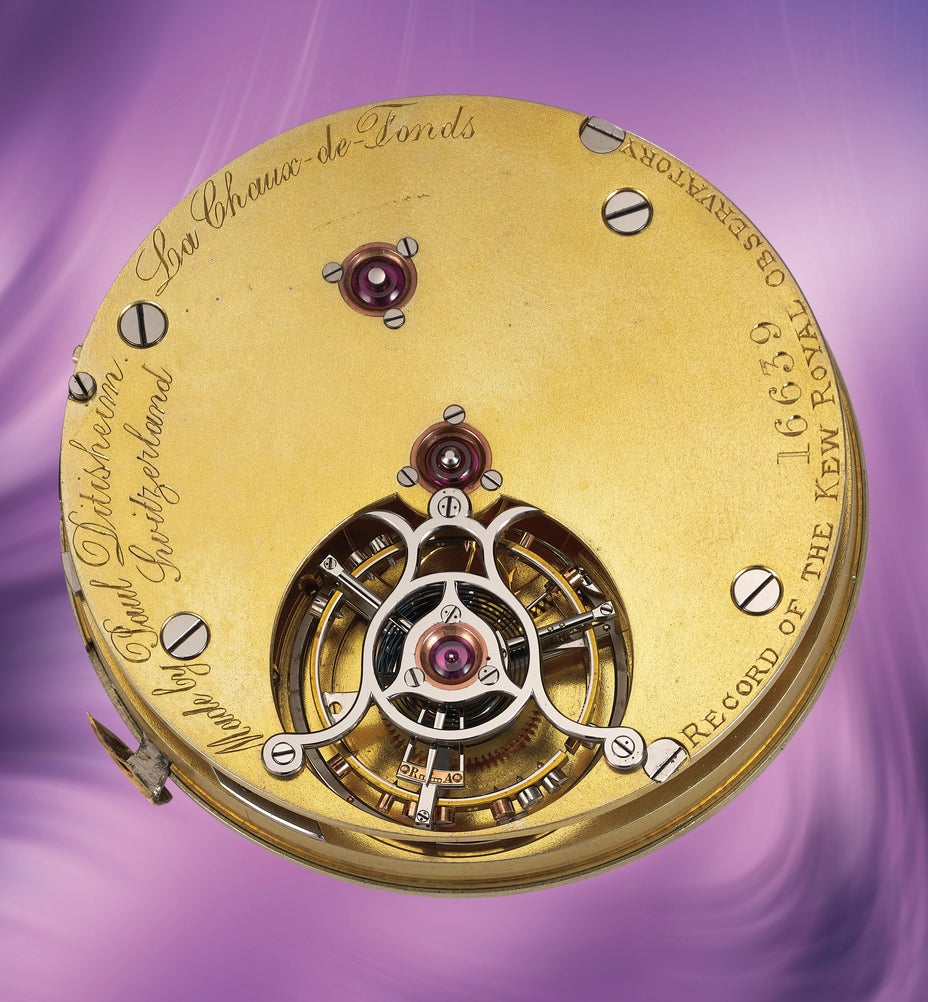
The present tourbillon from 1903 is part of this elite and rare circle, it features a 18k, three quarter plate movement (more often seen in German and English horology than Swiss) one minute tourbillon with Earnshaw-type spring detent escapement, Guillaume balance with gold and platinum timing screws, the carriage is possibly by Albert Pellaton Favre.
Impressively the present tourbillon was one of Ditisheim’s most accurate masterpieces as testified by the engraving on the movement “This chronometer No. 16639, the 11451th submitted to trial at Kew Observatory (National Physical Laboratory) has surpassed all previous results with the record number of 94.9 marks.
- Tourbillon with detent escapement and Guillaume balance
- One of only 8 tourbillons made by Ditisheim
- The present example is a record setting piece, surpassing all previous results with the record number of 94.9 marks at Kew Observatory
Renowned Swiss watchmaker Paul Ditisheim (1868-1945) revolutionized precision timekeeping through his chronometer research and innovations like the affix balance. By 1903, his watches were honored by the Observatories of Kew and Neuchâtel. In 1912, he achieved the world chronometric record at the Royal Kew Observatory. Ditisheim's contributions to horology were immense. In 1892, he established his own manufactory in La Chaux-de-Fonds. Ditisheim tirelessly researched and published works on the effects of atmospheric pressure, temperature, and magnetism on chronometric performance. His pioneering improvements in chronometer design included overcoil springs, Guillaume balances, and pivoted detents. Ditisheim's meticulous refinements propelled timekeeping to new heights, as proven by his record-setting accuracy prizes.
Ditisheim produced very few tourbillons, with noted horology historian Reinhard Meis documenting merely 8 examples.
The present tourbillon from 1903 is part of this elite and rare circle, it features a 18k, three quarter plate movement (more often seen in German and English horology than Swiss) one minute tourbillon with Earnshaw-type spring detent escapement, Guillaume balance with gold and platinum timing screws, the carriage is possibly by Albert Pellaton Favre.
Impressively the present tourbillon was one of Ditisheim’s most accurate masterpieces as testified by the engraving on the movement “This chronometer No. 16639, the 11451th submitted to trial at Kew Observatory (National Physical Laboratory) has surpassed all previous results with the record number of 94.9 marks.