131
Robert Pennington & Richard Pendleton
"One Day Marine Chronometer in the form of a Mudge Constant Force Timekeeper"
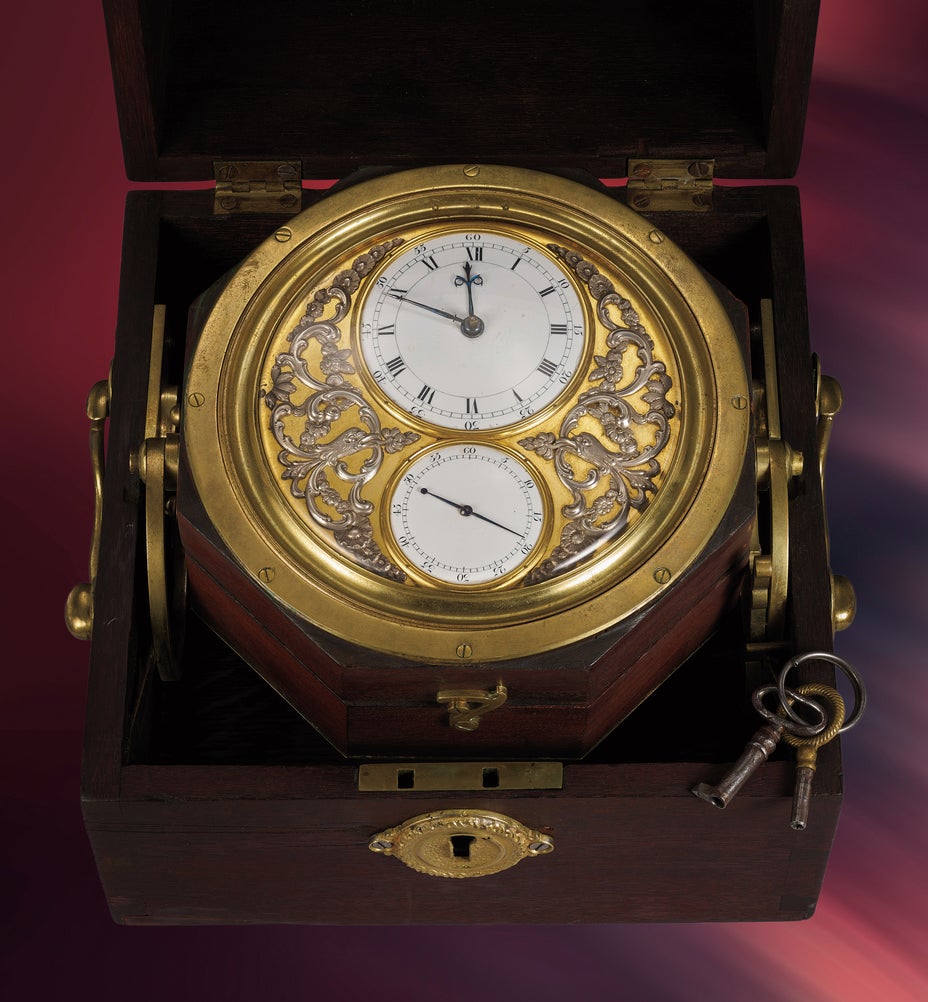
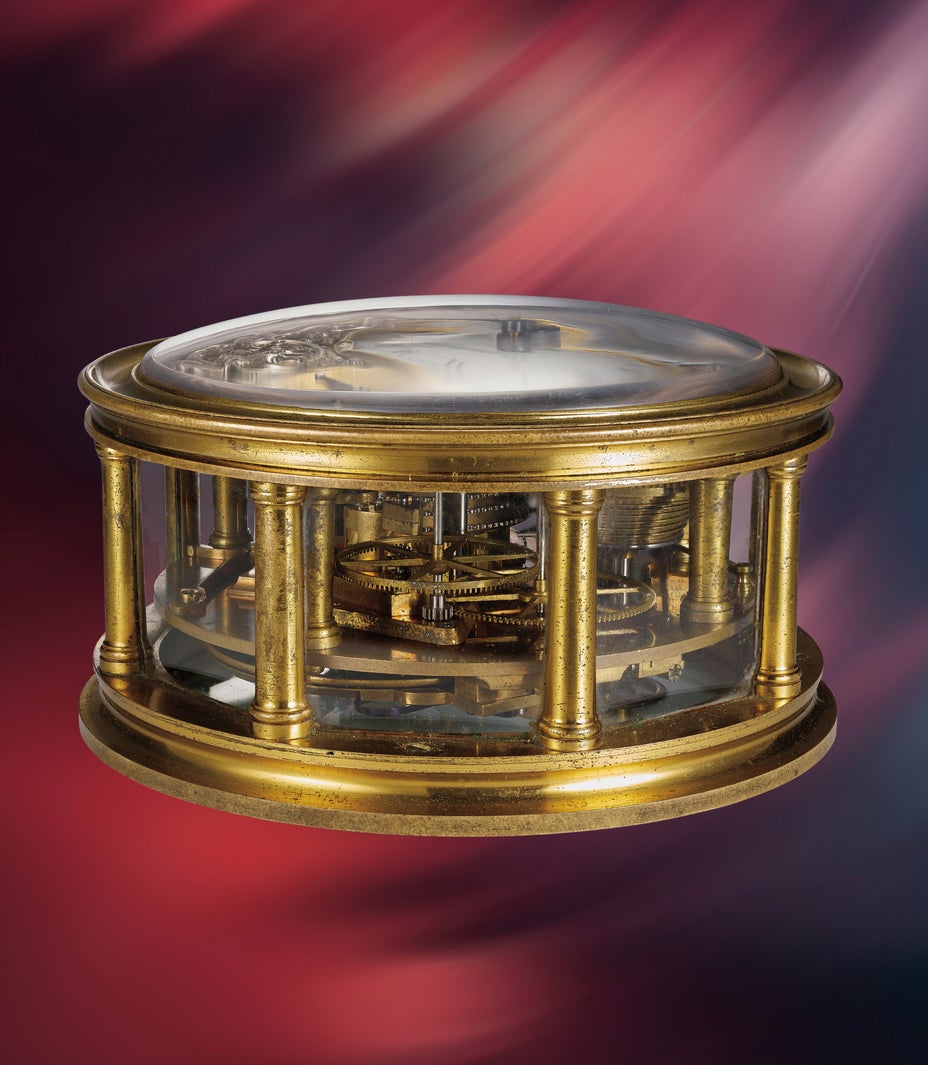
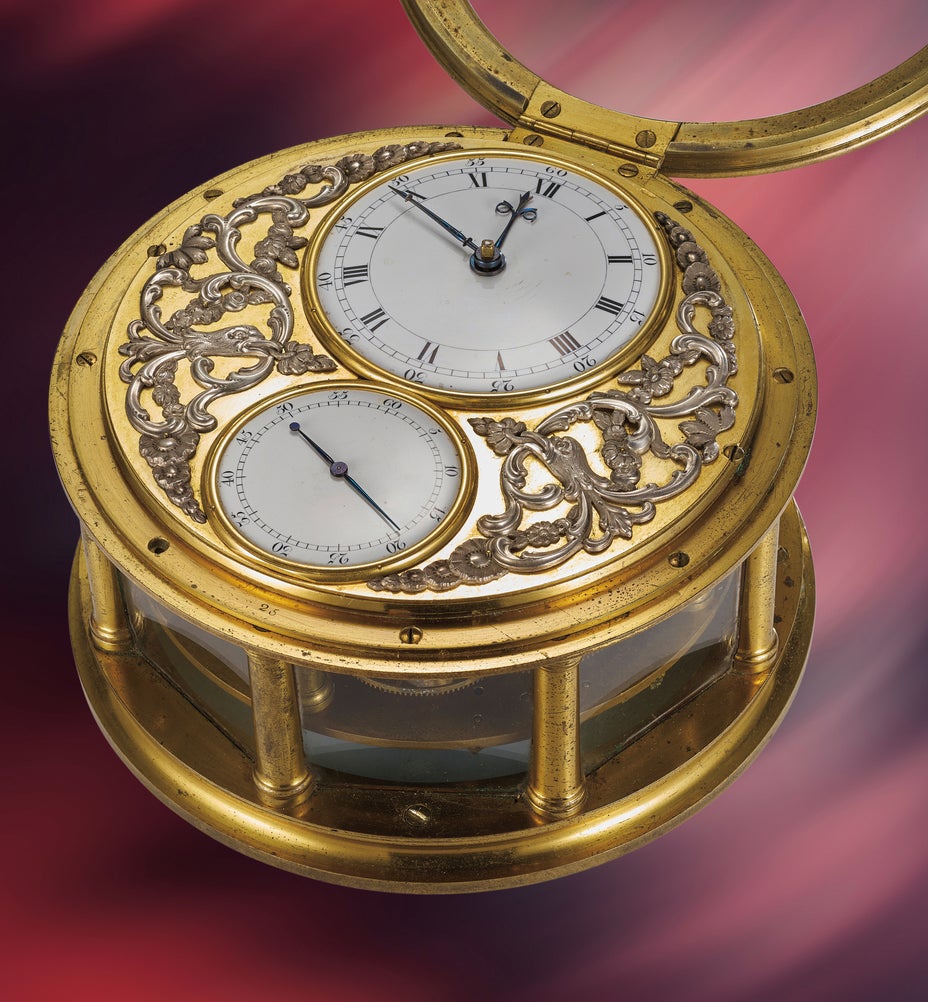
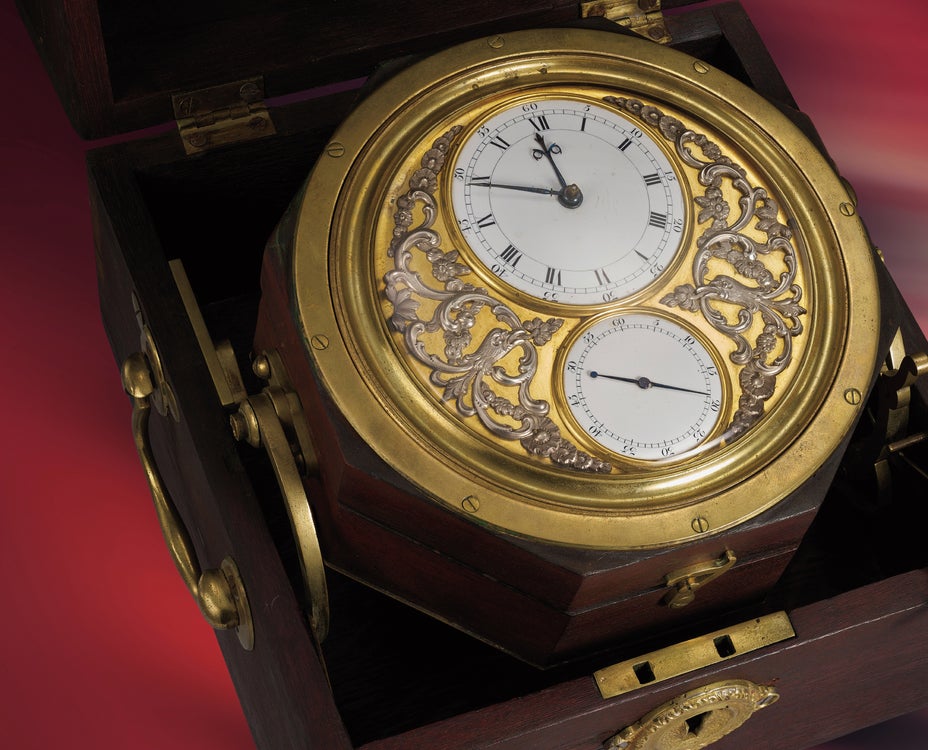
A historically important gilt and wood one day marine chronometer in the form of a Mudge Constant Force Timekeeper
Estimate
CHF80,000–160,000
€87,000–174,000
$102,000–203,000
Sold For
CHF203,200
Manufacturer
Robert Pennington & Richard Pendleton
Year
Circa 1797
Movement No
25
Model Name
"One Day Marine Chronometer in the form of a Mudge Constant Force Timekeeper"
Material
Brass and mahogany
Calibre
Manual, Constant Force, One Day
Dimensions
122mm diameter with original 185mm Square Box
Signed
Case and movement signed, case with inscriptions
Accessories
Accompanied by fitted wooden case with two keys.
Full-Cataloguing
Good To Know:
- Constant force one day marine chronometer
- Based on the works of Thomas Mudge Sr.
- 4th example known in unaltered condition
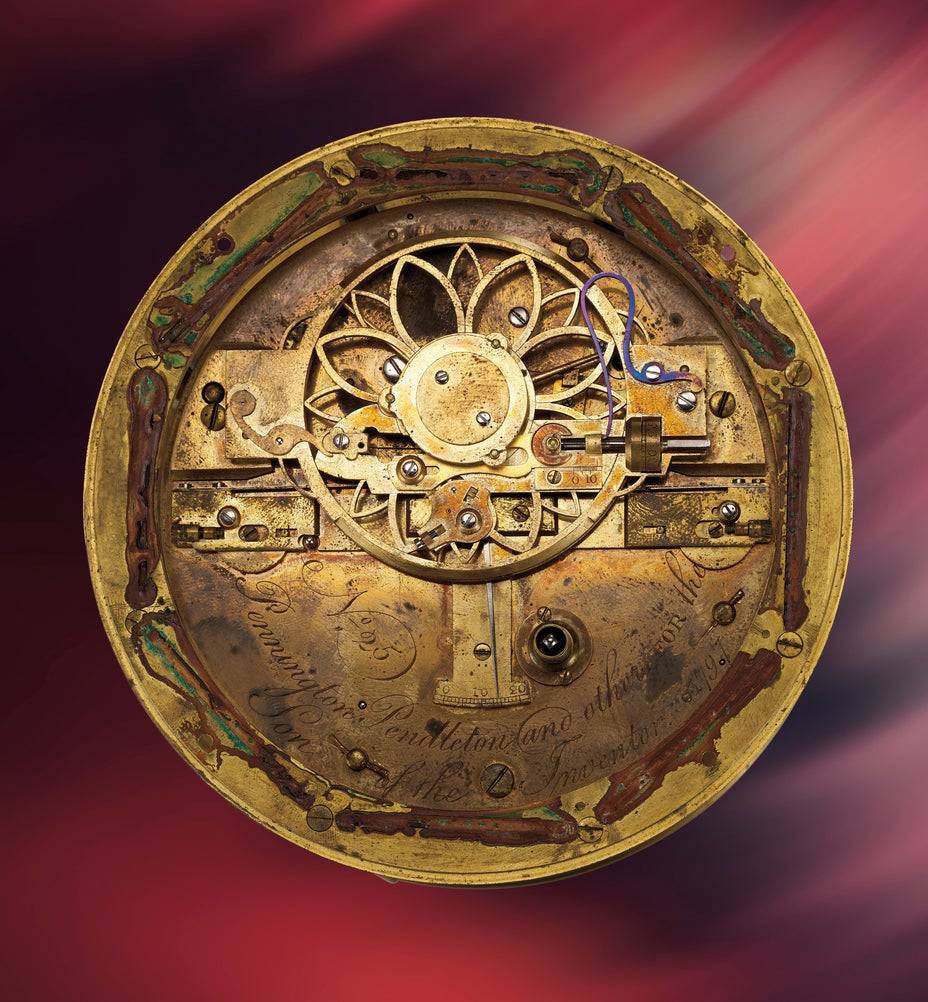
The present Timekeeper N° 25 is more than a chronometer but the tribute to a father from his son.
It is a rare constant force one-day marine timekeeper, from the short-lived manufactory established by Thomas Mudge Jr. to perpetuate the horological legacy of his father, Thomas Mudge, inventor of the detached lever escapement.
Thomas Mudge Sr. completed his first marine timekeeper in 1774 as a contender for the Board of Longitude prize. Two further examples—the celebrated “Green” and “Blue” timekeepers—followed. Despite their technical merit, they failed to meet the stringent requirements of the Longitude Act, and no reward was granted.
Convinced of his father’s superiority in chronometric science, Mudge Jr.—a lawyer by training—resolved in 1794 to establish a workshop with Howells, Pennington, and Pendleton to produce faithful copies of the elder Mudge’s constant force timekeepers. One of Mudge Sr.’s original instruments was provided for study to ensure absolute fidelity in reproduction. Although advanced in age and infirm, Mudge Sr. was consulted during the early stages; he died in 1794, shortly after completion of the first copy.
Mudge Jr. ambitiously projected a production of twelve timekeepers per annum. Yet the undertaking proved arduous: by the end of the first year only two examples had been completed. Mounting production costs and substantial overheads threatened the enterprise. Seeking financial security, Mudge petitioned the government to continue the £120 annual stipend his father had received as Watchmaker to the King and applied for naval contracts.
An initial order for two timekeepers was secured. In 1796, Mudge proposed supplying twelve; the Navy countered with eighteen. However, the agreement was subsequently rescinded on grounds of excessive cost. With one-day and eight-day models priced between 150 and 180 guineas—substantially higher than the 60 guineas charged by John Arnold—the Admiralty deemed the expense unjustifiable.
Part of this higher cost stemmed from Mudge Jr.’s insistence on faithfully replicating his father’s original designs, including technically useless yet elegant silver dial surrounds.
By 1798, the venture was abandoned for lack of funds. A total of twenty-six copies had been completed. Of these, only ten examples were accounted for. The rediscovery and sale of the present No. 25 in 1992 raised the census to eleven known survivors. It is the fourth example preserved in unaltered condition.
No. 25 is among the finest one-day timekeepers , the movement remains unadulterated and in working order. Of particular note is its rare use of trunnions—functionally related to gimbals yet distinct in design—allowing the case to be reversed for winding. This refined and practical feature underscores the technical ingenuity embodied within the series.
- Constant force one day marine chronometer
- Based on the works of Thomas Mudge Sr.
- 4th example known in unaltered condition
The present Timekeeper N° 25 is more than a chronometer but the tribute to a father from his son.
It is a rare constant force one-day marine timekeeper, from the short-lived manufactory established by Thomas Mudge Jr. to perpetuate the horological legacy of his father, Thomas Mudge, inventor of the detached lever escapement.
Thomas Mudge Sr. completed his first marine timekeeper in 1774 as a contender for the Board of Longitude prize. Two further examples—the celebrated “Green” and “Blue” timekeepers—followed. Despite their technical merit, they failed to meet the stringent requirements of the Longitude Act, and no reward was granted.
Convinced of his father’s superiority in chronometric science, Mudge Jr.—a lawyer by training—resolved in 1794 to establish a workshop with Howells, Pennington, and Pendleton to produce faithful copies of the elder Mudge’s constant force timekeepers. One of Mudge Sr.’s original instruments was provided for study to ensure absolute fidelity in reproduction. Although advanced in age and infirm, Mudge Sr. was consulted during the early stages; he died in 1794, shortly after completion of the first copy.
Mudge Jr. ambitiously projected a production of twelve timekeepers per annum. Yet the undertaking proved arduous: by the end of the first year only two examples had been completed. Mounting production costs and substantial overheads threatened the enterprise. Seeking financial security, Mudge petitioned the government to continue the £120 annual stipend his father had received as Watchmaker to the King and applied for naval contracts.
An initial order for two timekeepers was secured. In 1796, Mudge proposed supplying twelve; the Navy countered with eighteen. However, the agreement was subsequently rescinded on grounds of excessive cost. With one-day and eight-day models priced between 150 and 180 guineas—substantially higher than the 60 guineas charged by John Arnold—the Admiralty deemed the expense unjustifiable.
Part of this higher cost stemmed from Mudge Jr.’s insistence on faithfully replicating his father’s original designs, including technically useless yet elegant silver dial surrounds.
By 1798, the venture was abandoned for lack of funds. A total of twenty-six copies had been completed. Of these, only ten examples were accounted for. The rediscovery and sale of the present No. 25 in 1992 raised the census to eleven known survivors. It is the fourth example preserved in unaltered condition.
No. 25 is among the finest one-day timekeepers , the movement remains unadulterated and in working order. Of particular note is its rare use of trunnions—functionally related to gimbals yet distinct in design—allowing the case to be reversed for winding. This refined and practical feature underscores the technical ingenuity embodied within the series.