232
Rolex
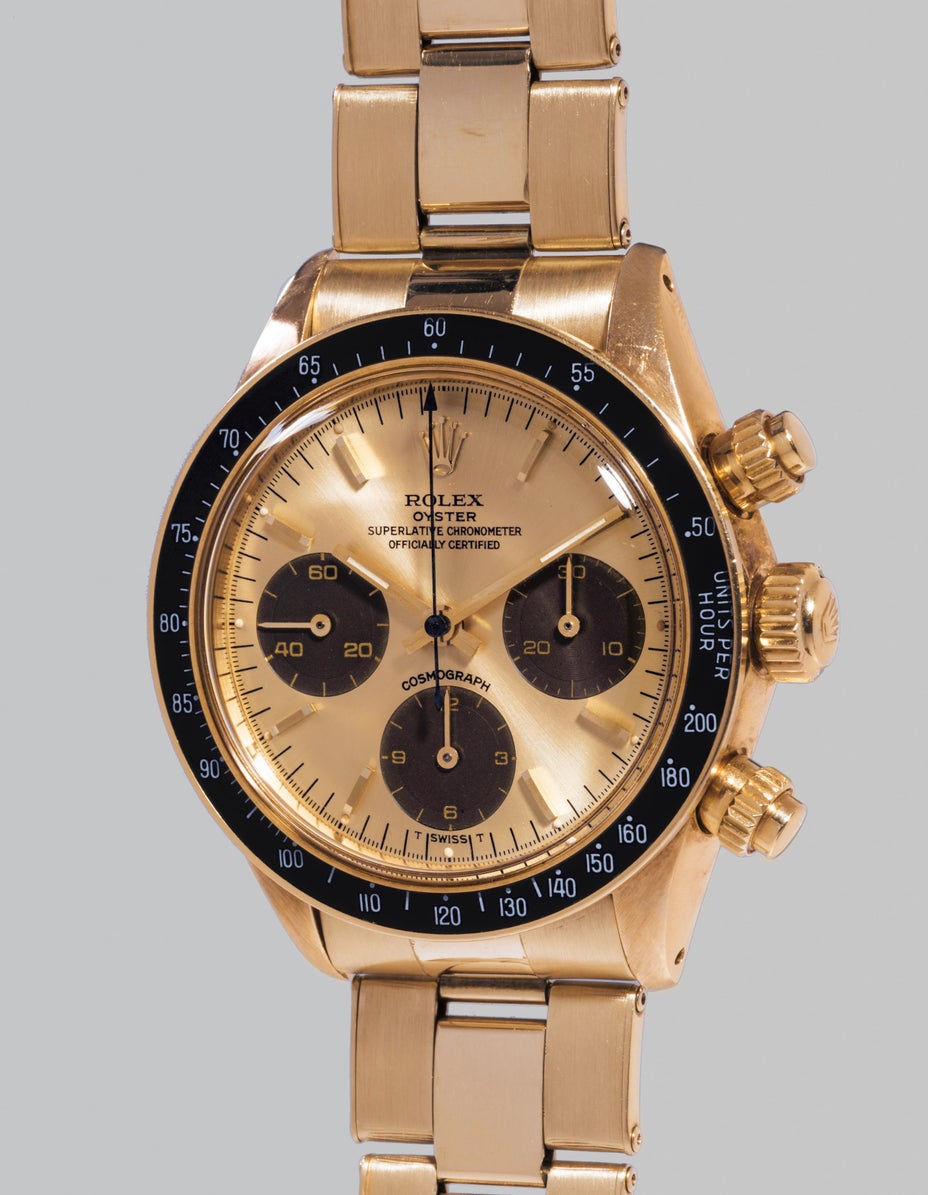
Ref. 6265, stamped 6263 inside the caseback
Oyster Cosmograph
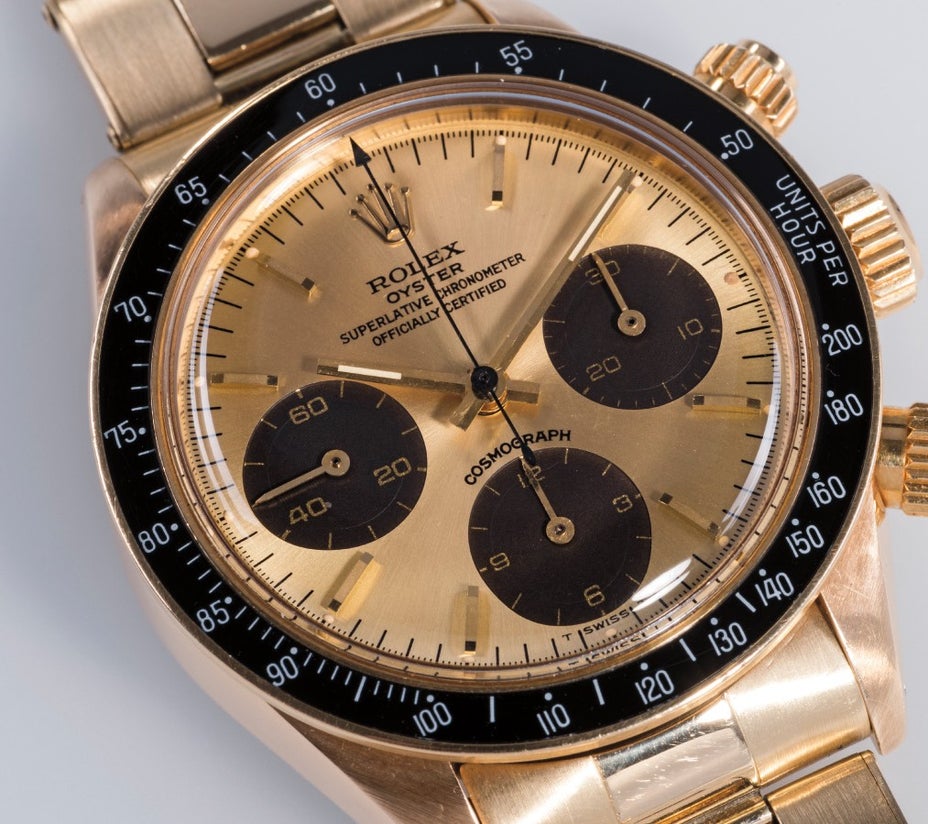
A very rare and attractive yellow gold chronograph wristwatch with champagne dial, "tropical" subsidiary registers and bracelet
Full-Cataloguing
The present watch dates to 1978 and is a beautiful example of this iconic wristwatch. The gold colored dial is enhanced by the “tropical” subsidiary dials, which have aged beautifully, uniformly reflecting a subtle chocolate brown tone. The “T-SWISS-T” designation at the lower edge of the dial by the 6 o’clock indicates the use of tritium for the hands and luminous hour markers, which have aged to a warm and pleasing cream-colored tone.
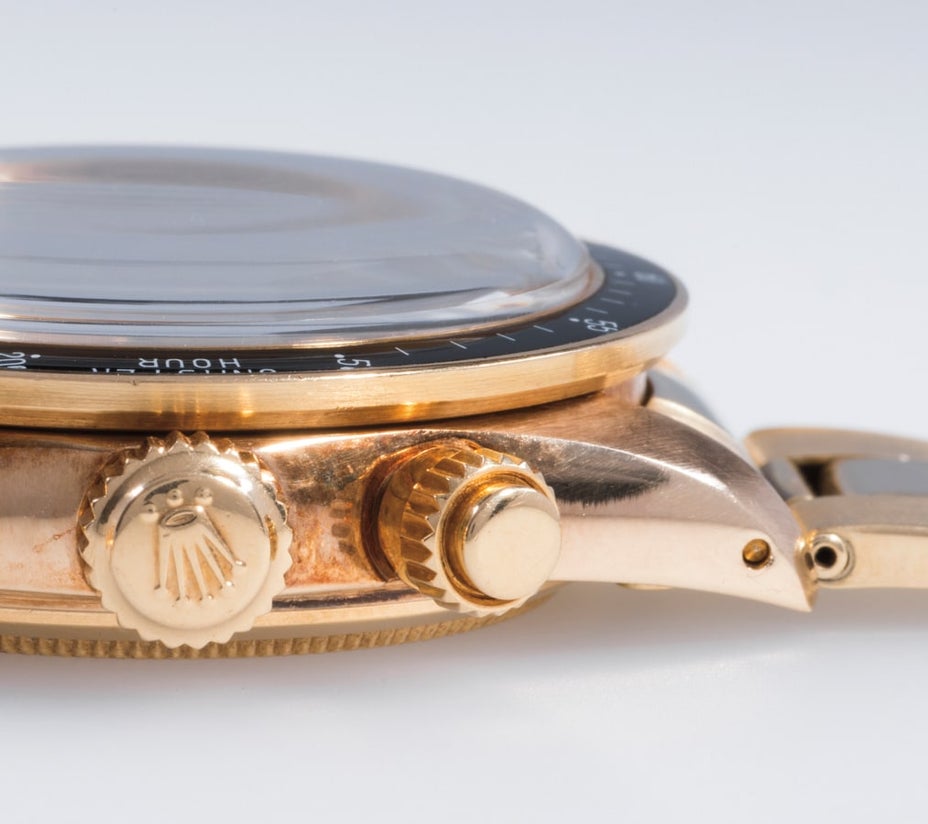
Adding to its exclusivity, this rare 6265 Oyster Cosmograph is in 14-karat gold, which was offered only in the North American market. Furthermore the typical metal bezel found on the 6265, had been replaced likely at the time of its original sale with the acrylic tachymeter bezel found on the 6263 model. The bezels for both references were easily interchangeable and fit both references, and its appearance on this example could have been the conscious decision of its new owner to make the watch look less sporty.
This elegant chronograph is preserved in exceptional condition, showing few traces of careful wear over its lifetime. The rarity of the timepiece is highlighted by the 14k gold case, tropical subsidiary dials, and original 14k gold riveted bracelet. It is a wonderful addition for the collector with discriminating tastes.
Rolex
Swiss | 1905Founded in 1905 England by Hans Wilsdorf and Alfred Davis as Wilsdorf & Davis, it soon became known as the Rolex Watch Company in 1915, moving its headquarters to Geneva in 1919. Like no other company, the success of the wristwatch can be attributed to many of Rolex's innovations that made them one of the most respected and well-known of all luxury brands. These innovations include their famous "Oyster" case — the world's first water resistant and dustproof watch case, invented in 1926 — and their "Perpetual" — the first reliable self-winding movement for wristwatches launched in 1933. They would form the foundation for Rolex's Datejust and Day-Date, respectively introduced in 1945 and 1956, but also importantly for their sports watches, such as the Explorer, Submariner and GMT-Master launched in the mid-1950s.
One of its most famous models is the Cosmograph Daytona. Launched in 1963, these chronographs are without any doubt amongst the most iconic and coveted of all collectible wristwatches. Other key collectible models include their most complicated vintage watches, including references 8171 and 6062 with triple calendar and moon phase, "Jean Claude Killy" triple date chronograph models and the Submariner, including early "big-crown" models and military-issued variants.