87
Rolex
Ref. 1804
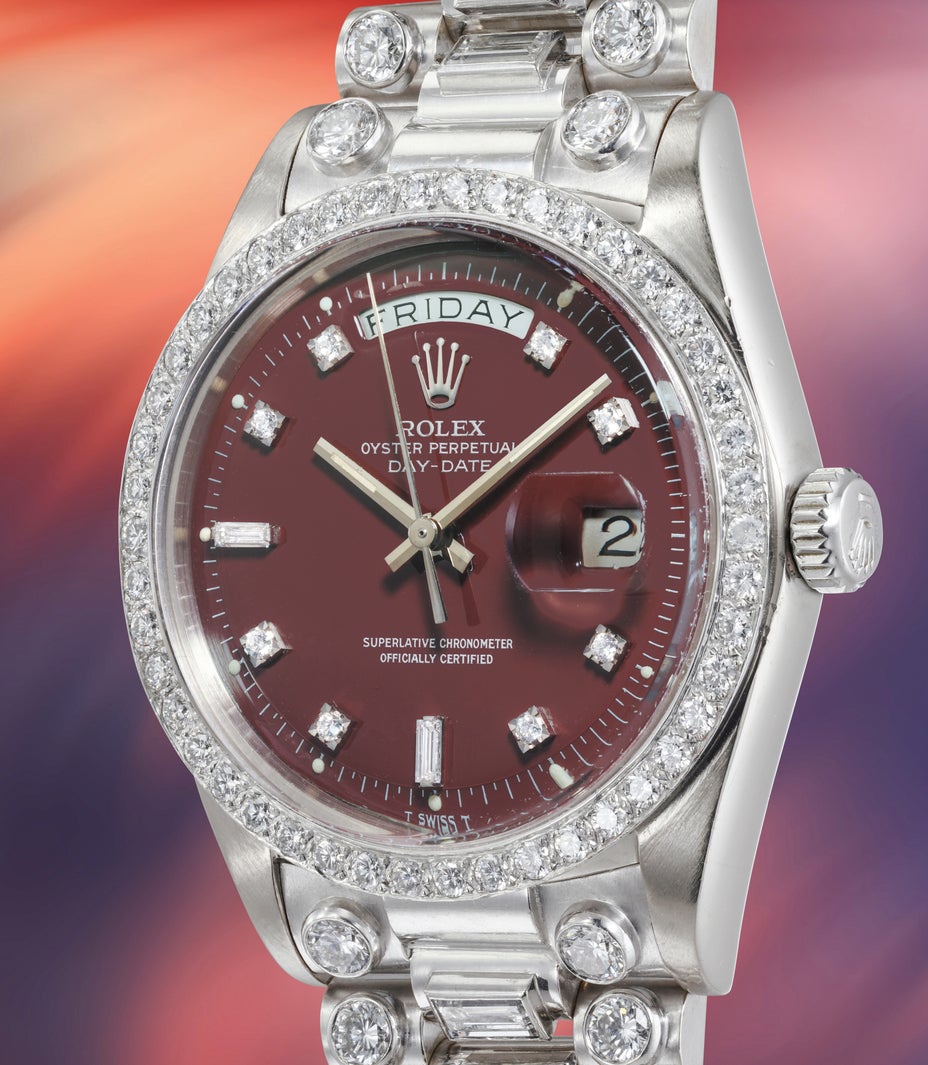
Day-Date "Octopussy"
An extremely rare, important and impressive white gold and diamond-set calendar wristwatch with center seconds, burgundy Stella dial and bracelet
Full-Cataloguing
- Calendar watch with center seconds
- One of the most exclusive Day-Dates made int he second half of the 20th century
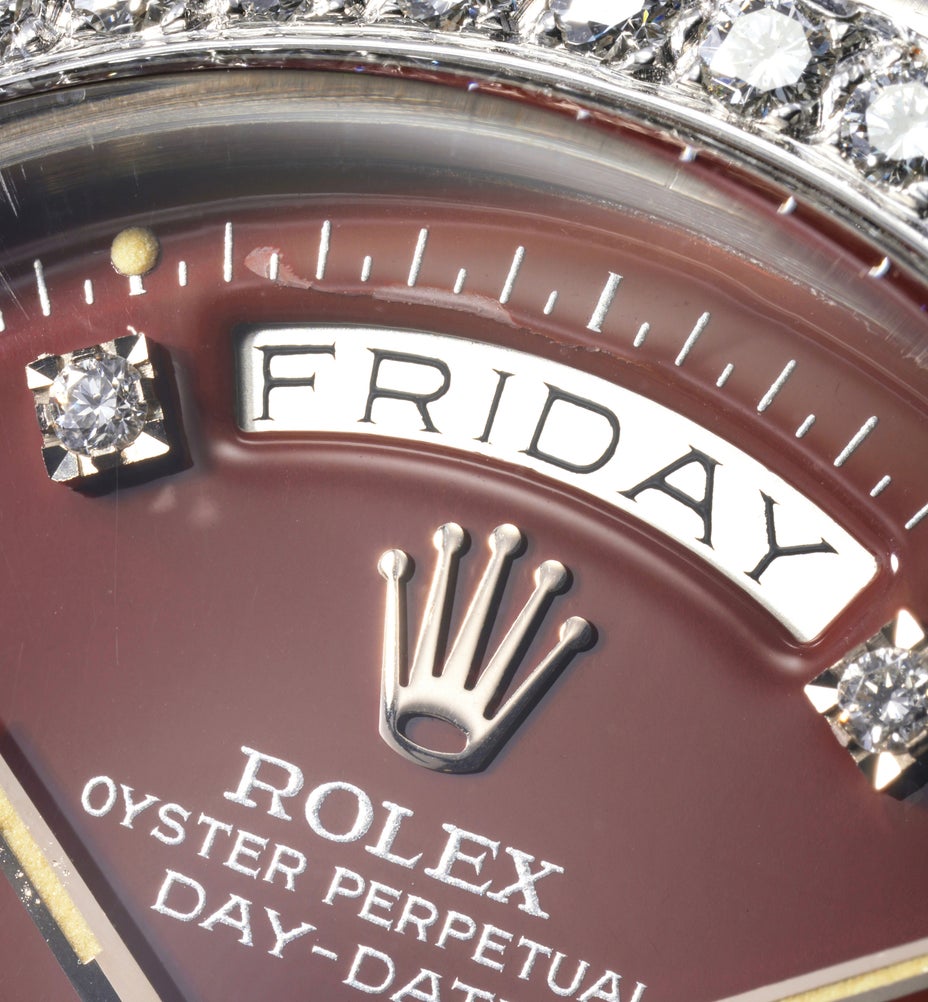
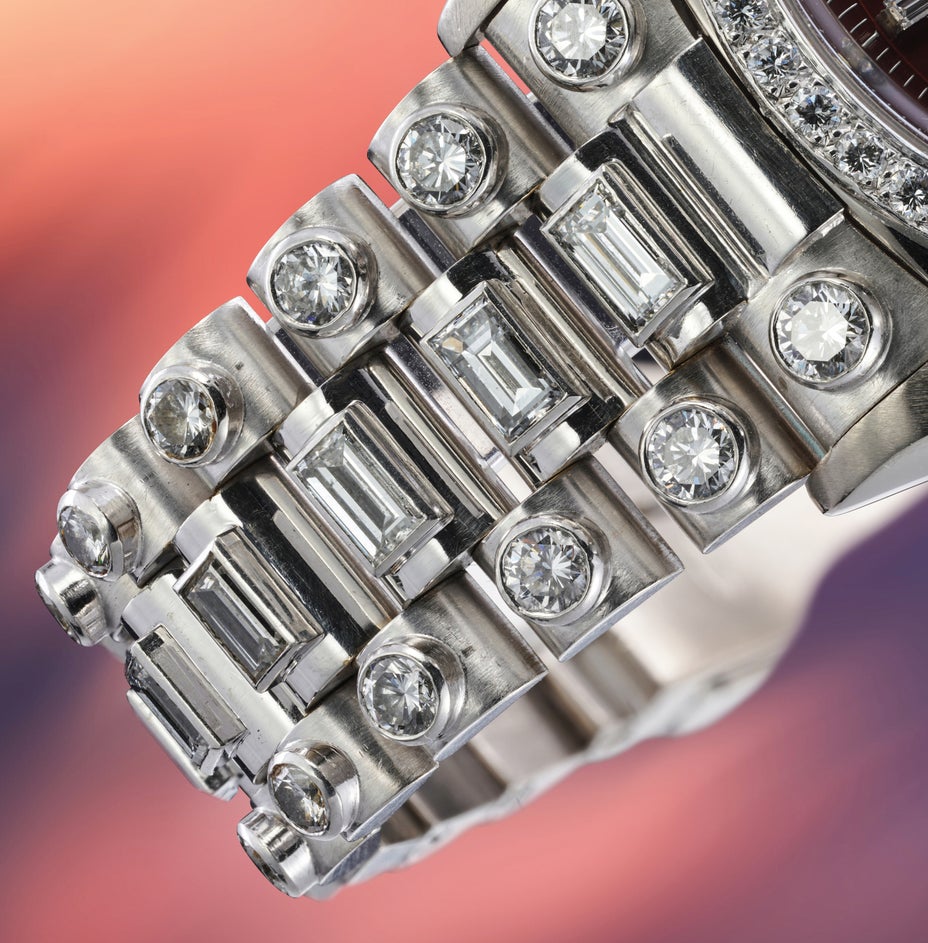
- Not only features an incredibly rare burgundy "Stella" dial that does not display fissures, it also has a diamond-set bracelet referred to as the "Octopussy"
- To date, only a handful of examples have appeared on the market
Launched in 1956, the Rolex Day-Date is one of the most recognizable and versatile wristwatches on the market. A model that can be worn by both men and women, it has been produced over its more than 60-year history in a wide variety of configurations, ranging from standard unadorned examples to those fitted with lacquered or gem-set dials. The model was produced exclusively in precious metals—platinum and various gold alloys—reinforcing its position as Rolex’s most prestigious offering.
The present wristwatch is an extremely rare example in white gold, featuring a diamond-set dial, a diamond-set President bracelet, and a striking burgundy Stella dial. Rolex produced these lacquered Stella dials from the 1960s until the 1990s using a complex multi-layer lacquer technique that creates a vibrant and richly saturated color.
The bracelet itself is a work of art and is affectionately referred to by collectors as the “Octopussy.” The outer edges of the links feature prominent raised round-cut diamonds framing a central raised baguette-cut diamond, with the round cylindrically set stones resembling the suction cups of an octopus. Without a doubt, it can be considered among the most lavish and exclusive Day-Date configurations produced during this era.
Rolex
Swiss | 1905Founded in 1905 England by Hans Wilsdorf and Alfred Davis as Wilsdorf & Davis, it soon became known as the Rolex Watch Company in 1915, moving its headquarters to Geneva in 1919. Like no other company, the success of the wristwatch can be attributed to many of Rolex's innovations that made them one of the most respected and well-known of all luxury brands. These innovations include their famous "Oyster" case — the world's first water resistant and dustproof watch case, invented in 1926 — and their "Perpetual" — the first reliable self-winding movement for wristwatches launched in 1933. They would form the foundation for Rolex's Datejust and Day-Date, respectively introduced in 1945 and 1956, but also importantly for their sports watches, such as the Explorer, Submariner and GMT-Master launched in the mid-1950s.
One of its most famous models is the Cosmograph Daytona. Launched in 1963, these chronographs are without any doubt amongst the most iconic and coveted of all collectible wristwatches. Other key collectible models include their most complicated vintage watches, including references 8171 and 6062 with triple calendar and moon phase, "Jean Claude Killy" triple date chronograph models and the Submariner, including early "big-crown" models and military-issued variants.