4Ο︎◆︎
Rudolf Stingel
Untitled (Topolino)
This work is accompanied by a gallery certificate of authenticity.
Full-Cataloguing
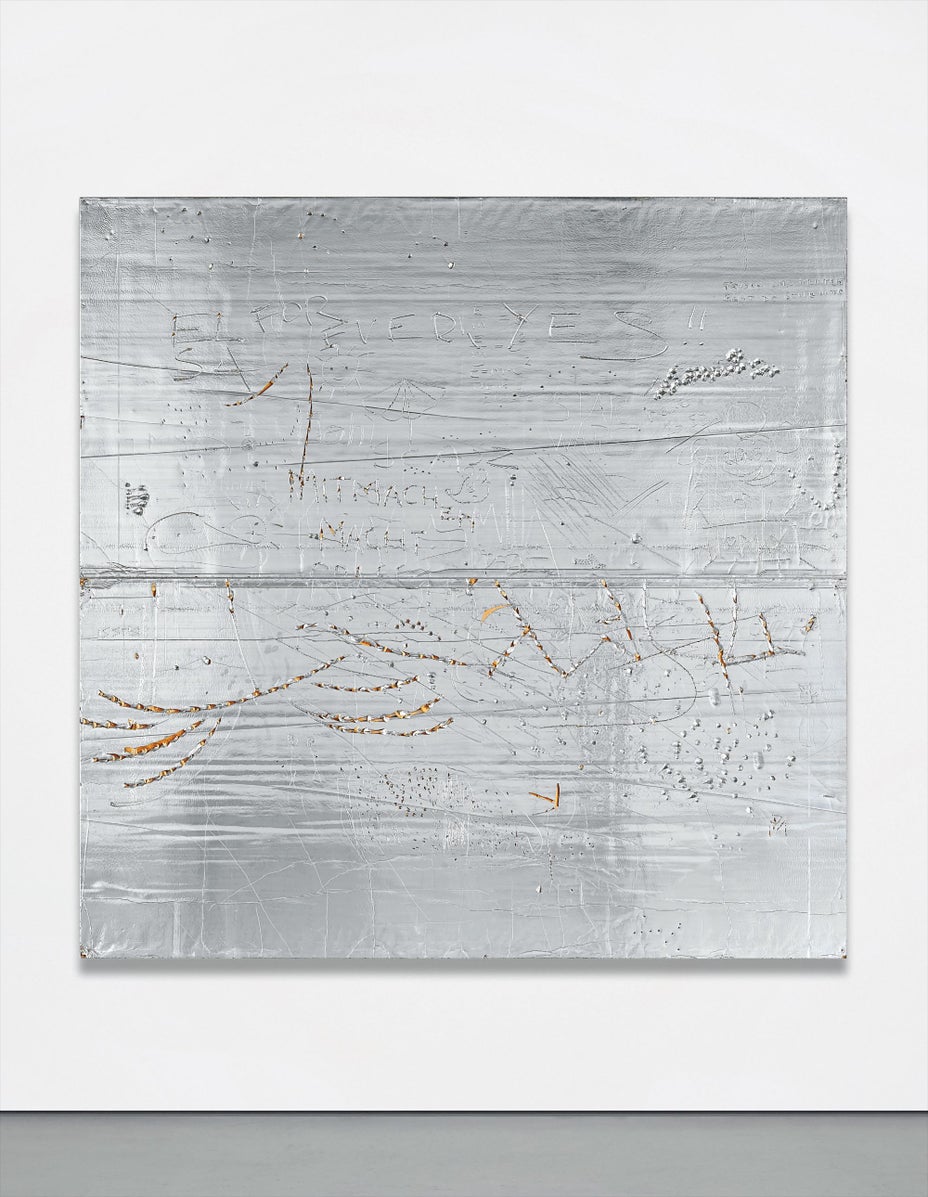
If previously, Stingel suggested that anybody can make his paintings by carefully following instructions, he accepts through the Cellotex works that his work can also be a bare blackboard that allows people to vent various individual and collective ideas, desires, expressions or frustrations. The work is transformed into a vessel with which the audience can say whatever it is they need to say. The Cellotex works are like pages of a notebook, or a guestbook where one can complain or express satisfaction, not simply about the artist’s work, but about anything one wishes - from the museum curator’s, to the quality of the food in the cafeteria. Stingel’s work is a self-conscious affirmation of the banality of painting. The more banal a painting, the more liberating it will be.
Stingel pushes Fontana’s gesture further and beyond. His work cannot be rejected by the viewer because the viewer is participating in it, is the co-author of the work. That’s why this Cellotex from 2002 is a turning point in the history of contemporary painting. Nobody before Stingel has been able to maintaining the value of authorship and at the same time question it so radically. Cy Twombly’s practice was a major step into a kind of indulgence into the mechanic gesture but Stingel stretched this idea, absorbing the individuality of each viewer.
Offering the pristine silver surface to the emotional instinct of any viewer is both an act of total defiance and of absolute courage. The embracing power of Jeff Koons shiny colored stainless steel finds in Stingel’s Cellotex room to work its final closure. The viewer does not simply enter the work through the reflecting surface, but they do physically and almost sexually. The Cellotex are not about the power of images but about the power of creating both images and signifiers.
Francesco Bonami
Rudolf Stingel
Italian | 1956Rudolf Stingel came to prominence in the late 1980s for his insistence on the conceptual act of painting in a context in which it had been famously declared dead. Despite the prevailing minimalist and conceptual narrative of the time, the Italian-born artist sought to confront the fundamental aspirations and failures of Modernist painting through the very medium of painting itself. While his works do not always conform to the traditional definitions of painting, their attention to surface, space, color and image provide new and expanded ways of thinking about the process and "idea" of painting. Central to his multifarious and prolific oeuvre is an examination of the passage of time and the probing of the fundamental questions of authenticity, meaning, hierarchy, authorship and context by dislocating painting both internally and in time and space. Stingel is best known for his wall-to-wall installations, constructed of fabric or malleable Celotex sheets, as well as his seemingly more traditional oil-on-canvas paintings.