1092
Swiss
“Bouquets de Chine”
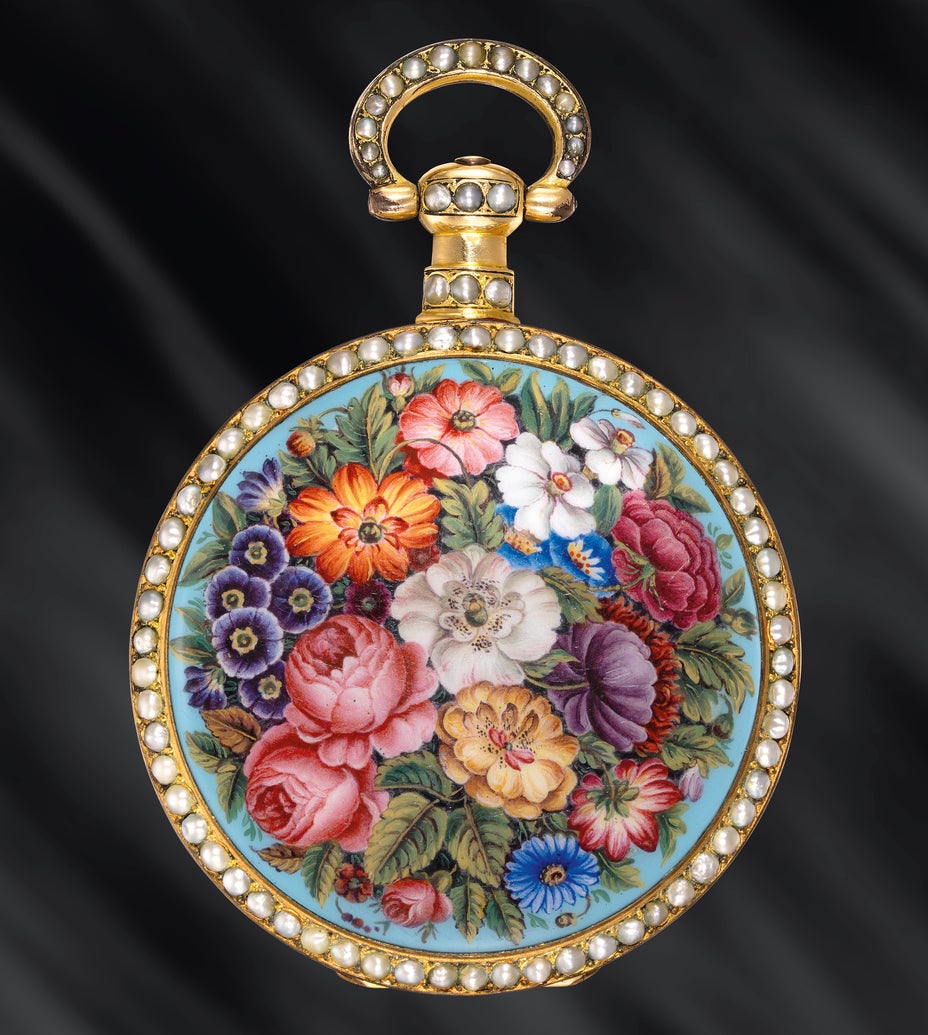
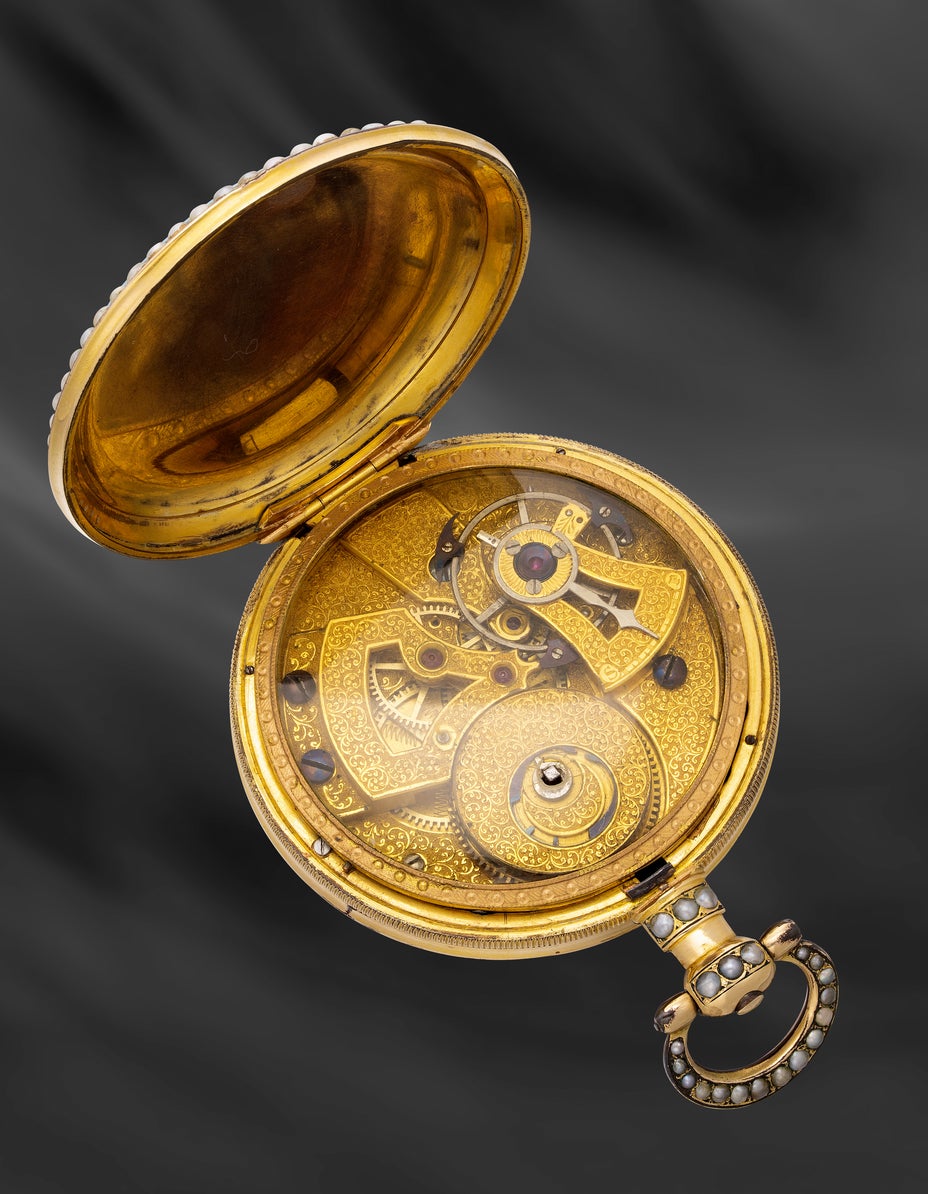
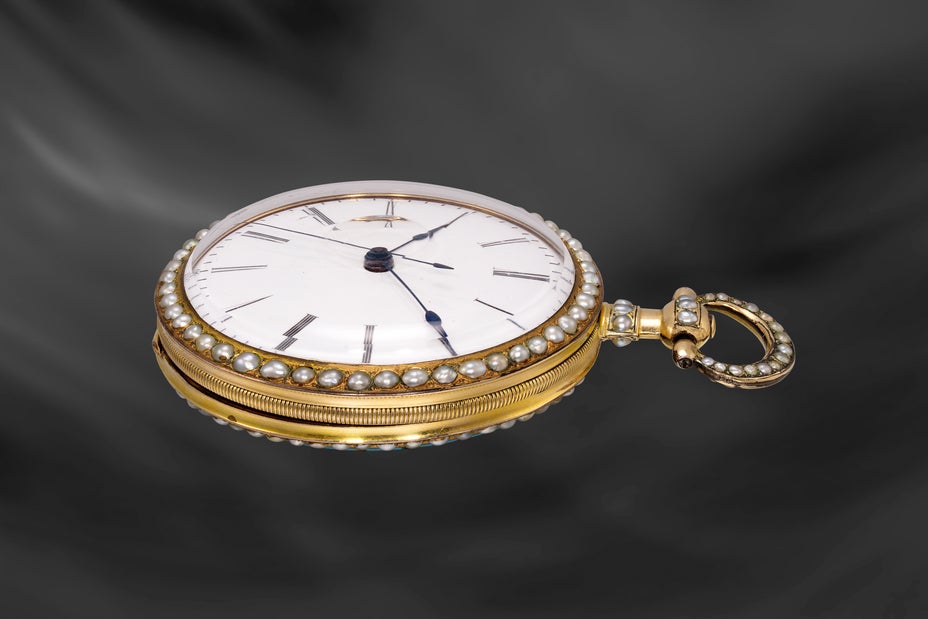
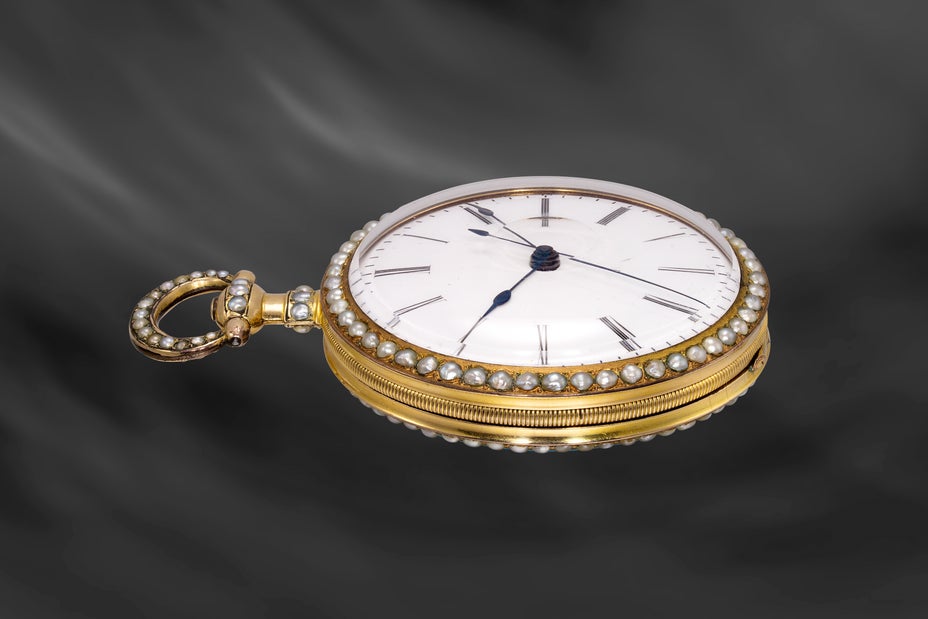
A finely decorated and well-preserved gilt-metal and pearl-set open faced pocket watch with Empire-styled case, center seconds, miniature enamel painting depicting bouquets de Chine, white enamel dial, engraved movement and duplex escapement, made for the Chinese market
Estimate
HK$40,000–80,000
€4,400–8,700
$5,100–10,300
Sold For
HK$82,550
Manufacturer
Swiss
Year
Circa 1850
Case No
3029
Model Name
“Bouquets de Chine”
Material
Gilt-metal, pearls and enamel
Calibre
Manual, duplex escapement
Dimensions
57mm diameter
Signed
Case numbered
Full-Cataloguing
Good To Know:
- Beautiful polychrome enamel case and engraved movement
- Enamel is very well-preserved
In Chinese culture, flowers carry profound symbolic resonance. Their forms, qualities, and fragrances are understood as deeply spiritual, reflections of the Chinese spirit itself. This cultural significance finds expression in poetry and proverb, where specific flowers embody distinct virtues: the lotus signifies purity, the chrysanthemum perseverance, and the plum blossom integrity.
Among them, the peony holds the highest esteem. Celebrated for its lush form, vibrant color, and intoxicating fragrance, it symbolizes wealth, nobility, prosperity, and happiness, a constellation of virtues that has earned it the title “Queen of Flowers.” In Chinese homes, paintings of flowers are displayed to invite good fortune; in offices, they are thought to beckon commercial success.
This rich symbolism made flowers a natural subject for exquisite timepieces, often commissioned by the most discerning patrons, including the Emperor himself. For China’s elite, the meaning embedded in each blossom would have been instantly legible, an unspoken reflection of their own status and refinement.
This Swiss watch made for the Chinese market, featuring a complete miniature painting on enamel, is a rare gem. Its enamel panel presents a summer blossom painted with remarkable delicacy against a striking opaque blue ground. Housed in a gilt-metal Empire‑style case, the bezel, pendant, and bow are set with large half‑pearls, and the sprung cuvette adds a further touch of refinement.
The movement, remarkably well preserved, features a gilt duplex movement with bridges engraved with foliate scrolls. A testament to careful preservation over more than three decades in a single collection.
- Beautiful polychrome enamel case and engraved movement
- Enamel is very well-preserved
In Chinese culture, flowers carry profound symbolic resonance. Their forms, qualities, and fragrances are understood as deeply spiritual, reflections of the Chinese spirit itself. This cultural significance finds expression in poetry and proverb, where specific flowers embody distinct virtues: the lotus signifies purity, the chrysanthemum perseverance, and the plum blossom integrity.
Among them, the peony holds the highest esteem. Celebrated for its lush form, vibrant color, and intoxicating fragrance, it symbolizes wealth, nobility, prosperity, and happiness, a constellation of virtues that has earned it the title “Queen of Flowers.” In Chinese homes, paintings of flowers are displayed to invite good fortune; in offices, they are thought to beckon commercial success.
This rich symbolism made flowers a natural subject for exquisite timepieces, often commissioned by the most discerning patrons, including the Emperor himself. For China’s elite, the meaning embedded in each blossom would have been instantly legible, an unspoken reflection of their own status and refinement.
This Swiss watch made for the Chinese market, featuring a complete miniature painting on enamel, is a rare gem. Its enamel panel presents a summer blossom painted with remarkable delicacy against a striking opaque blue ground. Housed in a gilt-metal Empire‑style case, the bezel, pendant, and bow are set with large half‑pearls, and the sprung cuvette adds a further touch of refinement.
The movement, remarkably well preserved, features a gilt duplex movement with bridges engraved with foliate scrolls. A testament to careful preservation over more than three decades in a single collection.