82
Attributed to Louis Elisée Piguet
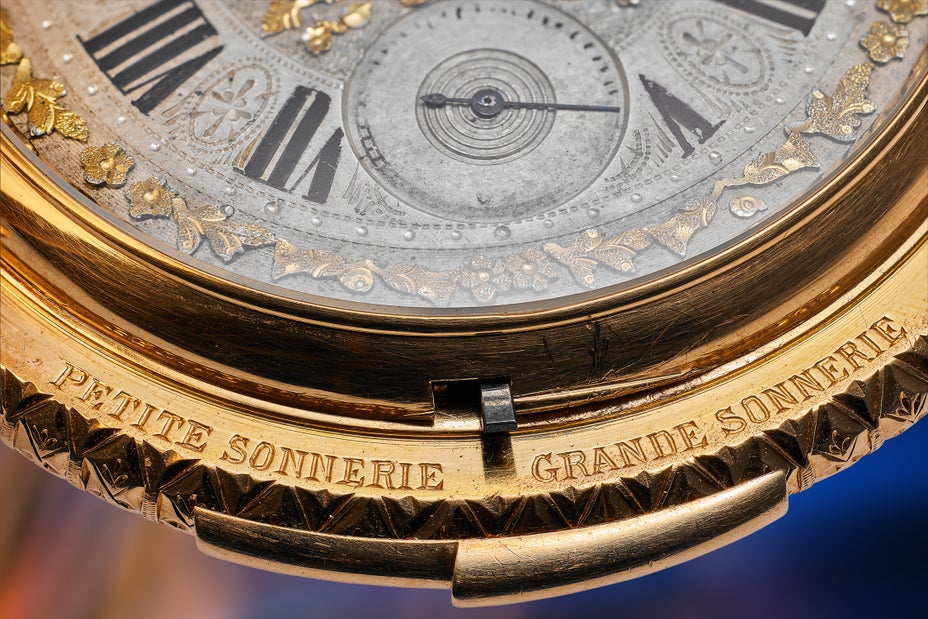
歸於Louis Elisée Piguet,極度精細,玫瑰金雕刻獵殼大小自鳴三問鐘錶,特為南美市場製造。
估價
$15,000–30,000
成交價
$30,480
製造商
Attributed to Louis Elisée Piguet
年份
Late 19th Century
錶殼號碼
1'325
材料
18K pink gold
機芯
Manual, two-train keyless counterpoised lever escapement, 42 jewels
尺寸
59.5mm Diameter
簽名
Case numbered 1'325, movement numbered 1'325 on the top plate.
完整圖錄內容
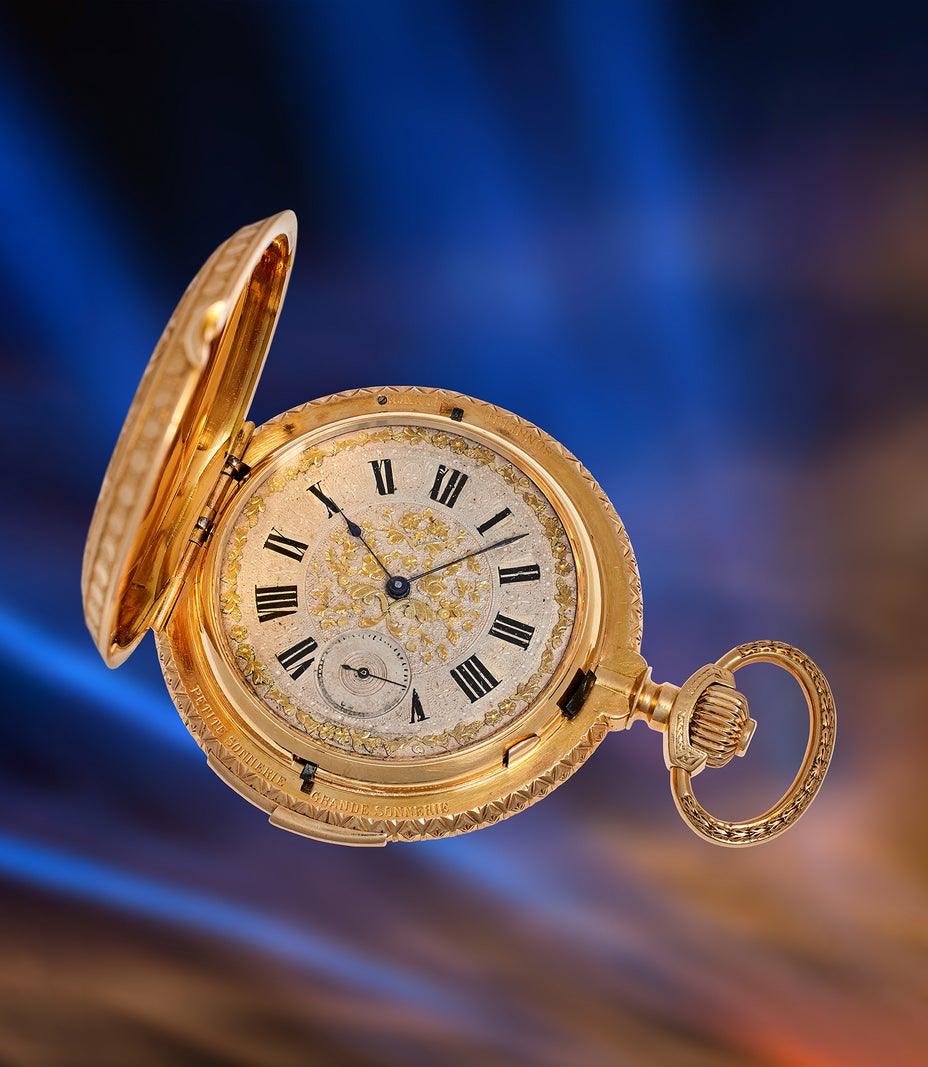
An exceptionally complicated watch destined for the South American market, this Grand Sonnerie minute repeating clock watch from the late-nineteenth century oozes horological savoir-faire and encompasses all the excesses of the Gilded Age.
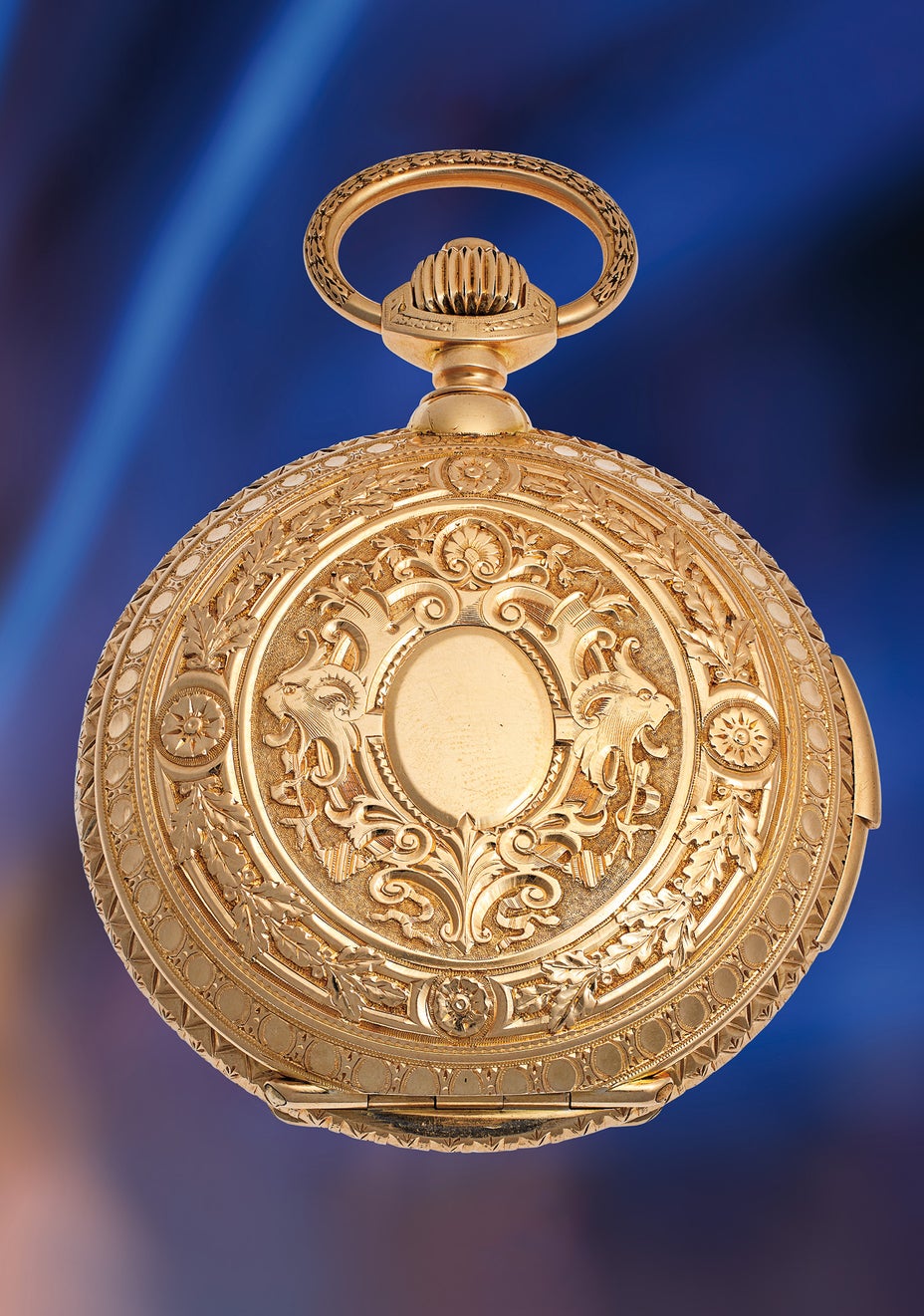
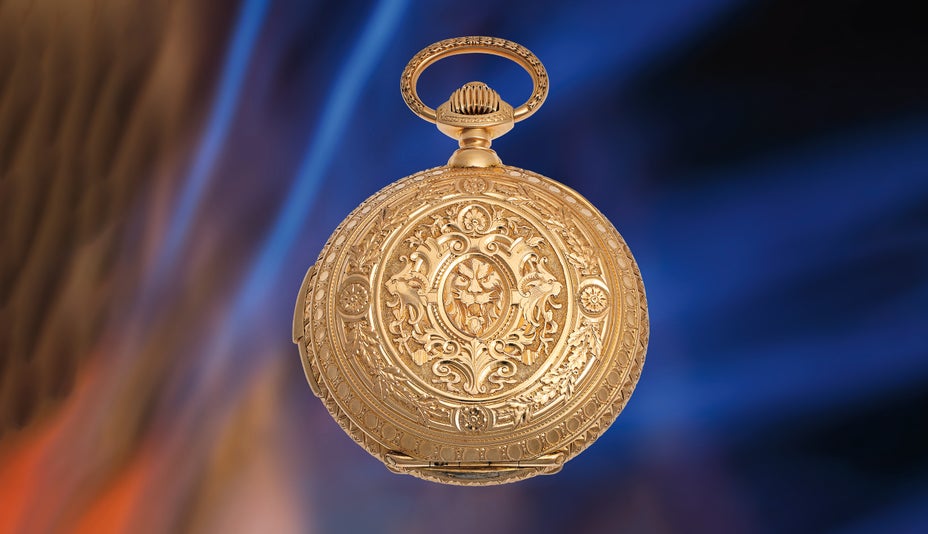
Luckily for modern cataloguers, the cuvette is engraved with an enlightening description of what lies within: a quarter-repeating Grande Sonnerie with counterpoised balance, 42 jewels, straight lever escapement, and Breguet spiral, made for Maulme Hermaños, Guayaquil. Throughout the entire case, the elaborate and fine chased decorations featuring lion’s head plaques, oak leaf clusters, rose cartouches, and alternating floral scrollwork – also seen on the decoration to the dial – gives a clear indication of the watch’s destination as the South American market.
Los hermanos Maulme, the Maulme brothers, were immigrants to Guayaquil, Ecuador, in the latter part of the 19th century. Arriving from Peru (or possibly Chile) as the sons of French immigrants, Enrique and Luis Maulme quickly set out to make a fortune in mining, and eventually branched into brewing and automobiles. Enrique Maulme’s automobile business eventually became the sole distributor of General Motors products in Ecuador. It is no leap of the imagination that one of these brothers, flush with success, ordered this highly prestigious timepiece.
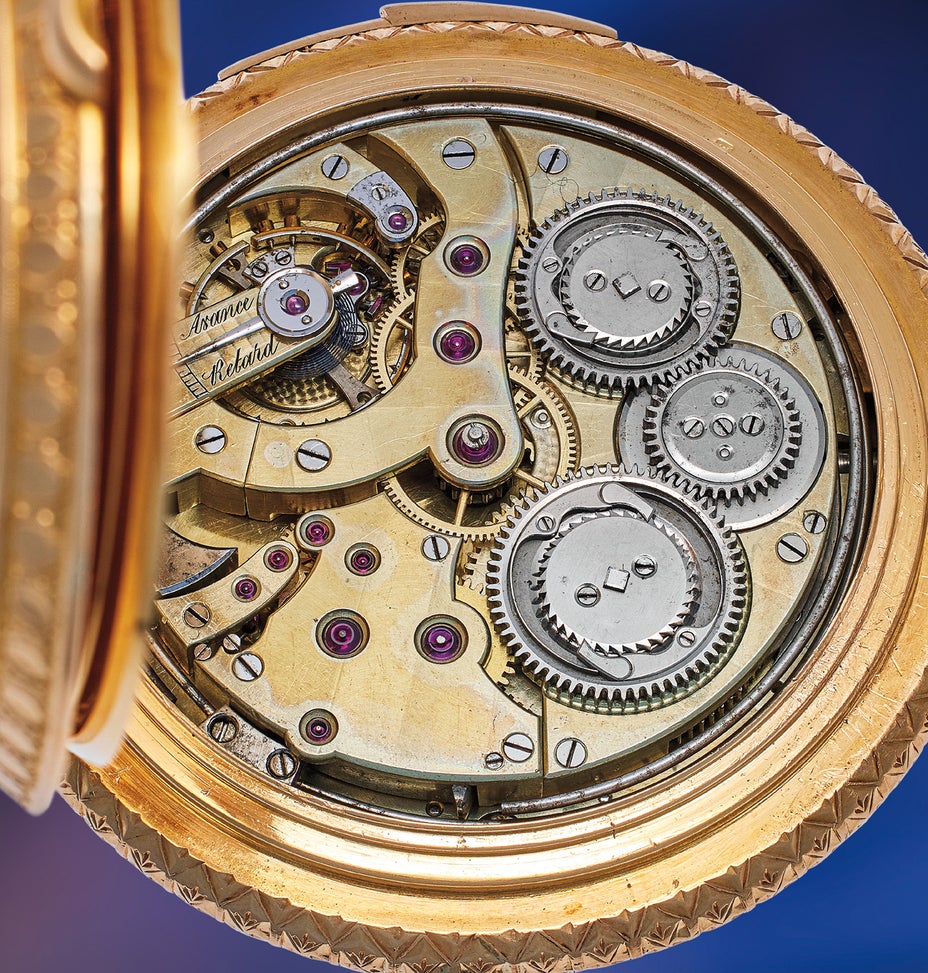
The movement was likely from noted Le Brassus watchmaker Louis Elisée Piguet, who provided ebauches of the highest complications for such notable makers as Patek Philippe, Vacheron Constantin, and Breguet. Indeed, this exact type of movement could be said to have inspired Philippe Dufour’s grande and petite sonnerie pocket watch, and later the first wristwatch to feature this same complication. Michel Parmigiani, former watch restorer and founder of Parmigiani Fleurier, acquired a L.E. Piguet grande and petite sonnerie ebauche and created the unique piece “La Rose Carrée” in 2021.
Luckily for modern cataloguers, the cuvette is engraved with an enlightening description of what lies within: a quarter-repeating Grande Sonnerie with counterpoised balance, 42 jewels, straight lever escapement, and Breguet spiral, made for Maulme Hermaños, Guayaquil. Throughout the entire case, the elaborate and fine chased decorations featuring lion’s head plaques, oak leaf clusters, rose cartouches, and alternating floral scrollwork – also seen on the decoration to the dial – gives a clear indication of the watch’s destination as the South American market.
Los hermanos Maulme, the Maulme brothers, were immigrants to Guayaquil, Ecuador, in the latter part of the 19th century. Arriving from Peru (or possibly Chile) as the sons of French immigrants, Enrique and Luis Maulme quickly set out to make a fortune in mining, and eventually branched into brewing and automobiles. Enrique Maulme’s automobile business eventually became the sole distributor of General Motors products in Ecuador. It is no leap of the imagination that one of these brothers, flush with success, ordered this highly prestigious timepiece.
The movement was likely from noted Le Brassus watchmaker Louis Elisée Piguet, who provided ebauches of the highest complications for such notable makers as Patek Philippe, Vacheron Constantin, and Breguet. Indeed, this exact type of movement could be said to have inspired Philippe Dufour’s grande and petite sonnerie pocket watch, and later the first wristwatch to feature this same complication. Michel Parmigiani, former watch restorer and founder of Parmigiani Fleurier, acquired a L.E. Piguet grande and petite sonnerie ebauche and created the unique piece “La Rose Carrée” in 2021.