930
Cartier New York
Model A
卡地亞,「Modèle A」,獨一無二、極度精細、富含重要歷史意義,黃金、黑瑪瑙、鑽石及水晶秘時座鐘,約1920年製。附後補證書
估價
HK$2,400,000–4,800,000
€261,000–523,000
$308,000–615,000
成交價
HK$3,937,000
製造商
Cartier New York
年份
Circa 1920
錶殼號碼
70143, HSA415
型號名稱
Model A
材料
18K yellow gold, rock crystal, onyx and diamonds
機芯
Manual key-wind
尺寸
8.5cm length x 5.1cm width x 13cm height
簽名
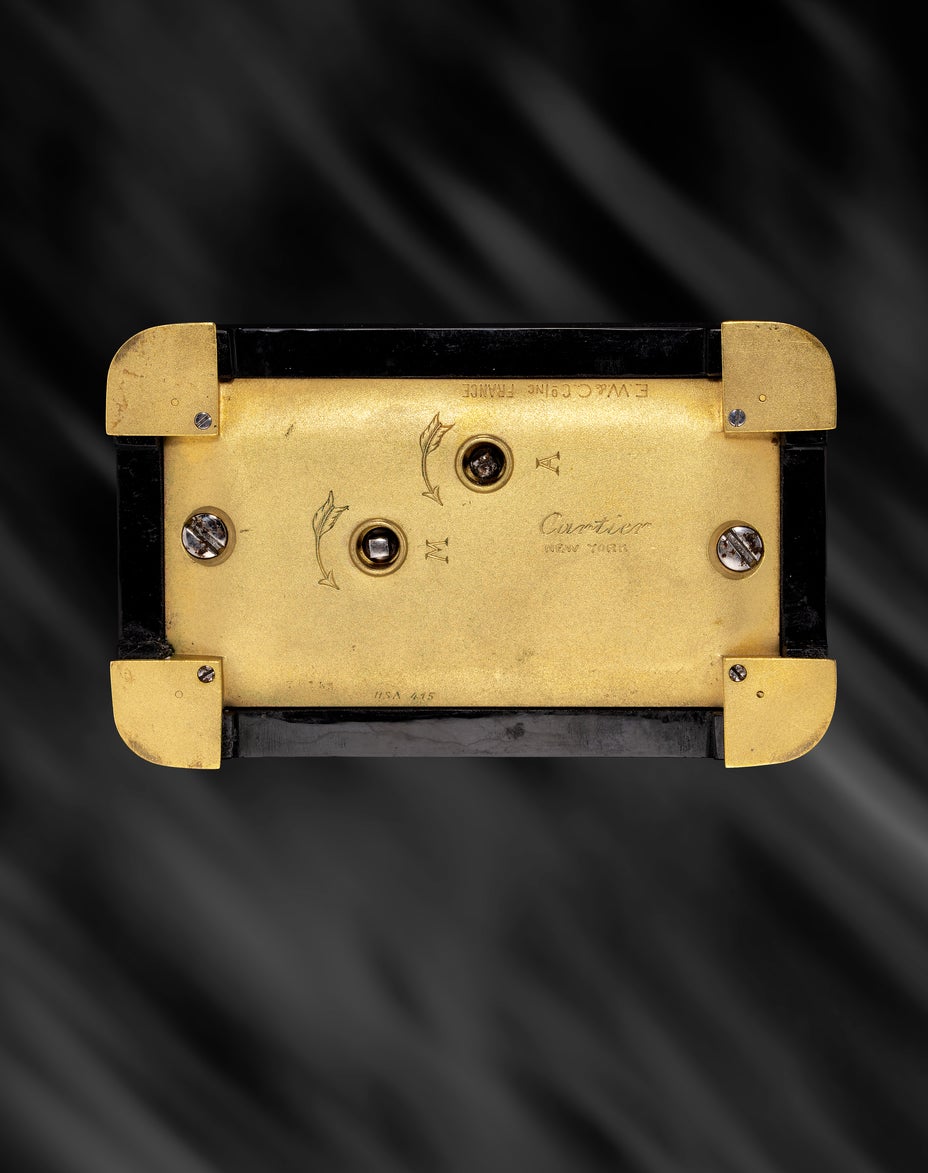
Base signed Cartier New York and European Watch & Clock Co. Inc France, further numbered 70145 and HSA 415
配件
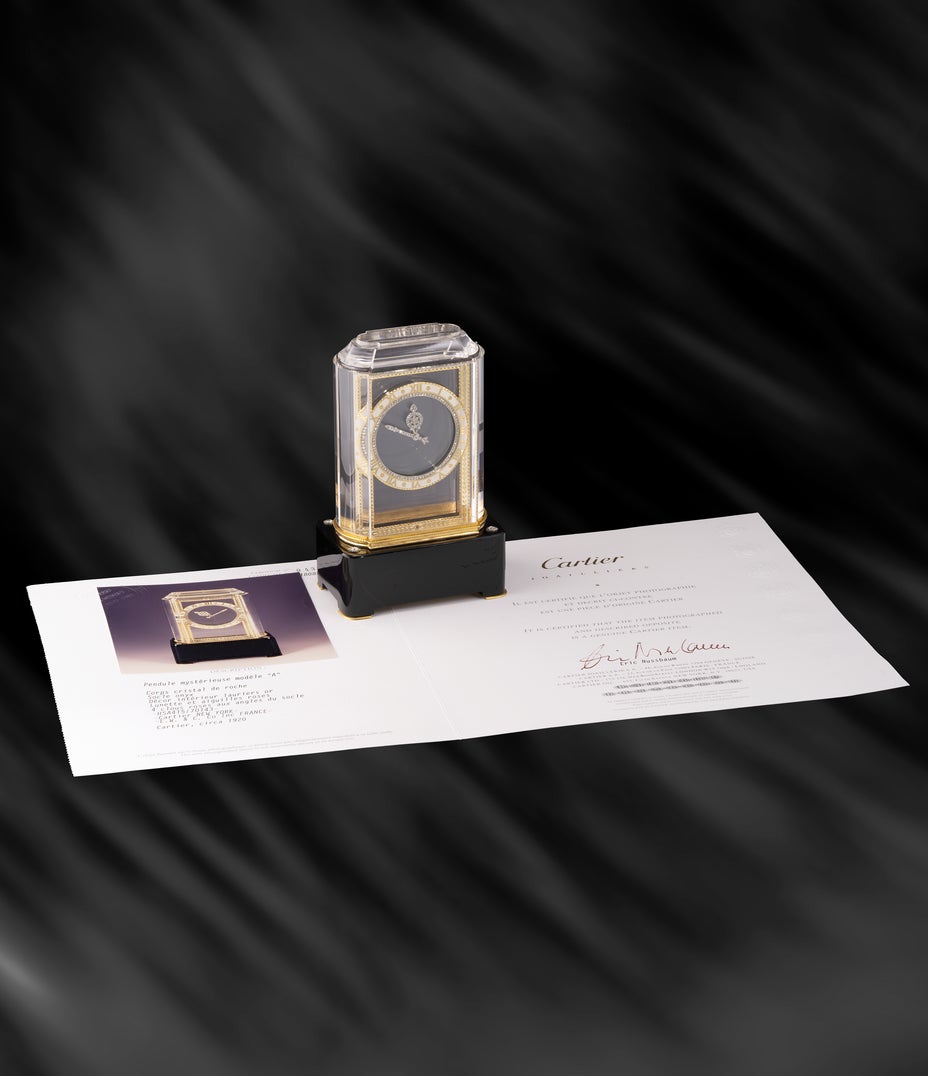
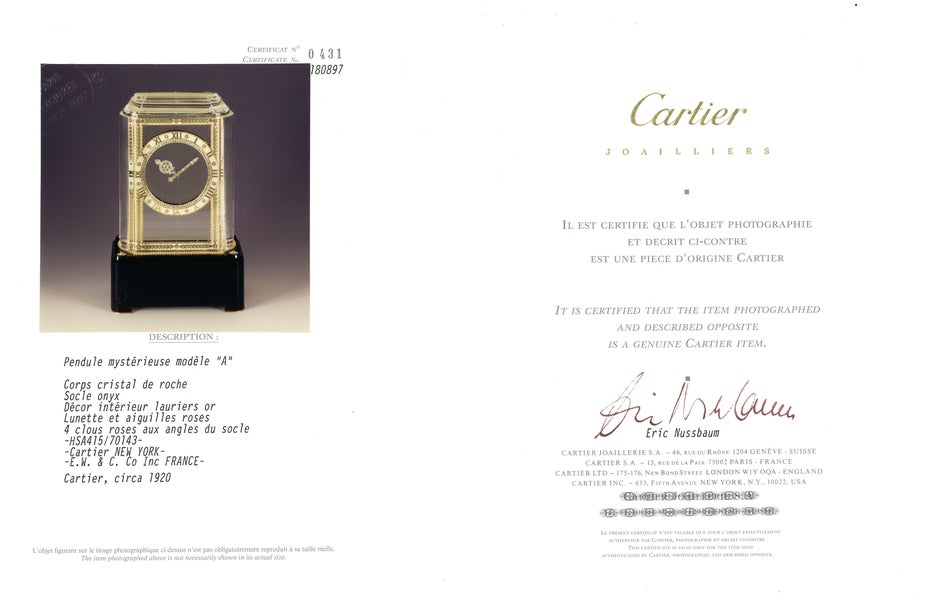
Accompanied by Cartier certificate of authenticity and outer packaging.
完整圖錄內容
GOOD TO KNOW:
- Every Model A mystery clock is unique
- Extremely rare in production with only approximately 60 examples ever made
- Well-preserved for a clock over a century old
- Signed ‘Cartier New York’ on base
Among the most magnificent, enchanting, and captivating horological wonders of the 20th century, Cartier’s mystery clocks stand as some of the most extraordinary creations ever conceived. Few maisons have produced timepieces of such magic, invention, and sheer audacity. For Cartier, the mystery clock became the ideal canvas upon which boundless creativity could unfold, a synthesis of two core principles: exquisite craftsmanship and the art of horology.
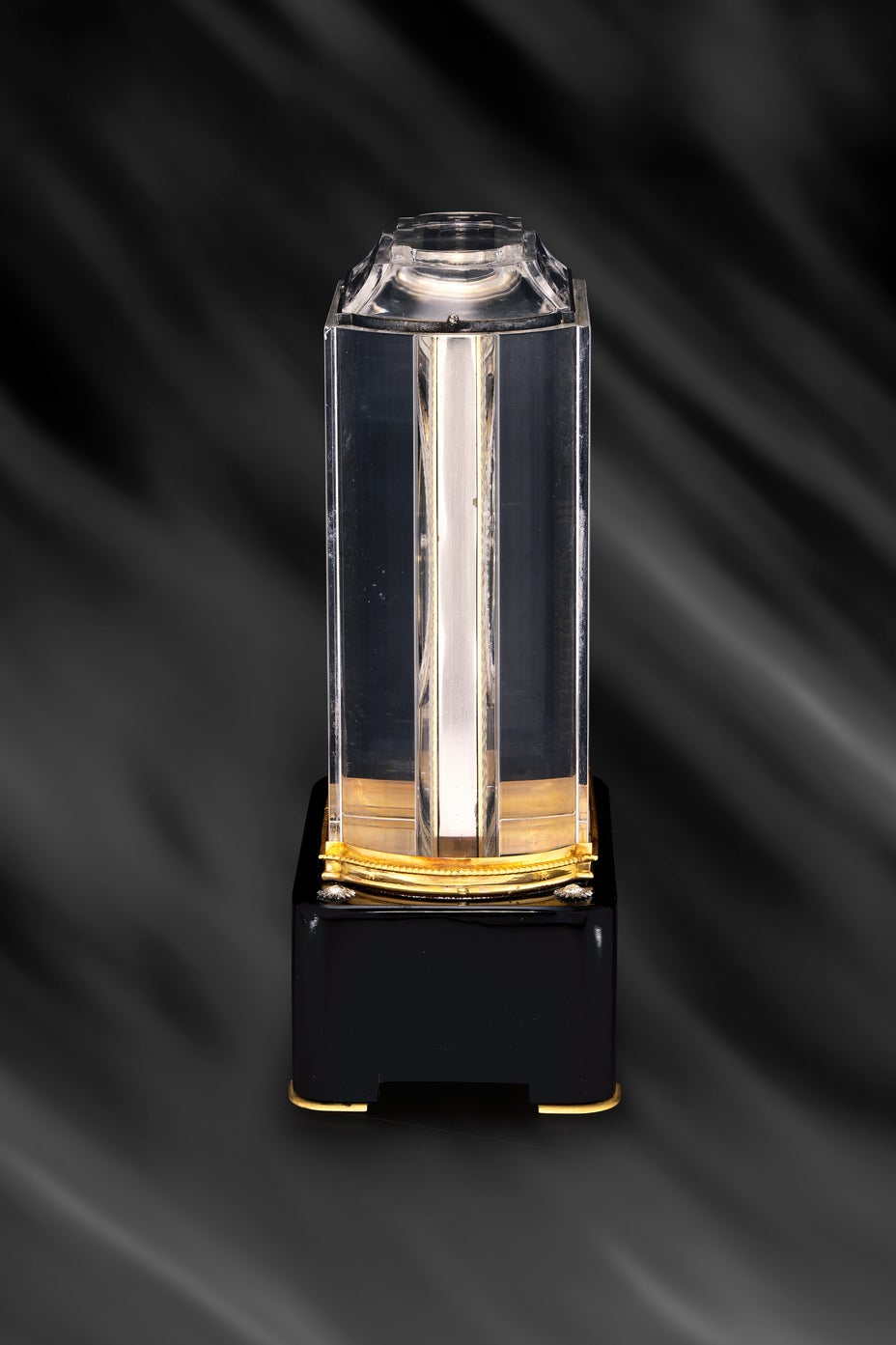
Truly a first of its kind, the Model A made its debut in 1912, captivating the world with its seemingly weightless hands suspended within a block of pellucid rock crystal. These early creations were bejewelled objets d’art that showcased Cartier’s mastery of both design and craftsmanship. Initially devised with a double‑axle mechanism, and soon after simplified to a single central axle, the “mystery” was solved by discreet crystal discs hidden within. Each disc, edged with a toothed border, is driven by screws fixed at the ends of the axles, operating at the 3 and 9 o’clock positions, while the driving pinions of the hands are concealed within the frame’s columns. The rotation is activated by a movement housed in the base; thus, it is not the hands that move, but the discs upon which they are individually mounted, rotating at two distinct speeds, one for the hours, one for the minutes.
A groundbreaking achievement, Model A Mystery Clocks were acquired by glamorous celebrities and prominent figures of society, including the banker John Pierpont Morgan, Count Greffulhe, and Sir Bhupindra Singh, the Maharajah of Patiala. Each clock was unique, with variations in the base: agate, onyx, obsidian, nephrite, lapis lazuli, gold, and jade, and in the decoration of the frames and chapter rings.
The concept of the floating‑hand clock originated with Maurice Coüet, a clockmaker who initially supplied Cartier before joining the firm. Coüet drew inspiration from Jean‑Eugène Robert‑Houdin, the 19th‑century clockmaker and magician credited with inventing the mystery clock design.
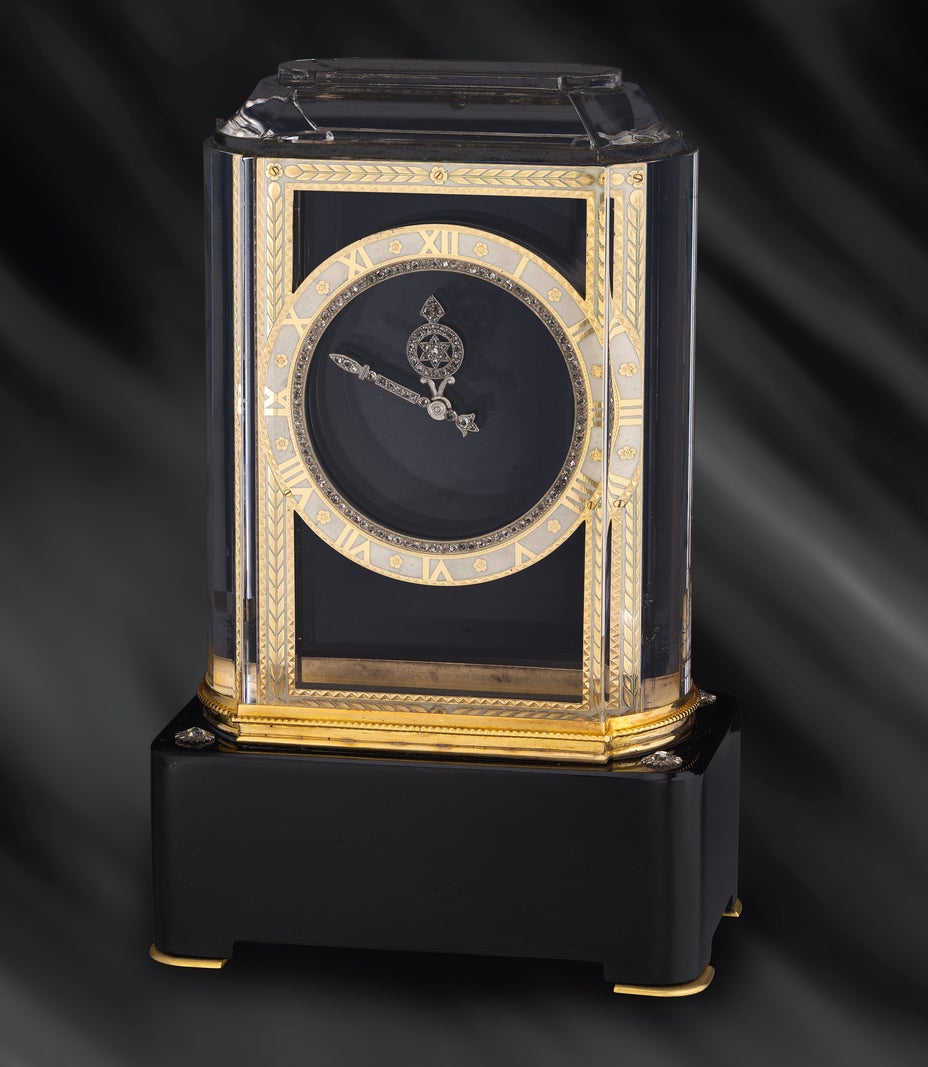
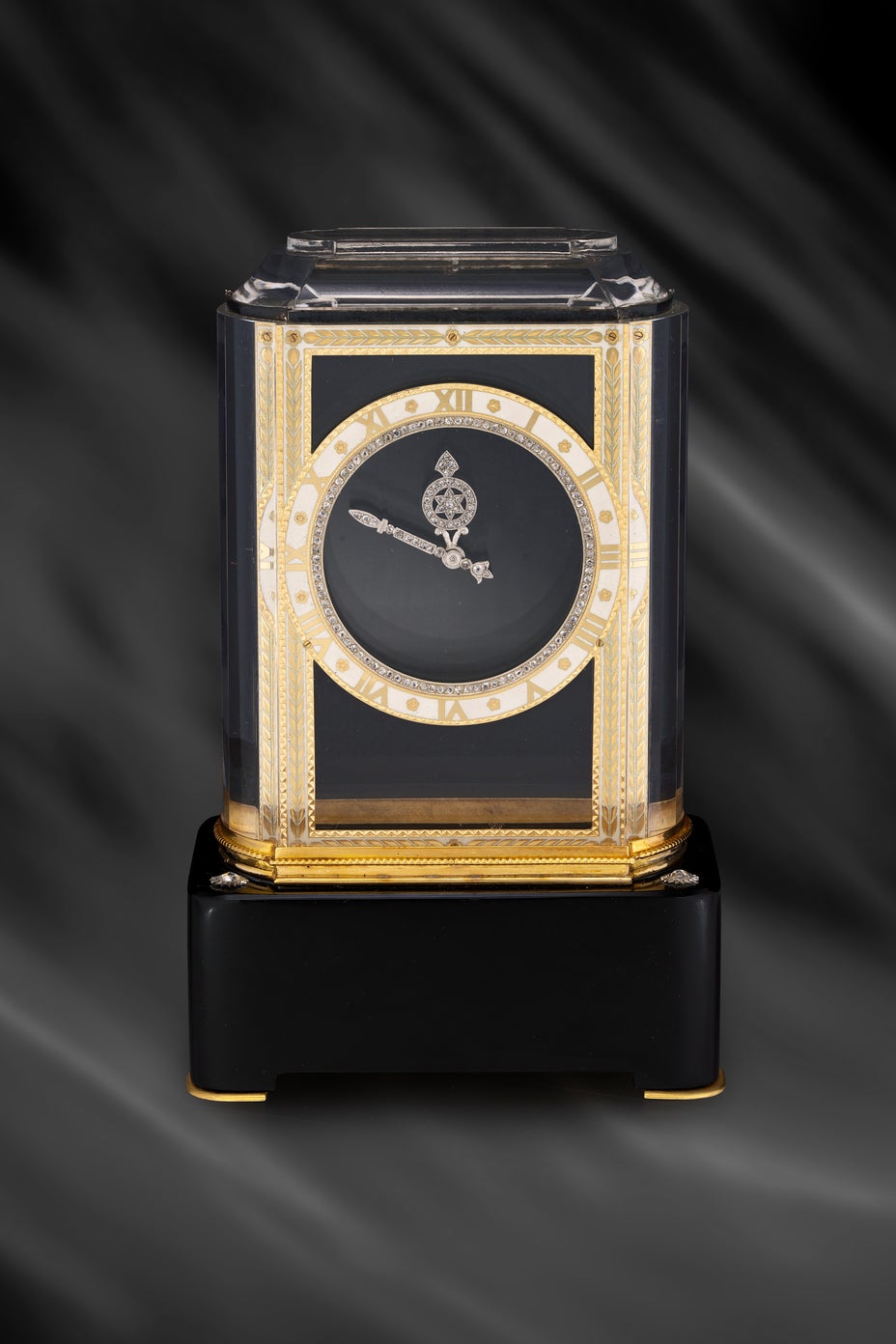
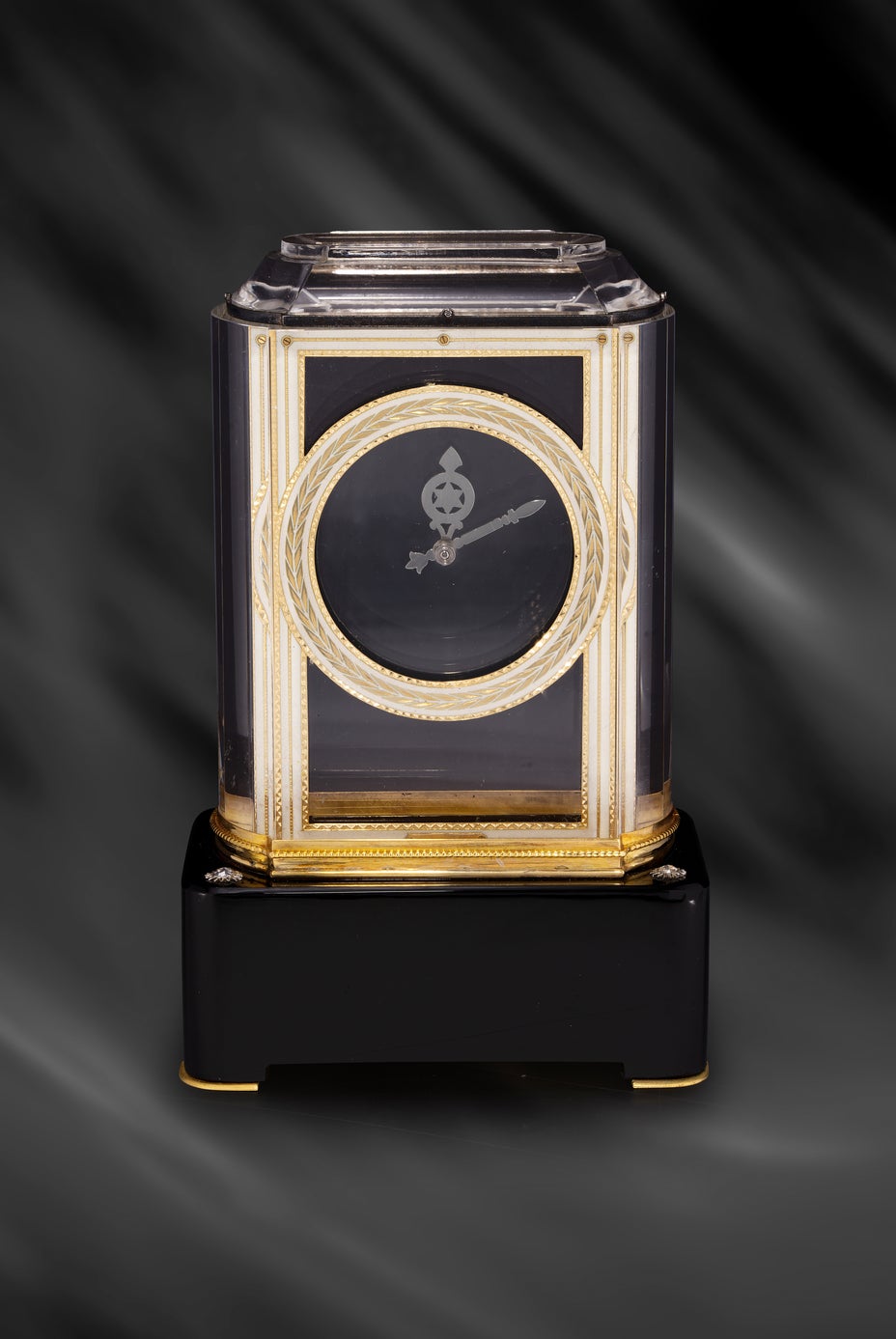
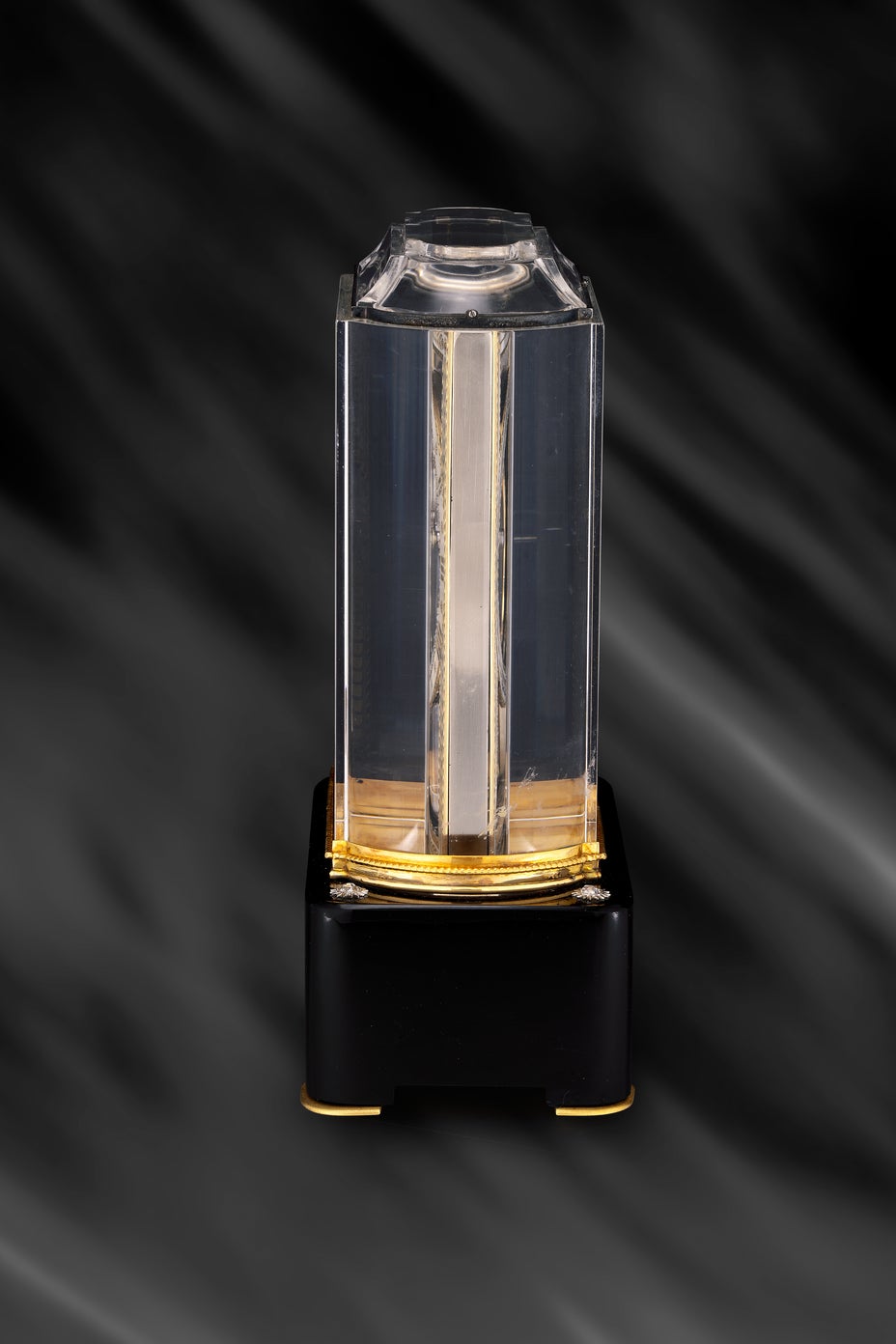
The present example, signed Cartier New York on the base, is fitted with a stylish white enamel bezel and frame upon an onyx base with four diamonds set on each edge. Rose-cut diamonds are set on the hands and inner ring on the dial. Gold leaves on the outer rims furthermore add to the design and flair. Its condition is exceptional, with all panels intact. Furthermore, the rock crystal dial and clock itself does not display cracks or fissures.
A well‑preserved objet d’art, this historically significant mystery clock will most likely remain hidden and cherished for many years to come. According to scholarship, production of the Model A was extremely limited, with only approximately 60 examples ever made. Its public sale at auction offers a unique opportunity to acquire one of horological history’s greatest optical illusions.
- Every Model A mystery clock is unique
- Extremely rare in production with only approximately 60 examples ever made
- Well-preserved for a clock over a century old
- Signed ‘Cartier New York’ on base
Among the most magnificent, enchanting, and captivating horological wonders of the 20th century, Cartier’s mystery clocks stand as some of the most extraordinary creations ever conceived. Few maisons have produced timepieces of such magic, invention, and sheer audacity. For Cartier, the mystery clock became the ideal canvas upon which boundless creativity could unfold, a synthesis of two core principles: exquisite craftsmanship and the art of horology.
Truly a first of its kind, the Model A made its debut in 1912, captivating the world with its seemingly weightless hands suspended within a block of pellucid rock crystal. These early creations were bejewelled objets d’art that showcased Cartier’s mastery of both design and craftsmanship. Initially devised with a double‑axle mechanism, and soon after simplified to a single central axle, the “mystery” was solved by discreet crystal discs hidden within. Each disc, edged with a toothed border, is driven by screws fixed at the ends of the axles, operating at the 3 and 9 o’clock positions, while the driving pinions of the hands are concealed within the frame’s columns. The rotation is activated by a movement housed in the base; thus, it is not the hands that move, but the discs upon which they are individually mounted, rotating at two distinct speeds, one for the hours, one for the minutes.
A groundbreaking achievement, Model A Mystery Clocks were acquired by glamorous celebrities and prominent figures of society, including the banker John Pierpont Morgan, Count Greffulhe, and Sir Bhupindra Singh, the Maharajah of Patiala. Each clock was unique, with variations in the base: agate, onyx, obsidian, nephrite, lapis lazuli, gold, and jade, and in the decoration of the frames and chapter rings.
The concept of the floating‑hand clock originated with Maurice Coüet, a clockmaker who initially supplied Cartier before joining the firm. Coüet drew inspiration from Jean‑Eugène Robert‑Houdin, the 19th‑century clockmaker and magician credited with inventing the mystery clock design.
The present example, signed Cartier New York on the base, is fitted with a stylish white enamel bezel and frame upon an onyx base with four diamonds set on each edge. Rose-cut diamonds are set on the hands and inner ring on the dial. Gold leaves on the outer rims furthermore add to the design and flair. Its condition is exceptional, with all panels intact. Furthermore, the rock crystal dial and clock itself does not display cracks or fissures.
A well‑preserved objet d’art, this historically significant mystery clock will most likely remain hidden and cherished for many years to come. According to scholarship, production of the Model A was extremely limited, with only approximately 60 examples ever made. Its public sale at auction offers a unique opportunity to acquire one of horological history’s greatest optical illusions.