US import tariffs: Non-US origin lots in this sale (including watches and timepieces with Swiss-made or non-US made movements) will be subject to special tariffs upon import to the USA, currently ranging from 10% to 39% on the total invoice price (hammer price plus buyer’s premium). Buyers are responsible for paying any applicable tariffs, duties, taxes and charges when importing their purchased lots. Due to the evolving nature of international trade regulations, we recommend clients consult with their local customs office or advisor for up-to-date information on the applicable tariffs.
131
Cartier Paris
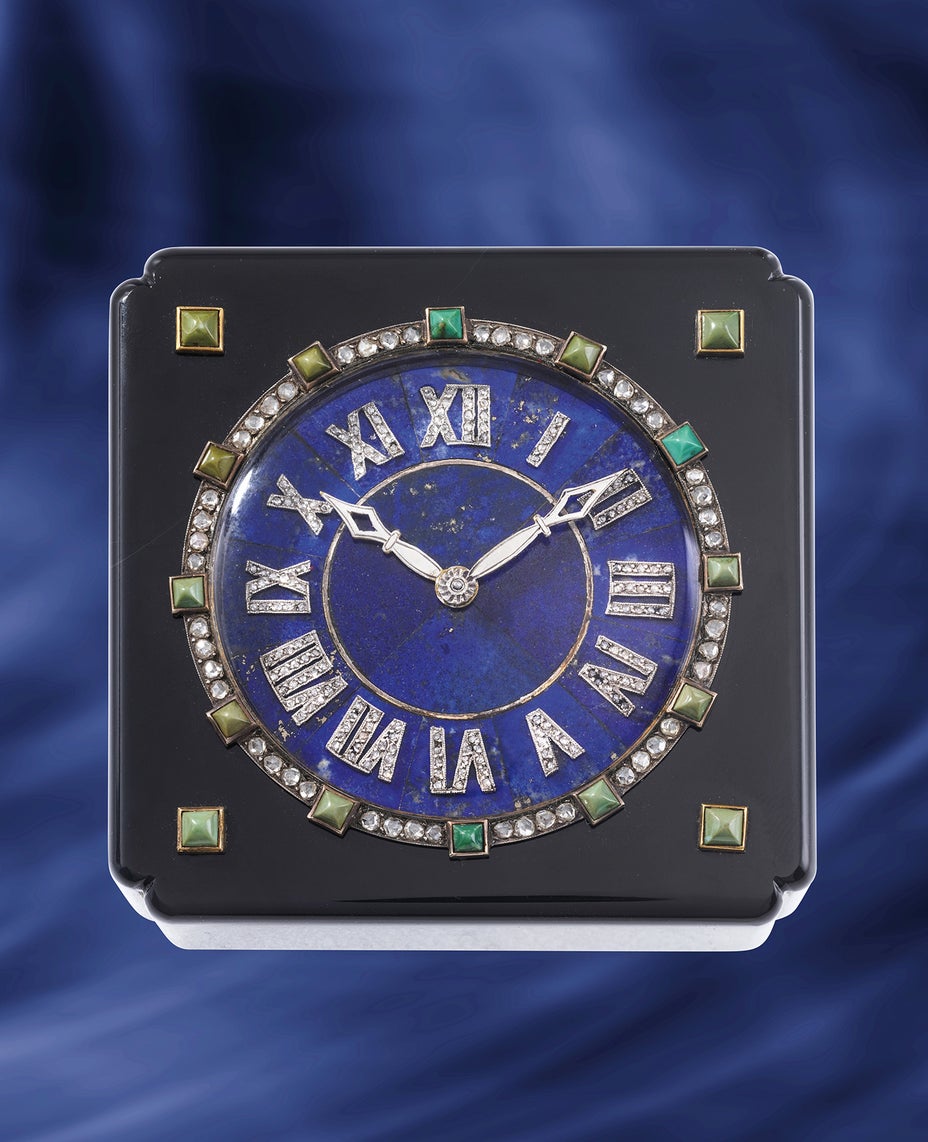
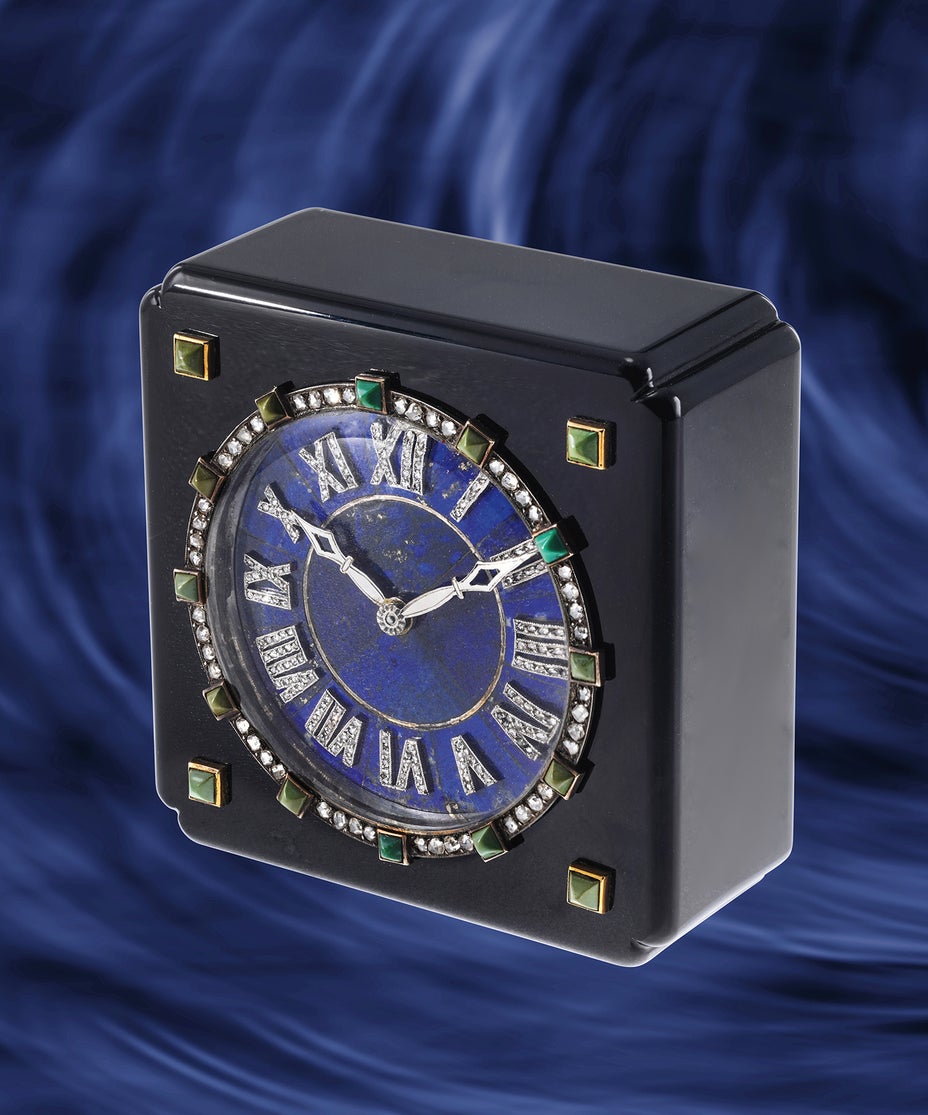
Cartier Paris,罕有、精美,瑪瑙方形桌鐘,備8天機芯、青金石鐘盤、鑲鑽時標、綠松石裝飾。
估價
CHF10,000–20,000
€10,800–21,600
$12,600–25,100
成交價
CHF76,200
製造商
Cartier Paris
年份
Circa 1930
機芯編號
41'456
錶殼號碼
1214, 2886 and stock no. 92954
材料
Black onyx, lapis lazuli, diamonds and turquoise
機芯
Manual, 15 jewels
尺寸
65mm length and 65mm width
簽名
Movement and case signed European Watch & Clock Co. Inc. France, case with Cartier hand stamped numbers
完整圖錄內容
First created in the early 1900s, the desk clock was Cartier’s perfect canvas to showcase its unbridled creativity. The desk clock is a result of two guiding principles - merging a beautifully and intricately crafted work of art with horology.
The creation of the desk clock perfectly coincides with Cartier’s first foray into the Far East. In 1901, Louis Cartier tasked one of his best salesmen, Jules Glaenzer, to asses its potential as a commercial center. Coming back, Glaenzer not only discovered another culture a world apart, but had also filled his pockets with curiosities, gems and treasures from the Far East. What started as a commercial trip turned into one of the biggest cultural inspirations for the illustrious jeweler.
Created in circa 1930, the present example is crafted in onyx, with a beautiful lapis lazuli dial to the center. Rose-cut diamonds are scattered throughout, making up the numerals on the dial giving an incredibly glamorous appearance. The unparalleled condition and quality of the present desk clock underlies its importance. It was during the 1920s and 1930s that Cartier was arguably at its most productive, manufacturing pieces of unsurpassed quality and ingenuity
The creation of the desk clock perfectly coincides with Cartier’s first foray into the Far East. In 1901, Louis Cartier tasked one of his best salesmen, Jules Glaenzer, to asses its potential as a commercial center. Coming back, Glaenzer not only discovered another culture a world apart, but had also filled his pockets with curiosities, gems and treasures from the Far East. What started as a commercial trip turned into one of the biggest cultural inspirations for the illustrious jeweler.
Created in circa 1930, the present example is crafted in onyx, with a beautiful lapis lazuli dial to the center. Rose-cut diamonds are scattered throughout, making up the numerals on the dial giving an incredibly glamorous appearance. The unparalleled condition and quality of the present desk clock underlies its importance. It was during the 1920s and 1930s that Cartier was arguably at its most productive, manufacturing pieces of unsurpassed quality and ingenuity