PROPERTY FROM A PRESTIGIOUS FAMILY COLLECTION
97
Northern Goldsmiths Company
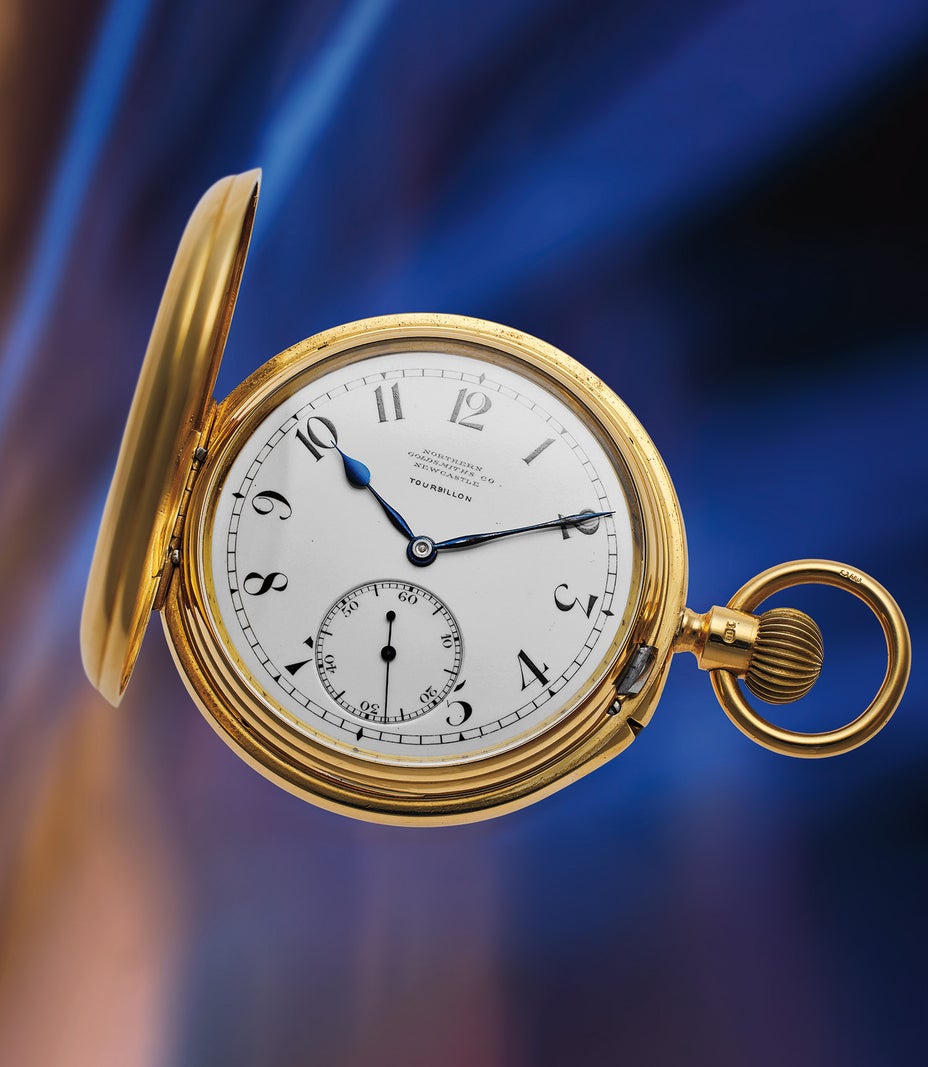
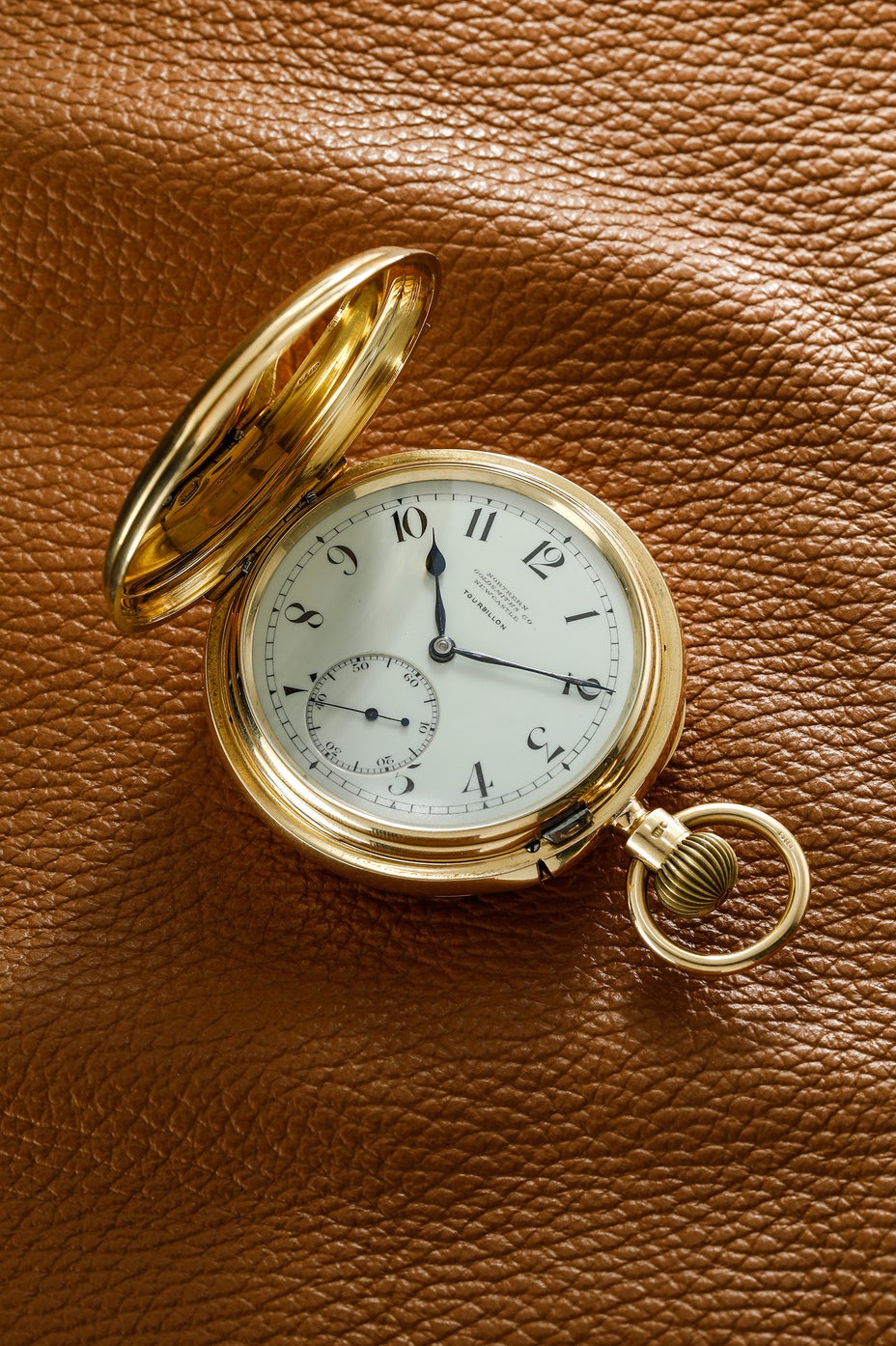
Northern Goldsmiths Company,極度罕有、重要,黃金獵殼天文台懷錶,備獨特一分鐘陀飛輪。
估價
$40,000–80,000
成交價
$69,850
製造商
Northern Goldsmiths Company
年份
1918
機芯編號
2052
錶殼號碼
2052
材料
18K yellow gold
機芯
Manual, gilt three quarter plate straight line lever escapement, 15 jewels
尺寸
56mm Diameter
簽名
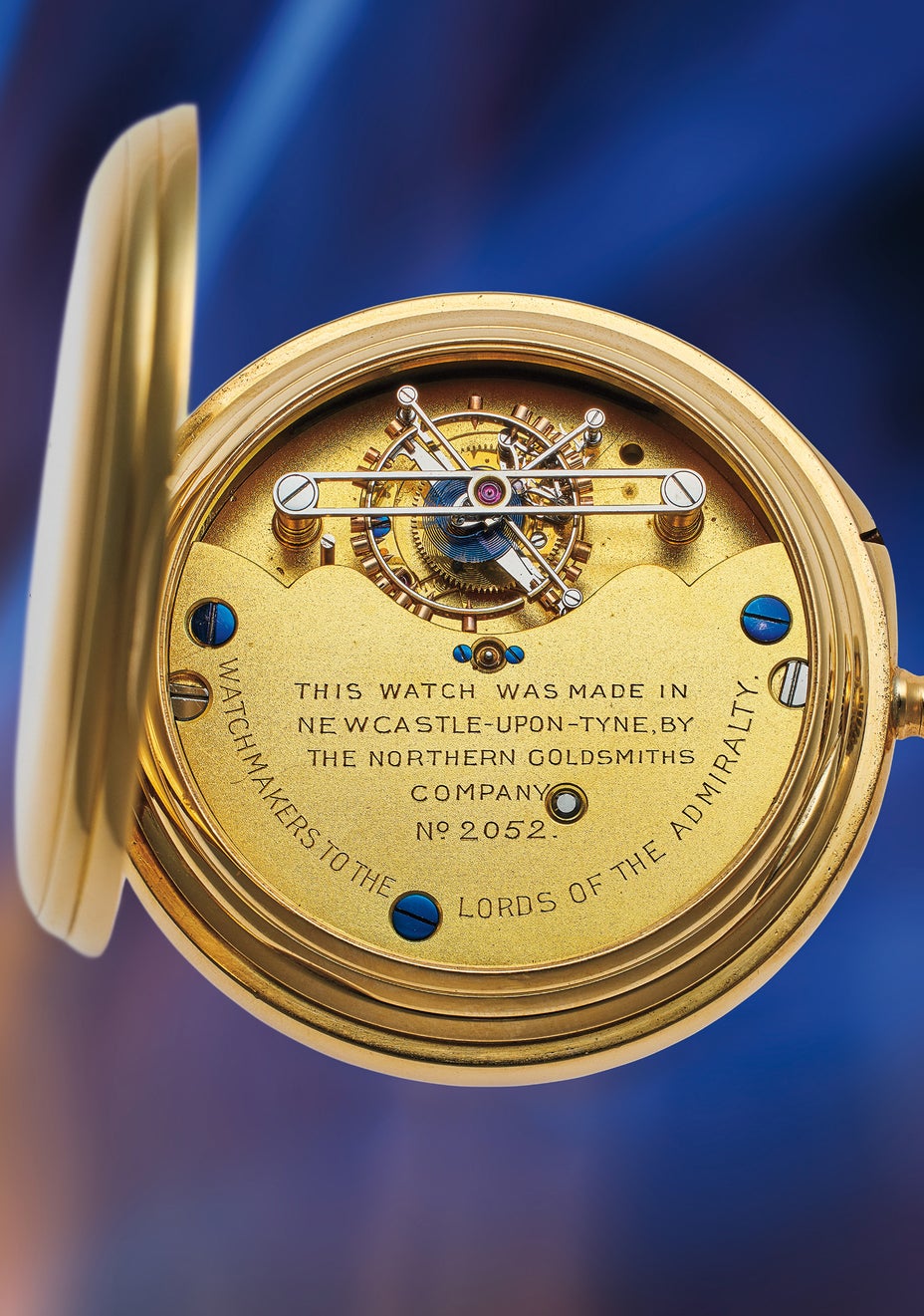
Case with London gold hallmarks for 1918 (front cover) and 1922 (back cover), dial and case signed Northern Goldsmiths Company Newcastle Upon Tyne.
完整圖錄內容
Featured in multiple historically important horological tomes including George Daniels and Cecil Clutton’s Watches, and Reinhard Meis’, Das Tourbillon, the Northern Goldsmiths series of eccentric tourbillon pocket watches are widely considered as some of the finest and most accurate British watches made during the early 20th century.
One of only nine known examples of a possible 15 produced between 1917 and 1922, the present watch was sent to the Kew Observatory for testing in 1919, and received 89.2 marks, earning a Kew A “Especially Good” certificate. Housed within an extremely high-quality 18 karat yellow gold hunter case with 5-knuckle joints and a raised push piece, the frosted gilt three-quarter plate movement exhibits finest quality, hand-made details, such as jewels housed in screwed-in gold chatons, mirror polished bridges and tourbillon cage, and beautifully beveled gear axles.
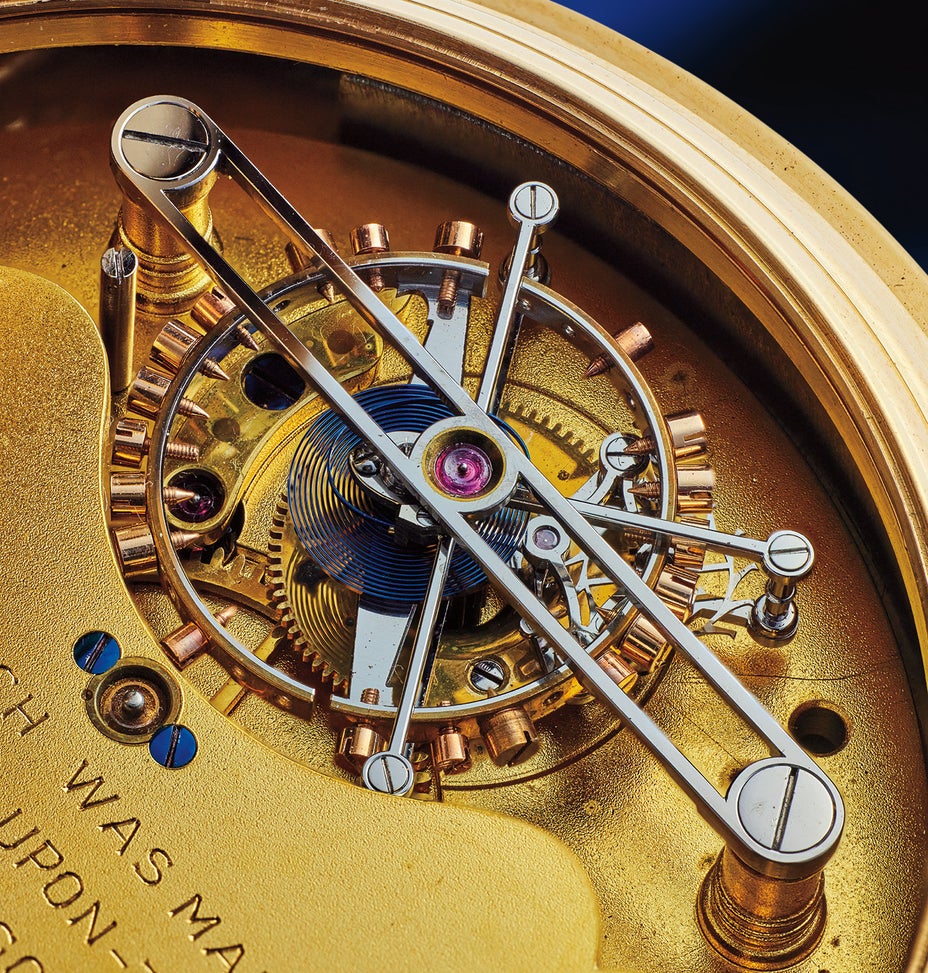
The tourbillon escapement, of course is the star of the show. The polished steel double-arm bridge, referred to in scholarship as the “Better 1” design attributed to Sidney Better, and houses a “Better type-2” carriage with offset arms. Free-sprung and fitted with a blued steel balance wheel with terminal curve, the entire design was made for maximum timekeeping accuracy – and its Especially Good rating at Kew proves it. Beautifully preserved with its mesmerizing, eccentric tourbillon cage immediately captivating to the eye, it is an exceptional opportunity for the discerning collector.
One of only nine known examples of a possible 15 produced between 1917 and 1922, the present watch was sent to the Kew Observatory for testing in 1919, and received 89.2 marks, earning a Kew A “Especially Good” certificate. Housed within an extremely high-quality 18 karat yellow gold hunter case with 5-knuckle joints and a raised push piece, the frosted gilt three-quarter plate movement exhibits finest quality, hand-made details, such as jewels housed in screwed-in gold chatons, mirror polished bridges and tourbillon cage, and beautifully beveled gear axles.
The tourbillon escapement, of course is the star of the show. The polished steel double-arm bridge, referred to in scholarship as the “Better 1” design attributed to Sidney Better, and houses a “Better type-2” carriage with offset arms. Free-sprung and fitted with a blued steel balance wheel with terminal curve, the entire design was made for maximum timekeeping accuracy – and its Especially Good rating at Kew proves it. Beautifully preserved with its mesmerizing, eccentric tourbillon cage immediately captivating to the eye, it is an exceptional opportunity for the discerning collector.