901
Omega
Ref. ST 145.022-69
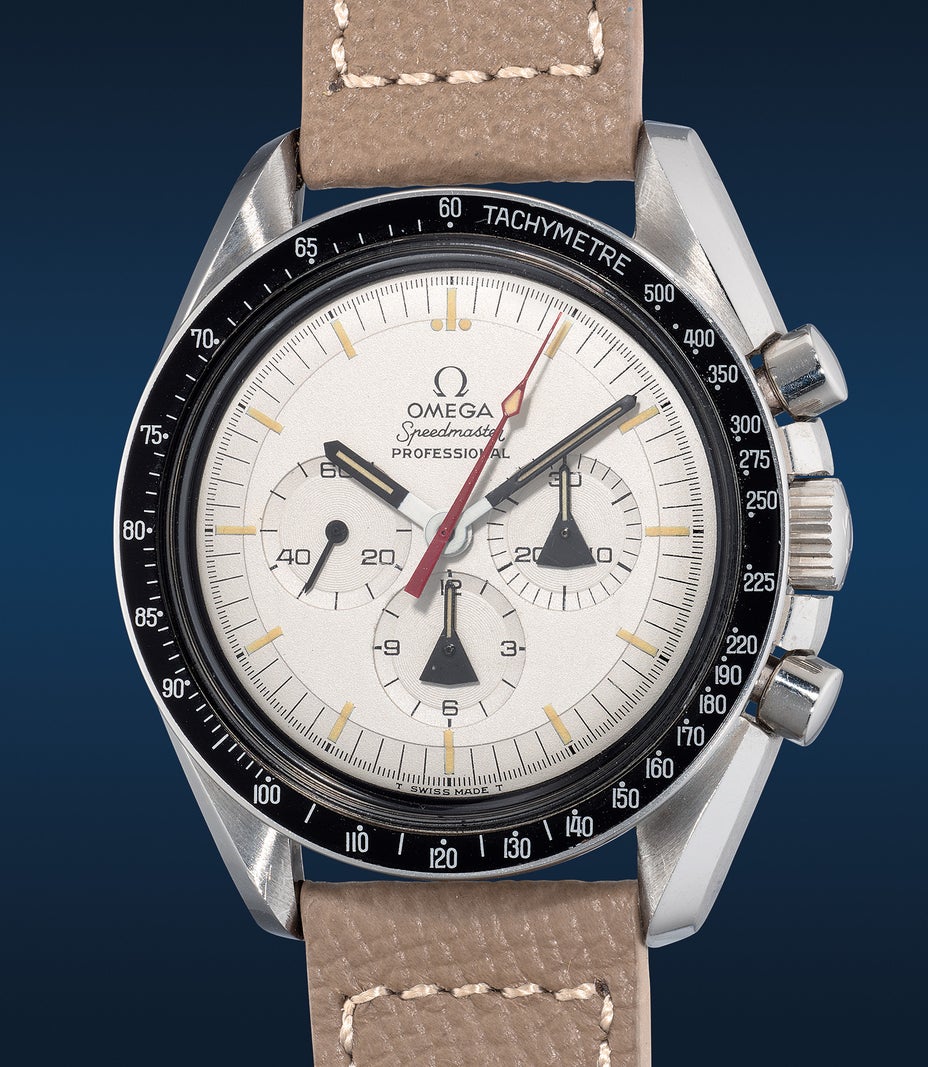
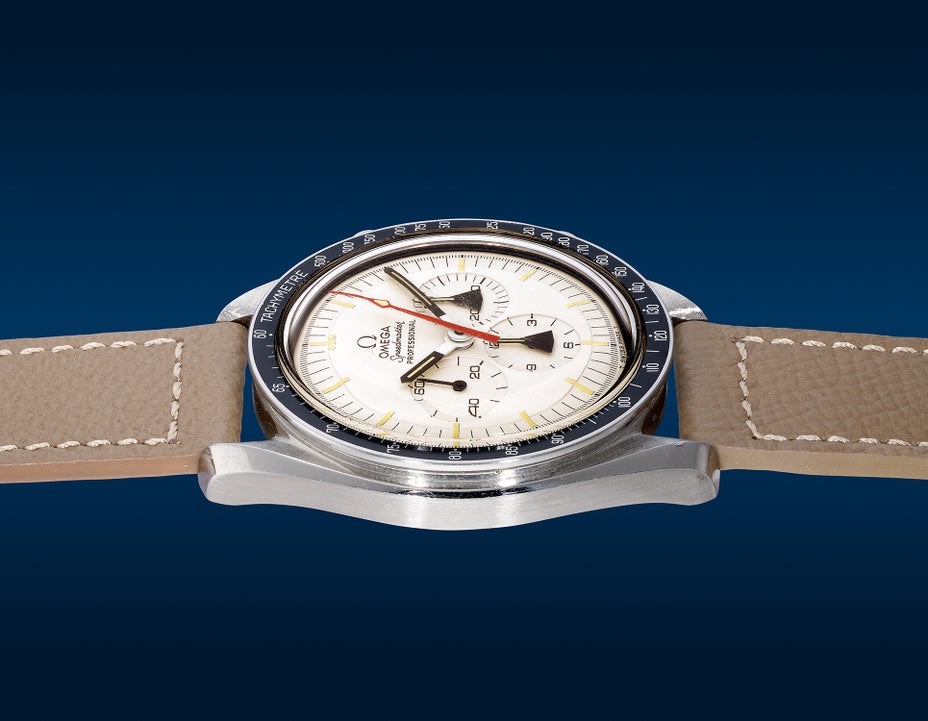
Speedmaster Professional Moonwatch, "Alaska Project"
歐米茄,「Speedmaster Professional Moonwatch, "Alaska Project" 」型號ST 145.022,極為罕有重要,精鋼計時腕錶,備白色錶盤,特為阿波羅計劃製造,曾交予美國太空總署,1970年製。附後補證書
完整圖錄內容
Even before NASA’s most famous Apollo 11 moon landing mission in 1969, and under the cover of the codename “Alaska Project”, Omega was working on a secret project to create the perfect space watch. The code-name “Alaska” was chosen to ensure that this secret project would remain as elusive as possible in case of any industrial espionage.
Following the cancellation of the Apollo missions after Apollo 17, there was no immediate use for the Alaska Project’s test-watches so the project was temporarily terminated, though remarkable progress had been made. This first phase of the development can be called “Alaska I”.
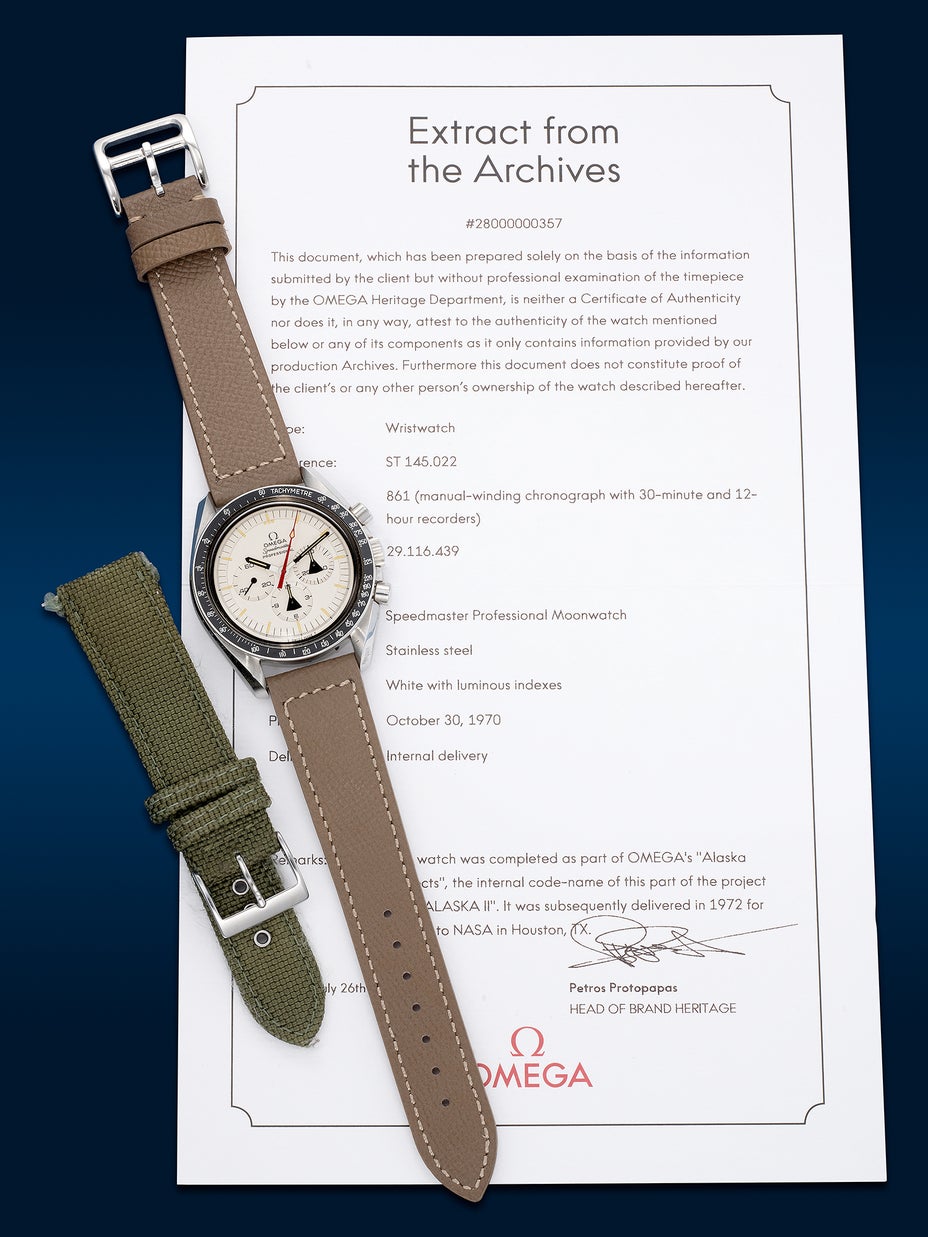
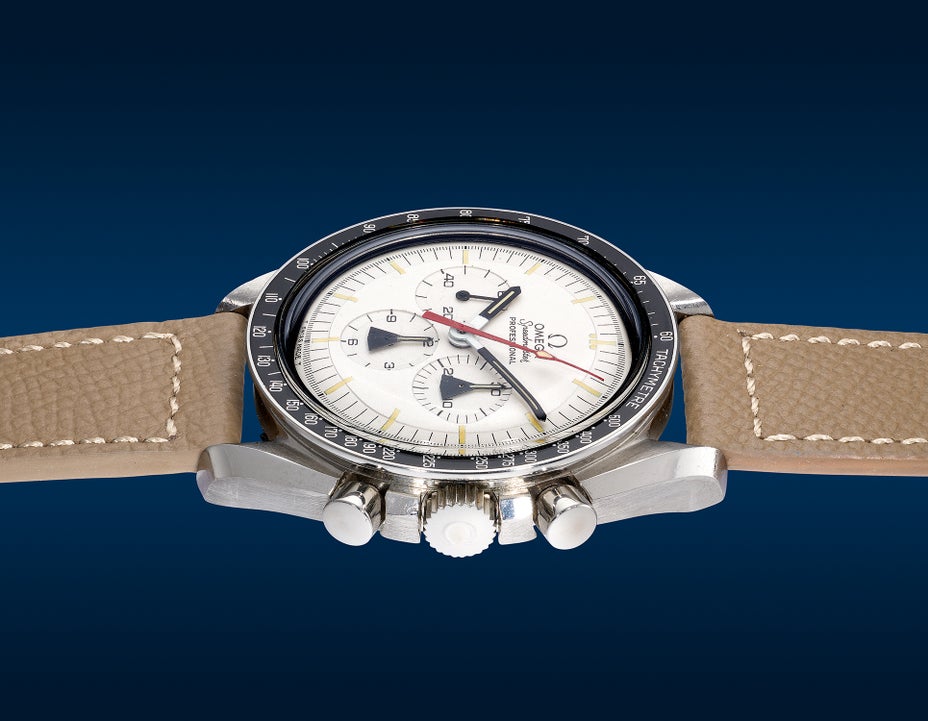
In the early 1970s, Omega began work on a continuation of its secret project, now internally titled “Alaska II”, which involved several studies and prototypes. The first batch of the “Alaska II” prototypes is closely related to the production of Speedmaster Professional, with less changes than those of the earlier project of 1969. It paired most of the tested technologies of “Alaska I” with the trusted and legendary Speedmaster Moonwatch case of the (then) current reference ST 145.022. The special characteristics of the watch are aimed at improving legibility and usage in space. For example, the white dial was considered more legible and the same holds true for the oversized subsidiary dials hands (aptly dubbed “Apollo” hands by Omega). Additionally, some examples are known to have a red anodized aluminum outer protective case.
The “Alaska II” test-watches were delivered to Houston at the beginning of 1970s, with the present lot delivered in 1972 as confirmed by the Extract. While once again considerable progress had been made, since the Apollo Program had come to an end by the end of 1972, the “Alaska II” test-watches were not retained by the program office and the series of Omega’s Alaska Projects came to a halt once more.
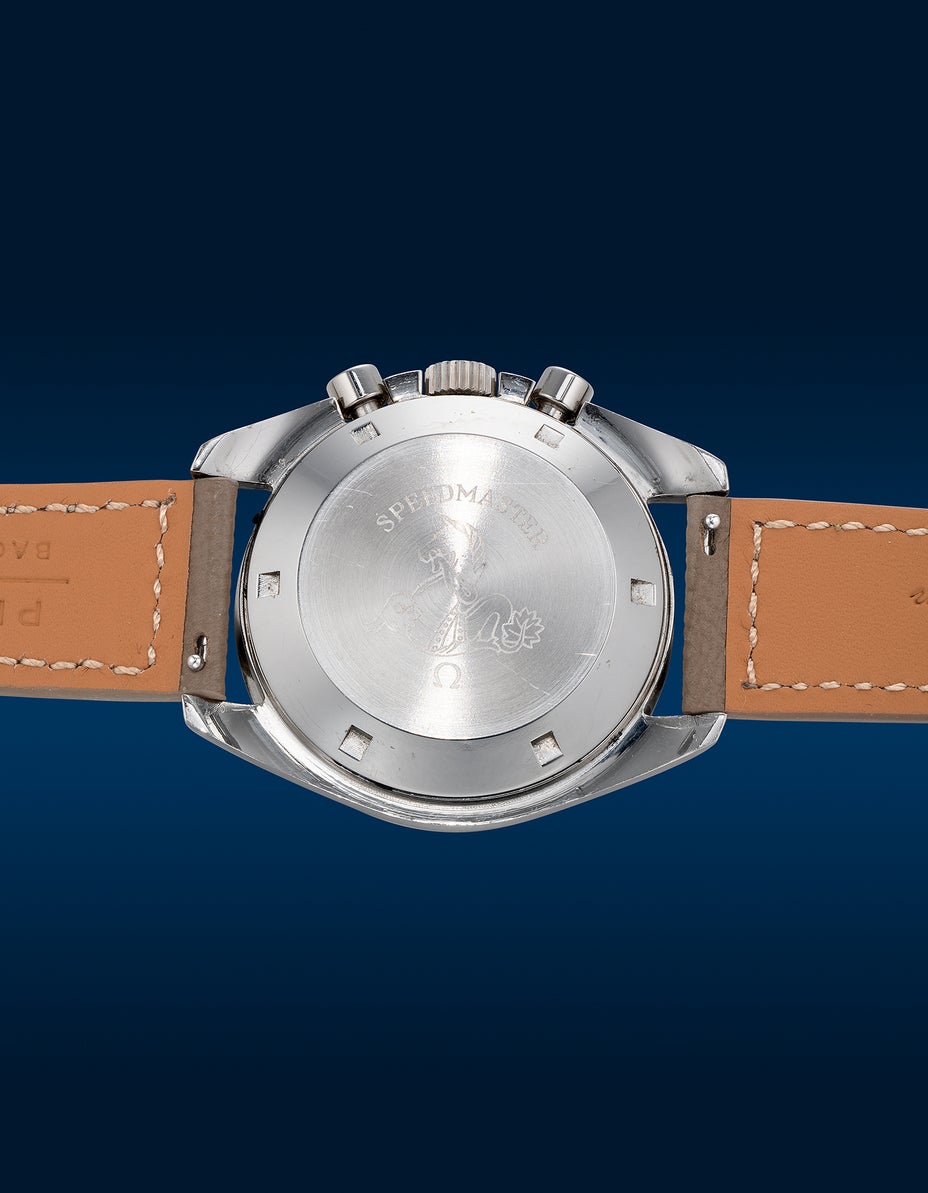
With a virtually flawless dial and an extremely well-preserved case, the present example represents an enormously scarce occasion for the Omega collector to own what is undoubtedly considered one of the holiest grails of Omega production.
Omega
Swiss | 1848Omega's rich history begins with its founder, Louis Brandt, who established the firm in 1848 in La Chaux de Fonds. In 1903, the company changed its name to Omega, becoming the only watch brand in history to have been named after one its own movements. A full-fledged manufacturer of highly accurate, affordable and reliable watches, its sterling reputation enabled them to be chosen as the first watch company to time the Olympic Games beginning in 1932. Its continued focus on precision and reliability ultimately led their Speedmaster chronograph wristwatch to be chosen by NASA in 1965 — the first watch worn on the moon.
Key models sought-after by collectors include their first, oversized water-resistant chronograph — the reference 2077, early Speedmaster models such as the CK 2915 and 2998, military-issued versions of the Seamaster and oversized chronometer models such as those fitted with their prestigious caliber 30T2Rg.