229
Patek Philippe
Ref. 5131G
World Time
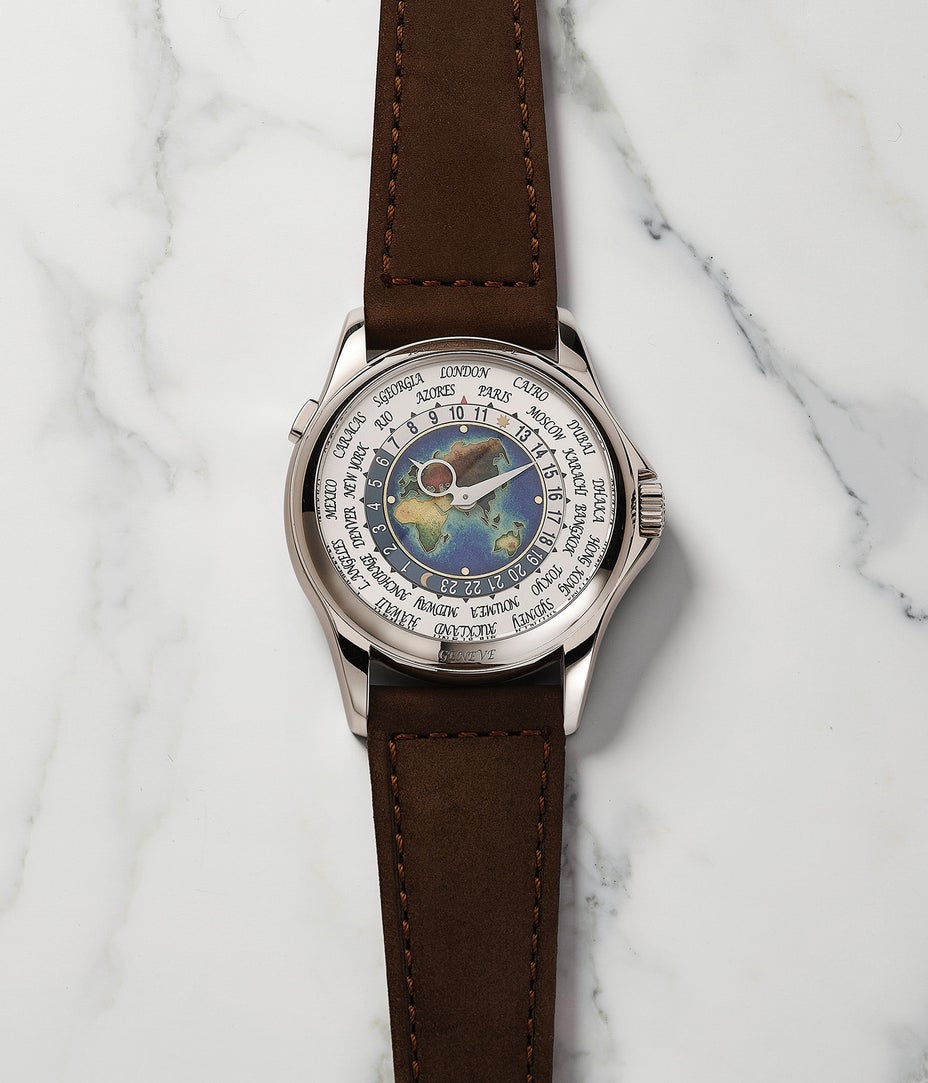
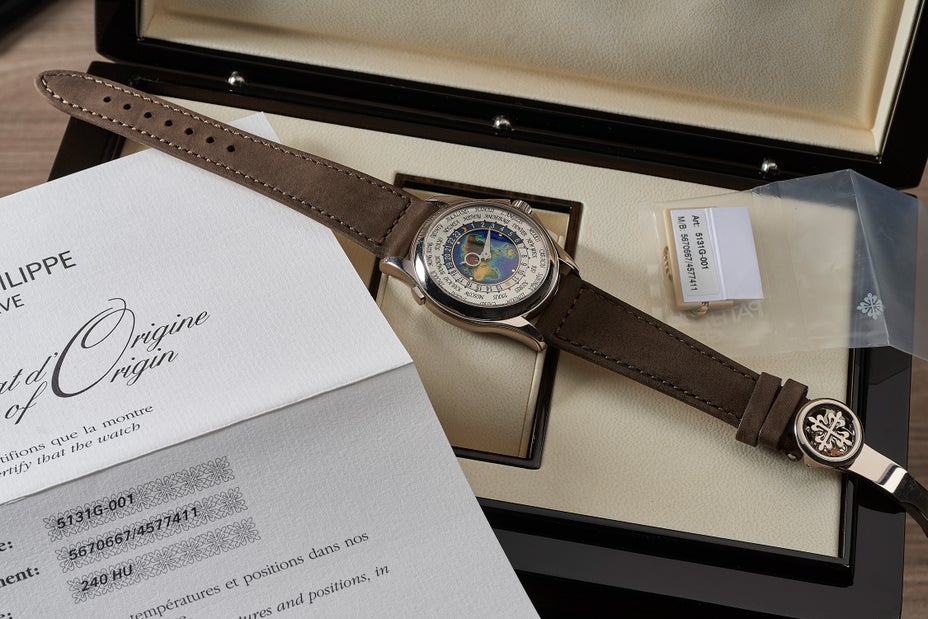
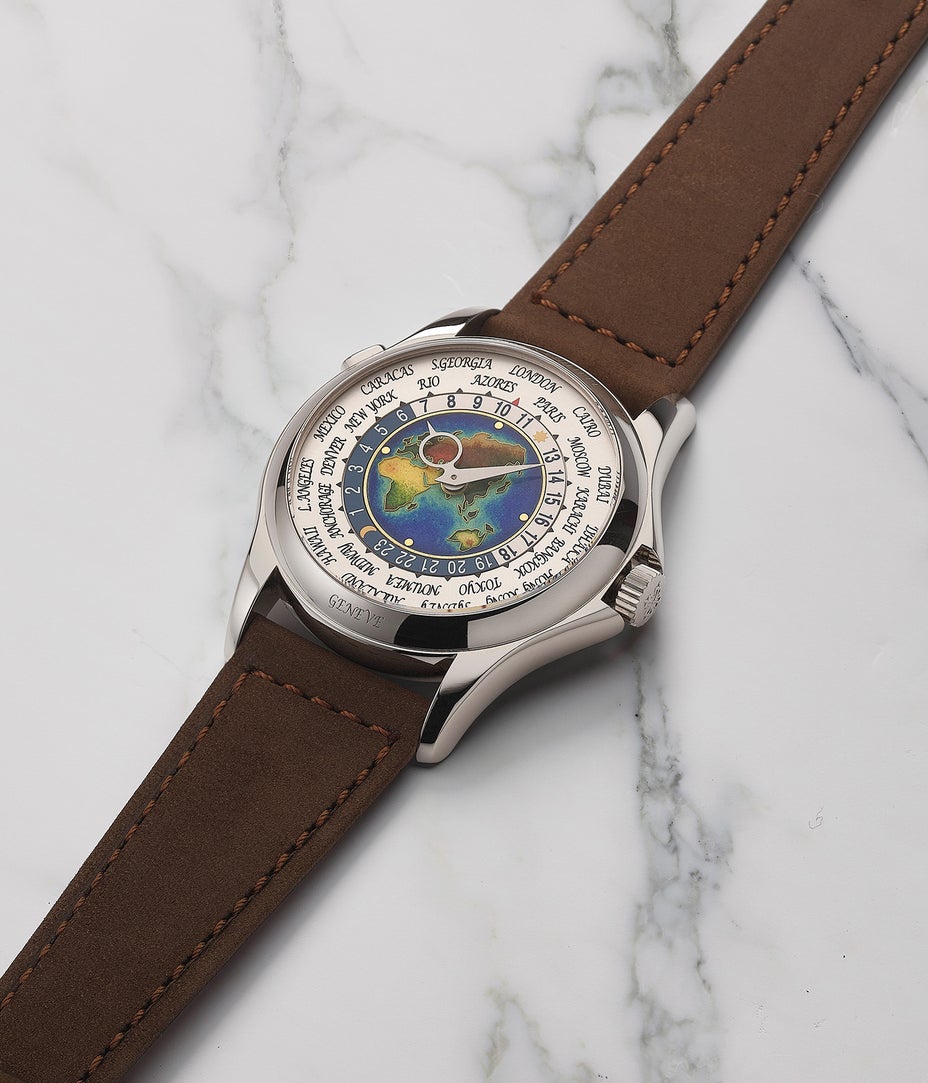
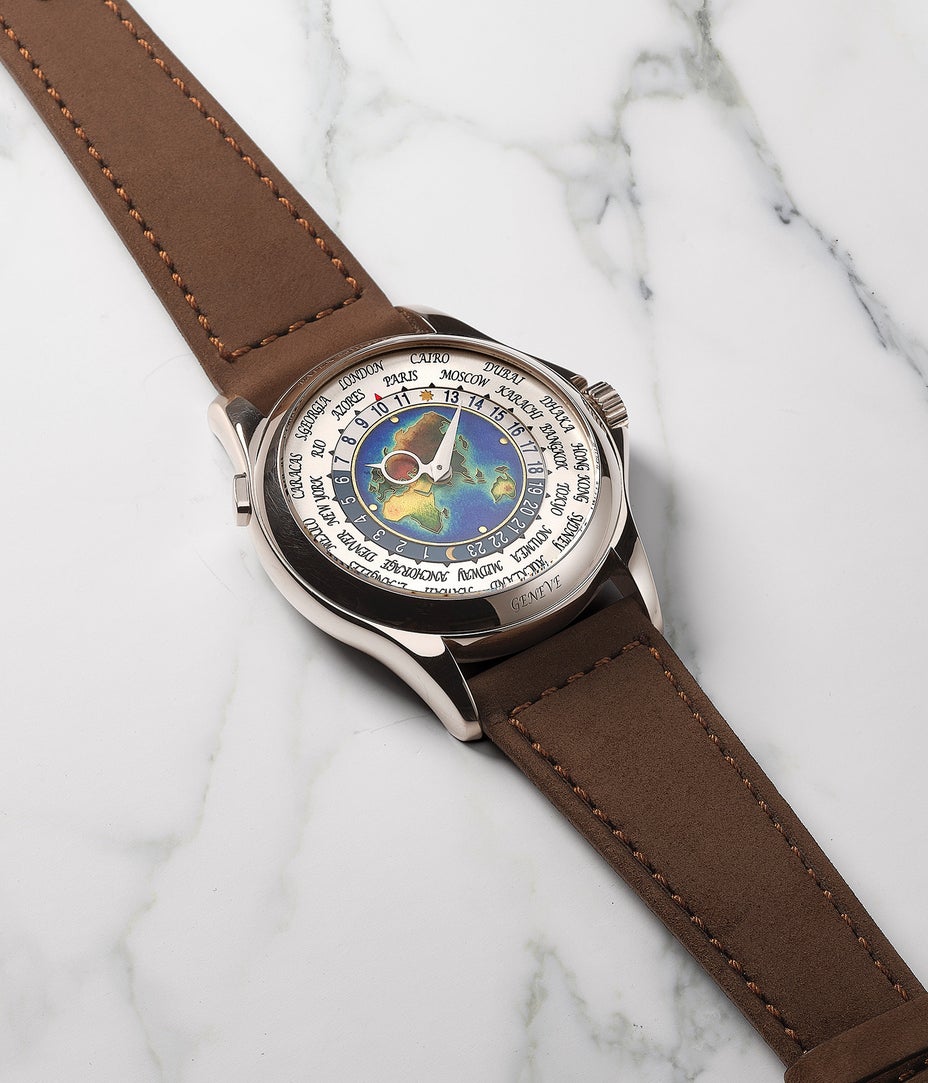
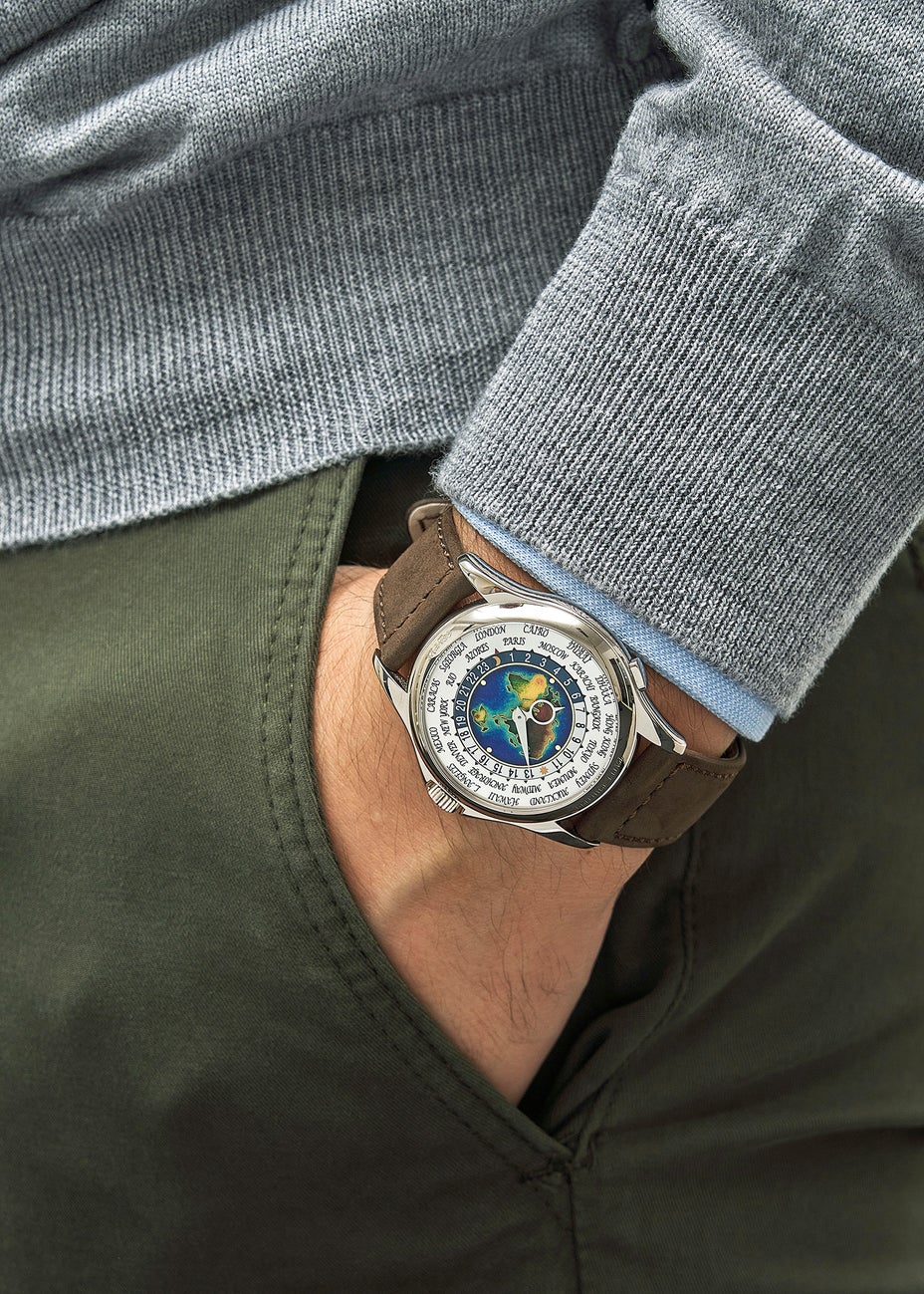
A very fine and rare white gold world time wristwatch with cloisonné enamel dial, certificate of origin and presentation box
完整圖錄內容
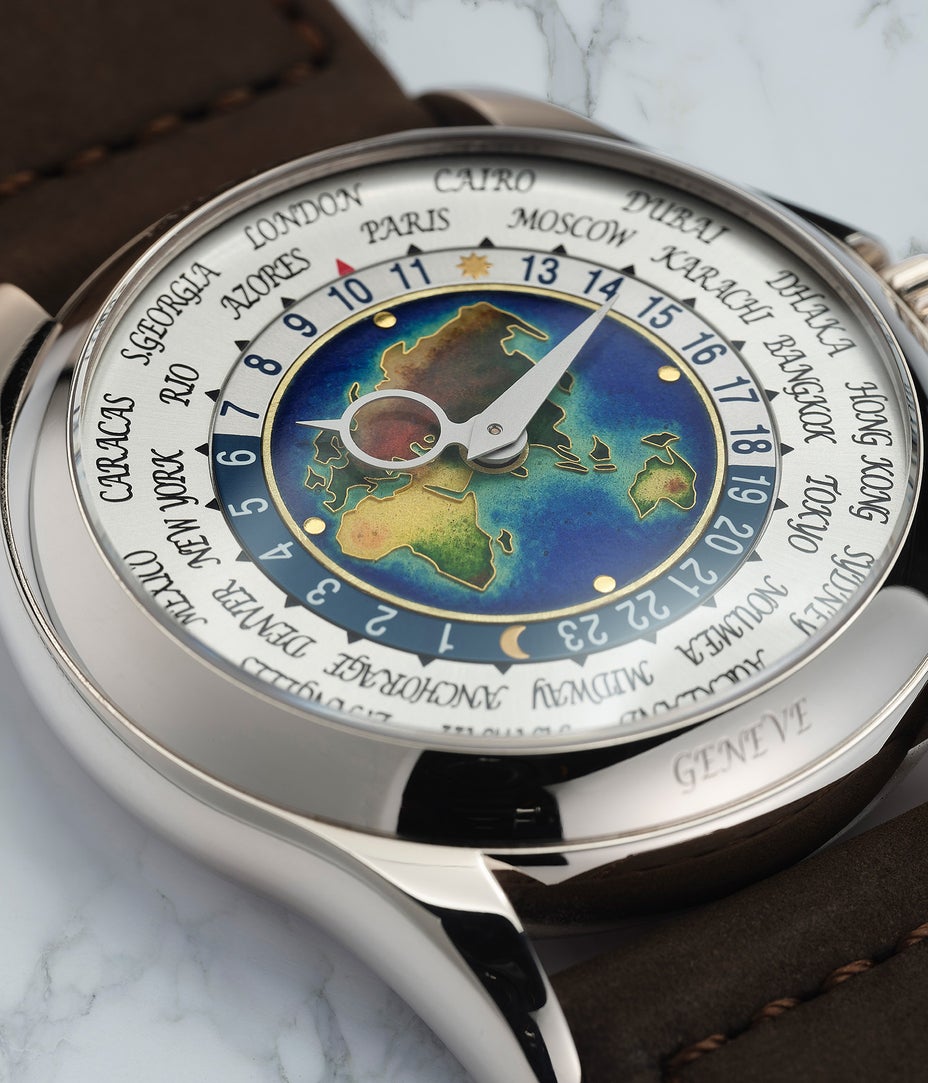
The various cloisonné enamel dials initially only depicted a map of the Americas, later models also featured Asia, Africa and Europe, as with the present model.
Worldtime watches were invented, as is the case with most innovations, out of necessity. With the advent of the industrial age came the means necessary to facilitate global trade and travel and, as a direct result, there was a need for timekeeping devices capable of tracking time in multiple locations. Between 1930 and 1931, Louis Cottier designed an ingenious, ultra-thin mechanism that simultaneously displayed the correct hours across the world's time zones through a rotating 24-hour ring, in addition to the local time.
The city of choice (local time zone) would be set at the 12 o'clock position with the hours/minutes hand set at local time. The highly user friendly design, used until the present day, would then display the correct time in both hours and minutes, night and day, for every time zone in the world simultaneously, while clearly indicating local time - all via a single dial.
The white gold case of present example in a perfect frame for the vibrant cloisonné enamel center dial depicting Europe, Africa and Asia in a wonderful array of blues, greens and yellows all outlined in fine gold.
A well-balanced 40mm in diameter, this modern horological masterpiece marries the old and the new perfectly, and is sure to be the perfect companion for the well-traveled connoisseur.
Patek Philippe
Swiss | 1839Since its founding in 1839, this famous Geneva-based firm has been surprising its clientele with superbly crafted timepieces fitted with watchmaking's most prestigious complications. Traditional and conservative designs are found across Patek Philippe's watches made throughout their history — the utmost in understated elegance.
Well-known for the Graves Supercomplication — a highly complicated pocket watch that was the world’s most complicated watch for 50 years — this family-owned brand has earned a reputation of excellence around the world. Patek's complicated vintage watches hold the highest number of world records for results achieved at auction compared with any other brand. For collectors, key models include the reference 1518, the world's first serially produced perpetual calendar chronograph, and its successor, the reference 2499. Other famous models include perpetual calendars such as the ref. 1526, ref. 3448 and 3450, chronographs such as the reference 130, 530 and 1463, as well as reference 1436 and 1563 split seconds chronographs. Patek is also well-known for their classically styled, time-only "Calatrava" dress watches, and the "Nautilus," an iconic luxury sports watch first introduced in 1976 as the reference 3700 that is still in production today.