229
Patek Philippe
Ref. 739
大型天文台懷錶,備「Guillaume」鎳鋼合金擺輪
完整圖錄內容
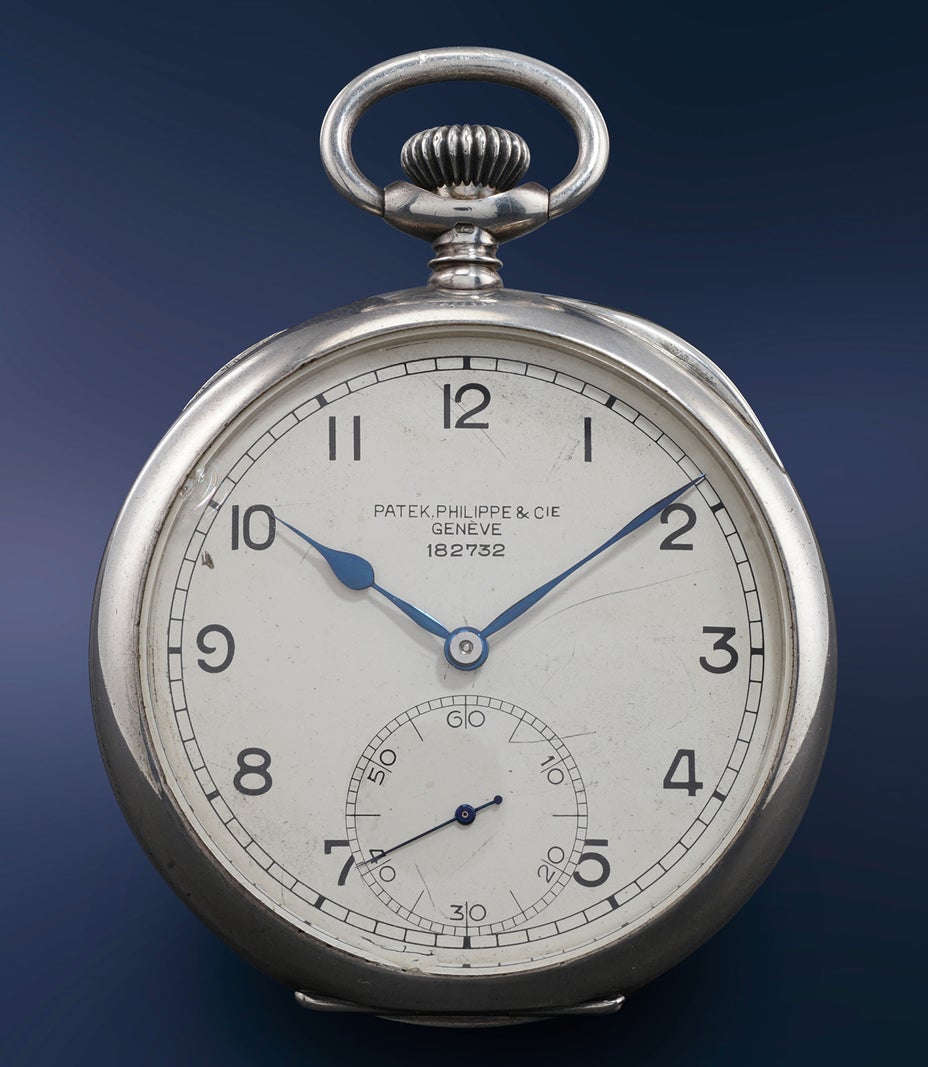
It is interesting to note some movements were made earlier and later encased such as the present watch. The typical construction consisted for these precision timepieces featured an oversized case measuring between 59mm to 62mm diameter, and with a caliber 19”, 21” and 22” movement depending on the case size. The cases were manufactured in silver and stamped with the FFBA (Fédération des Fabricants de Boîtes Argent) Swiss silver hallmark. The dials typically carried the movement number enabling ease in check in the Bulletin certificates, and the watch would have originally been issued with a wooden deck box. These deck chronometers were produced in four series:
• 738-open face chronometer with subsidiary dial
• 738-1-open face chronometer with up/down indicator and subsidiary seconds dial with vertical orientation
• 738-2-open face chronometer with up/down indicator and subsidiary seconds dial with a horizontal orientation
• 739-open face chronometer with subsidiary dial, renamed reference 738, like the present watch
The Stern Frères dials were made in metal, silvered or enamel.
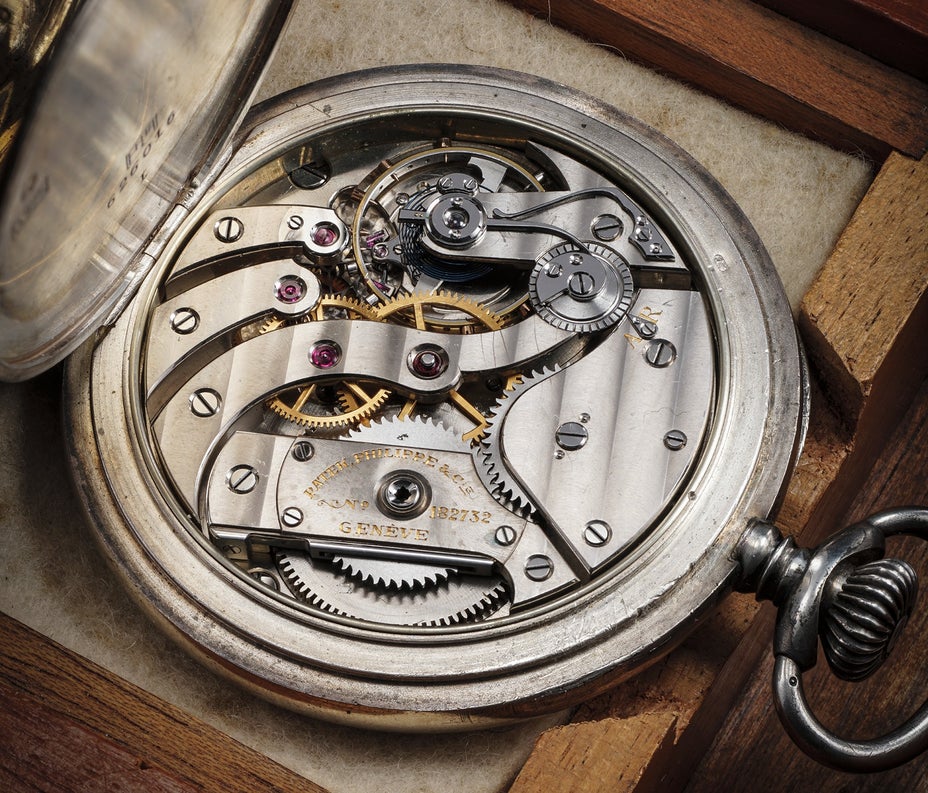
The present example features a movement made in 1914 but the watch was only sold in 1942 to A. Lünser a watchmaker based in Berlin whose name is further engraved on the inner caseback.
The movement is superbly executed and finished, it features a fine adjustment, wolf’s tooth winding and a Guillaume balance, a balance made of steel and nickel alloy with anti-magnetic properties and un-affected by varying temperatures. It was an invention that enabled its inventor, Charles-Eduard Guillaume, to obtain the Nobel Prize for physics in 1920.
Patek Philippe
Swiss | 1839Since its founding in 1839, this famous Geneva-based firm has been surprising its clientele with superbly crafted timepieces fitted with watchmaking's most prestigious complications. Traditional and conservative designs are found across Patek Philippe's watches made throughout their history — the utmost in understated elegance.
Well-known for the Graves Supercomplication — a highly complicated pocket watch that was the world’s most complicated watch for 50 years — this family-owned brand has earned a reputation of excellence around the world. Patek's complicated vintage watches hold the highest number of world records for results achieved at auction compared with any other brand. For collectors, key models include the reference 1518, the world's first serially produced perpetual calendar chronograph, and its successor, the reference 2499. Other famous models include perpetual calendars such as the ref. 1526, ref. 3448 and 3450, chronographs such as the reference 130, 530 and 1463, as well as reference 1436 and 1563 split seconds chronographs. Patek is also well-known for their classically styled, time-only "Calatrava" dress watches, and the "Nautilus," an iconic luxury sports watch first introduced in 1976 as the reference 3700 that is still in production today.