1030
Patek Philippe
Ref. 533
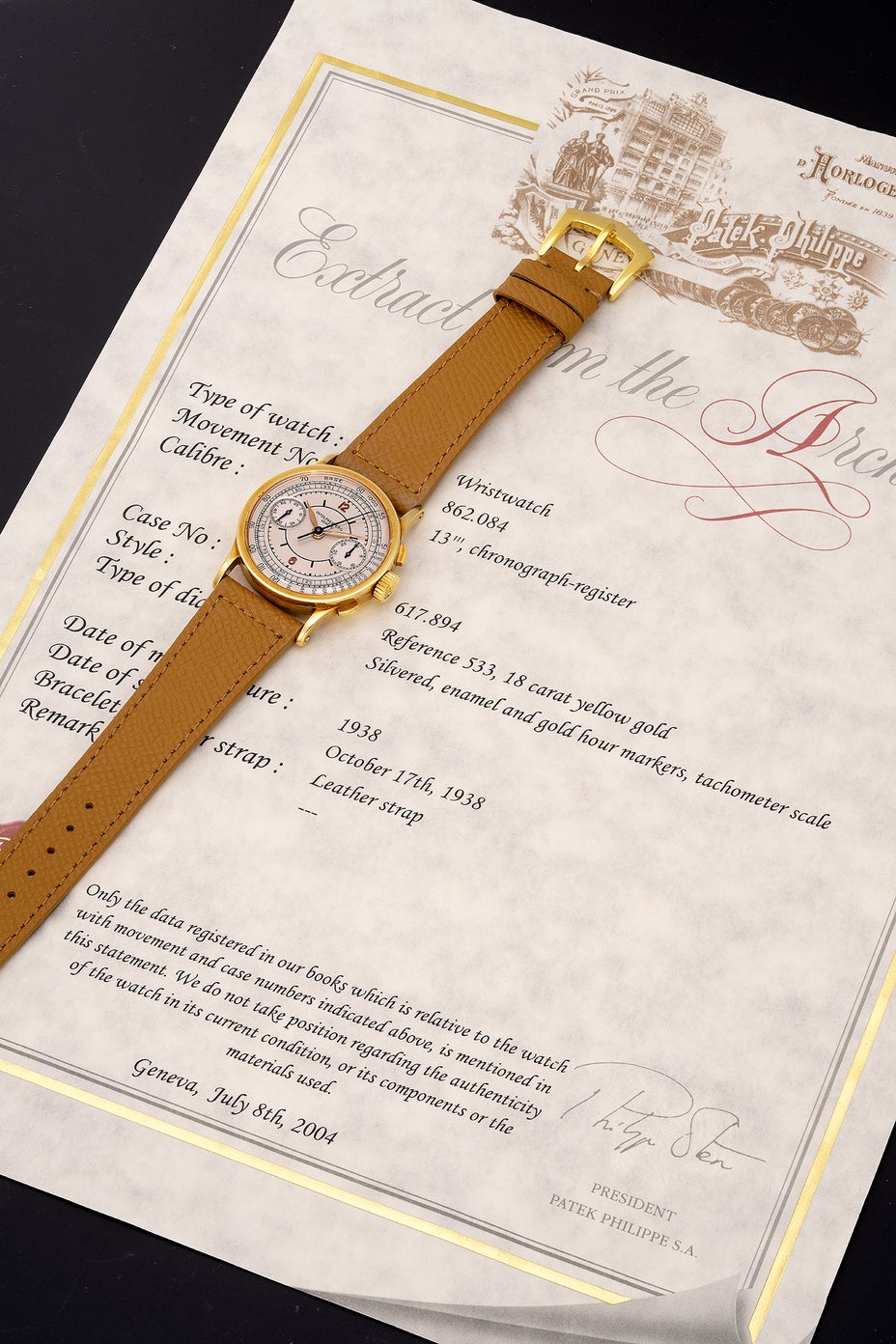
百達翡麗,型號533,精細罕有,黃金計時腕錶,備「sector」錶盤,1938年製。附後補證書
完整圖錄內容
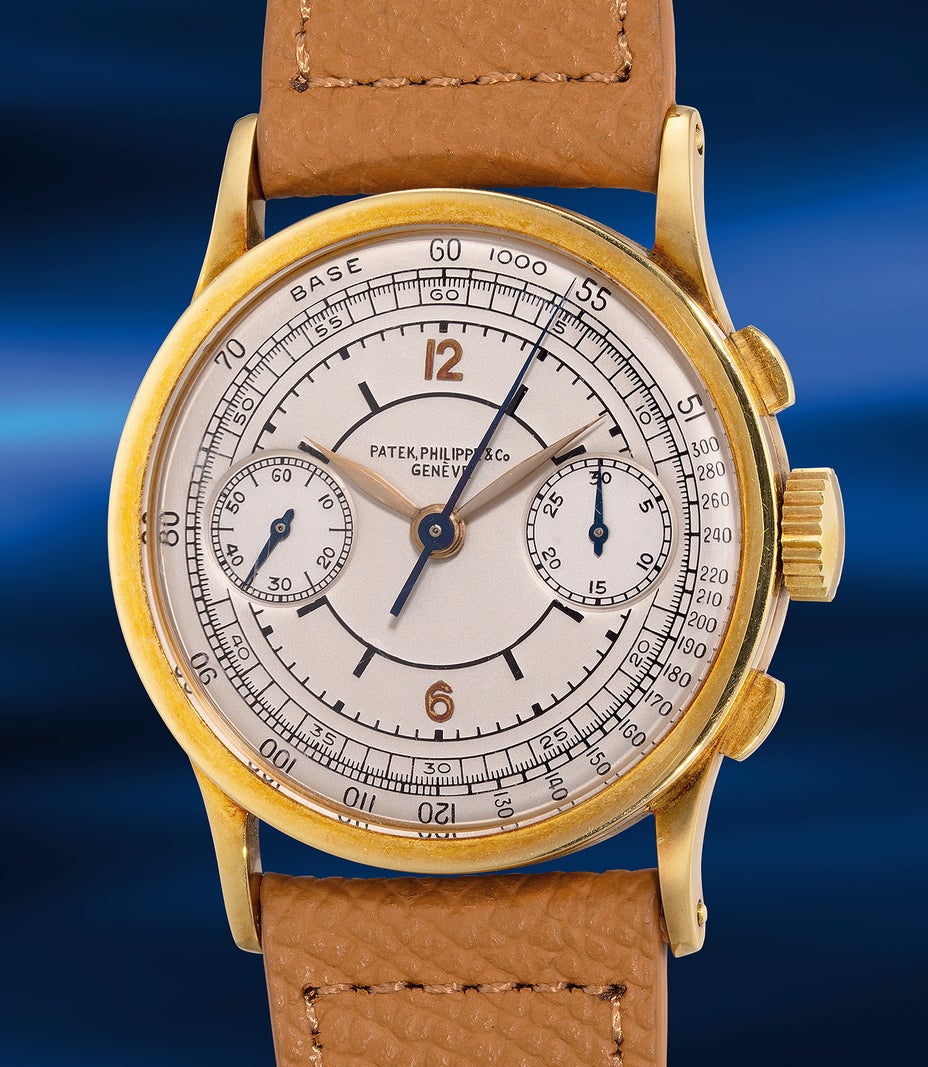
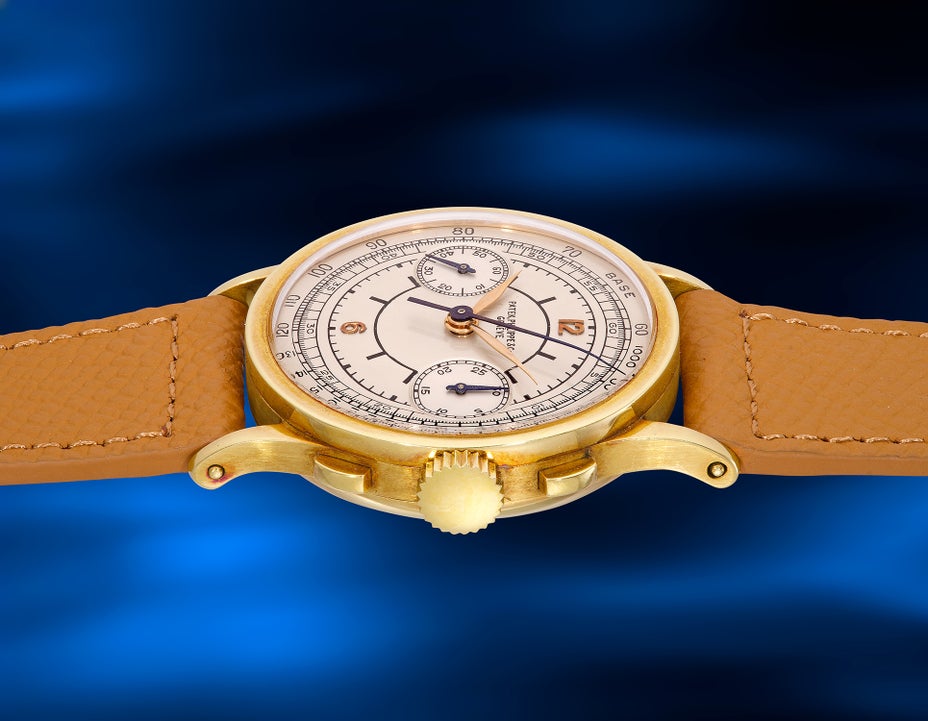
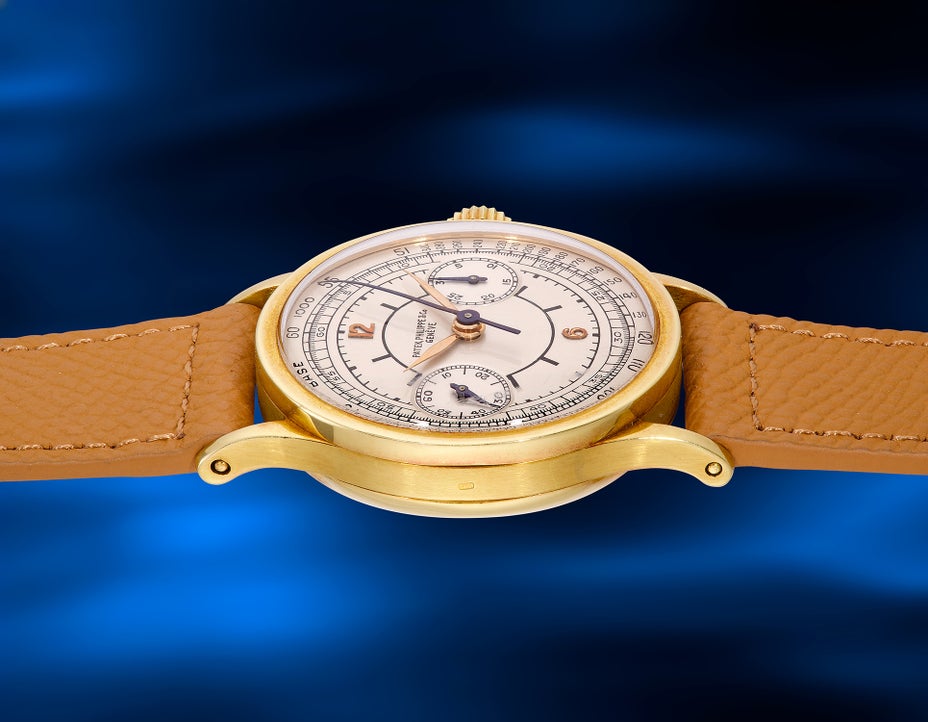
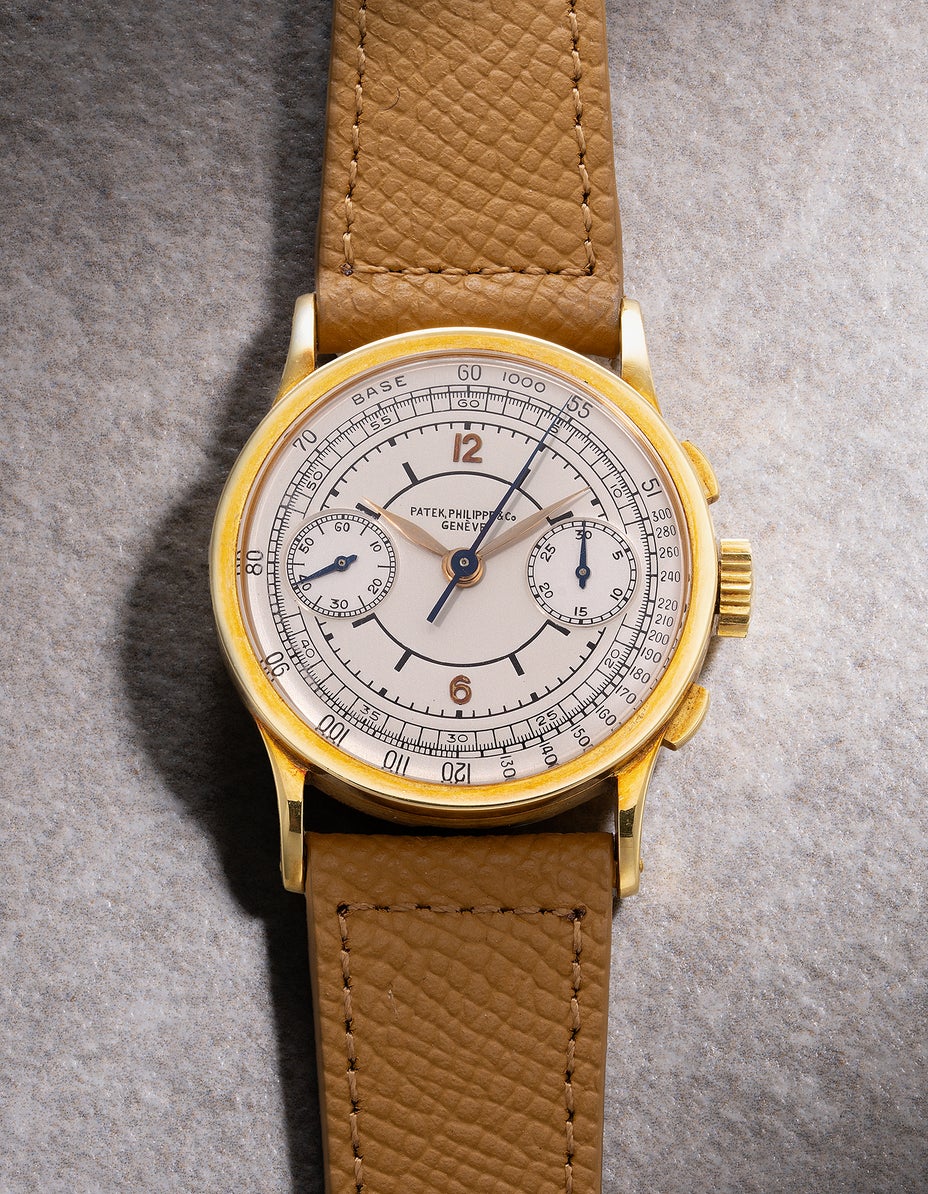
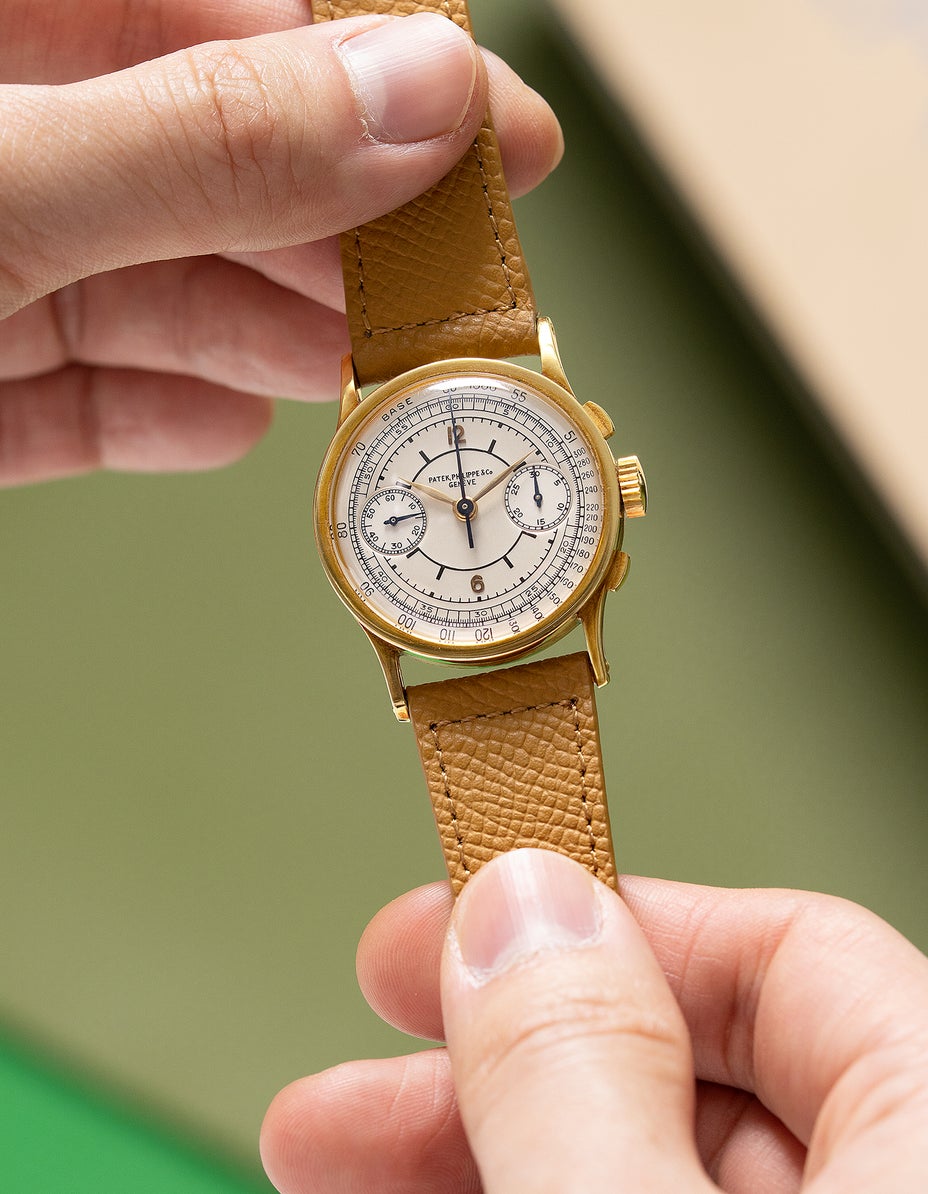
Extremely appealing, research also indicates that only approximately 150 examples are known today, making it one of the rarest chronographs by Patek Philippe to get your hands on. And as of this very specimen, it is blessed with one of the most desirable dials, the sector. To further provide more perspective, it is believed only 12 examples of the ref 533 were fitted with a sector dial, and the present example is one of only six known to the market.
The sector dial has been in use by various Swiss manufacturers for approximately the last 100 years. The first known examples were found on pocket watches at the turn of the century, however as early as 1910 they began to appear on wristwatches, in particular during the First World War used by aviators. The design is a wonderful mix of the Art Deco and Bauhaus schools with two concentric circles, one for hours, and the other for minutes with radial lines creating the sectors. Often the dials were enhanced by various scales like a tachymeter or telemeter. These provided a functionality for aviators during the war, and their tool-like capability would later be of use in manufacturing and the early and growing motor sport field. The sector dial was popular during the 1930s, 40s and 50s, but gradually fell out of favour, however are now popular once again, as exemplified by Patek Philippe’s release of the reference 5296 with sector dial in 2005.
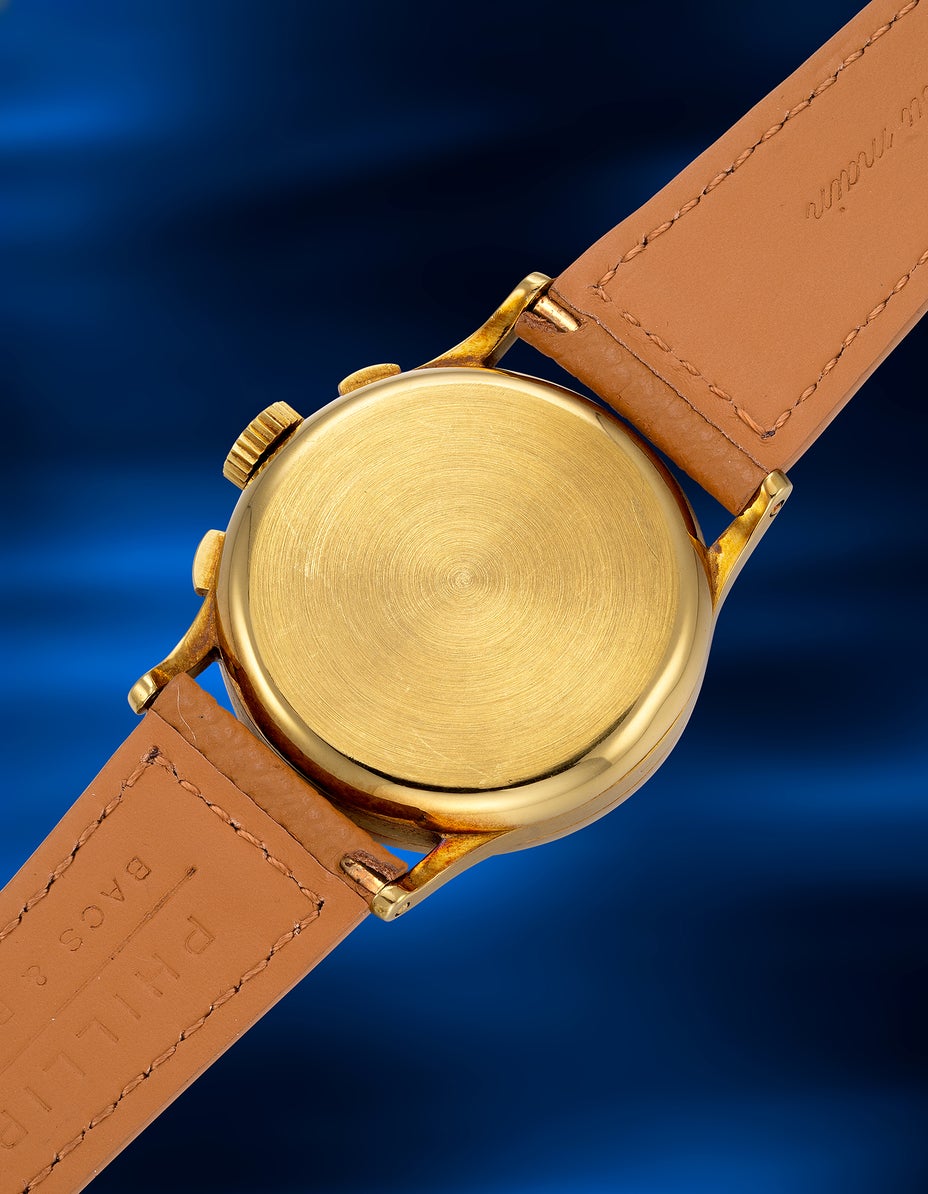
Presenting a superb case with strong hallmarks, its dial is equally well-preserved with its desirable hard enamel long signature and scales. An example that left the manufacture in 1938, this is one of the earlier examples from its production.
Patek Philippe
Swiss | 1839Since its founding in 1839, this famous Geneva-based firm has been surprising its clientele with superbly crafted timepieces fitted with watchmaking's most prestigious complications. Traditional and conservative designs are found across Patek Philippe's watches made throughout their history — the utmost in understated elegance.
Well-known for the Graves Supercomplication — a highly complicated pocket watch that was the world’s most complicated watch for 50 years — this family-owned brand has earned a reputation of excellence around the world. Patek's complicated vintage watches hold the highest number of world records for results achieved at auction compared with any other brand. For collectors, key models include the reference 1518, the world's first serially produced perpetual calendar chronograph, and its successor, the reference 2499. Other famous models include perpetual calendars such as the ref. 1526, ref. 3448 and 3450, chronographs such as the reference 130, 530 and 1463, as well as reference 1436 and 1563 split seconds chronographs. Patek is also well-known for their classically styled, time-only "Calatrava" dress watches, and the "Nautilus," an iconic luxury sports watch first introduced in 1976 as the reference 3700 that is still in production today.