重要顯赫家族珍藏
1013
Paul Ditisheim
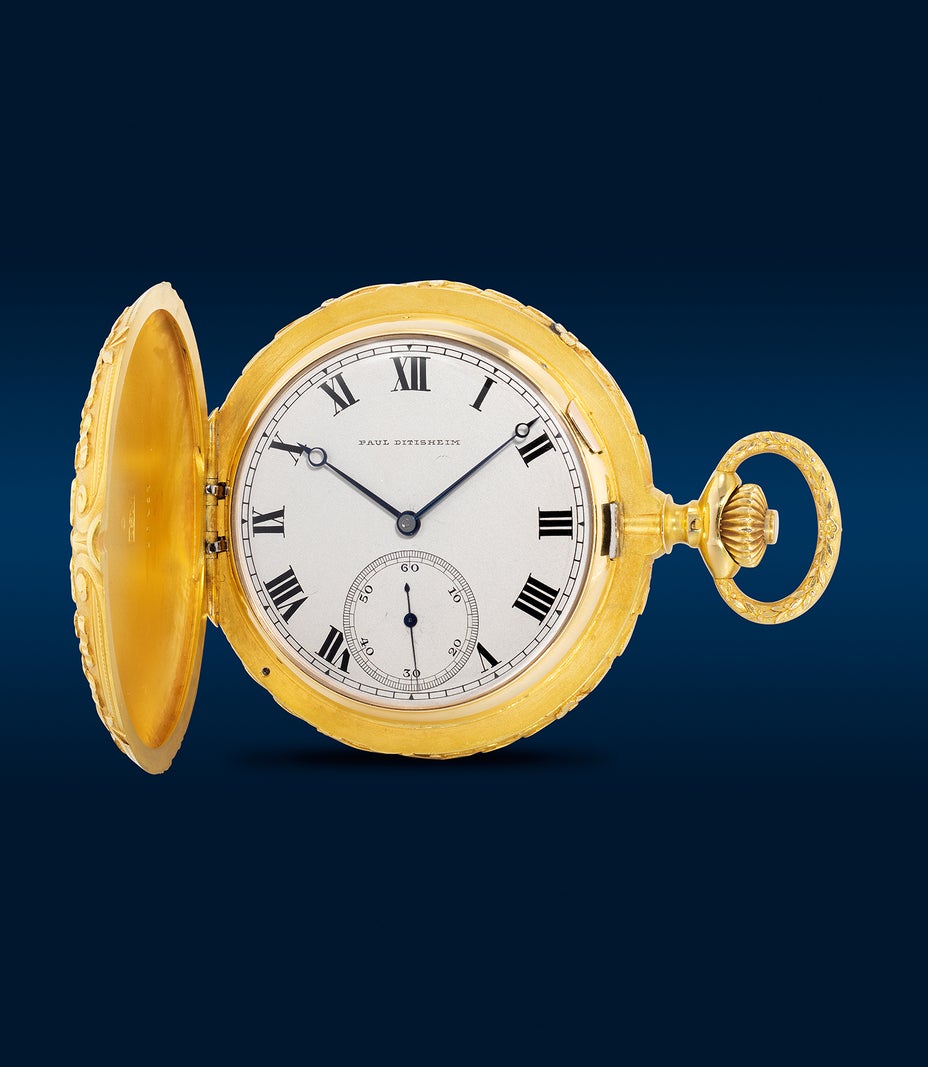
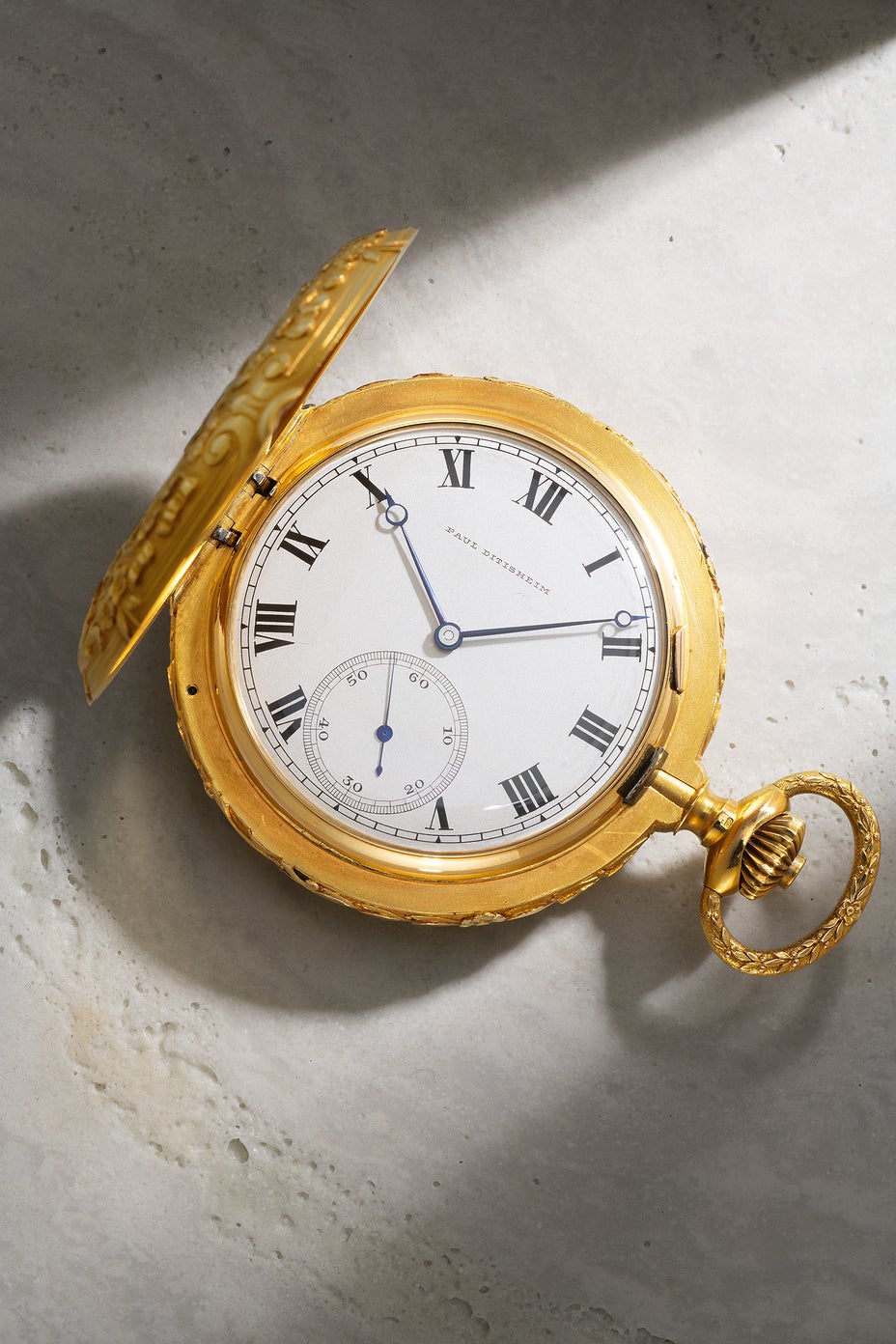
Paul Ditisheim,十分精美罕有,黃金三金橋陀飛輪獵殼懷錶,備一分鐘陀飛輪、小秒針,約1897年製。附原裝天文臺證書、錶盒
估價
HK$480,000–960,000
€57,600–115,000
$61,500–123,000
成交價
HK$889,000
製造商
Paul Ditisheim
年份
Circa 1897
機芯編號
10’257
錶殼號碼
10’257
材料
18K yellow gold
尺寸
59mm diameter
簽名
Case, dial and movement signed
配件
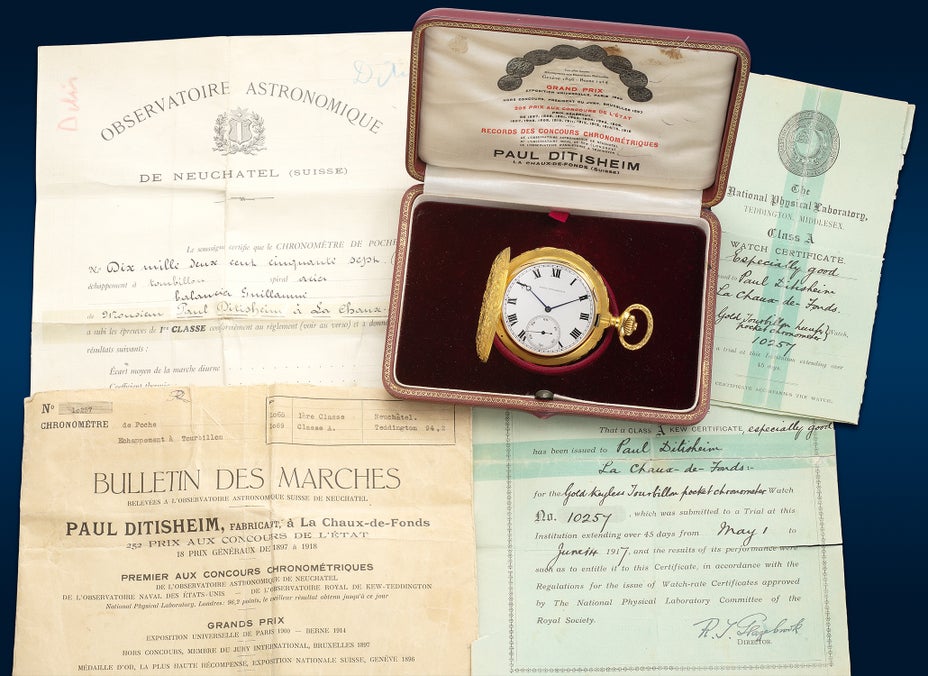
Accompanied by Neuchâtel Observatory Bulletin des Marches “premiere classe” dated 1916 with envelope, Class A Kew certificate “especially good” awarding 94.2 points dated 1917 and fitted presentation box.
完整圖錄內容
Renowned Swiss watchmaker Paul Ditisheim (1868-1945) revolutionized precision timekeeping through his chronometer research and innovations like the affix balance. By 1903, his watches were honored by the Observatories of Kew and Neuchâtel. In 1912, he achieved the world chronometric record at the Royal Kew Observatory. Ditisheim's contributions to horology were immense. In 1892, he established his own manufactory in La Chaux-de-Fonds. Ditisheim tirelessly researched and published works on the effects of atmospheric pressure, temperature, and magnetism on chronometric performance. His pioneering improvements in chronometer design included overcoil springs, Guillaume balances, and pivoted detents. Ditisheim's meticulous refinements propelled timekeeping to new heights, as proven by his record-setting accuracy prizes.
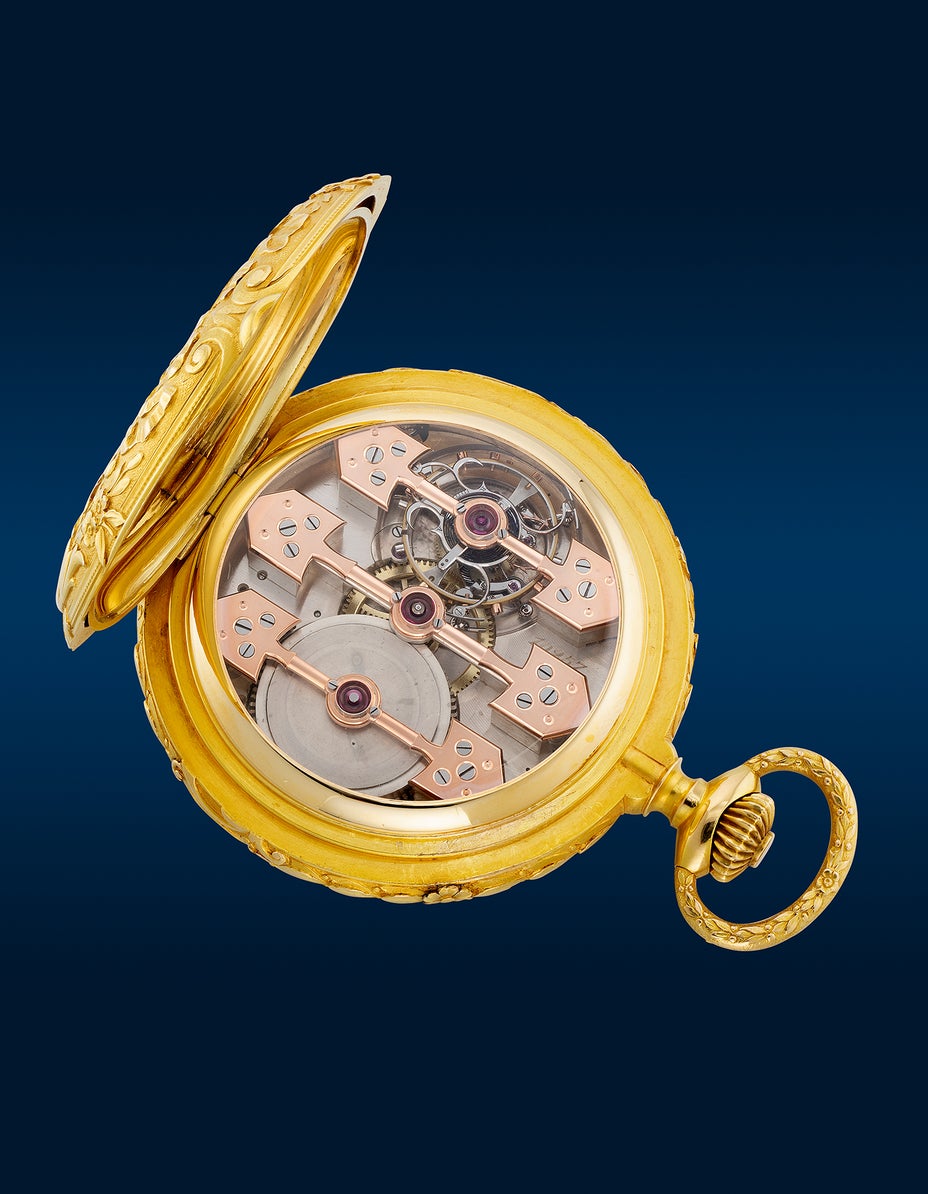
Ditisheim produced very few tourbillons, with noted horology historian Reinhard Meis documenting merely 8 examples. This incredible rarity, along with its Grether carriage, chronometer escapement, and Guillaume balance, suggest potential Girard-Perregaux origins. Girard-Perregaux pioneered the three gold bridge movement in 1867, a layout exposing the bridges in a mesmerizing display of horological artistry. The innovation won a gold medal at the 1889 Paris Exposition. Ditisheim adopted this architecture for the present tourbillon pocket watch.
Tested at the Kew Observatory in 1916 and 1917, it received Class A certificates with exceptional scores as shown on the accompanying certifications, affirming its superlative timekeeping. The movement dazzles with arrow-headed bridges over machined plates and steel carriage. A bi-metallic Guillaume balance, pivoted detent, and blued overcoil optimize precision for this exceptionally accurate 1-minute tourbillon.
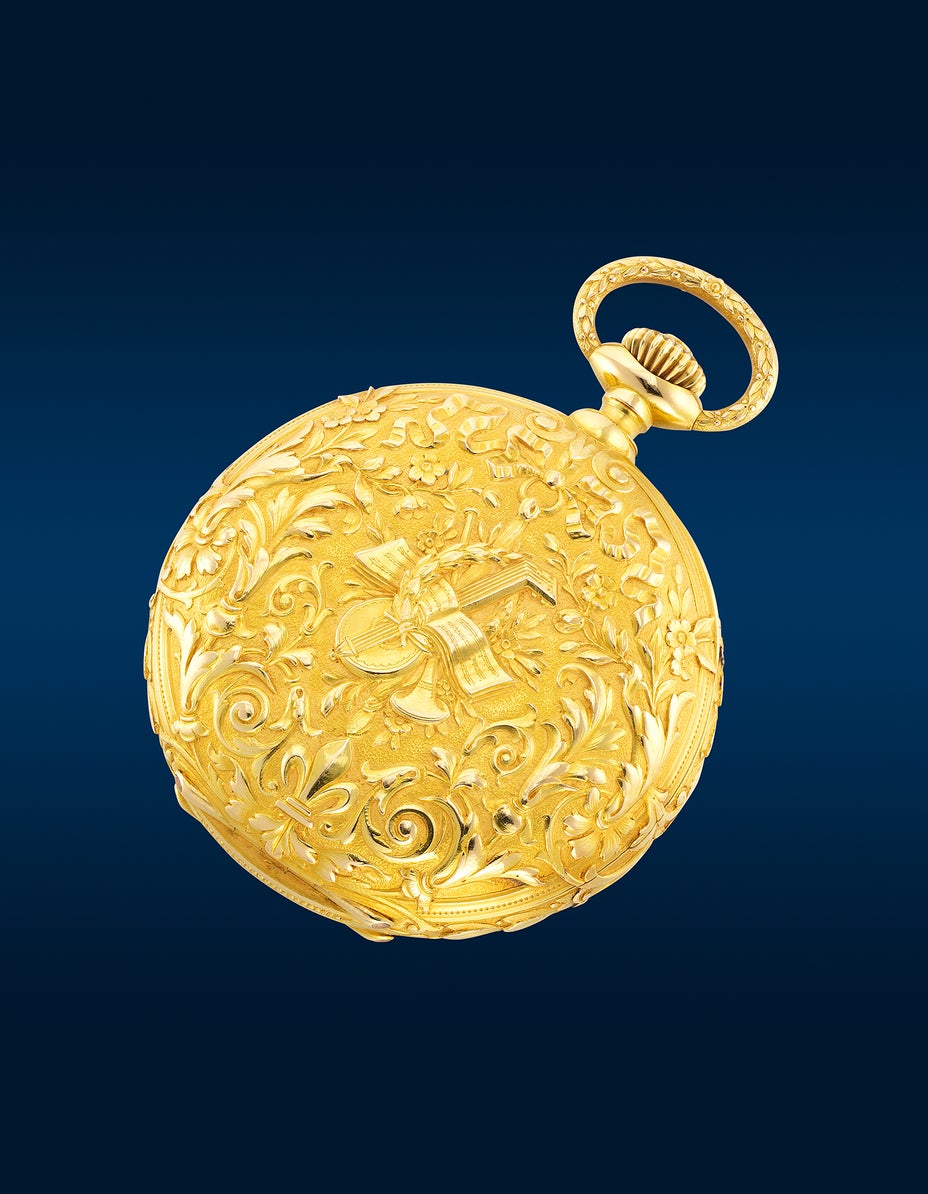
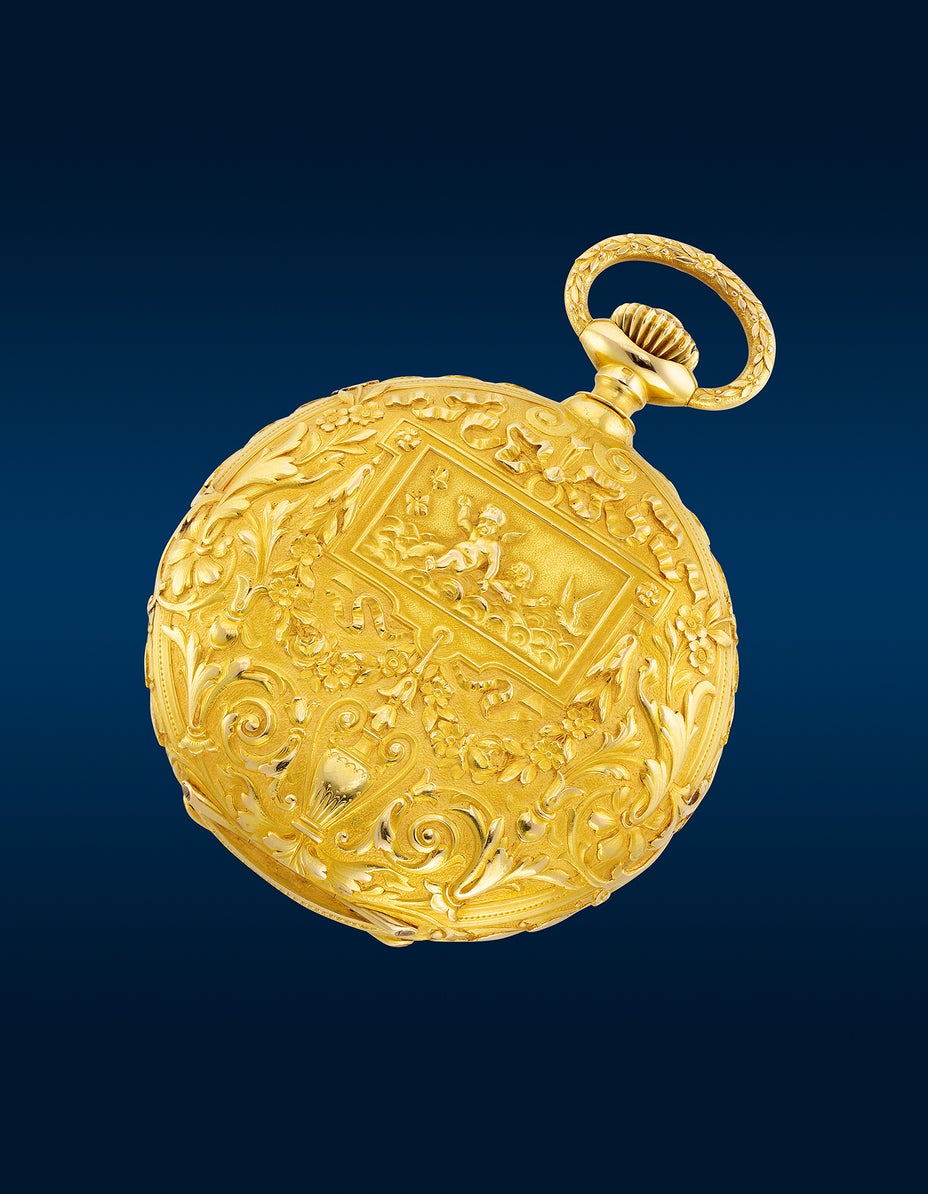
The yellow gold hunter case exquisitely captures the spirit of the Belle Epoque with masterful hand chasing imparting artistic beauty. On the front, a central panel depicts winged putti joyfully playing with a bird amidst butterflies dancing over flowers. Garlands of blossoms and verdant foliage frame the idyllic scene. A ribbon bow and vase provide finishing accents, with delicacy and vitality animating the composition. On the reverse, music trophies wreathed in flowers and leaves evoke the sounds that might accompany such an enchanting moment. The floral chasing extends fluidly from the case onto the band, enveloping the entirety with vivacious neoclassical ornamentation. The present example is possibly part of the collection from the Time Museum, Rockford U.S.A as prominently illustrated in the Das Tourbillon book by Reinhard Meis in pages 146-147.
Further accompanied by the Observartoire Astronomique Bulletin des Marches Neuchatel, Bulletin des Marches from The National Physical Laboratory Teddington, Middlesex UK and its original red leather box. Together, the sublime horology and craftsmanship transcend function, elevating the timepiece into a breathtaking objet d'art that evokes the soaring creativity of the era. The Belle Epoque springs to life in this exceptionally well-preserved 19th century Paul Ditisheim pocket watch, transformed through beauty and visionary artisanship into a captivating ornate treasure.
Ditisheim produced very few tourbillons, with noted horology historian Reinhard Meis documenting merely 8 examples. This incredible rarity, along with its Grether carriage, chronometer escapement, and Guillaume balance, suggest potential Girard-Perregaux origins. Girard-Perregaux pioneered the three gold bridge movement in 1867, a layout exposing the bridges in a mesmerizing display of horological artistry. The innovation won a gold medal at the 1889 Paris Exposition. Ditisheim adopted this architecture for the present tourbillon pocket watch.
Tested at the Kew Observatory in 1916 and 1917, it received Class A certificates with exceptional scores as shown on the accompanying certifications, affirming its superlative timekeeping. The movement dazzles with arrow-headed bridges over machined plates and steel carriage. A bi-metallic Guillaume balance, pivoted detent, and blued overcoil optimize precision for this exceptionally accurate 1-minute tourbillon.
The yellow gold hunter case exquisitely captures the spirit of the Belle Epoque with masterful hand chasing imparting artistic beauty. On the front, a central panel depicts winged putti joyfully playing with a bird amidst butterflies dancing over flowers. Garlands of blossoms and verdant foliage frame the idyllic scene. A ribbon bow and vase provide finishing accents, with delicacy and vitality animating the composition. On the reverse, music trophies wreathed in flowers and leaves evoke the sounds that might accompany such an enchanting moment. The floral chasing extends fluidly from the case onto the band, enveloping the entirety with vivacious neoclassical ornamentation. The present example is possibly part of the collection from the Time Museum, Rockford U.S.A as prominently illustrated in the Das Tourbillon book by Reinhard Meis in pages 146-147.
Further accompanied by the Observartoire Astronomique Bulletin des Marches Neuchatel, Bulletin des Marches from The National Physical Laboratory Teddington, Middlesex UK and its original red leather box. Together, the sublime horology and craftsmanship transcend function, elevating the timepiece into a breathtaking objet d'art that evokes the soaring creativity of the era. The Belle Epoque springs to life in this exceptionally well-preserved 19th century Paul Ditisheim pocket watch, transformed through beauty and visionary artisanship into a captivating ornate treasure.