130
Rolex
Ref. 6556
Tru-Beat
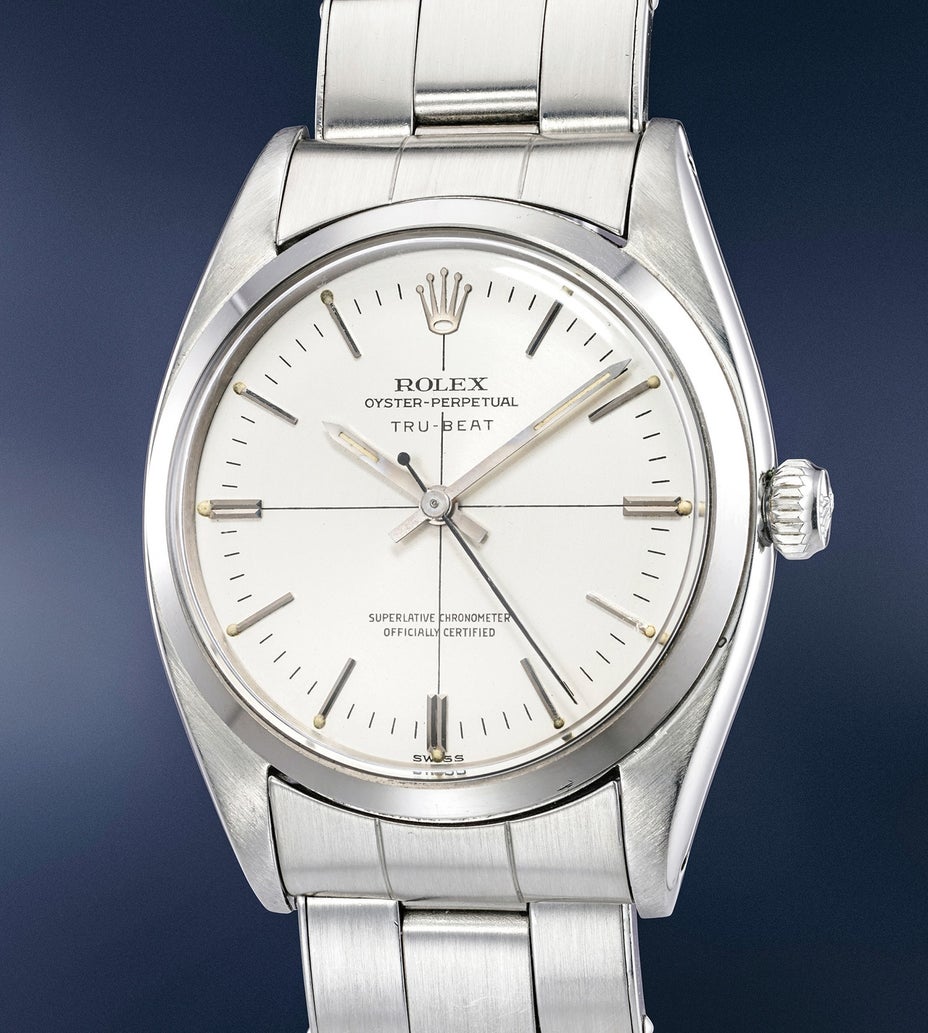
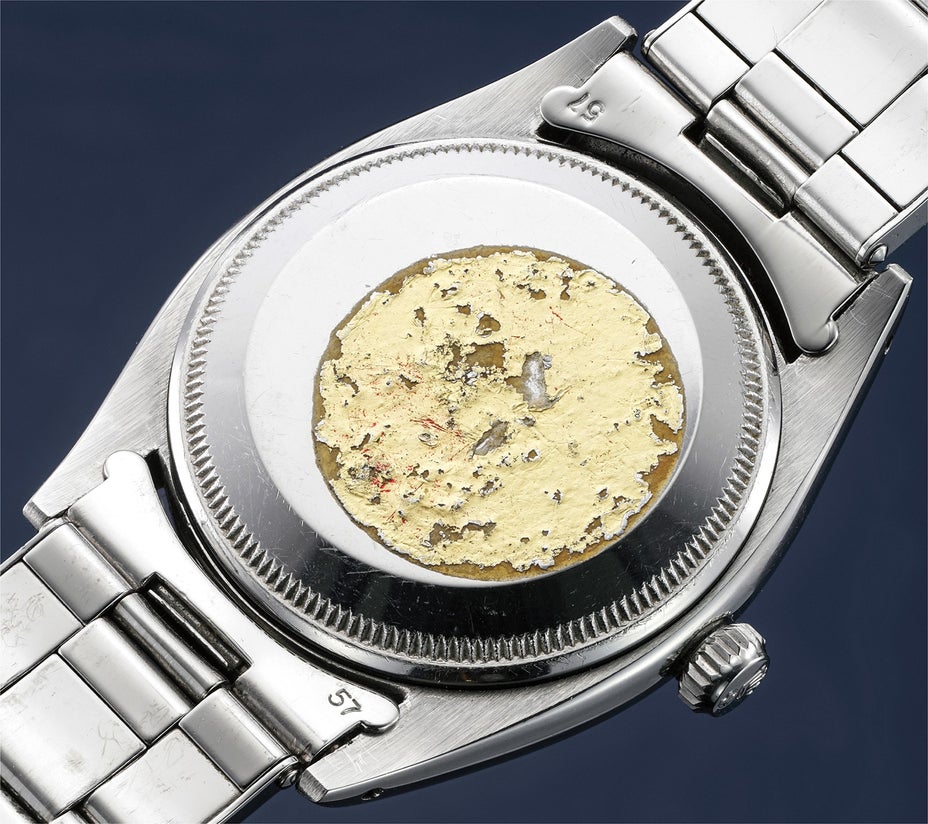
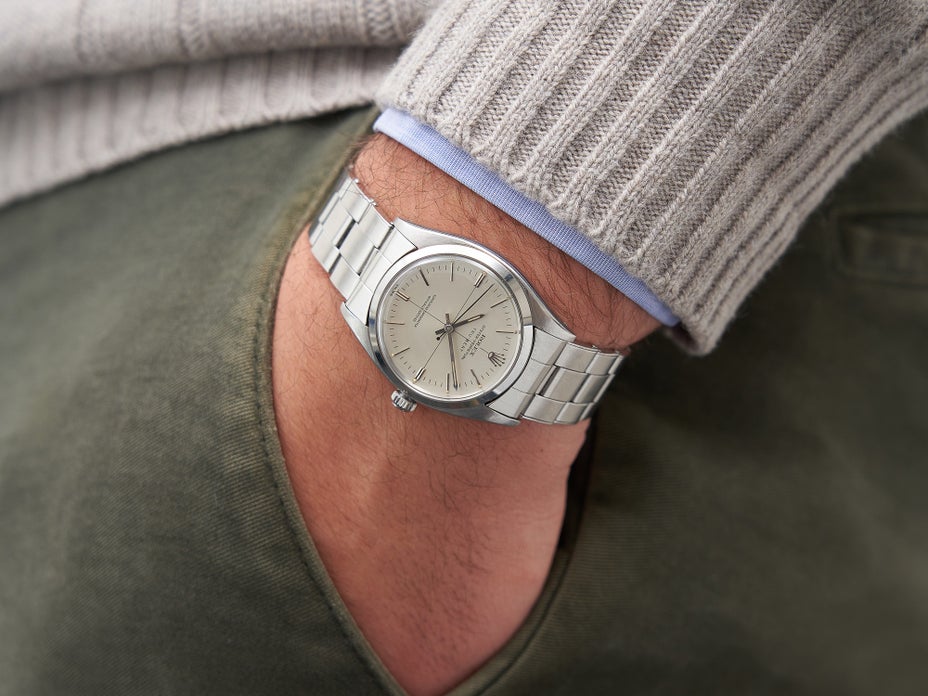
A rare and attractive stainless steel wristwatch with "dead-beat" center seconds, bracelet and medals
完整圖錄內容
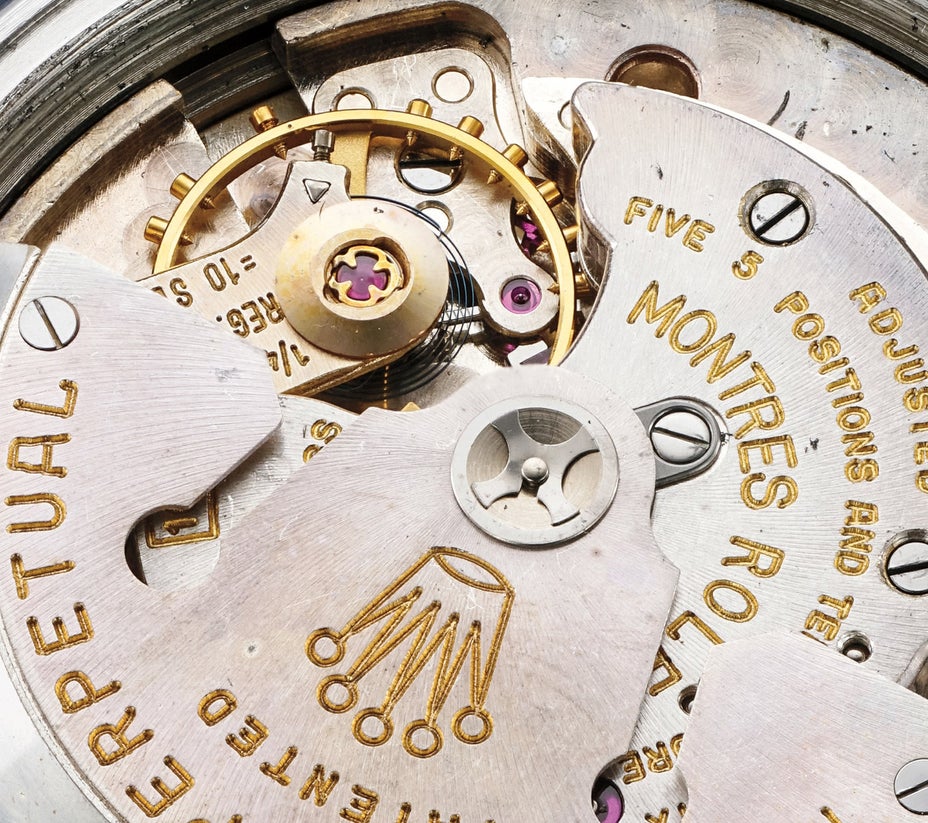
The Tru-Beat reference 6556 was launched in 1954 as a tool watch for doctors and healthcare workers. It is the only mechanical Rolex model to ever incorporate a “dead-beat” seconds mechanism that advances the seconds hand only once per second. This permitted more accurate readings of patients’ pulse rates, however the demand for such a timepiece was quite low, and the reference was soon discontinued. Amongst the small quantities produced, few have survived with the dead-beat mechanism of the Rolex caliber 1040 still intact.
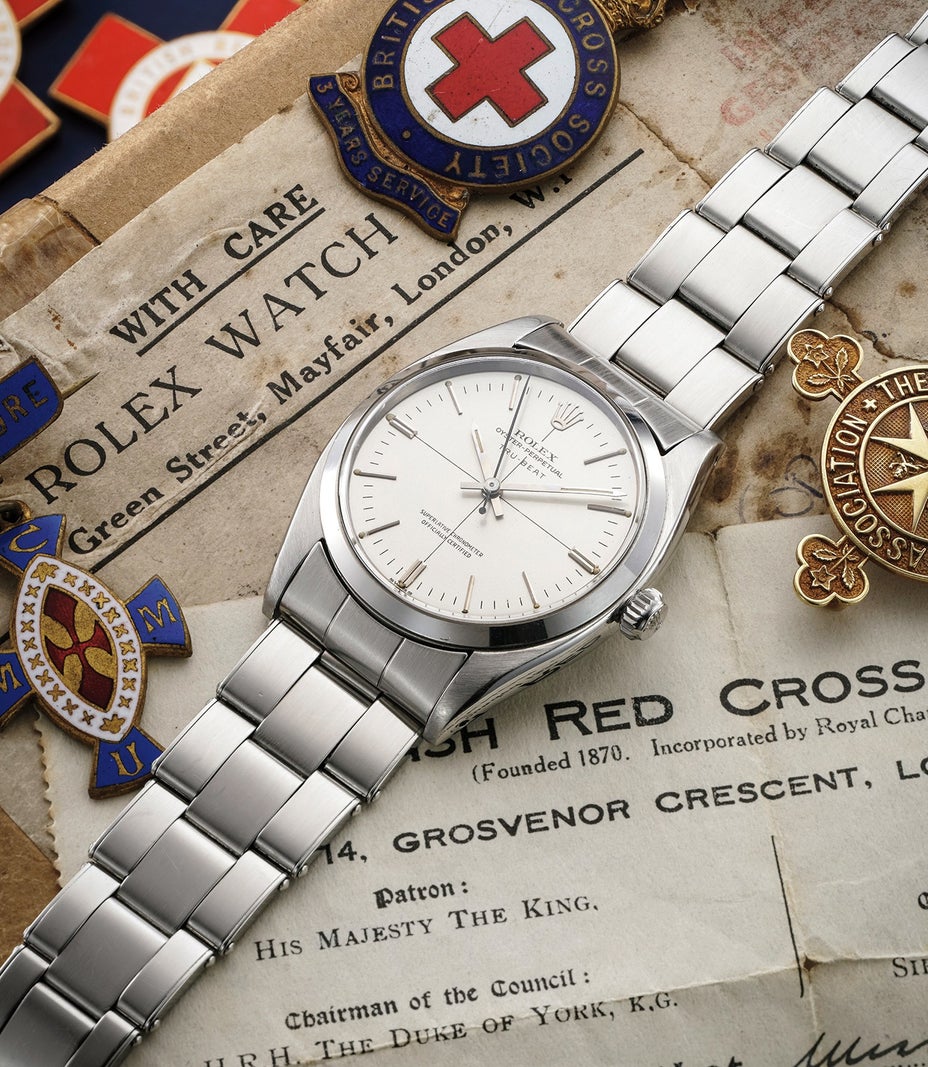
The present example was given to John Barnes, a Rolex watchmaker for training purposes, he then purchased the watch and offered to his aunt Daisy Cox, a British Red Cross medical worker, who quite appropriately needed such a tool watch in her everyday activities.
Mrs. Cox had a long career in medical services with the British Red Cross, the Civil Defense and St. John’s Ambulance working from 1931 well into the mid-1960s. For her exemplarily services, Mrs. Cox received an impressive number of medical medals – which are offered with this lot- including a British 1939-1945 Defense medal, numerous British Red Cross medical service medals and St. John’s ambulance badge.
The present example functions exactly as Rolex originally designed it, with a seconds hand that perfectly advances once every second. Many watchmakers did not have the ability to repair such movements, and switched out the mechanism in favour of typical automatic movements, hence the rarity of a correct example today.
Rolex
Swiss | 1905Founded in 1905 England by Hans Wilsdorf and Alfred Davis as Wilsdorf & Davis, it soon became known as the Rolex Watch Company in 1915, moving its headquarters to Geneva in 1919. Like no other company, the success of the wristwatch can be attributed to many of Rolex's innovations that made them one of the most respected and well-known of all luxury brands. These innovations include their famous "Oyster" case — the world's first water resistant and dustproof watch case, invented in 1926 — and their "Perpetual" — the first reliable self-winding movement for wristwatches launched in 1933. They would form the foundation for Rolex's Datejust and Day-Date, respectively introduced in 1945 and 1956, but also importantly for their sports watches, such as the Explorer, Submariner and GMT-Master launched in the mid-1950s.
One of its most famous models is the Cosmograph Daytona. Launched in 1963, these chronographs are without any doubt amongst the most iconic and coveted of all collectible wristwatches. Other key collectible models include their most complicated vintage watches, including references 8171 and 6062 with triple calendar and moon phase, "Jean Claude Killy" triple date chronograph models and the Submariner, including early "big-crown" models and military-issued variants.