

44
Zenith
Ref. GH 381
El Primero
精美,黃金自動上弦計時腕錶,備「Tropical」棕色錶盤。附錶盒
- 估價
- CHF8,000 - 12,000€7,500 - 11,200$8,700 - 13,100
CHF32,760
拍品詳情
- 製造商
- Zenith
- 年份
- 1969
- 型號
- GH 381
- 錶殼號碼
- 485D928
- 型號名稱
- El Primero
- 材料
- 18K yellow gold
- 機芯
- Automatic, cal. 3019, 21 jewels
- 錶帶/ 錶鏈
- Leather
- 錶扣
- Gilt Zenith pin buckle
- 尺寸
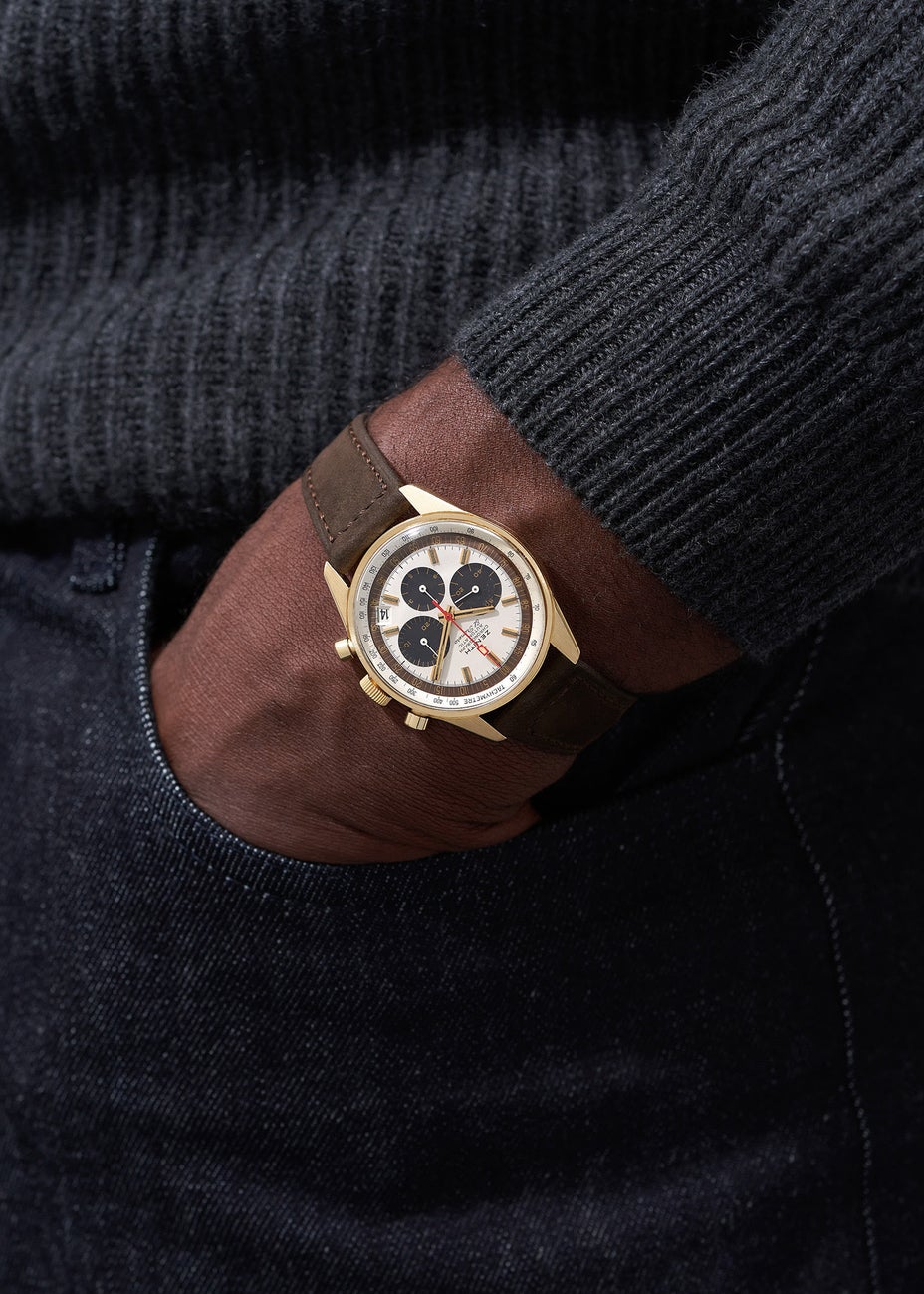
- 37.5mm Diameter
- 簽名
- Case, dial, movement and buckle signed
- 配件
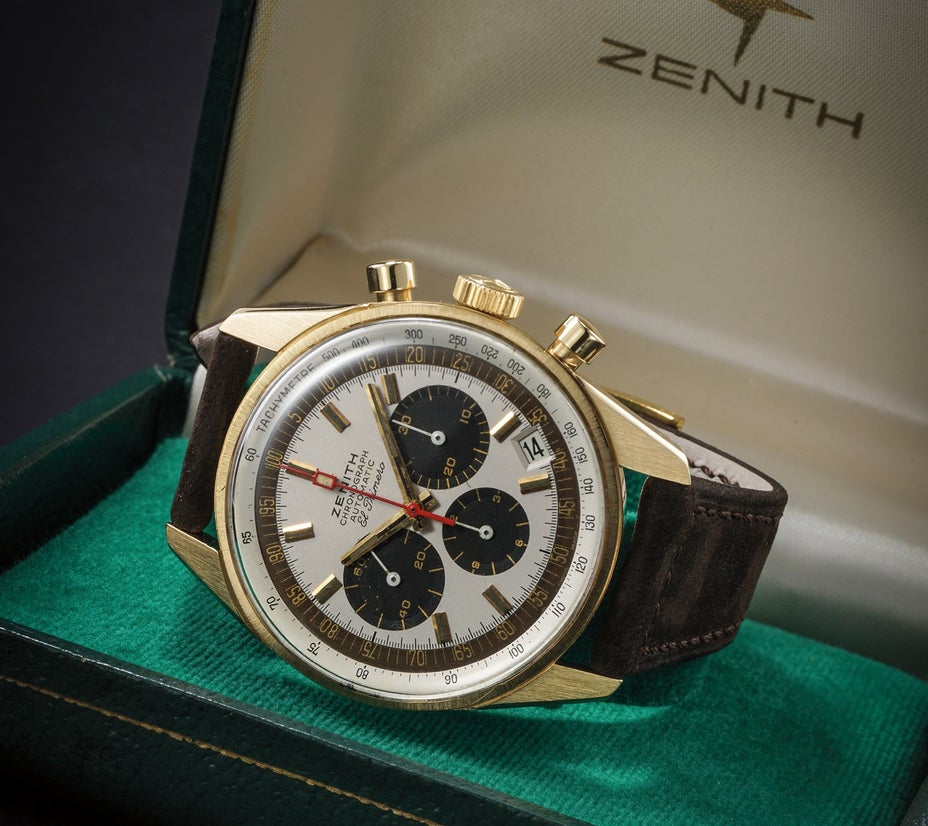
- Accompanied by Zenith box and Zenith Extract from the Archives confirming produciton of the present watch in April 1969
專家
完整圖錄內容
圖錄文章
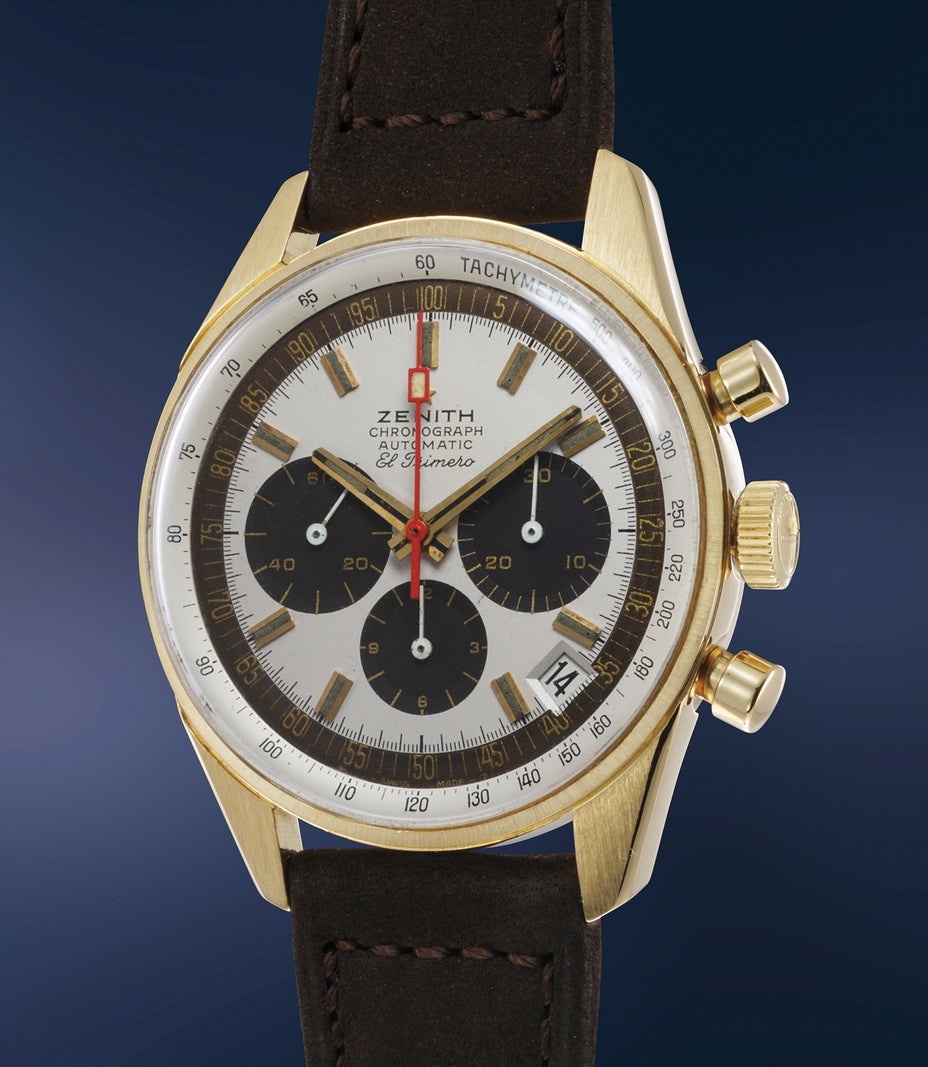
The Zenith El Primero made horological history on January 10, 1969, the day the first prototypes were presented to the press. It was the world’s first automatic, high-frequency chronograph, with a balance wheel running at 36,000 beats per hour.
The El Primero was launched with two models: the A386 in stainless steel and the G381 in 18k yellow gold. Both shared similar aesthetics, most notably with a 37.5 mm case that featured wide, faceted lugs, as well as pump pushers. But the inaugural El Primero models each had a distinct dial. Whilst the steel example was given overlapping tricolour registers, the yellow gold G381 had a more classical “panda”
dial of black registers on a white face.
Both models were in production for a mere three years – from 1969 to 1971 – and made in small numbers. According to the reference tome Zenith - Swiss Watch Manufacture Since 1865 by Manfred Rössler, only about 2,500 of the steel A386 were produced. And the precious-metal G381, unsurprisingly, is even rarer, with less than 700 made.
When Zenith marked the 50th anniversary of the El Primero last year, one of the vintage models it reproduced was the G381, as a 50-piece limited edition, underlining its historical significance.
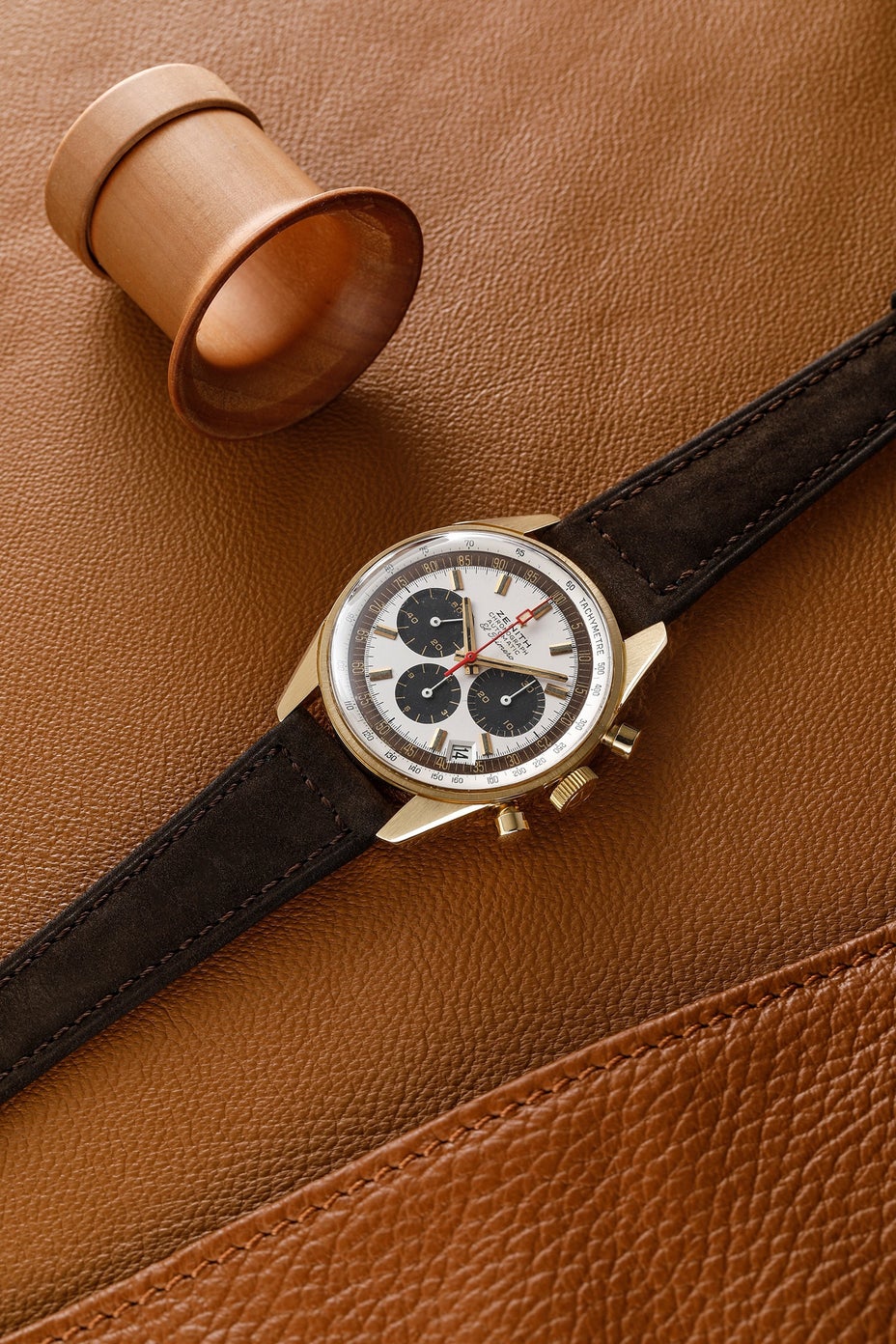
The present example of this historical reference from 1969 is without a doubt in a most honest condition: no signs of restoration can be found on the dial, instead all the graphics are present and in extremely good condition, and the centesimal scale track has acquired a wonderful tropical brown hue.
The El Primero was launched with two models: the A386 in stainless steel and the G381 in 18k yellow gold. Both shared similar aesthetics, most notably with a 37.5 mm case that featured wide, faceted lugs, as well as pump pushers. But the inaugural El Primero models each had a distinct dial. Whilst the steel example was given overlapping tricolour registers, the yellow gold G381 had a more classical “panda”
dial of black registers on a white face.
Both models were in production for a mere three years – from 1969 to 1971 – and made in small numbers. According to the reference tome Zenith - Swiss Watch Manufacture Since 1865 by Manfred Rössler, only about 2,500 of the steel A386 were produced. And the precious-metal G381, unsurprisingly, is even rarer, with less than 700 made.
When Zenith marked the 50th anniversary of the El Primero last year, one of the vintage models it reproduced was the G381, as a 50-piece limited edition, underlining its historical significance.
The present example of this historical reference from 1969 is without a doubt in a most honest condition: no signs of restoration can be found on the dial, instead all the graphics are present and in extremely good condition, and the centesimal scale track has acquired a wonderful tropical brown hue.
Zenith
Swiss | 1865Since Zenith's beginnings, founder George Favre-Jacot sought to manufacture precision timepieces, realizing quality control was best maintained when production was housed under one roof. Zenith remains one of the few Swiss manufacturers to produce their own in-house movements to this day.
Today, the brand is best known for the "El Primero," the firm's most successful automatic chronograph movement. In an interesting twist of fate, the company that owned Zenith during the 1970s decided to move on to quartz movements and therefore sought to destroy the parts and tools necessary to make mechanical movements. One watchmaker realized this folly and hid the tools and parts before they were destroyed. In 1984, he returned them to Zenith so they could once again make the El Primero movement.
瀏覽製造者Today, the brand is best known for the "El Primero," the firm's most successful automatic chronograph movement. In an interesting twist of fate, the company that owned Zenith during the 1970s decided to move on to quartz movements and therefore sought to destroy the parts and tools necessary to make mechanical movements. One watchmaker realized this folly and hid the tools and parts before they were destroyed. In 1984, he returned them to Zenith so they could once again make the El Primero movement.