
341
Richard Prince
Untitled (cartoon)
Full-Cataloguing
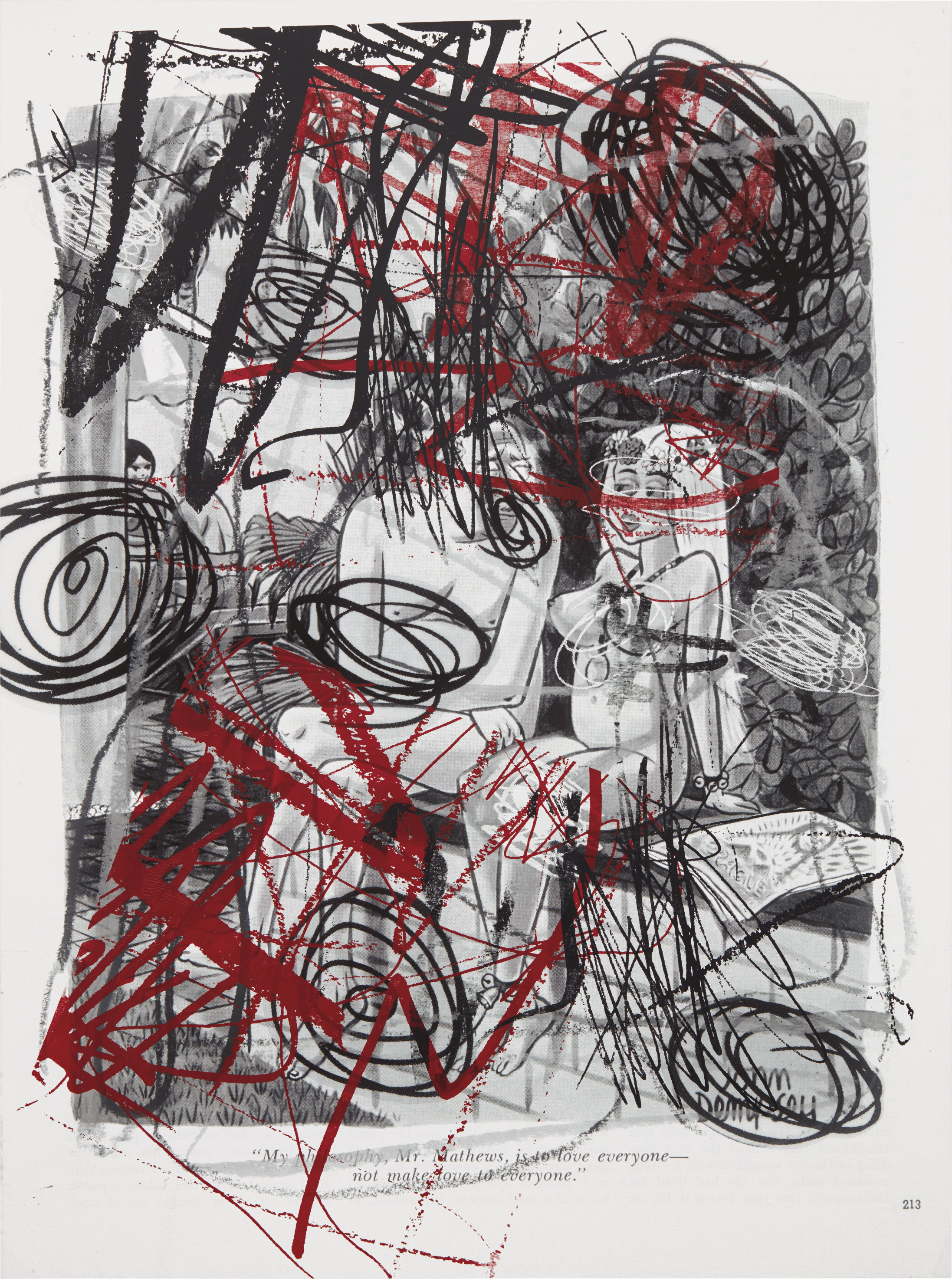
In blowing up the original cartoon and representing it in large-scale format, Prince does not shy away from the notion of re-appropriation, but instead confronts it head on. Rather than obscuring the original cartoonist John Dempsey’s signature, Prince includes this, along with the magazine page number, in the lower right corner of his composition. Dempsey was a well-known Playboy illustrator whose cartoons lampooning American subculture were a staple of the magazine for over five decades. In re-contextualizing these notorious images and caustic one-liners, Prince develops his own dark and humorous commentary. As such, Untitled (cartoon) stands as a striking example of Prince’s hallmark style, masterfully combining conceptual rigor and humor – the cornerstones on which the artist’s ever-provocative career was founded.
Richard Prince
American | 1947For more than three decades, Prince's universally celebrated practice has pursued the subversive strategy of appropriating commonplace imagery and themes – such as photographs of quintessential Western cowboys and "biker chicks," the front covers of nurse romance novellas, and jokes and cartoons – to deconstruct singular notions of authorship, authenticity and identity.
Starting his career as a member of the Pictures Generation in the 1970s alongside such contemporaries as Cindy Sherman, Robert Longo and Sherrie Levine, Prince is widely acknowledged as having expanded the accepted parameters of art-making with his so-called "re-photography" technique – a revolutionary appropriation strategy of photographing pre-existing images from magazine ads and presenting them as his own. Prince's practice of appropriating familiar subject matter exposes the inner mechanics of desire and power pervading the media and our cultural consciousness at large, particularly as they relate to identity and gender constructs.