4Ο◆
Rudolf Stingel
Untitled (Plan B)
Full-Cataloguing
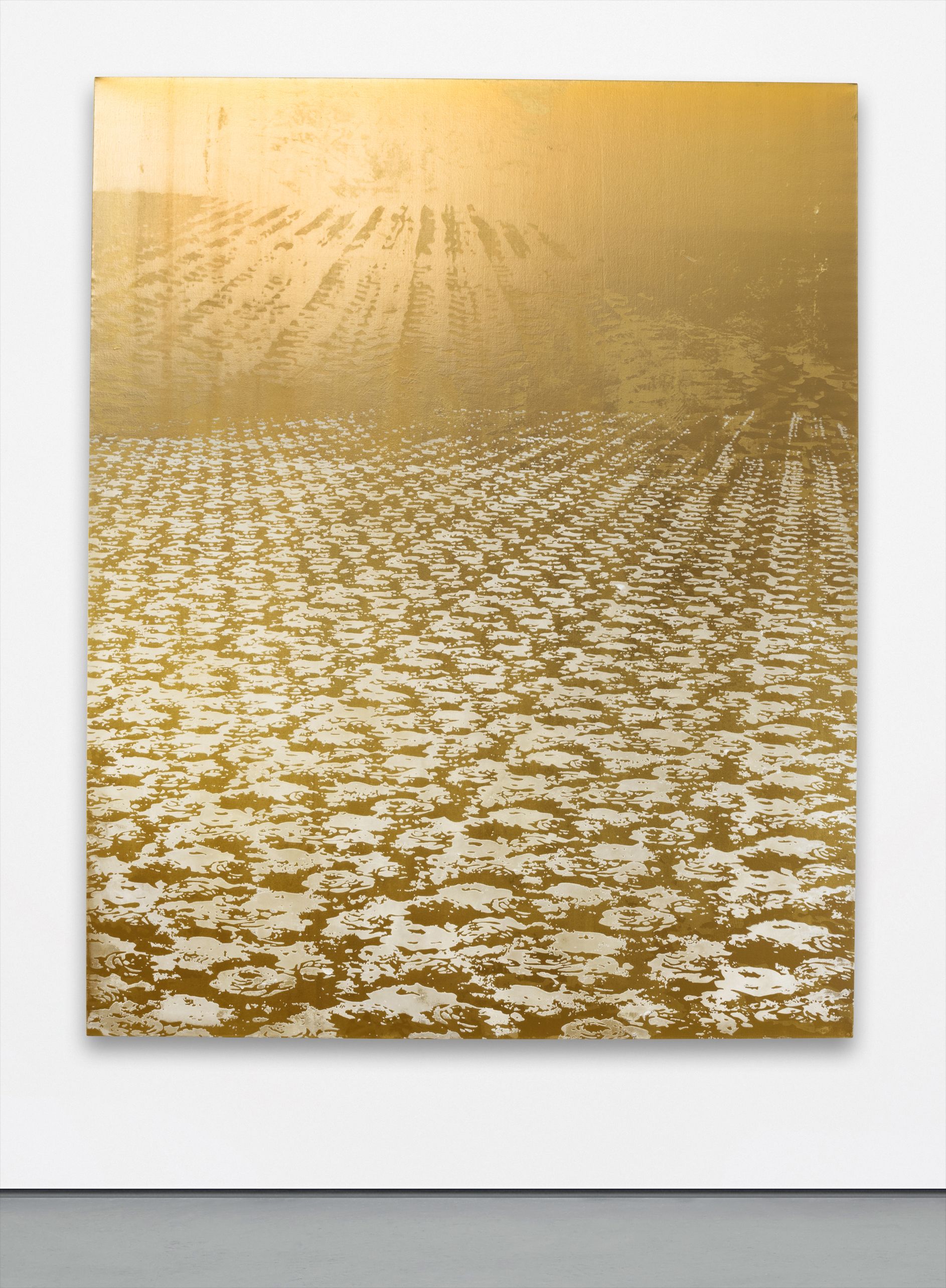
Stingel has habitually sought to invert our understanding of domestic and industrial materials, a theme he takes up once again in Untitled (Plan B). He challenges the customary separation of the decorative and visual arts by employing familiar carpet motifs as the primary subject matter of his canvas, depicting them in a plush and indulgent manner. The effect of this re-contextualisation is almost otherworldly, emphasised by the disorientating glimmer of the enamel over the linen base. Executed in 2008, Untitled (Plan B) belongs to a series inspired by Stingel’s 2004 Plan B installation at Grand Central Terminal in New York. By installing a vivid floral carpet across the entire Vanderbilt Hall, he transformed a busy public space using decorative elements usually reserved for the private or semi-private sphere. The project was understated and monumental, minimalist in its simplicity but ground-breaking in its impact and ability to provoke a range of engagement according to a pre-established conceptual framework. It also served to raise wider implications about the very status of contemporary art and the tensions inherent in its collection.
This work sits within Stingel’s wider oeuvre as a celebrated example of his revolutionary artistic practice, testing the boundaries between abstraction and figuration as well as the limits of individual materials, colours and wider concepts. By forcing us to take an active role in unpacking the visual complexities and associations in the painting, Stingel overturns conventional hierarchies and creates a space in which new relationships can be forged between artist, medium and viewer.
Rudolf Stingel
Italian | 1956Rudolf Stingel came to prominence in the late 1980s for his insistence on the conceptual act of painting in a context in which it had been famously declared dead. Despite the prevailing minimalist and conceptual narrative of the time, the Italian-born artist sought to confront the fundamental aspirations and failures of Modernist painting through the very medium of painting itself. While his works do not always conform to the traditional definitions of painting, their attention to surface, space, color and image provide new and expanded ways of thinking about the process and "idea" of painting. Central to his multifarious and prolific oeuvre is an examination of the passage of time and the probing of the fundamental questions of authenticity, meaning, hierarchy, authorship and context by dislocating painting both internally and in time and space. Stingel is best known for his wall-to-wall installations, constructed of fabric or malleable Celotex sheets, as well as his seemingly more traditional oil-on-canvas paintings.