

PROPERTY FROM A DISTINGUISHED NEW YORK COLLECTION
167
Donald Judd
Untitled
- Estimate
- $400,000 - 500,000
$790,000
Lot Details
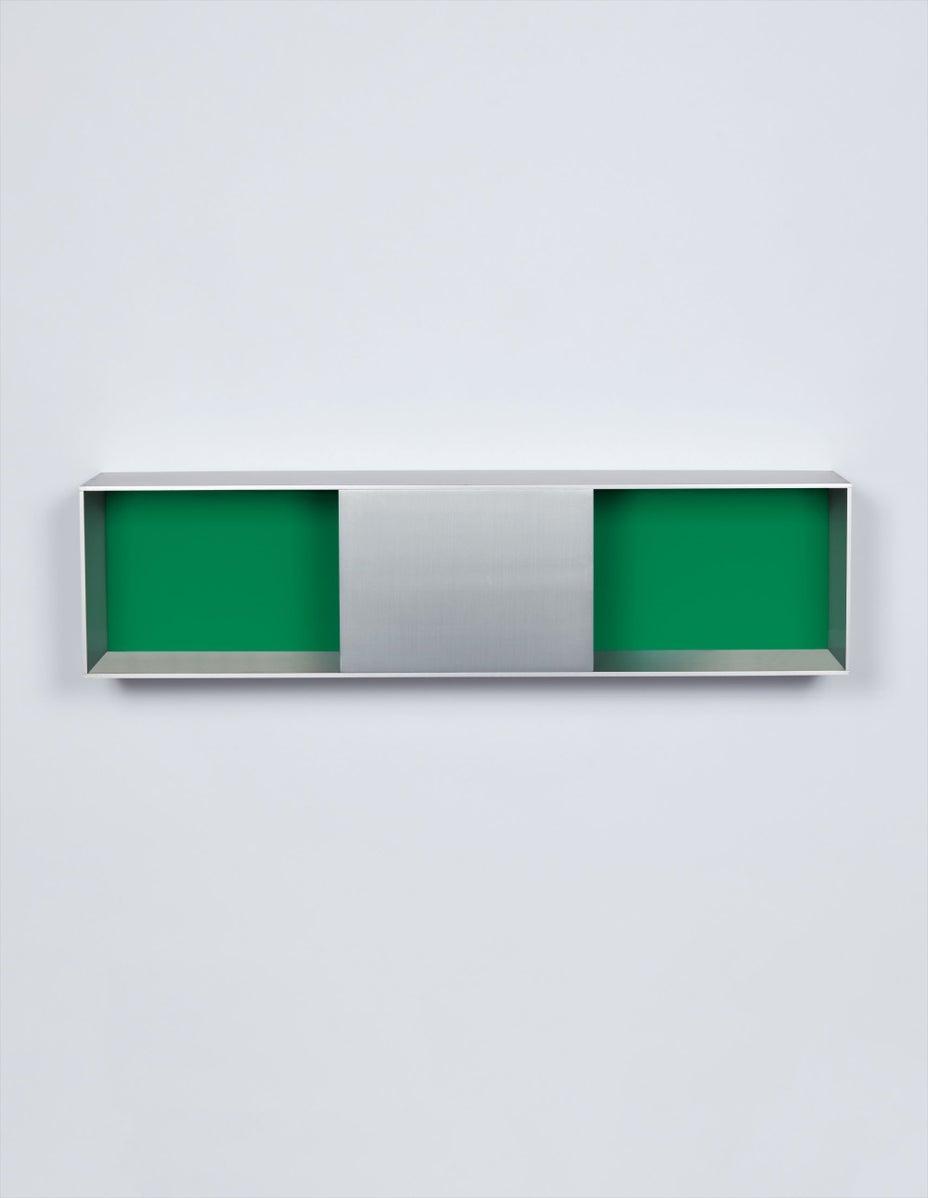
clear anodized aluminum and green acrylic sheet
stamped with the artist's name, number and fabricator "DONALD JUDD 91-114 © ALUMINUM AG MENZIKEN" on the reverse
10 x 39 3/8 x 9 3/4 in. (25.4 x 100 x 24.8 cm.)
Executed in 1991.
Specialist
Full-Cataloguing
Catalogue Essay
Executed in 1991, only three years before the artist’s passing, Untitled exemplifies Donald Judd’s commitment to material, space, and color as the three fundamental elements of art. A key figure of the Minimalist movement beginning in the 1960s, Judd continually rejected traditional notions of art history, as demonstrated by the present lot. From 1988 to 1994, Judd worked with Alu Menziken, an aluminum manufacturing company based in Switzerland, in the construction of these industrial boxes. Menziken’s primary area of focus was the production of automobiles, machinery, and aerospace, making Judd’s preference for working with this company a true testament to his aesthetic ideology and practice—a rejection of the traditional artist’s studio in favor of the factory as a place of artistic production.
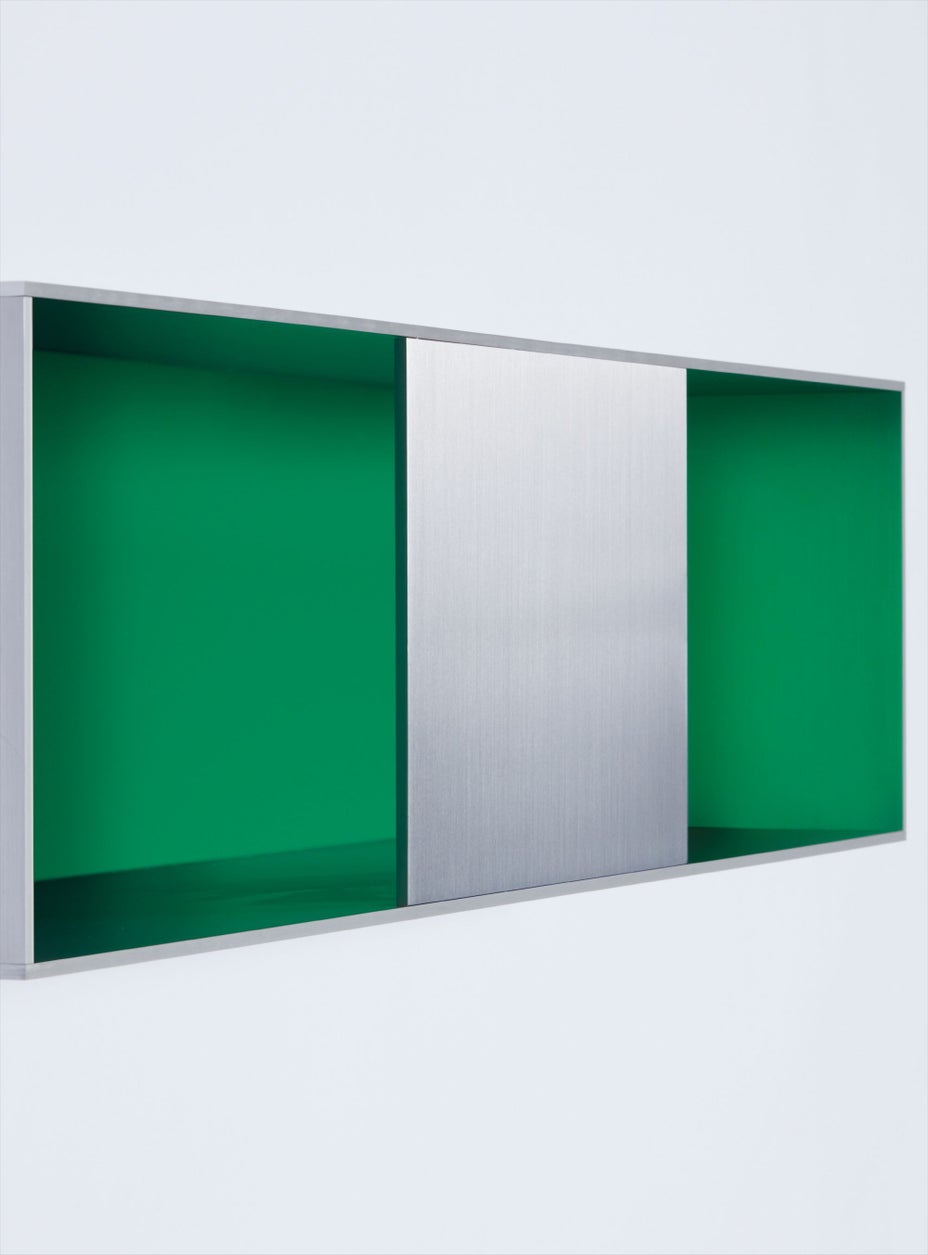
In Untitled, Judd utilizes the industrial materials of clear anodized aluminum and colored acrylic sheets to create a singular form that is without allusion to the pictorial world. The floating rectangular box, a defining characteristic of the works fabricated by Menziken, is bisected by a central panel, which divides the sculpture into three equal parts. While the viewer is initially confronted with a powerful, static form, new spatial relations come into play as his or her position shifts, reflecting the surrounding space in different iterations. In its design, Judd experiments with the striking dichotomy inherent within the structure of the Menziken-fabricated works, and also alludes to the importance of color. While the outer aluminum structure remains austere and unchanging, the interior is imbued with a richness and complexity made possible by the emerald green hue of the acrylic sheet. Floating and isolated, each of these boxes takes on a wholly distinct personality with each color variant. Ultimately, and as exemplified by the present lot, Judd’s preference for modest, simple forms allowed him to truly explore the artistic possibilities of color, light, and space for which he is renowned.
Provenance
Exhibited
Donald Judd
American | B. 1928 D. 1994Donald Judd came to critical acclaim in the 1960s with his simple, yet revolutionary, three-dimensional floor and wall objects made from new industrial materials, such as anodized aluminum, plywood and Plexiglas, which had no precedent in the visual arts. His oeuvre is characterized by the central constitutive elements of color, material and space. Rejecting the illusionism of painting and seeking an aesthetic freed from metaphorical associations, Judd sought to explore the relationship between art object, viewer and surrounding space with his so-called "specific objects." From the outset of his three-decade-long career, Judd delegated the fabrication to specialized technicians. Though associated with the minimalist movement, Judd did not wish to confine his practice to this categorization. Inspired by architecture, the artist also designed and produced his own furniture, predominantly in wood, and eventually hired a diverse team of carpenters late in his career.
Browse Artist