

16
Gego
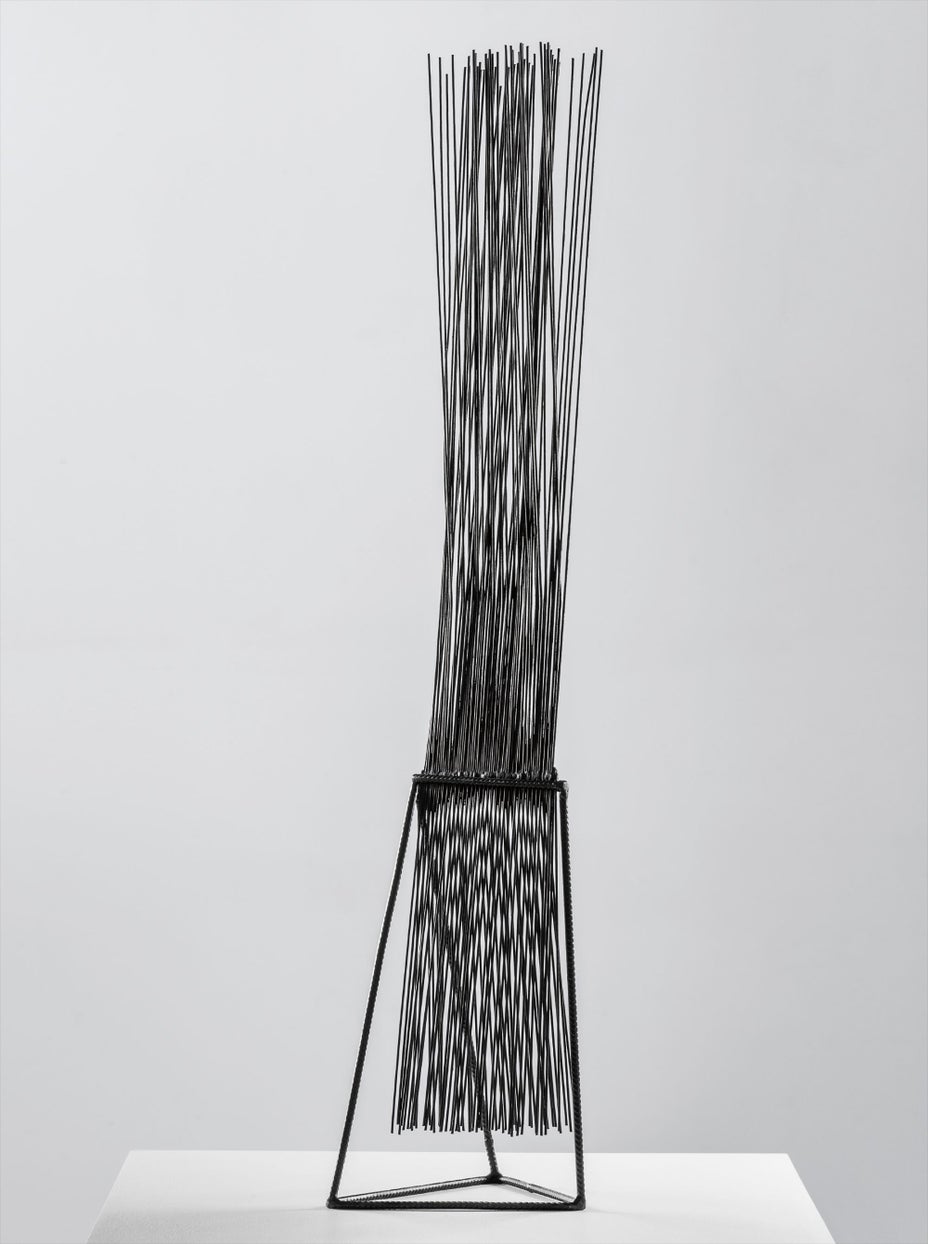
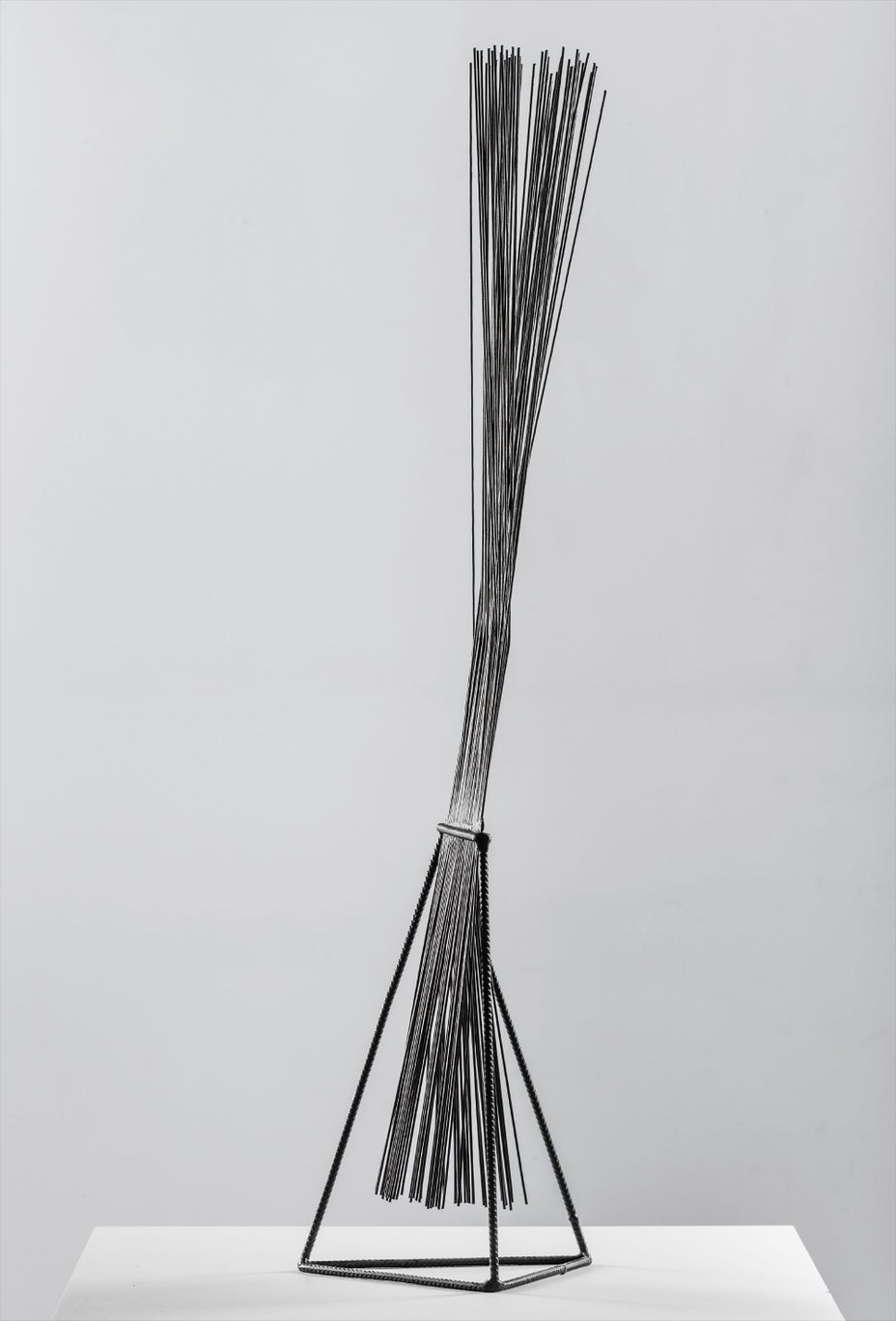
Untitled
- Estimate
- $200,000 - 300,000
Lot Details
painted iron
28 3/8 x 4 3/4 x 7 1/8 in. (72.1 x 12.1 x 18.1 cm)
Executed in 1967, this work is registered in the artist's archives under reference number CP 0133 and is accompanied with a certificate of authenticity signed by the artist.
Specialist
Full-Cataloguing
Catalogue Essay
Untitled (1967) marks a seminal moment in the career of German-born architect and engineer Gertrude Goldschmidt, more commonly known as Gego. Forced to flee Nazi Germany in 1939, Gego quickly established herself in her adopted Venezuela as a major creative force through various architectural projects, leading to prestigious teaching positions at important educational institutions in Caracas. Her abstract drawings earned the encouragement of the modern masters Alejandro Otero and Jesús Rafael Soto. Furthering the aesthetic and conceptual principles of Constructivism, Geometric Abstraction, and Kinetic Art, Gego’s unique spatial investigations are abstract constructions that escape the limitations of the picture plane. Her paperless, three-dimensional drawings—first made in iron—achieved a new level of virtuosity when, in 1967, she began to employ stainless steel wire. The light and flexible medium eliminated the need for an intermediary, such as a welder and blacksmith; thus, freeing Gego to make emblematic works by her own hand.
Provenance
Gego
Venezuelan | B. 1912 D. 1994Venezuelan artist Gego is internationally recognized as a leading female figure of abstraction in Latin America. Gego (Gertrude Goldschmidt) studied architecture and worked as a draughtsman in various firms in Germany before immigrating to Venezuela in 1939.
Gego's experimentation with pure abstraction in the late 1950s culminated in her most important series, produced in the 1980s, titled Dibujos sin Papel (Drawings Without Paper). In this series, she utilized industrial materials in suspended wire sculptures. These seemingly banal yet technically sophisticated sculptures are representative of the artist's mature style and were undoubtedly informed by her training as an architect. With the series Reticulárea ambiental, Gego built upon the Dibujo sin Papel and further highlighted her interest in spatial abstraction by creating expansive, engulfing sculptures of metal scraps.
Browse ArtistGego's experimentation with pure abstraction in the late 1950s culminated in her most important series, produced in the 1980s, titled Dibujos sin Papel (Drawings Without Paper). In this series, she utilized industrial materials in suspended wire sculptures. These seemingly banal yet technically sophisticated sculptures are representative of the artist's mature style and were undoubtedly informed by her training as an architect. With the series Reticulárea ambiental, Gego built upon the Dibujo sin Papel and further highlighted her interest in spatial abstraction by creating expansive, engulfing sculptures of metal scraps.