33Ο︎◆︎
Rudolf Stingel
Untitled
Full-Cataloguing
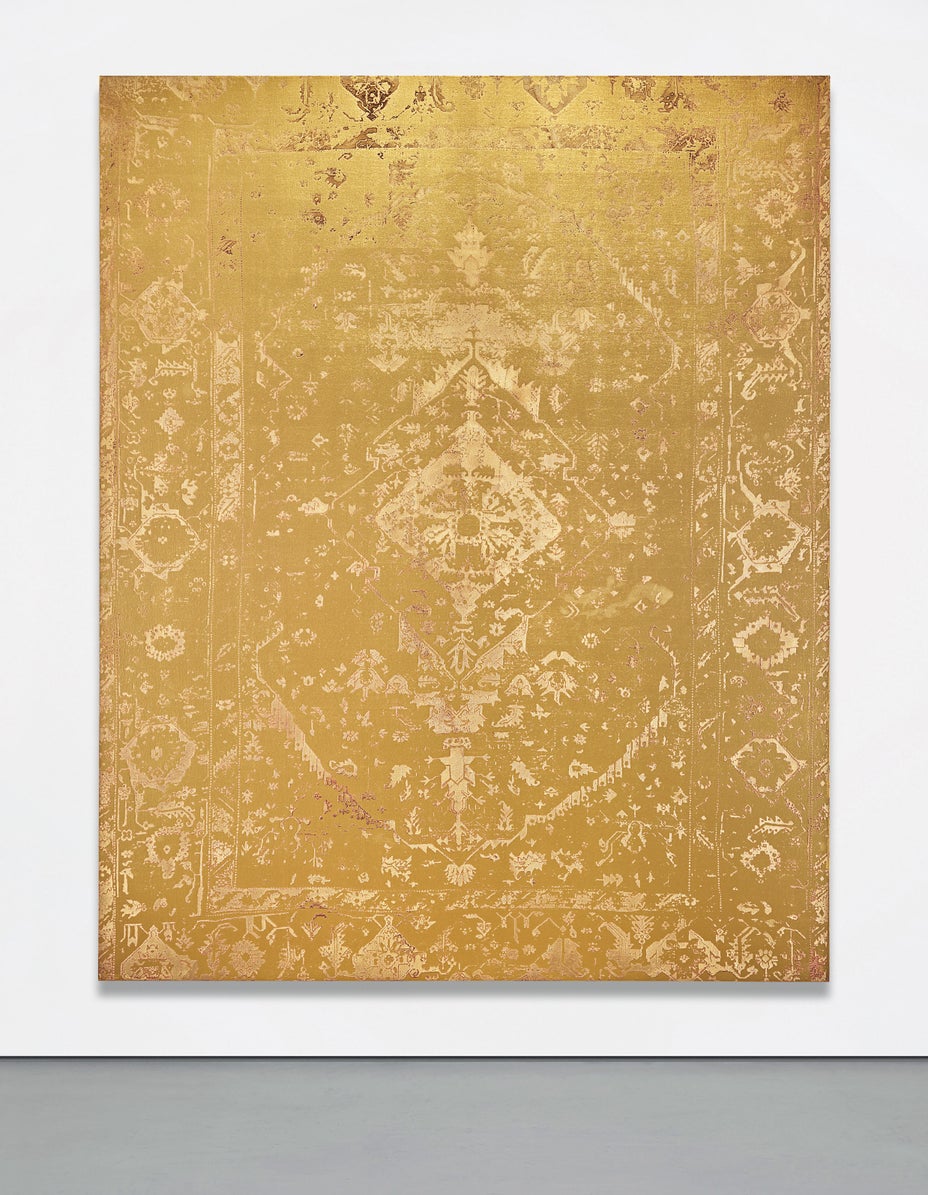
Stingel’s fascination with the decorative originates from his upbringing in Italy and Vienna, where he was exposed to Baroque and Rococo styles. Assembling patterns from these decorative prototypes, Stingel creates large-scale “paintings,” which immerse the viewer in repetitive symmetrical patterns as would wallpaper or carpets; yet upon close inspection, each surface is exceptionally distinctive with graduated tones, washes of shade, and unpredictable splashes of texture. Lingering between a floor carpet and a wall tapestry, Untitled touches upon a theme Stingel has been exploring since the early 1990s when he created an installation of carpets that lined the walls and floors.
Since at least as early as 2004, Stingel has been working with gold color pigments in his work. A contemporary alchemist, he is often using one thing to create a convincing allusion to something else. In Untitled he turns a carpet into a shimmering object of pure golden desire. This form of transubstantiation has long been an important aspect of Stingel’s work—he turned Styrofoam panels into suggestions of snow, aluminum paint to suggest paintings of pure silver and cast polycarbonate to create metal radiators. We’re in on the trick, but we fall for the paintings all the same, because they are as beautiful as they are thoughtful.
By visually blurring the logic of spatial recognition and visual orientation, Stingel began to explore the relationship between painting and space utilizing patterns that strategically possess overlapping historical references. Untitled lies at the intersection of lavishness and starkness, exploring what it means to make a painting in the margins between linear design and painterly gesture. As critic Roberta Smith has aptly noted, Stingel "combines a love of painting with the postmodern suspicion of it, and often achieves a near-perfect balance between the visual and the conceptual."(Roberta Smith, "DIY Art: Walk on It, Write on It, Stroke It," The New York Times, June 29, 2007)
Rudolf Stingel
Italian | 1956Rudolf Stingel came to prominence in the late 1980s for his insistence on the conceptual act of painting in a context in which it had been famously declared dead. Despite the prevailing minimalist and conceptual narrative of the time, the Italian-born artist sought to confront the fundamental aspirations and failures of Modernist painting through the very medium of painting itself. While his works do not always conform to the traditional definitions of painting, their attention to surface, space, color and image provide new and expanded ways of thinking about the process and "idea" of painting. Central to his multifarious and prolific oeuvre is an examination of the passage of time and the probing of the fundamental questions of authenticity, meaning, hierarchy, authorship and context by dislocating painting both internally and in time and space. Stingel is best known for his wall-to-wall installations, constructed of fabric or malleable Celotex sheets, as well as his seemingly more traditional oil-on-canvas paintings.