
130
Sol LeWitt
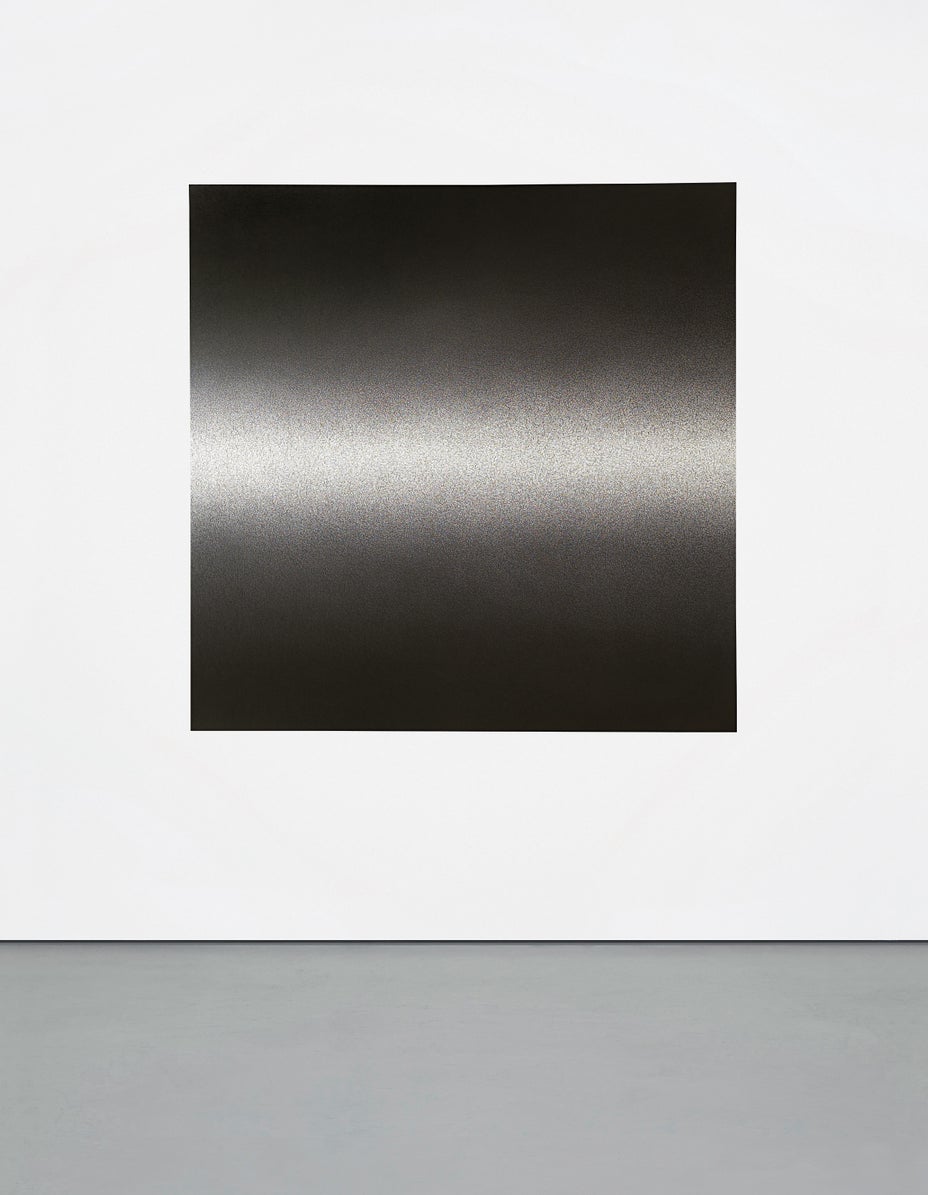
Wall Drawing #1185 Scribbles: Inverted Curve (Horizontal)
- Estimate
- £150,000 - 200,000‡
£118,750
Lot Details
graphite
304.8 x 304.8 cm (120 x 120 in.)
Executed in October 2005, this work is accompanied by a certificate of authenticity signed by the artist.
Specialist
Full-Cataloguing
Catalogue Essay
Wall Drawing 1185: Scribbles: Inverted curve (horizontal), October 2005 is included in MASS MoCA’s ongoing exhibition Sol LeWitt: A Drawing Retrospective, which opened on November 16, 2008 and will remain on view for 25 years. The 105 wall drawings included in the exhibition cover nearly an acre of space in the historic mill building that was renovated for the specific purpose of housing the exhibition. A hallmark of LeWitt’s wall drawings, the title of Wall Drawing 1185: Scribbles: Inverted curve (horizontal) describes its appearance, and while the description is reductive and straightforward, the work is a stunning and powerful tour de force.
Provenance
Exhibited
Sol LeWitt
American | B. 1928 D. 2007Connected to the Conceptual and Minimalist art movements of the 1960s and '70s, the artist and theorist Sol LeWitt was a pivotal figure in driving 'idea' art into the mainstream art discourse. Redefining what constituted a work of art and its genesis, LeWitt explored these ideas through wall drawings, paintings, sculptures, works on paper and prints.
Using a prescription to direct the creation of a work, the artist’s hand subordinated to the artist's thoughts, in direct contrast to the Abstract Expressionist movement earlier in the century. Actions, forms and adjectives were broken down into terms, serially repeated and reconfigured: grids, lines, shapes, color, directions and starting points are several examples. These directives and constructs fueled an influential career of vast variety, subtlety and progression.
Browse ArtistUsing a prescription to direct the creation of a work, the artist’s hand subordinated to the artist's thoughts, in direct contrast to the Abstract Expressionist movement earlier in the century. Actions, forms and adjectives were broken down into terms, serially repeated and reconfigured: grids, lines, shapes, color, directions and starting points are several examples. These directives and constructs fueled an influential career of vast variety, subtlety and progression.