

813
A. Lange & Söhne
Ref. 403.035
Datograph
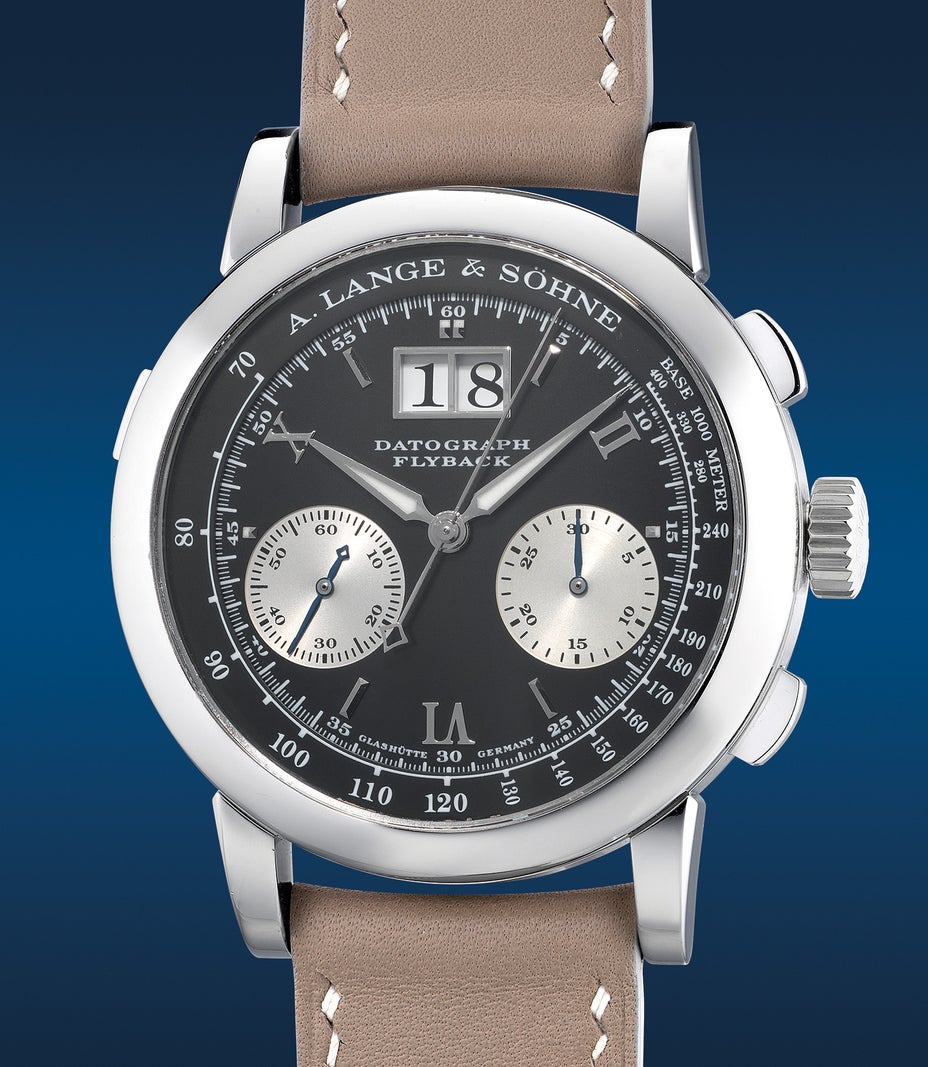
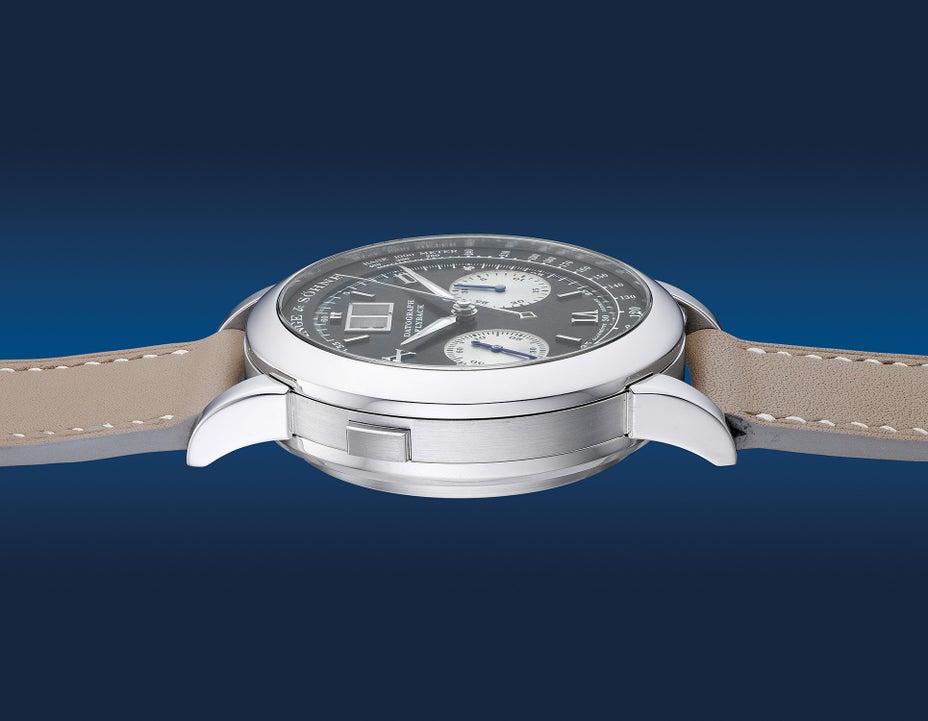
A fine and early platinum flyback chronograph wristwatch with large date, tachymeter scale, guarantee and presentation box
- Estimate
- HK$320,000 - 630,000€38,100 - 74,900$41,000 - 80,800
HK$529,200
Lot Details
- Manufacturer
- A. Lange & Söhne
- Year
- Circa 2001
- Reference No
- 403.035
- Movement No
- 33‘906
- Case No
- 140’909
- Model Name
- Datograph
- Material
- Platinum
- Calibre
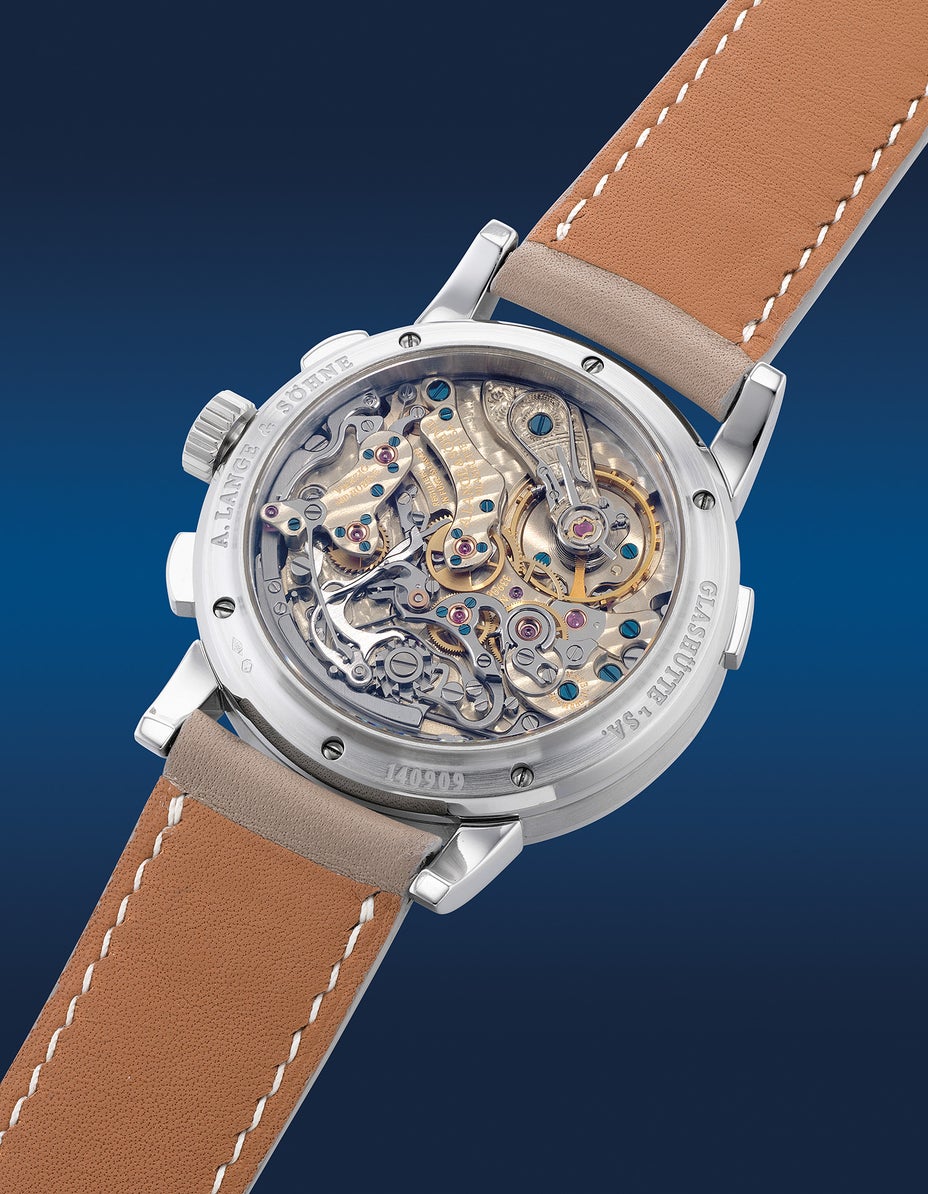
- Manual, cal. L 951.1, 40 jewels
- Bracelet/Strap
- Calf
- Clasp/Buckle
- Platinum A. Lange & Söhne pin buckle
- Dimensions
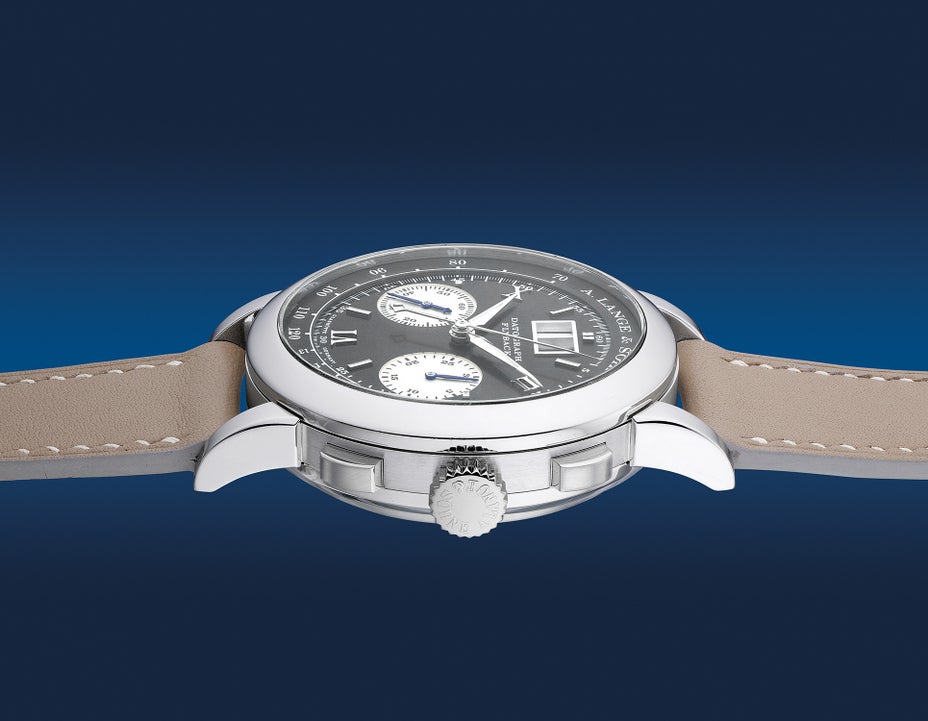
- 39mm diameter
- Signed
- Case, dial, movement and buckle signed
- Accessories
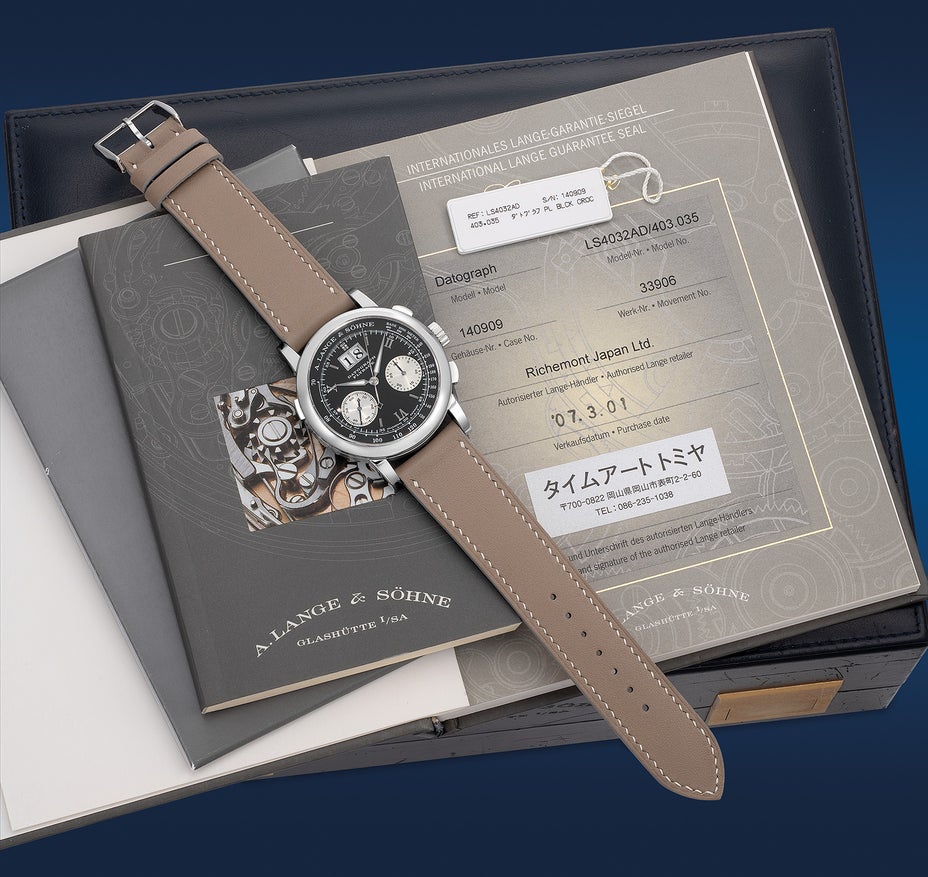
- Accompanied by A. Lange & Söhne guarantee stamped Richemont Japan Ltd, dated 7th March 2001, instruction manual, leather folder and fitted presentation box.
Specialist
Full-Cataloguing
Catalogue Essay
Launched in 1999, collectors have widely regarded A.Lange & Söhne Datograph as one of the finest modern chronograph wristwatches produced by any firm. Since its re-establishment of manufacture, A. Lange & Söhne has been creating some of the most impressive timepieces executed to the highest quality. It features an in-house manual movement and is expertly finished throughout with Glashütte stripes and a signature hand-engraved balance cock. The oversized date window display particular to A. Lange & Söhne wristwatches inspired by the Dresden Semper Opera clock sits perfectly legible on the 12 O’clock position.
The first generation of the Datograph features a 39mm diameter case without the power reserve indication giving the dial a clean and minimalist appeal. Furthermore, the platinum case and black dial is the original Datograph that captured the admiration of so many collectors and connoisseurs when it first appeared at Baselworld in 1999. In 2012, the firm upgraded the Datograph featuring a more significant 41mm diameter case and implemented an up/down power reserve indication at 6 o’clock, featuring baton indexes instead of Roman numerals.
The present example A. Lange & Söhne Datograph in platinum from circa 2001 belongs to the model's first generation that can be identified by the ‘METER’ tachymeter scale that was replaced later in A. Lange & Söhne production around 2005 with ‘METERS’ tachymeter scale. A small but essential detail that collectors look for in collecting early versions of Datograph. Complete with its original guarantee and presentation box, this is undoubtedly an example that will garner much interest from collectors of fine chronograph wristwatches.
The first generation of the Datograph features a 39mm diameter case without the power reserve indication giving the dial a clean and minimalist appeal. Furthermore, the platinum case and black dial is the original Datograph that captured the admiration of so many collectors and connoisseurs when it first appeared at Baselworld in 1999. In 2012, the firm upgraded the Datograph featuring a more significant 41mm diameter case and implemented an up/down power reserve indication at 6 o’clock, featuring baton indexes instead of Roman numerals.
The present example A. Lange & Söhne Datograph in platinum from circa 2001 belongs to the model's first generation that can be identified by the ‘METER’ tachymeter scale that was replaced later in A. Lange & Söhne production around 2005 with ‘METERS’ tachymeter scale. A small but essential detail that collectors look for in collecting early versions of Datograph. Complete with its original guarantee and presentation box, this is undoubtedly an example that will garner much interest from collectors of fine chronograph wristwatches.
A. Lange & Söhne
German | 1845Originally founded in 1845 by Ferdinand Adolph Lange in Glashütte, Dresden, Germany, the firm established an entire watchmaking culture and industry in Glashütte. The brand quickly became Germany's finest watchmaker, first creating dependable, easy-to-repair watches before going on to produce some of the world's finest complicated pocket watches, including Grande Sonnerie watches, tourbillon watches and Grande Complications.
On the final day of World War II, their factories were destroyed by Russian bombers, and in 1948 the brand was confiscated by the Soviet Union. Following the fall of the Berlin Wall in 1990, Ferdinand's great grandson Walter Lange re-established the brand with the objective to once again produce top-quality luxury watches. Now part of the Richemont Group, its original vintage and modern creations are highly coveted by collectors. Key models from the modern era include the Lange 1, Pour Le Mérite Tourbillon and the Zeitwerk.
Browse MakerOn the final day of World War II, their factories were destroyed by Russian bombers, and in 1948 the brand was confiscated by the Soviet Union. Following the fall of the Berlin Wall in 1990, Ferdinand's great grandson Walter Lange re-established the brand with the objective to once again produce top-quality luxury watches. Now part of the Richemont Group, its original vintage and modern creations are highly coveted by collectors. Key models from the modern era include the Lange 1, Pour Le Mérite Tourbillon and the Zeitwerk.