86
Albert H. Potter
Pivoted Detent Chronometer
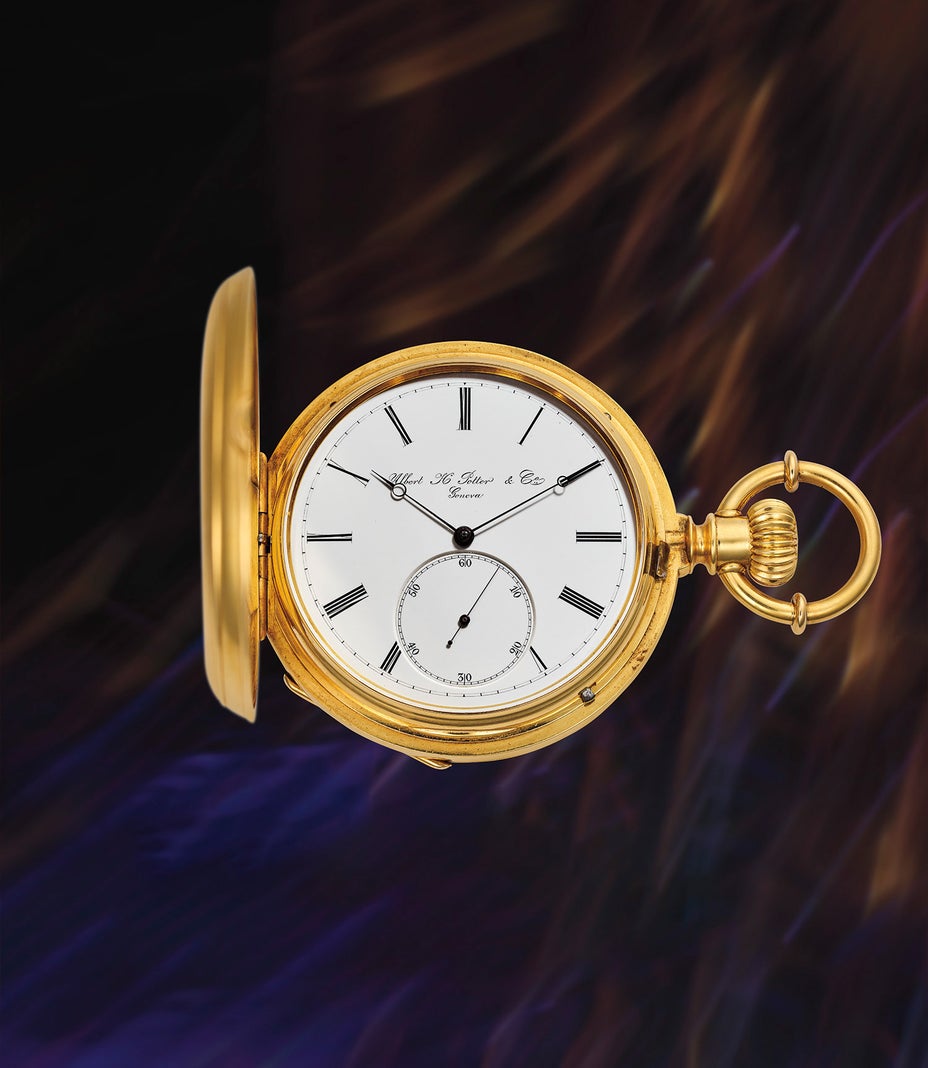
A very rare and exquisite yellow gold hunter cased keyless pocket chronometer with presentation box
Estimate
$20,000–40,000
Sold For
$73,660
Manufacturer
Albert H. Potter
Year
Circa 1877
Model Name
Pivoted Detent Chronometer
Material
18K yellow gold
Calibre
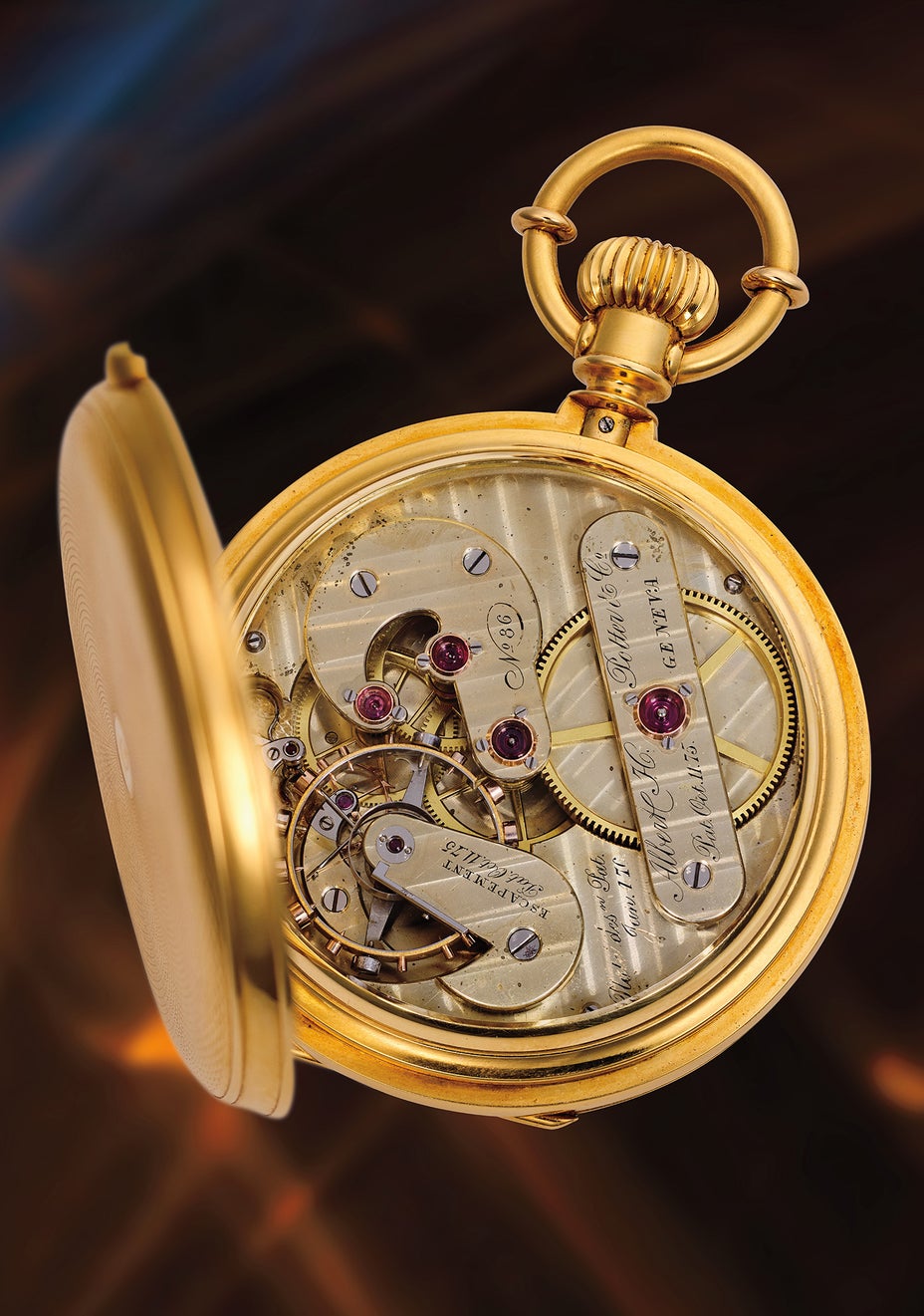
Manual type two, pivoted detent escapement, jewelled to the center
Dimensions
56mm Diameter
Signed
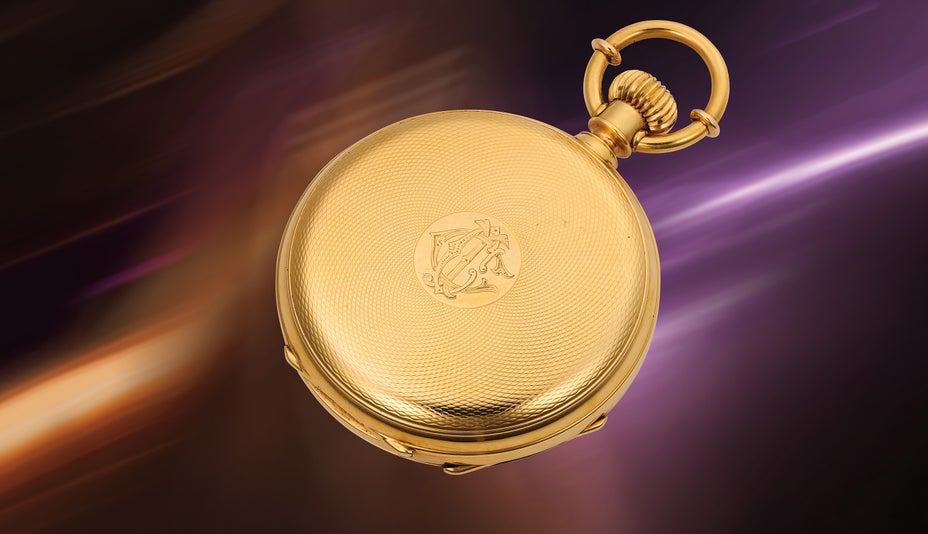
Case with Potter’s trademark, dial and movement signed.
Accessories
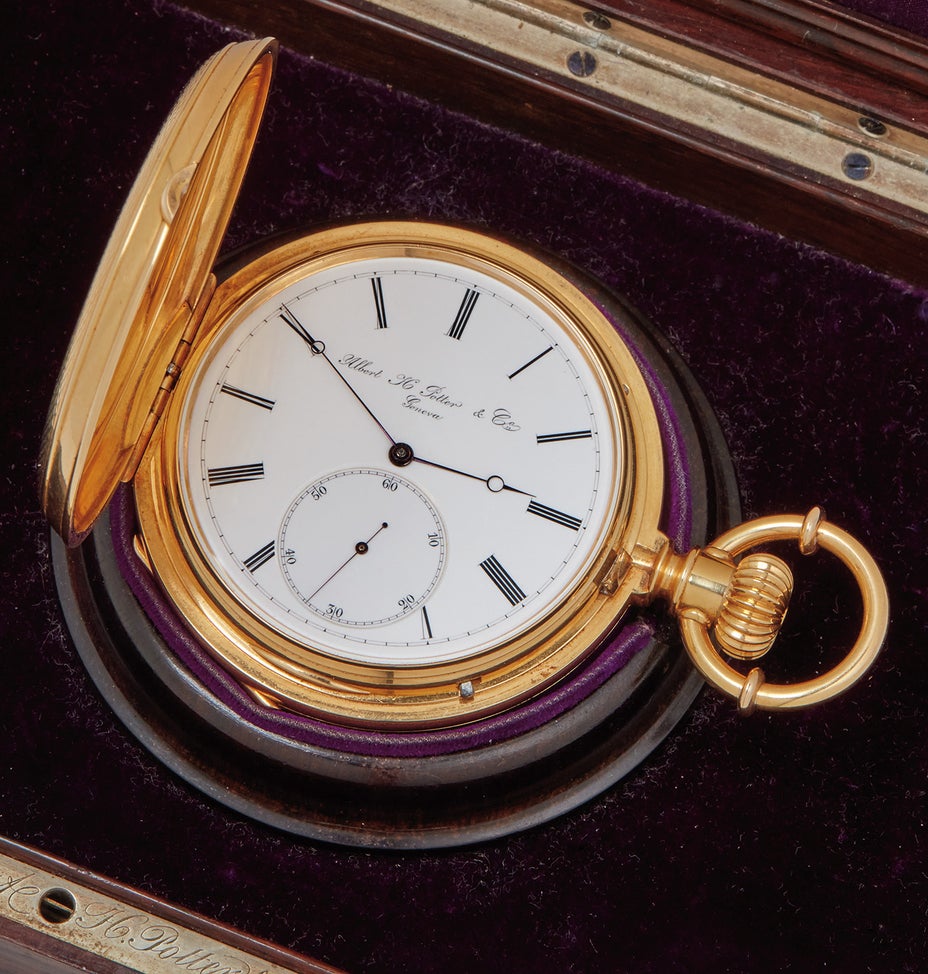
Accompanied by original numbered Albert H. Potter fitted wooden presentation box, additional crystals and main spring.
Full-Cataloguing
Albert H. Potter (1836-1908) was a pioneering American horologist with lasting contributions to precision timekeeping and haute horlogerie. Born in Mechanicville, New York, he began his career as an apprentice in 1852 with Wood and Foley of Albany, New York.
During his residency in Chicago in the 1870s, Potter designed and built a pocket chronometer that became a prototype for his later timepieces, and by 1875/1876, Potter had patents on compensation balances, safety barrels, and pivoted detent escapements. His high-quality movements sold for between $250 and $500 dollars – an amount substantially higher than Swiss brands like Vacheron Constantin.
In 1876, Potter moved to Geneva and over the next 20 years produced approximately 600 high quality timepieces from repeaters to chronometers. The present pocket chronometer, number 86, with pivoted detent escapement dates to 1877 and is an exceptional example of Albert Potter's craftsmanship and innovation. The nickel movement with Potter’s patented bridge layout is stamped “plate den. Pat. Jan. 4.76” with a free-sprung helical hairspring and bi-metallic compensation balance. The movement is further stamped “escapement Pat. Oct. 11. 75”, while the 18K yellow gold case is stamped with Potter’s trademark. The flawless white enamel dial has fine Roman numerals and a subsidiary dial at 6 o’clock. Purchased by the consignor at auction in 1991, the present watch has been preserved unused since then, remaining in overall outstanding condition.
Albert H. Potter ceased watchmaking in 1895 and pivoted to designing steam powered carriages and pressure boilers. Today, his watches are highly sought after both for their rarity, innovativeness, and exceptional craftsmanship. The watches produced during his Geneva period are considered his finest, and the present example is a rare opportunity to own one of these exceptional pocket chronometers.
During his residency in Chicago in the 1870s, Potter designed and built a pocket chronometer that became a prototype for his later timepieces, and by 1875/1876, Potter had patents on compensation balances, safety barrels, and pivoted detent escapements. His high-quality movements sold for between $250 and $500 dollars – an amount substantially higher than Swiss brands like Vacheron Constantin.
In 1876, Potter moved to Geneva and over the next 20 years produced approximately 600 high quality timepieces from repeaters to chronometers. The present pocket chronometer, number 86, with pivoted detent escapement dates to 1877 and is an exceptional example of Albert Potter's craftsmanship and innovation. The nickel movement with Potter’s patented bridge layout is stamped “plate den. Pat. Jan. 4.76” with a free-sprung helical hairspring and bi-metallic compensation balance. The movement is further stamped “escapement Pat. Oct. 11. 75”, while the 18K yellow gold case is stamped with Potter’s trademark. The flawless white enamel dial has fine Roman numerals and a subsidiary dial at 6 o’clock. Purchased by the consignor at auction in 1991, the present watch has been preserved unused since then, remaining in overall outstanding condition.
Albert H. Potter ceased watchmaking in 1895 and pivoted to designing steam powered carriages and pressure boilers. Today, his watches are highly sought after both for their rarity, innovativeness, and exceptional craftsmanship. The watches produced during his Geneva period are considered his finest, and the present example is a rare opportunity to own one of these exceptional pocket chronometers.