5
Albert Renger-Patzsch
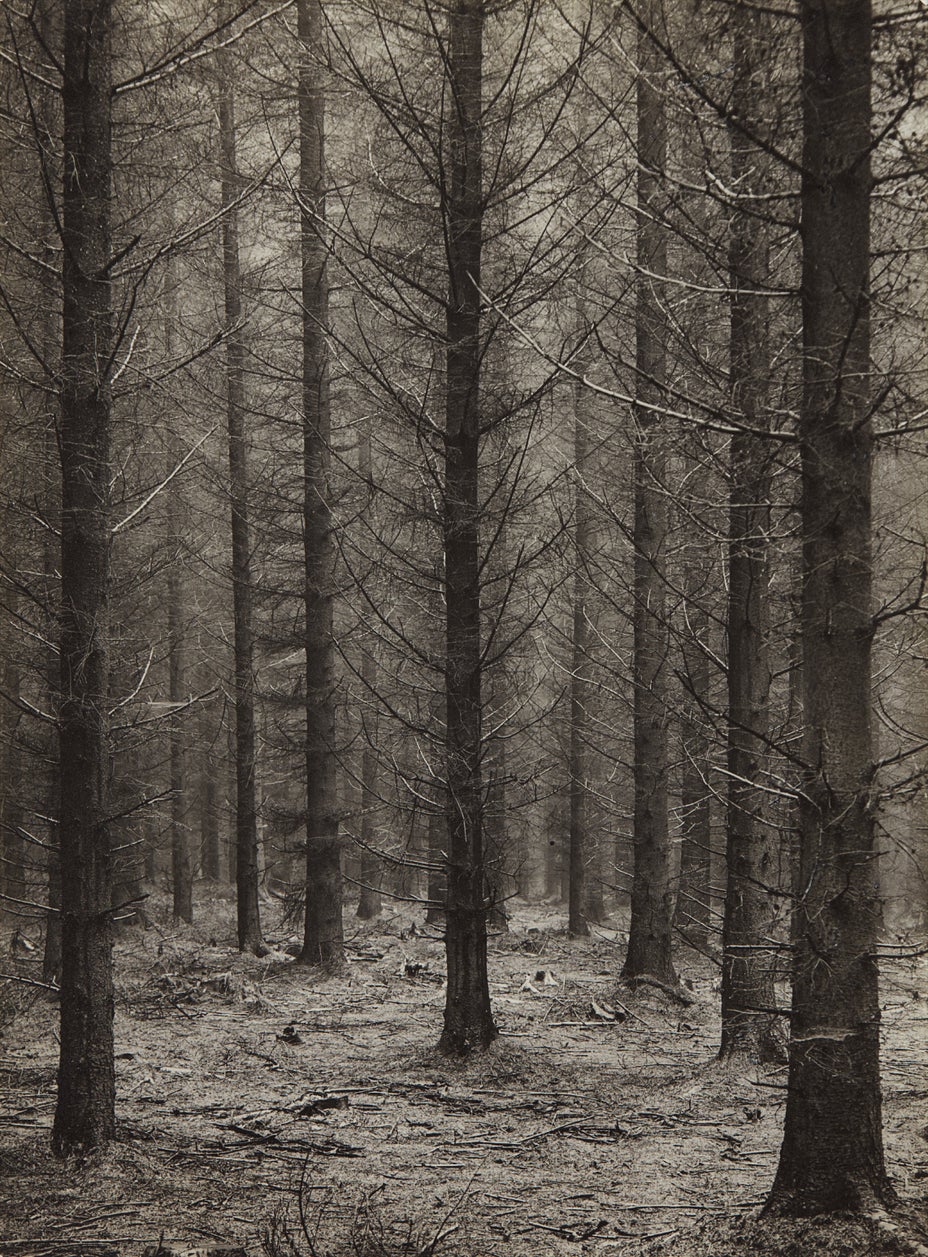
Spätherbst im Fichtenwald
Estimate
$15,000–25,000
Sold For
$27,500
1947-1955
Gelatin silver print.
15 1/8 x 11 1/8 in. (38.4 x 28.3 cm)
'Wamel-Dorf über Soest I. W.' credit stamp on the verso.
Full-Cataloguing
Albert Renger-Patzsch used photography to document the exact appearance of things. He rejected any claim of artistry for himself, believing that artistry resided in the essence of the object—in the thing itself. His photographs of the material world, from plants and animals to landscapes and man-made structures, have been recognized, along with August Sander’s portraits, as cornerstones of the post-World War I movement that came to be known as Neue Sachlichkeit (New Objectivity).
The subject of fir trees in a forest, with their repeating patterns of dark, vertical trunks and upwardly extending branches, is one to which Renger-Patzsch returned again and again, from the 1920s on. These studies constitute a powerful example of what Carl George Heise wrote in his introduction to Renger-Patzsch’s 1928 volume, Die Welt ist Schön (The World is Beautiful): that photography can help us “see anew the symbolism of the fullness of life itself, inexhaustible in all of its parts."
The subject of fir trees in a forest, with their repeating patterns of dark, vertical trunks and upwardly extending branches, is one to which Renger-Patzsch returned again and again, from the 1920s on. These studies constitute a powerful example of what Carl George Heise wrote in his introduction to Renger-Patzsch’s 1928 volume, Die Welt ist Schön (The World is Beautiful): that photography can help us “see anew the symbolism of the fullness of life itself, inexhaustible in all of its parts."