PROPERTY FROM THE ESTATE OF PAUL KANTOR, LOS ANGELES
27
Alberto Giacometti
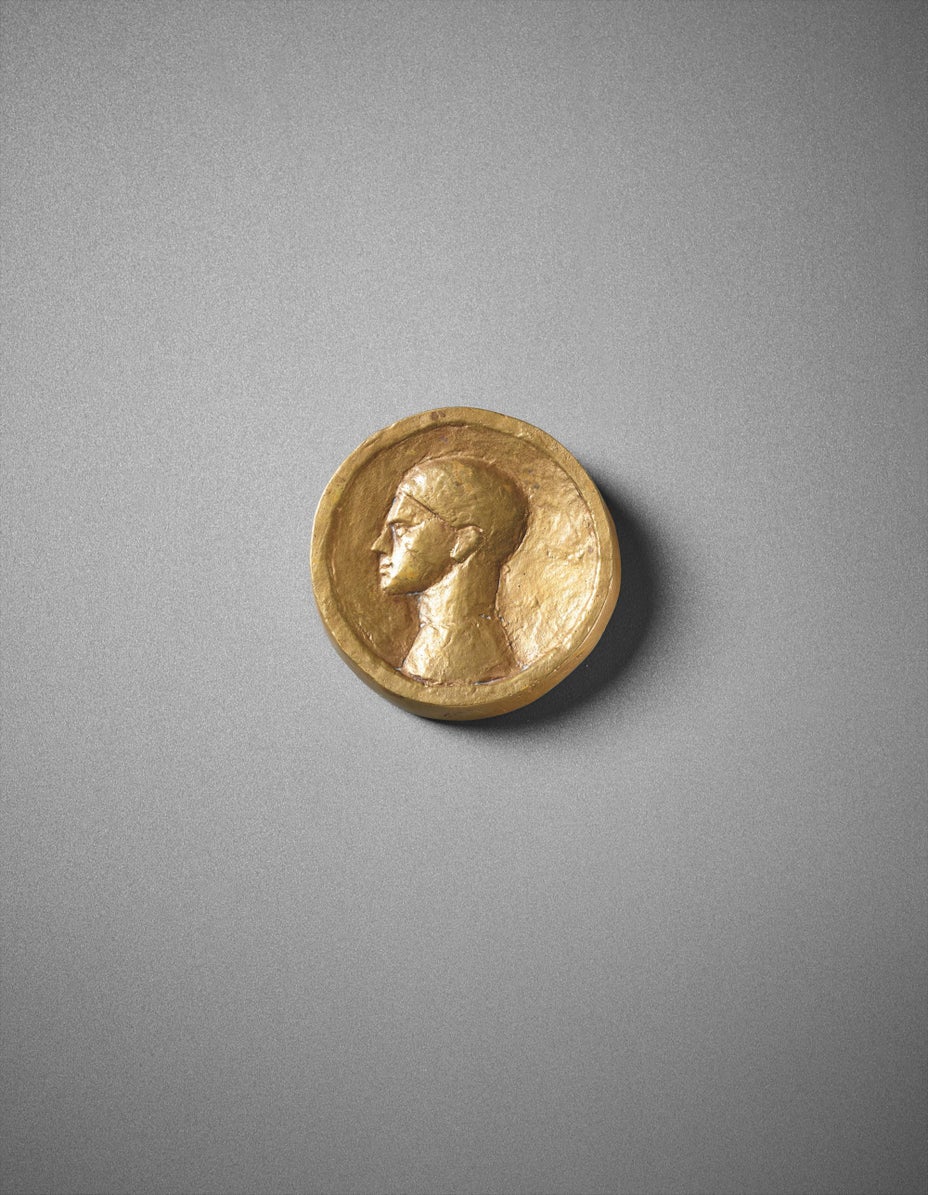
Portrait medallion (man in profile)
Estimate
£4,000–6,000‡︎
Sold For
£25,000
circa 1936
Bronze.
6.6 cm (2 5/8 in.) diameter
Reverse with brooch and impressed with AG 02. Together with a certificate of authenticity from the Giacometti Commitee.
Full-Cataloguing
The present lot has been authenticated by the Fondation Alberto et Annette Giacometti and is registered in the Alberto Giacometti Database, the online catalogue of authentic works by the artist, as number AGD 3476.
Alberto Giacometti designed the present model portrait medallion, together with a female version, as an architectural ornament for use in a Jean-Michel Frank's interiors. Aesthetically ‘after the antique’, the object has much in common with Roman coins and the Renaissance portrait medals that they inspired. Frank’s furniture designs were filled with neo-classicist elements, and the austerity of his interiors referenced Greek and Roman ruins. Traditionally, portrait medallions were made for noble families as signifiers of power, prestige and connection to the Roman empire, with an emphasis on the artist’s facility with classical art history and scholarship. Giacometti’s adoption of this historically significant genre immediately calls upon traditional methods of broadcasting status and his proficiency with adopting contemporary concepts of refined taste.
Alberto Giacometti designed the present model portrait medallion, together with a female version, as an architectural ornament for use in a Jean-Michel Frank's interiors. Aesthetically ‘after the antique’, the object has much in common with Roman coins and the Renaissance portrait medals that they inspired. Frank’s furniture designs were filled with neo-classicist elements, and the austerity of his interiors referenced Greek and Roman ruins. Traditionally, portrait medallions were made for noble families as signifiers of power, prestige and connection to the Roman empire, with an emphasis on the artist’s facility with classical art history and scholarship. Giacometti’s adoption of this historically significant genre immediately calls upon traditional methods of broadcasting status and his proficiency with adopting contemporary concepts of refined taste.