
CHILE
2
Alfredo Jaar
Out of Balance
- Estimate
- $10,000 - 15,000
$13,750
Lot Details
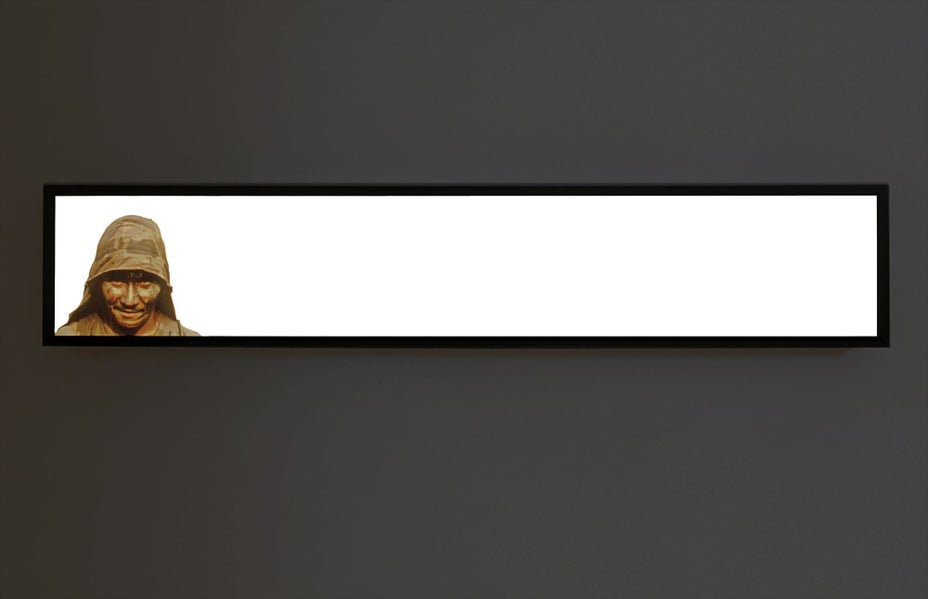
lightbox with color transparency
1989
18 x 96 x 5 in. (45.7 x 243.8 x 12.7 cm.)
This work is from an edition of 3 plus 2 artist's proofs. This work is accompanied by a certificate of authenticity signed by the artist.
Specialist
Full-Cataloguing
Catalogue Essay
I’ve never been capable of creating a single work of art that just comes from my imagination. I don’t know how to do that. Every work is a response to a real-life event, a real-life situation.
Alfredo Jaar, 2007
Alfredo Jaar was the first Latin American artist to be included in the Aperto Section of the 1986 Venice Biennale, and most recently he represented Chile in the 2013 Venice Biennale.
His work, which comprises photographs, installations and film, is centered on the constraints of representing and exploring conflicts, ethnic violence, and the increasing demoralization of developing nations within a global economy. His most ambitious endeavor to date is The Rwanda Project (1994-2000), which is based on the 1994 Rwandan genocide and took him six years to complete. The Rwanda Project interrogates and shatters the idea of “mass tragedy” by concentrating on the plight of specific individuals. The project seeks to convey through powerful visual means the devastating loss of one million identifiable human beings.
Jaar’s responsiveness to themes of political and social engagement in an international context is consistently grounded in the experience of individual people and their stories of endurance and plight. Out of Balance, a pre-cursor toThe Rwanda Project, focuses on the lives and labor of six Brazilian gold miners. An 1989 installation, it was comprised of six light boxes displayed at varying heights. These carefully crafted illuminated windows depict Brazilian miners at the edges of the frame. The illuminated background pushes the image directly into the viewer’s space. This heightens the direct perceptual involvement with the miners while simultaneously suggesting the inescapable and unbridgeable distance between the viewer and the social subject of the work. Jaar compels the viewer to engage on an individual level with the people he represents, and to highlight the social and national differences and commonalities that his installations insistently reveal. As Jaar states, “This process of identification is fundamental to create empathy, solidarity, and intellectual involvement.” (Alfredo Jaar, 2007)
Alfredo Jaar, 2007
Alfredo Jaar was the first Latin American artist to be included in the Aperto Section of the 1986 Venice Biennale, and most recently he represented Chile in the 2013 Venice Biennale.
His work, which comprises photographs, installations and film, is centered on the constraints of representing and exploring conflicts, ethnic violence, and the increasing demoralization of developing nations within a global economy. His most ambitious endeavor to date is The Rwanda Project (1994-2000), which is based on the 1994 Rwandan genocide and took him six years to complete. The Rwanda Project interrogates and shatters the idea of “mass tragedy” by concentrating on the plight of specific individuals. The project seeks to convey through powerful visual means the devastating loss of one million identifiable human beings.
Jaar’s responsiveness to themes of political and social engagement in an international context is consistently grounded in the experience of individual people and their stories of endurance and plight. Out of Balance, a pre-cursor toThe Rwanda Project, focuses on the lives and labor of six Brazilian gold miners. An 1989 installation, it was comprised of six light boxes displayed at varying heights. These carefully crafted illuminated windows depict Brazilian miners at the edges of the frame. The illuminated background pushes the image directly into the viewer’s space. This heightens the direct perceptual involvement with the miners while simultaneously suggesting the inescapable and unbridgeable distance between the viewer and the social subject of the work. Jaar compels the viewer to engage on an individual level with the people he represents, and to highlight the social and national differences and commonalities that his installations insistently reveal. As Jaar states, “This process of identification is fundamental to create empathy, solidarity, and intellectual involvement.” (Alfredo Jaar, 2007)
Provenance
Alfredo Jaar
Chilean | 1956Born in Santiago, Alfredo Jaar studied architecture at the Universidad de Chile. He was the first Latin American to participate in the Aperto Section of the Venice Biennale of 1986. His art interrogates the relationship between First and Third World countries and their interplay within the global economy through community-based projects, photographs, installations and film.
Jaar's engagement with social and political issues in the larger global context is focused on the experience of the individual's endurance in different conflicts and personal narratives. He also explores the limitations of art in representing these humanitarian events in a society that has become desensitized to images depicting mordant issues, such as genocides and famines. His thoughtful and provocative works often address politically charged issues in subtle and poetic ways, creating new perspectives for reflecting on important world issues.
Browse ArtistJaar's engagement with social and political issues in the larger global context is focused on the experience of the individual's endurance in different conflicts and personal narratives. He also explores the limitations of art in representing these humanitarian events in a society that has become desensitized to images depicting mordant issues, such as genocides and famines. His thoughtful and provocative works often address politically charged issues in subtle and poetic ways, creating new perspectives for reflecting on important world issues.