US import tariffs: Non-US origin lots in this sale (including watches and timepieces with Swiss-made or non-US made movements) will be subject to special tariffs upon import to the USA, currently ranging from 10% to 39% on the total invoice price (hammer price plus buyer’s premium). Buyers are responsible for paying any applicable tariffs, duties, taxes and charges when importing their purchased lots. Due to the evolving nature of international trade regulations, we recommend clients consult with their local customs office or advisor for up-to-date information on the applicable tariffs.
138Σ︎
André Beyner and Maurice Grimm
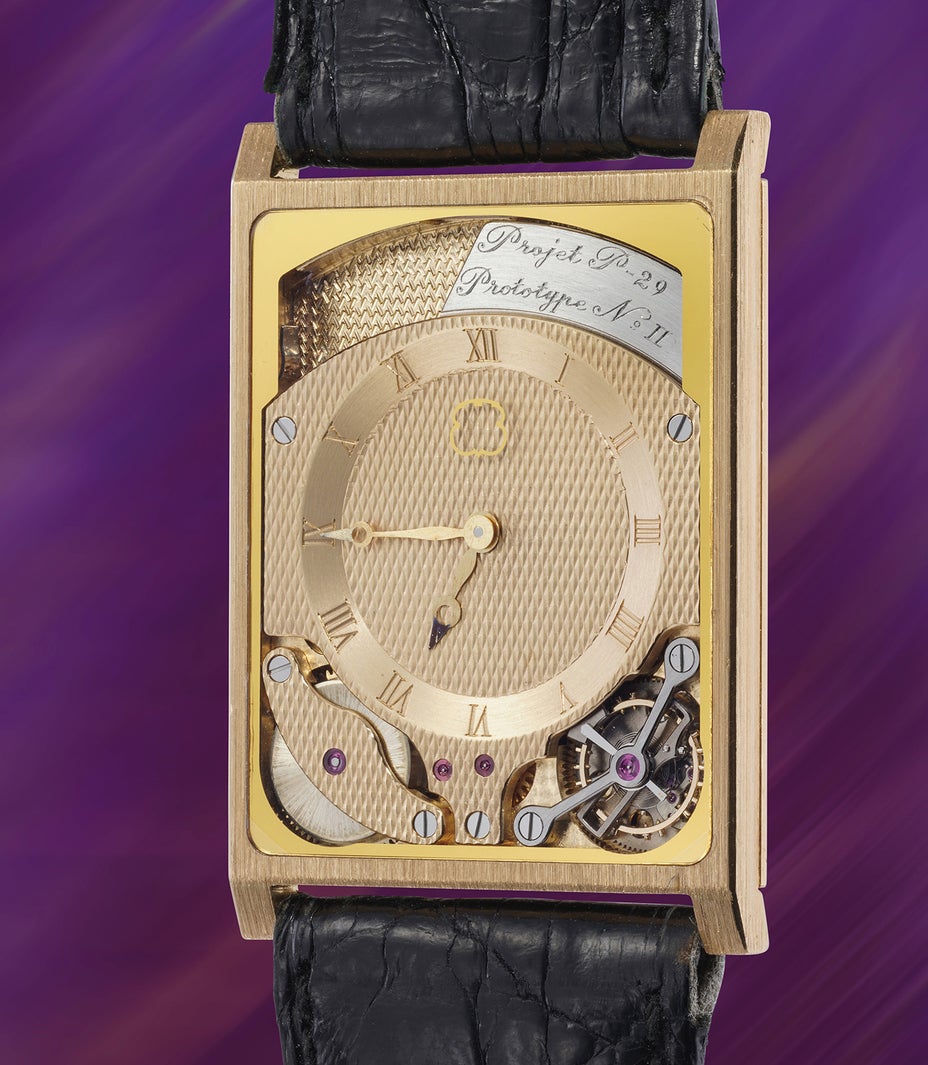
Project P29 Prototype N° II
An historically important yellow gold self-winding tourbillon prototype wristwatch, accompanied by original drawings and correspondence
Estimate
CHF30,000–60,000
€32,400–64,700
$37,700–75,400
Sold For
CHF127,000
Manufacturer
André Beyner and Maurice Grimm
Year
1984/1986
Model Name
Project P29 Prototype N° II
Material
18k yellow gold
Calibre
Automatic Tourbillon
Bracelet/Strap
Alligator
Clasp/Buckle
Yellow gold plated pin buckle
Dimensions
25mm width x 31mm length
Signed
Case, dial, and movement signed
Accessories
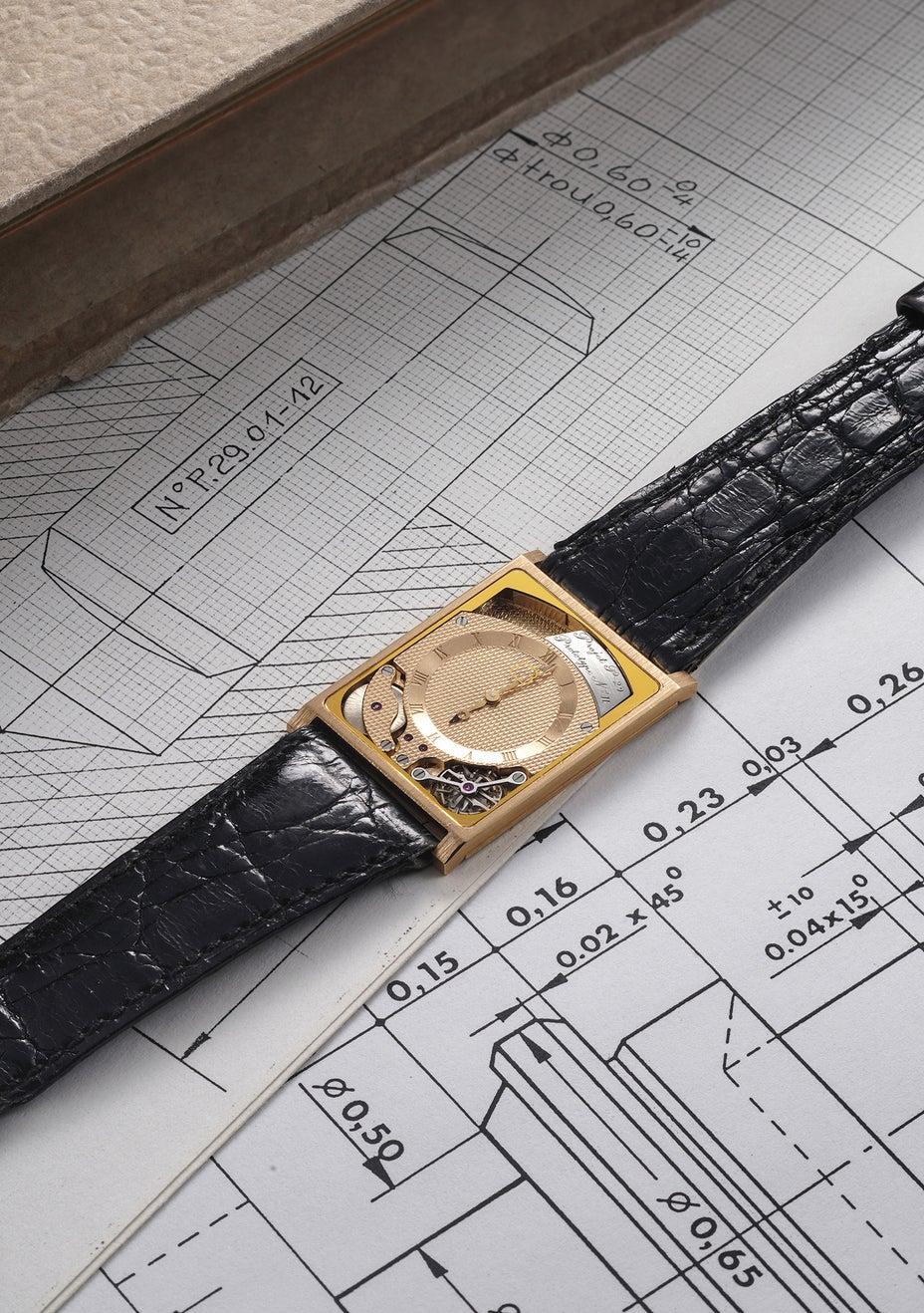
Accompanied by a large folder containing all the drawings to produce the movement realized between 1982 and 1986.
Full-Cataloguing
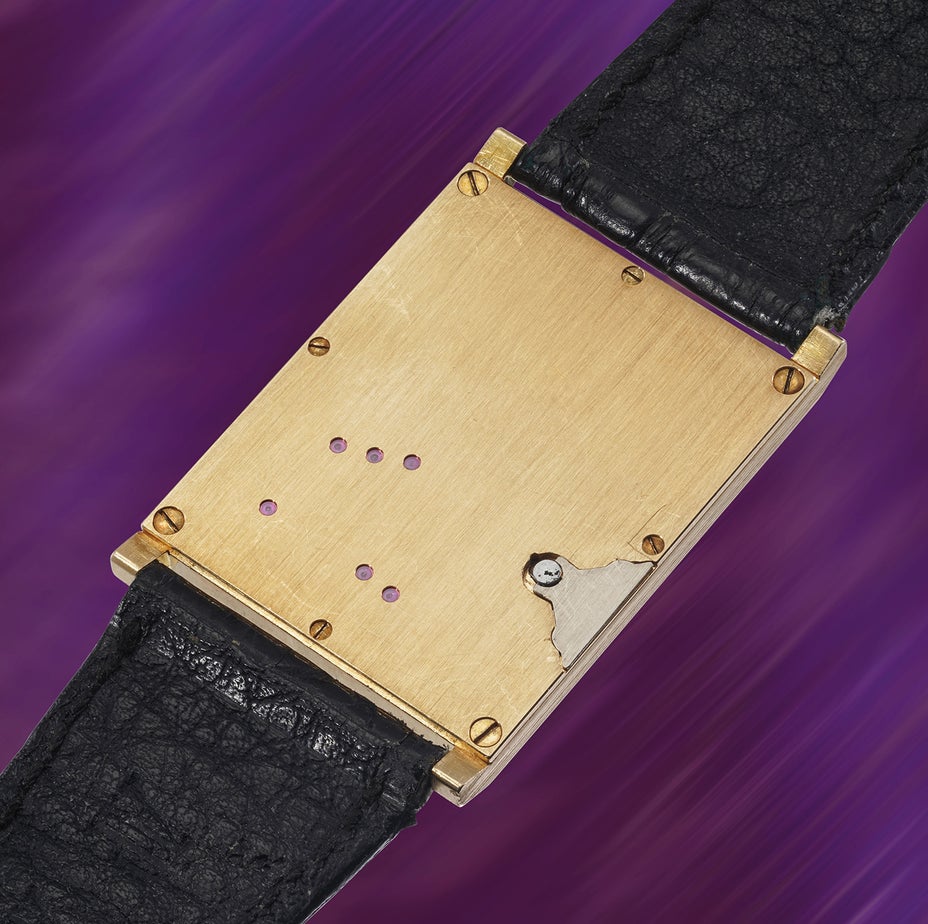
The present watch is a historically important creation of two brilliant engineers, Maurice Grimm and André Beyner. Renowned for their groundbreaking innovations, including the record-thin “Delirium,” they pushed horological boundaries with this prototype, the world’s first ultra-thin tourbillon with automatic winding. Just 2.7mm thick, it set a record by integrating the movement into the caseback and introduced a novel “hammer” winding system using a heavy platinum oscillating mass.
Audemars Piguet later acquired the project, launching the caliber 2870 in 1986 inside reference 25643, the thinnest serially produced tourbillon wristwatch of its era. The advent of Electro Discharge Machining (EDM) in the early 1980s made possible the ultra-precise components needed for such breakthroughs. Harnessing this technology, Beyner and Grimm created the foundation for Audemars Piguet’s legendary “Ra Tourbillon” of 1986, the first self-winding ultra-thin tourbillon. More than a technical feat, it reignited the tourbillon as a viable wristwatch complication and helped spark the mechanical revival that restored Swiss haute horlogerie to global prominence.
Accompanied by Maurice Grimm’s original technical drawings, the present lot is not only a prototype of immense horological importance, but also a once-in-a-lifetime opportunity for the discerning collector to acquire a cornerstone of modern watchmaking history.
Audemars Piguet later acquired the project, launching the caliber 2870 in 1986 inside reference 25643, the thinnest serially produced tourbillon wristwatch of its era. The advent of Electro Discharge Machining (EDM) in the early 1980s made possible the ultra-precise components needed for such breakthroughs. Harnessing this technology, Beyner and Grimm created the foundation for Audemars Piguet’s legendary “Ra Tourbillon” of 1986, the first self-winding ultra-thin tourbillon. More than a technical feat, it reignited the tourbillon as a viable wristwatch complication and helped spark the mechanical revival that restored Swiss haute horlogerie to global prominence.
Accompanied by Maurice Grimm’s original technical drawings, the present lot is not only a prototype of immense horological importance, but also a once-in-a-lifetime opportunity for the discerning collector to acquire a cornerstone of modern watchmaking history.