23
Andy Warhol
Self-Portrait
Full-Cataloguing
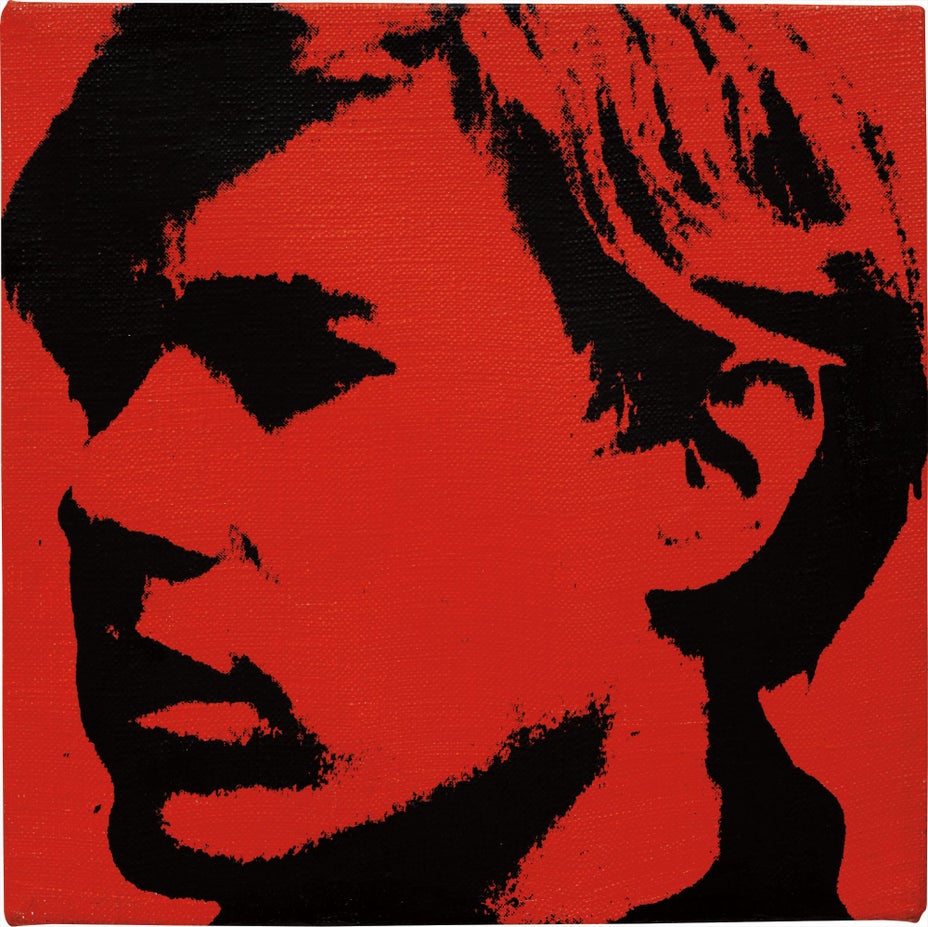
The present lot, the 1967 Self-Portrait, is an early iteration of the artist’s self-portraits, and is from the artist’s second ever series of self-pictures. Warhol’s first commissioned self-portrait was in 1963, and to this mode he returned roughly every five years throughout his artistic career. His first self-portraits were deeply influenced by celebrity portraiture, and thus the earliest of these were silkscreens that heavily resembled rehearsed glamour-shots painted in a variety of colours. These works appeared alongside Warhol’s dazzling, newfound celebrity status, and often showed the young artist imitating his glamorous subjects both in posture and gesture.
From the mid-1960s onwards, and in part due to his various encounters with actors and models, filmmaking became engrained in Warhol’s mode of production, and his works became much more nuanced and restrained. It was also likely that this extended time with filmstrips propelled the artist to turn to a more introspective, small scale, focusing on single images rather than multiple silkscreens. Using the aesthetics of a filmstrip, Warhol’s works from the mid-1960s onwards were much more candid, and experimented with monochromes, most prominently in violets and cadmium reds. Self-Portrait was executed at this moment of change, showing us an unadulterated, genuine shot of the artist in a brilliant, striking red.
While much of his works can be explained by his interest in celebrity and consumerist culture, Warhol’s self-portraits are much more difficult to grasp. Though they present an intimate glimpse into the artist’s persona, they are deliberately self-effacing and vague. Self Portrait offers us Warhol’s slightly concealed boyish face, as if he is deliberately shying away from the camera. This image itself is perhaps one of the rarest of the artist—in stark contrast to the aloof, self-assured Warhol that is most commonly depicted, Self-Portrait captures an introverted and innocent version of the artist, the red cadmium an apt metaphor for perfect youth.
Andy Warhol
American | B. 1928 D. 1987Andy Warhol was the leading exponent of the Pop Art movement in the U.S. in the 1960s. Following an early career as a commercial illustrator, Warhol achieved fame with his revolutionary series of silkscreened prints and paintings of familiar objects, such as Campbell's soup tins, and celebrities, such as Marilyn Monroe. Obsessed with popular culture, celebrity and advertising, Warhol created his slick, seemingly mass-produced images of everyday subject matter from his famed Factory studio in New York City. His use of mechanical methods of reproduction, notably the commercial technique of silk screening, wholly revolutionized art-making.
Working as an artist, but also director and producer, Warhol produced a number of avant-garde films in addition to managing the experimental rock band The Velvet Underground and founding Interview magazine. A central figure in the New York art scene until his untimely death in 1987, Warhol was notably also a mentor to such artists as Keith Haring and Jean-Michel Basquiat.