78
Armand-Albert Rateau
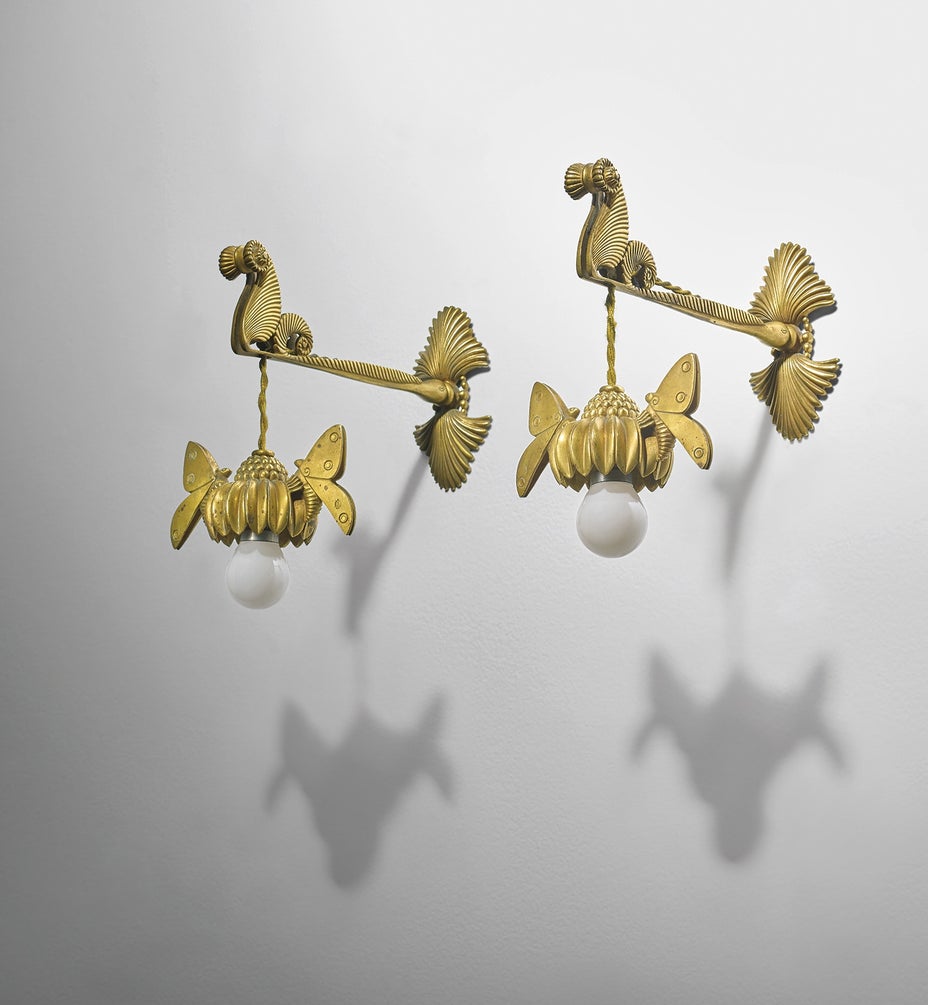
Pair of wall lights, designed for Jeanne Lanvin, Paris
Estimate
£70,000–90,000
Sold For
£175,000
circa 1924
Gilt bronze.
Each: 15.5 x 16 x 27.5 cm (6 1/8 x 6 1/4 x 10 7/8 in.)
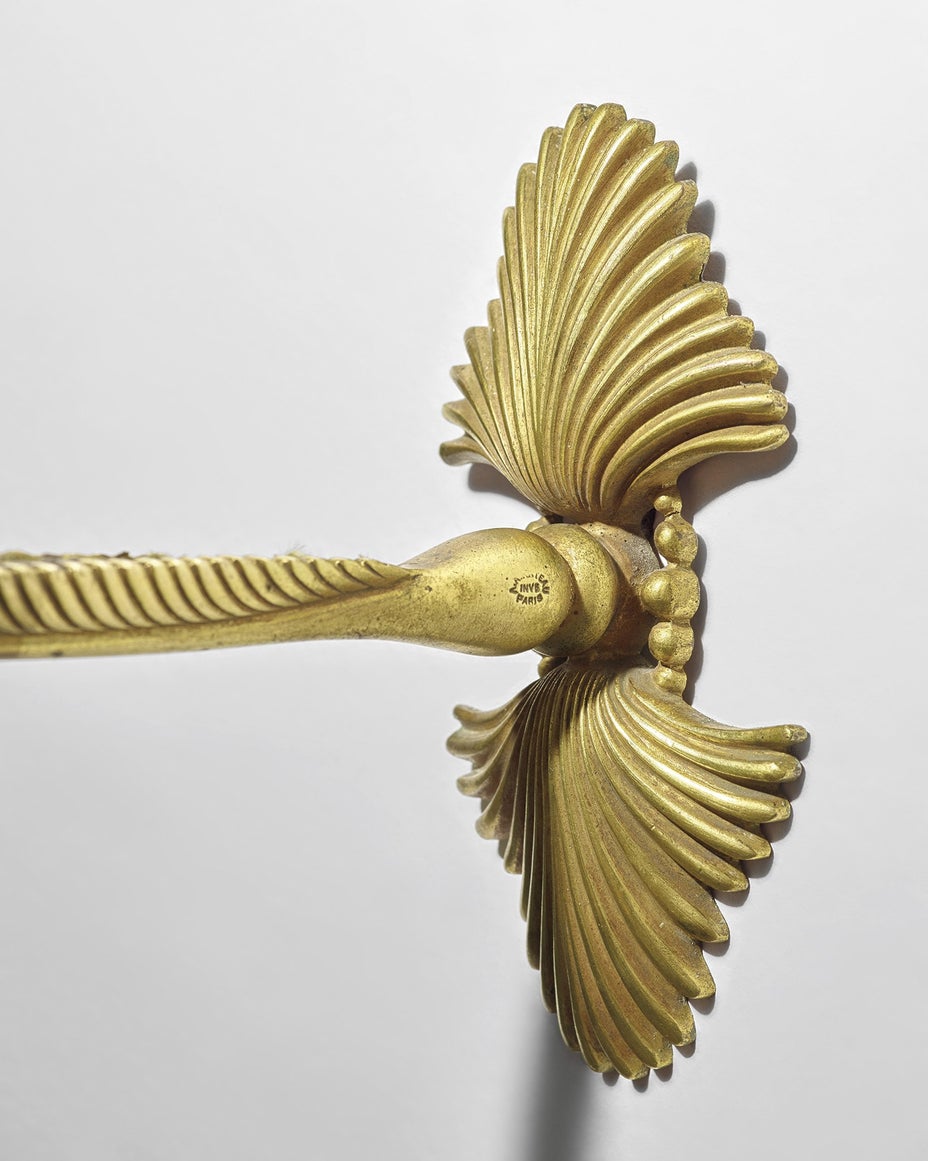
Executed by Maison Baguès, Paris, France. Each impressed twice A.A.RATEAU/INVR/PARIS.
Full-Cataloguing
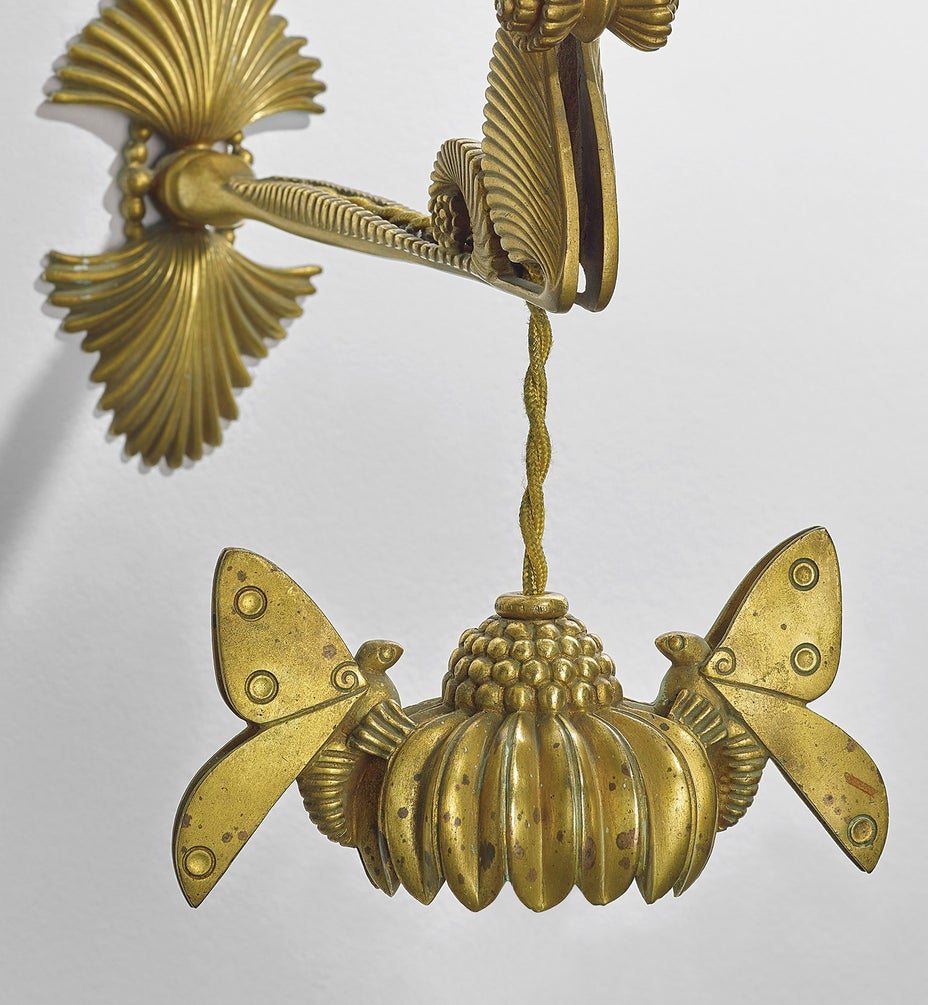
The present pair of wall lights designed by Armand-Albert Rateau combines overt symmetry with the freedom of fantasy, inspired by classical antiquity and nature. Characteristic of the designer’s highly individual interpretation of neoclassicism during the 1920s, Rateau integrated stylised daisies, acanthus and palm leaves into the structure of the wall lights, which are executed in bronze — a material used extensively during antiquity and for which Rateau’s work also became closely associated. A decade earlier, Rateau had visited the excavated ancient Roman city of Pompeii with its preserved frescoes, including elaborate, decorative garden and landscape scenes, as well as visited the nearby archaeological museum in Naples that housed examples of ancient bronze furniture. These influences are evident in the present design, which is evocative of this classical past yet unmistakably modern. Perched on either side of the suspended flower, Rateau balanced a butterfly as if found in nature, further enlivening the gilded bronze surface, which is enhanced by an exposed light bulb. The design was produced by Maison Baguès, Paris, an atelier celebrated for their finely casted bronze lighting, and who expanded alongside late nineteenth and early twentieth-century advancements in electricity.
Rateau conceived of the present model wall lights as part of the interior scheme for one of the designer’s most significant clients, the legendary couturier Jeanne Lanvin. Between 1921-1925, Rateau refurbished Lanvin’s hôtel particulier at 16, rue Barbet-de-Jouy in Paris, which included the complete renovation of her bedroom, boudoir and bathroom. A version of the wall lights in patinated bronze hung on either side of a swiveling mirror above the marble sink in Lanvin’s bathroom, and positioned across from a large bath surrounded by a low-relief plaster landscape scene of stag and deer. Rateau incorporated stylised pheasants, pine cones and daisies into the designs for the faucets, creating a whimsical punctuation throughout the tranquil and luxurious space. The daisy motif, which also features in the present wall light design, was a tribute to Lanvin’s daughter Marguerite and was used throughout the apartment. Illustrative of Rateau and Lanvin’s shared understanding and re-interpretation of a classical style into a modern visual language, the bathroom alongside the couturier’s bedroom and boudoir were later donated to and re-constructed in the Musée des Arts Décoratifs, Paris.
Rateau conceived of the present model wall lights as part of the interior scheme for one of the designer’s most significant clients, the legendary couturier Jeanne Lanvin. Between 1921-1925, Rateau refurbished Lanvin’s hôtel particulier at 16, rue Barbet-de-Jouy in Paris, which included the complete renovation of her bedroom, boudoir and bathroom. A version of the wall lights in patinated bronze hung on either side of a swiveling mirror above the marble sink in Lanvin’s bathroom, and positioned across from a large bath surrounded by a low-relief plaster landscape scene of stag and deer. Rateau incorporated stylised pheasants, pine cones and daisies into the designs for the faucets, creating a whimsical punctuation throughout the tranquil and luxurious space. The daisy motif, which also features in the present wall light design, was a tribute to Lanvin’s daughter Marguerite and was used throughout the apartment. Illustrative of Rateau and Lanvin’s shared understanding and re-interpretation of a classical style into a modern visual language, the bathroom alongside the couturier’s bedroom and boudoir were later donated to and re-constructed in the Musée des Arts Décoratifs, Paris.