27
Ashley Bickerton
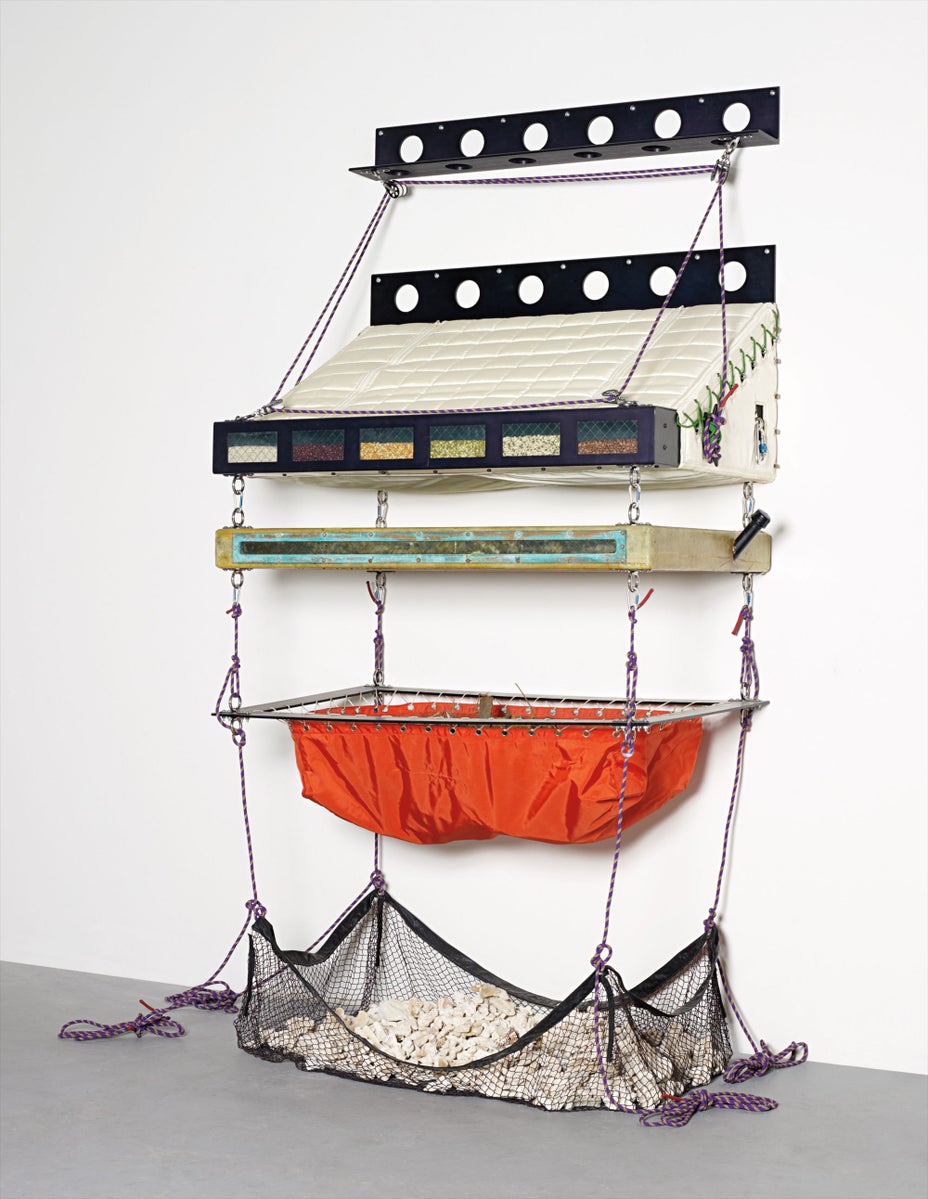
Stratified Landscape #3
Estimate
£40,000–60,000‡︎
Sold For
£43,750
wood, fiberglass, corroded steel, corroded copper, leather, rope, anodized aluminum, canvas, netting, beans, resin, decomposed seaweed, coral
254 x 121.9 x 78.7 cm (100 x 47 7/8 x 30 7/8 in.)
Full-Cataloguing
This defiant, industrial wall-sculpture, Stratified Landscape #3, illustrates Ashley Bickerton’s interest in blurring the boundaries between sculpture
and commodity. The artist’s career-long process of experimenting with the hybridisation of forms and materials create object-based sculptures,
or ‘Culture-scapes’, where desolate constructions appear to withstand apocalyptic devastation.
During the 1980’s Bickerton embarked on the ‘Neo-Geometric Conceptualism’ movement alongside Jeff Koons, Peter Halley and Meyer
Vaisman. Abbreviated to ‘Neo-Geo’, it was fuelled by a critical assessment of America’s obsession with capitalist consumerism. Challenging the
dominant culture of the time, Bickerton appropriated and parodied popular images and labels from consumer culture, indebted to Pop art,
suggesting the over-consumption of American society. The art critic David Rimanelli commented in 1994 that Bickerton works of this period “were
perhaps the most concisely sarcastic integration of Pop and institutional critique in a sarcasm-rich period”. (An American In Paris Gagosian Gallery,
Le Bourget, Paris 28 January - 3 May, 2014, www.lehmannmaupin.com).
Executed in 1990, the present lot is a seminal example of the transitional
period during the early nineties when he decided to leave New York and settle in Bali in 1997. This radical change of location paralleled a dramatic
visual shift from considering the potential of ready-made objects and images in visual culture to interest in the natural environment and new
ideas of culture and beauty. The incorporation of beds of coral and seaweed in Stratified Landscape #3 demonstrates his increasing interest in
the natural environment, which has influenced his production for the past twenty years.
Stratified Landscape #3 anticipates Bickerton’s interest in the natural environments further developed during his time in Bali, where he still lives,
as well as retaining his early leitmotif of the deleterious effects of ferocious capitalism on landscapes, as the title of the work indicates.
and commodity. The artist’s career-long process of experimenting with the hybridisation of forms and materials create object-based sculptures,
or ‘Culture-scapes’, where desolate constructions appear to withstand apocalyptic devastation.
During the 1980’s Bickerton embarked on the ‘Neo-Geometric Conceptualism’ movement alongside Jeff Koons, Peter Halley and Meyer
Vaisman. Abbreviated to ‘Neo-Geo’, it was fuelled by a critical assessment of America’s obsession with capitalist consumerism. Challenging the
dominant culture of the time, Bickerton appropriated and parodied popular images and labels from consumer culture, indebted to Pop art,
suggesting the over-consumption of American society. The art critic David Rimanelli commented in 1994 that Bickerton works of this period “were
perhaps the most concisely sarcastic integration of Pop and institutional critique in a sarcasm-rich period”. (An American In Paris Gagosian Gallery,
Le Bourget, Paris 28 January - 3 May, 2014, www.lehmannmaupin.com).
Executed in 1990, the present lot is a seminal example of the transitional
period during the early nineties when he decided to leave New York and settle in Bali in 1997. This radical change of location paralleled a dramatic
visual shift from considering the potential of ready-made objects and images in visual culture to interest in the natural environment and new
ideas of culture and beauty. The incorporation of beds of coral and seaweed in Stratified Landscape #3 demonstrates his increasing interest in
the natural environment, which has influenced his production for the past twenty years.
Stratified Landscape #3 anticipates Bickerton’s interest in the natural environments further developed during his time in Bali, where he still lives,
as well as retaining his early leitmotif of the deleterious effects of ferocious capitalism on landscapes, as the title of the work indicates.