
172A
Banksy
Angel
Full-Cataloguing
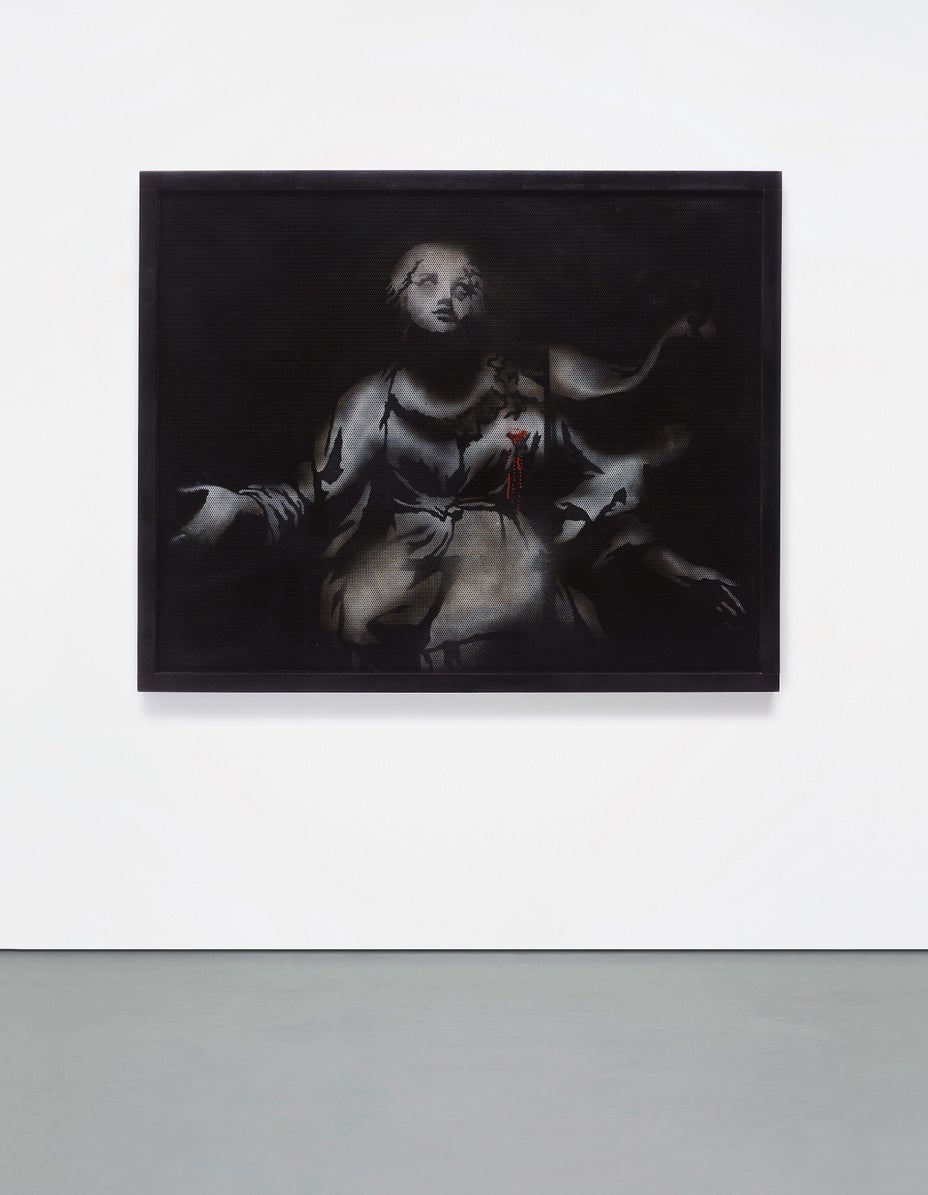
This fusion of genres is exemplified in Angel, an image of the Holy Virgin created in Banksy’s signature stencil style. This recognisable motif immediately recalls countless art historical images of the Ascension created by Western artists during the 15th to 17th centuries. This strong art historical reference, rendered in spray paint as opposed to oil paints, establishes a dialogue between the dichotomy of street and fine art. Furthermore, Angel is also typically imbued with a poignant social commentary; this particular stencil has appeared before in Banksy’s oeuvre - a work featuring the same image of the Holy Virgin appeared in Naples at the Piazza dei Girolamini, and has locally become known as the ‘Napoli Angel’ or the ‘Madonna con Pistol.’ In this instance, the Virgin is depicted in her assent towards an iconised pistol, with potent, blood-red droplets on her monochromatic chest indicative of a gunshot wound, arguably signalling a problem with the glorification of crime in the area.
In this sense, Banksy’s bleeding angel displays his mission: the anarchic and turbulence of the street is represented in the glaring wound, puncturing the heart of the angel motif, an image which represents sanctified, classical art history. Satirical and engaged, as well as technically accomplished, Angel attests to Banksy’s global reputation as one of the most prolific and intriguing artists of our time.
Banksy
British | 1975Anonymous street artist Banksy first turned to graffiti as a miserable fourteen year old disillusioned with school. Inspired by the thriving graffiti community in his home city, Bristol, Banksy's works began appearing on trains and walls in 1993, and by 2001 his blocky, spray-painted works had cropped up all over the United Kingdom. Typically crafting his images with spray paint and cardboard stencils, Banksy is able to achieve a meticulous level of detail. His aesthetic is clean and instantly readable due to his knack for reducing complex political and social statements to simple visual elements.
His graffiti, paintings and screenprints use whimsy and humour to satirically critique war, capitalism, hypocrisy and greed — with not even the Royal family safe from his anti-establishment wit.