814
Barraud
“Bouquets de Chine”
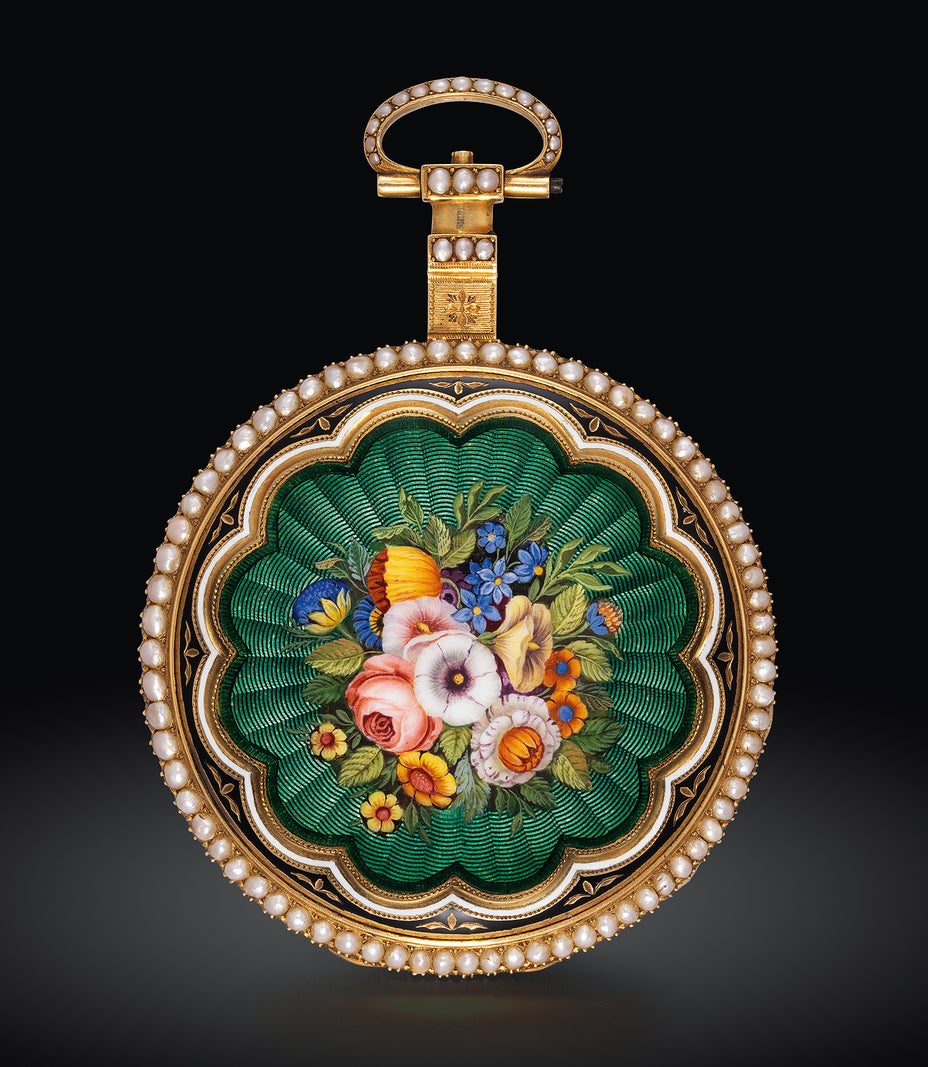
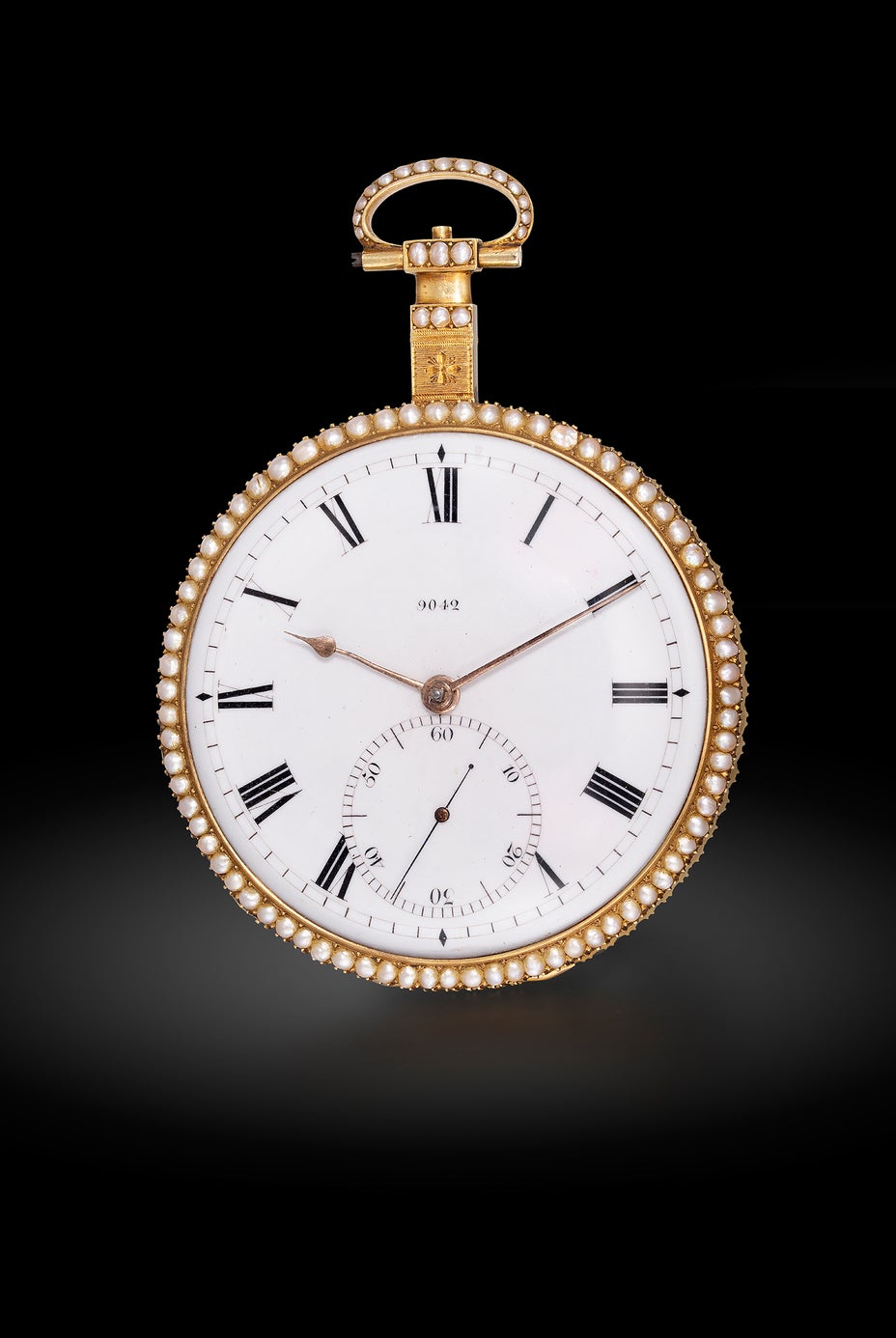
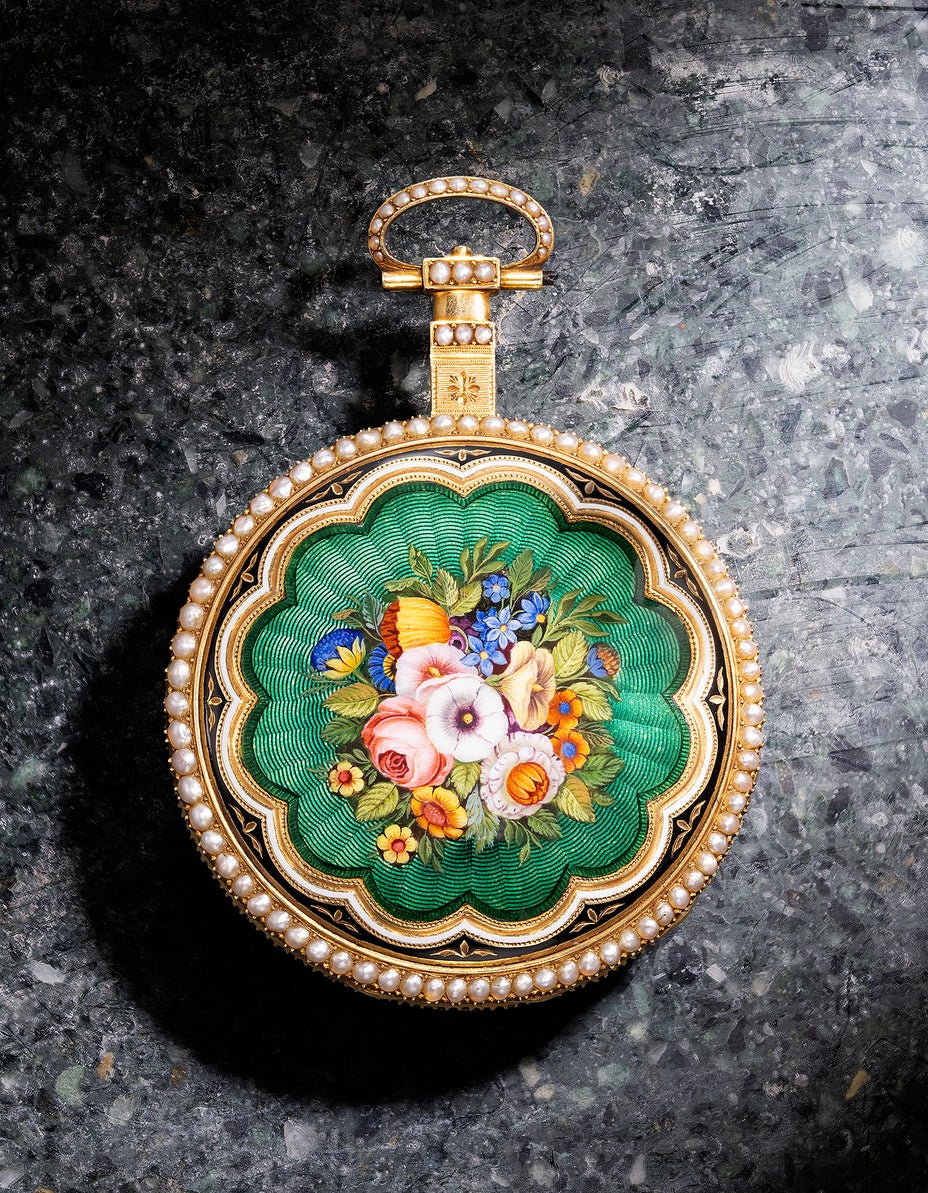
A lavishly decorated, important and well-preserved yellow gold and pearl-set open faced pocket watch with Empire-styled case, miniature enamel painting depicting bouquets de Chine, white enamel dial and engraved dustcap, made for the Chinese market
Estimate
HK$80,000–160,000
€9,100–18,100
$10,300–20,500
Sold For
HK$406,400
Manufacturer
Barraud
Year
Circa 1810
Movement No
9042
Case No
7
Model Name
“Bouquets de Chine”
Material
Yellow gold, pearls, enamel
Calibre
Manual, gilt cylinder movement
Dimensions
61mm diameter
Signed
Case stamped, dial numbered, movement signed
Accessories
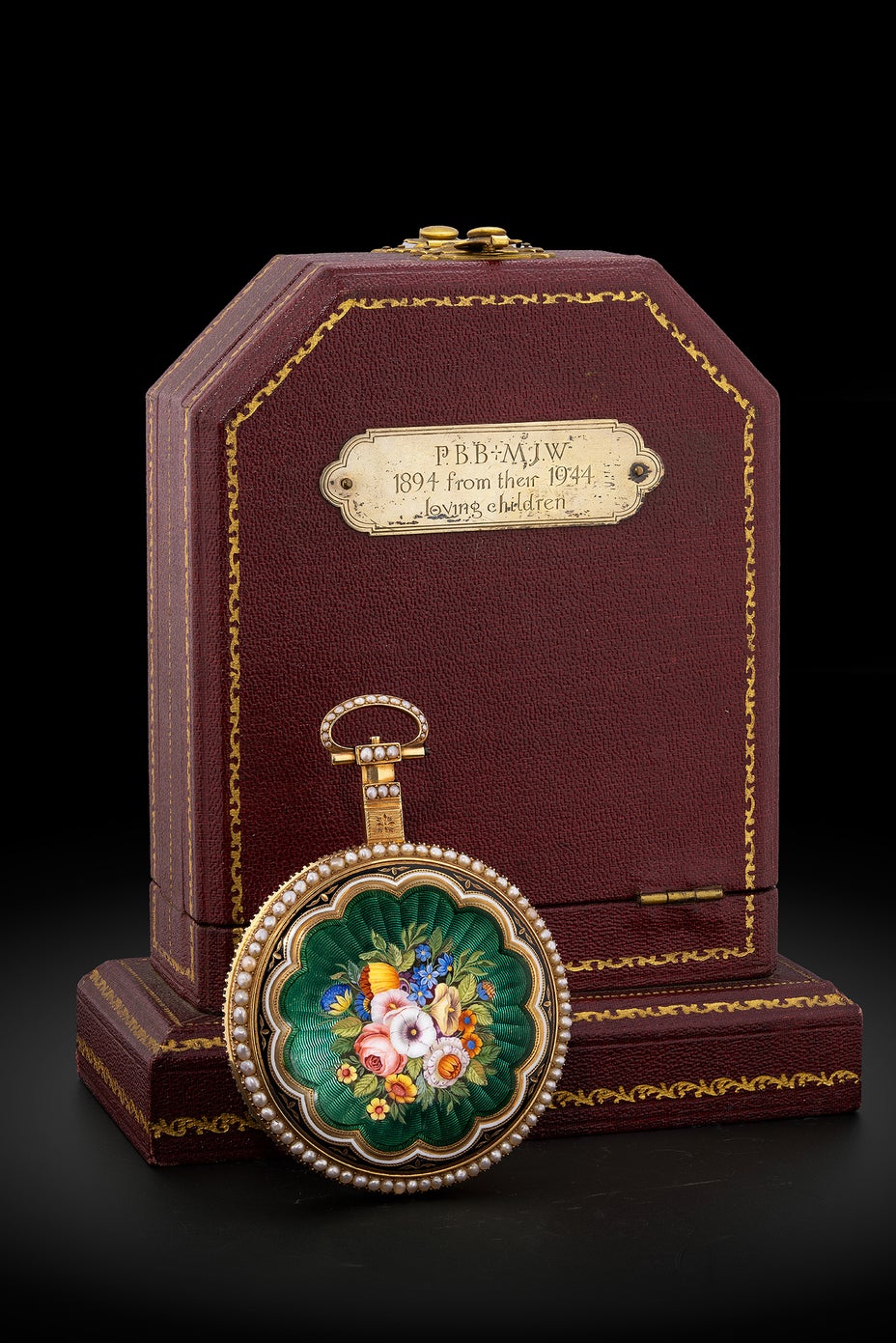
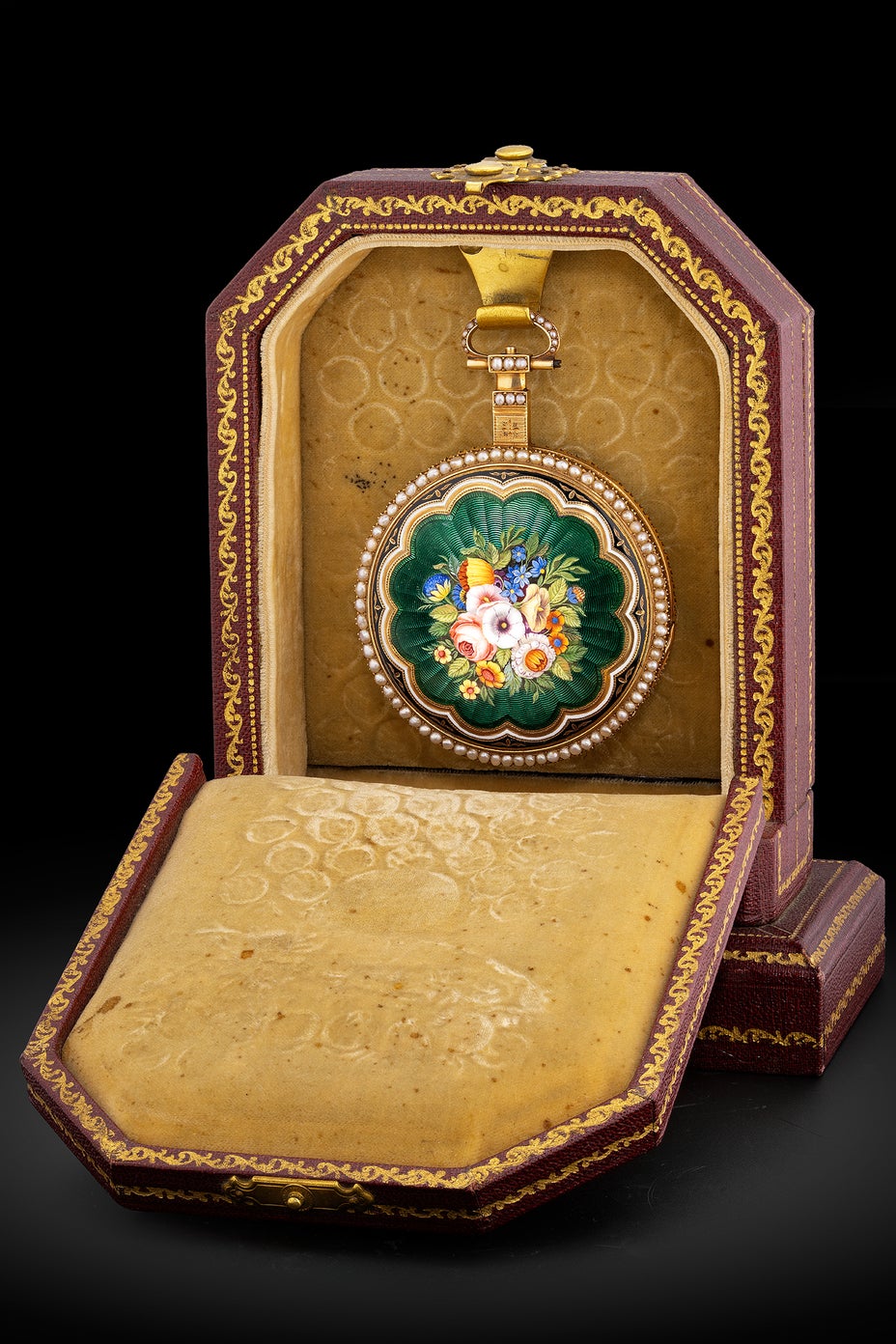
Accompanied by fitted presentation box.
Full-Cataloguing
Although initial connections between China and the West were established in the 13th century, the first clocks and watches were imported through Portuguese trading posts in the 16th century (1514) during the Ming dynasty, particularly with the arrival of Jesuits like Father Matteo Ricci (1552-1610). Timepieces quickly became favored gifts, symbolizing power, knowledge, cultural exchange, friendship and peace, always captivating and delighting their recipients.
At the intersection of these two worlds, pocket watches destined for the Chinese market serve as splendid testaments to European craftsmanship, exported as early as the 18th century. The primary production centers for these pocket watches were London and Switzerland. The English East India Company, established in 1600, gained control of vast parts of the Indian subcontinent and colonized parts of Southeast Asia and Hong Kong. Strong commercial and diplomatic ties between Britain and the Chinese court ensured that many watches, despite having Swiss origins, were signed with English names and marked as London-made.
Paul Philipp Barraud (1750-1820), an English chronometer maker in London, became a member of the Clockmakers' Company in 1796 and a master in 1811. During a time when accurate timekeeping was crucial for the United Kingdom—enabling ships to navigate the high seas with precision—Barraud's work contributed significantly to the expansion of the British Empire.
Barraud partnered with George Jamieson and William Howells; of his seven children, three sons—Frederick Joseph, John, and James—followed him into the business. From 1796 to 1820, they created over 1,000 chronometers and enjoyed a thriving enterprise in the Far East, crafting beautifully enameled pocket watches for the Chinese market.
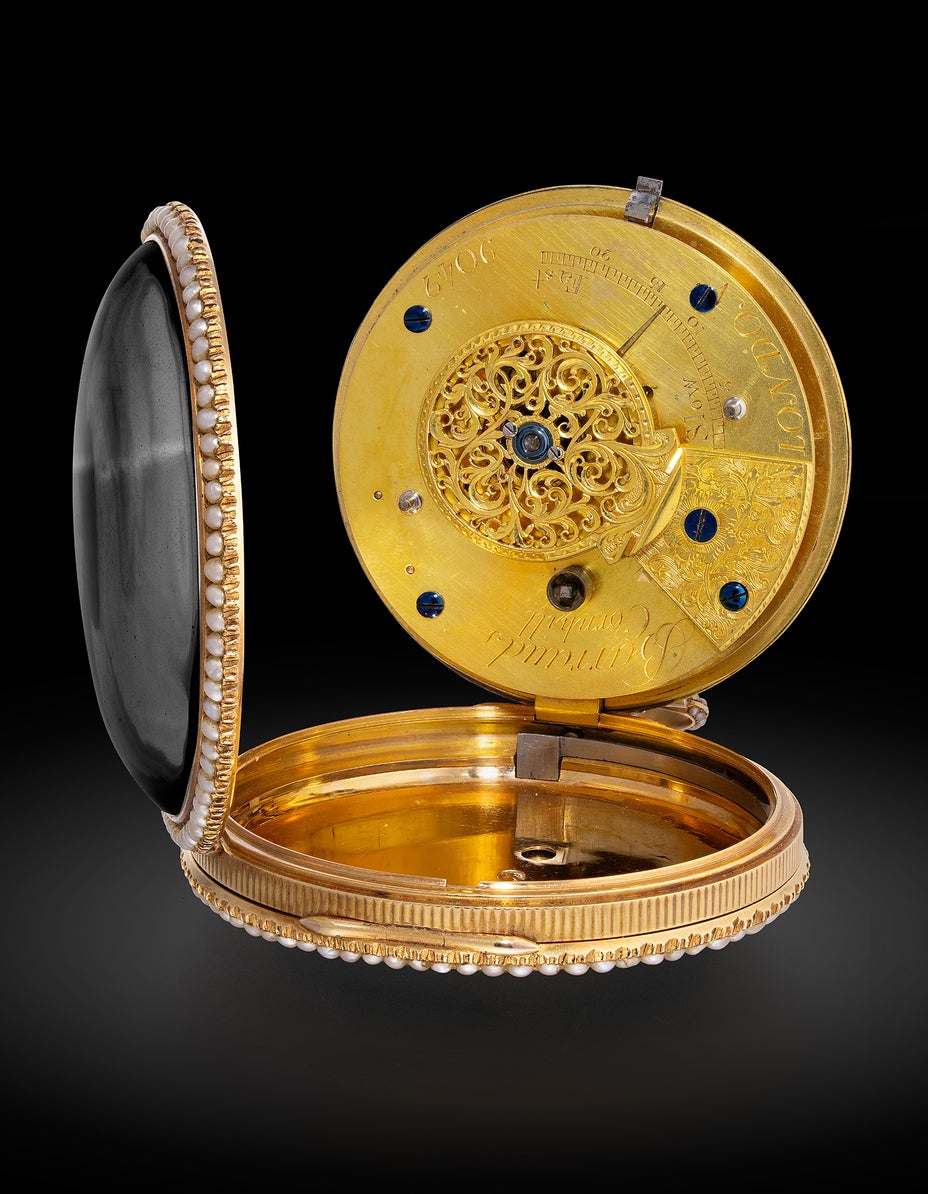
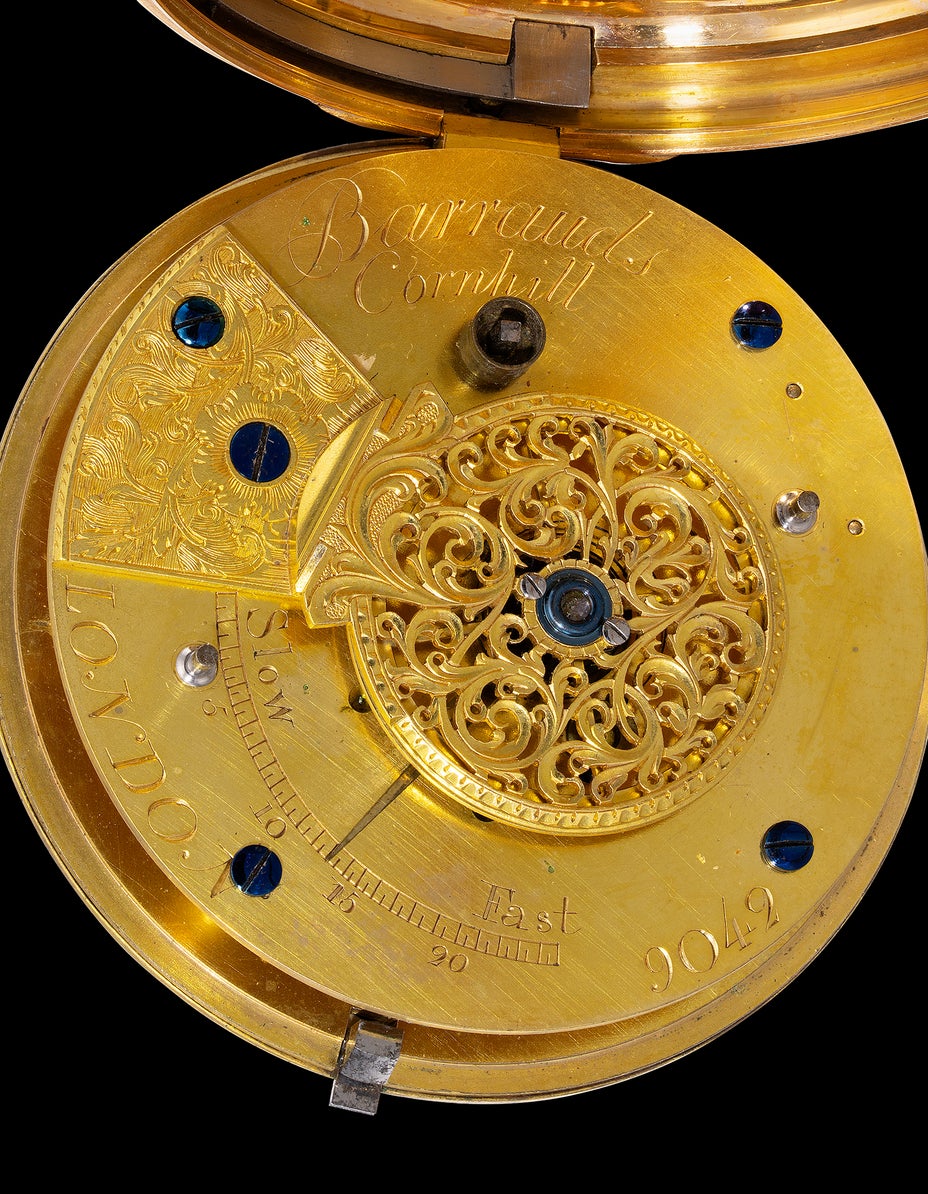
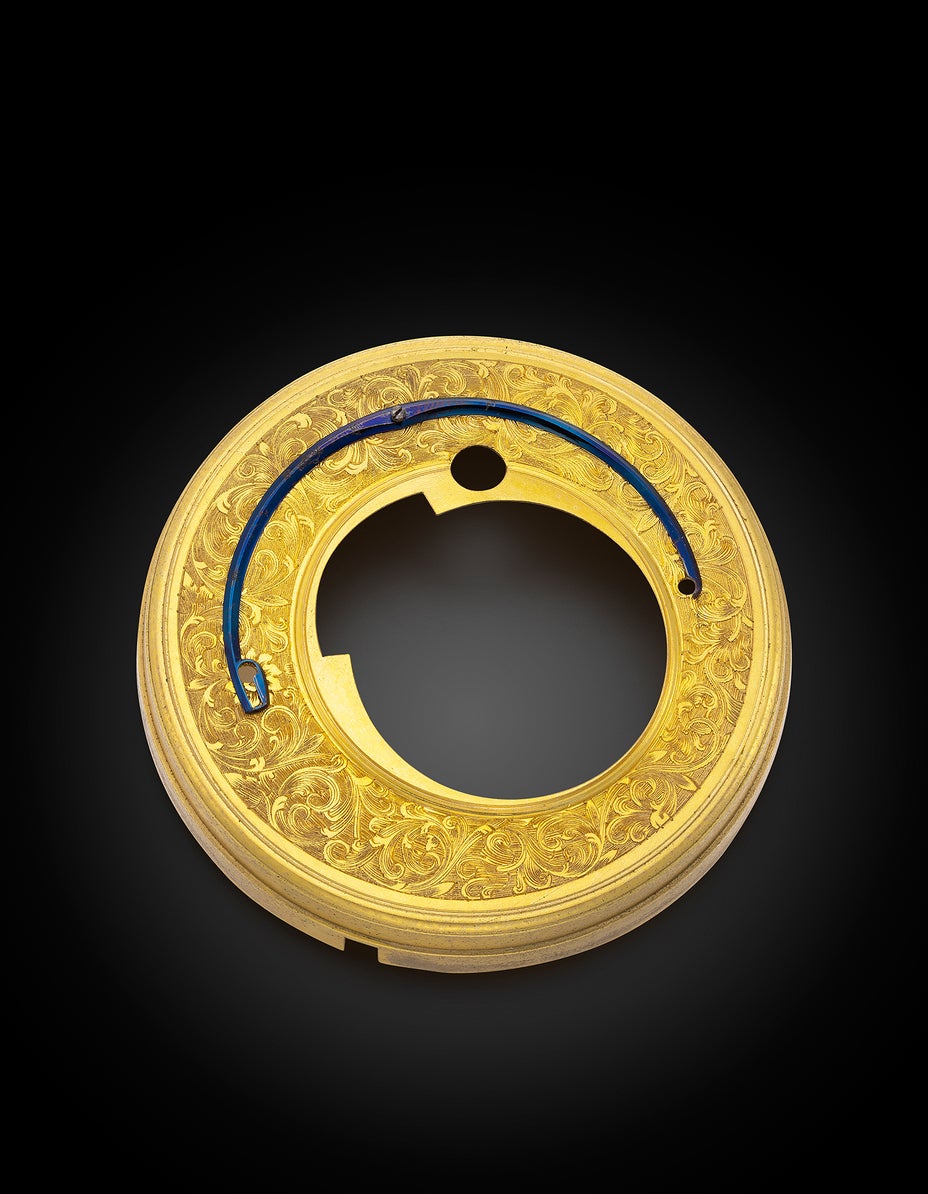
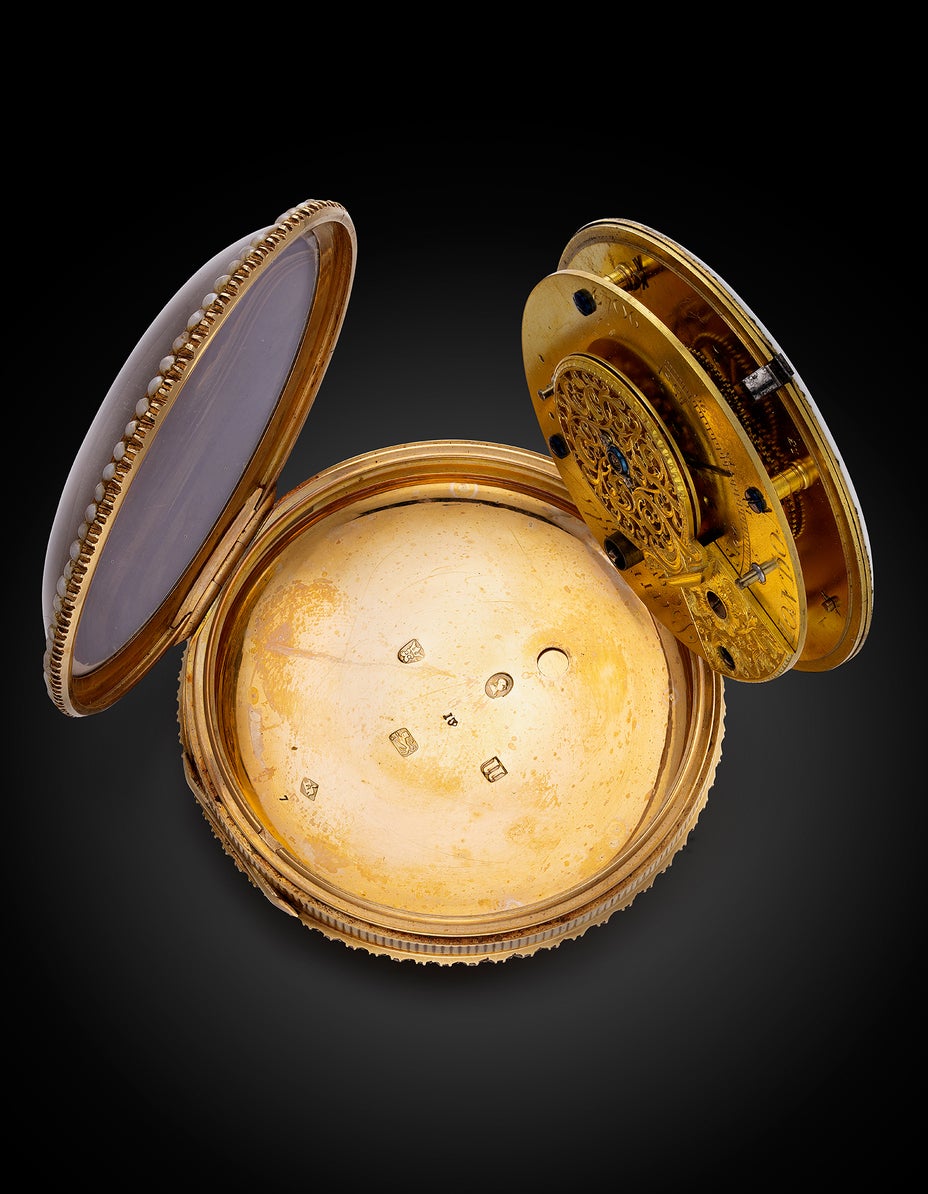
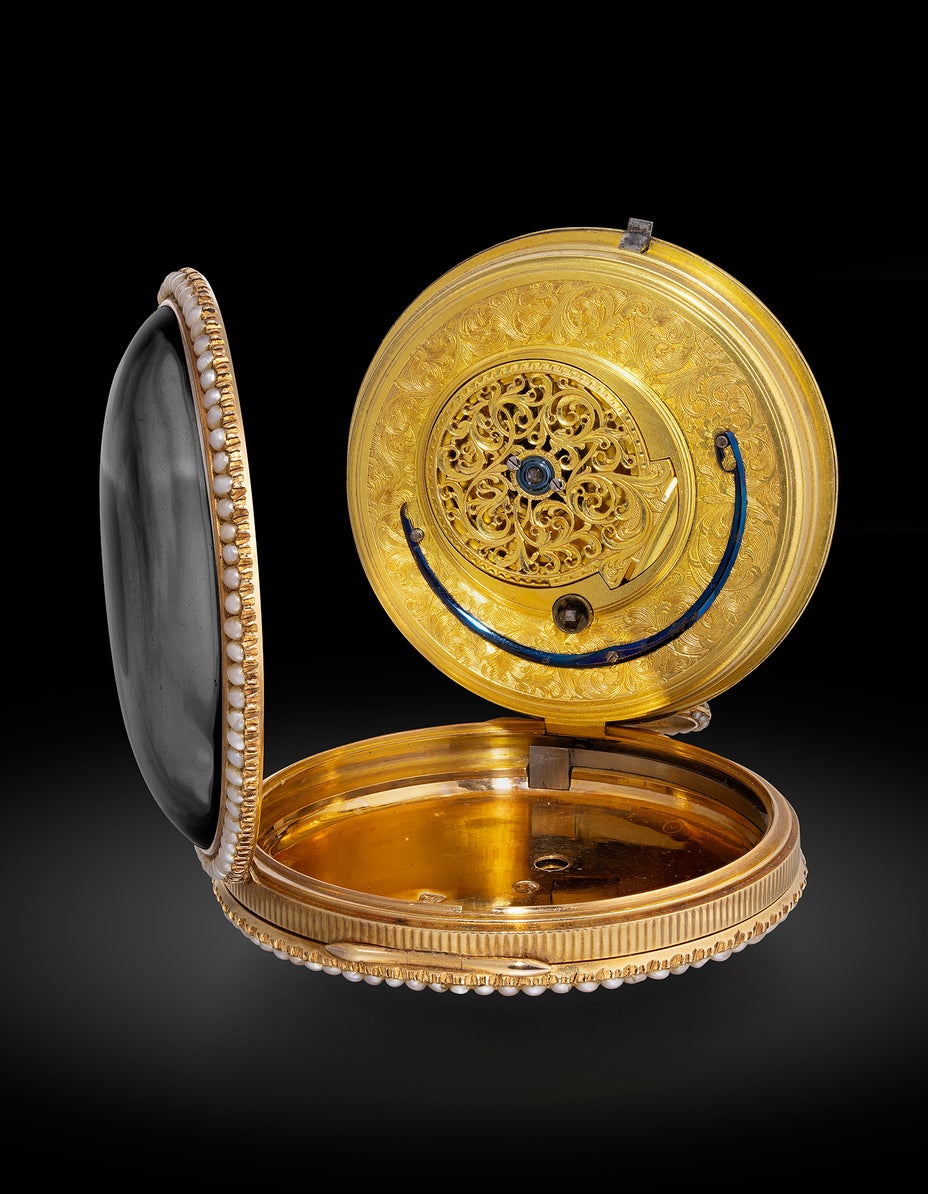
The present specimen exemplifies these exquisitely decorated pocket watches. It features a movement protected by a removable gilt brass dust cap, lavishly engraved. The watch has a sprung gold cuvette, with the bezel, pendant, and bow set with half-pearls. The reverse side showcases rich, painted enamel artworks which are characteristics of the “Empire” style case. Depicting a summer blossom, the polychrome enamel miniature of a bouquet against a dark green engine-turned ground is executed with remarkable precision and beauty. A similar piece by Barraud, featuring bouquets de Chine and a red engine-turned ground, was exhibited at the Macau Timepiece Museum in 2023 and belongs to a private collection.
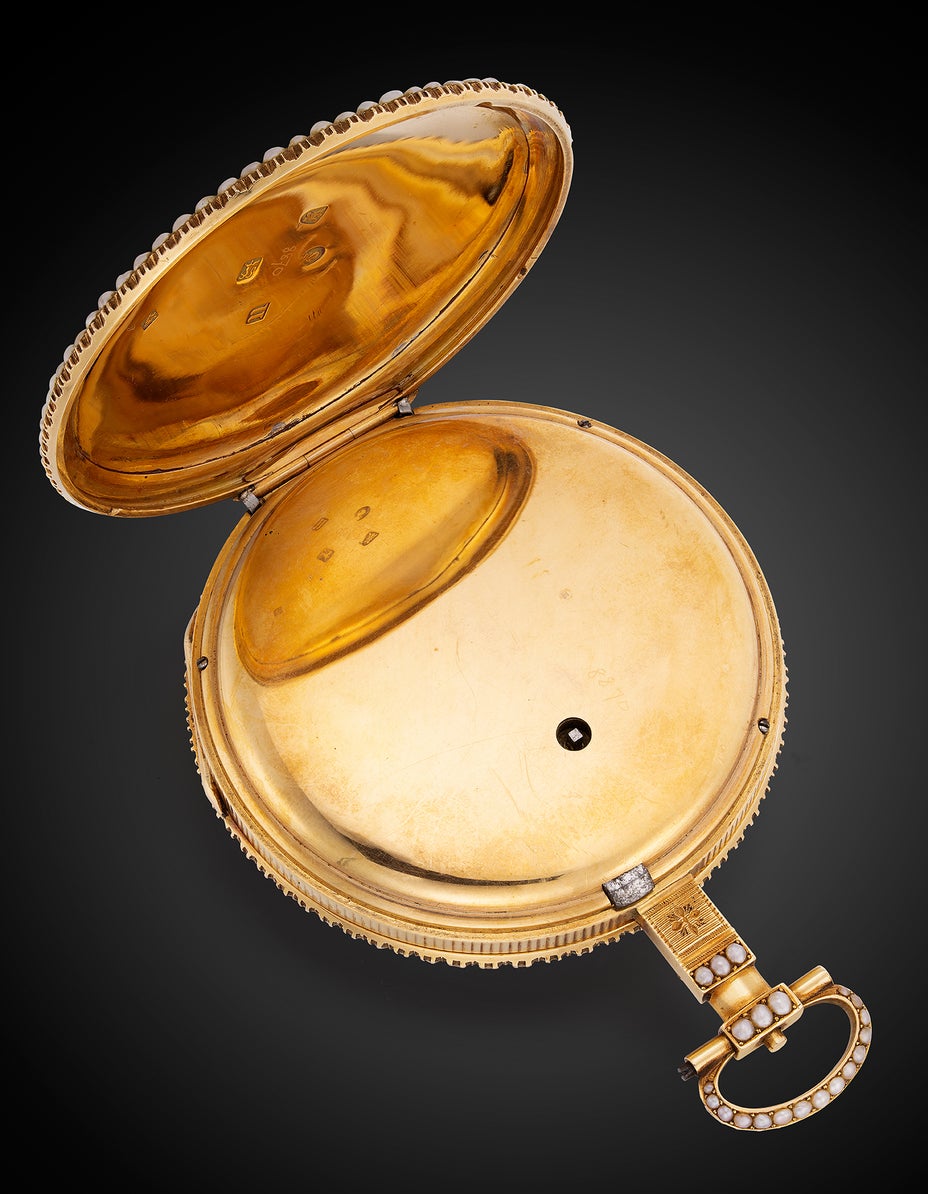
An interesting aspect of these early watches for the Chinese market is the imitation or forgery of British hallmarks, particularly in the 18th and early 19th centuries, when English watchmaking was held in the highest regard. Marks resembling British hallmarks were stamped on watchcases to create the illusion of English craftsmanship. Sometimes, pseudo hallmarks—designs intended to mimic authentic hallmarks without being outright replicas—were used to enhance the appeal of a case. This particular piece features pseudo hallmarks with a lion passant instead of the crown typically found on gold cases.
Extremely well preserved, the enamel shows no signs of restoration and retains the vivid colors of the bouquet, with all engravings crisp and in their original condition. The pearls are intact, with no material loss. This watch represents a fascinating chapter in history, where English watchmaking was highly sought after by collectors all over the globe. The fitted case that comes with the watch is engraved “P.B.B – M.J.W. | 1894 from their 1944 loving children”, a special touch that highlights this piece as a gift to a parent from their children in the 20th century. Notably, this particular watch last appeared publicly exactly 30 years ago and the collector has kept it safely stored ever since. Phillips is honored to present this masterpiece once again to the auction market.
At the intersection of these two worlds, pocket watches destined for the Chinese market serve as splendid testaments to European craftsmanship, exported as early as the 18th century. The primary production centers for these pocket watches were London and Switzerland. The English East India Company, established in 1600, gained control of vast parts of the Indian subcontinent and colonized parts of Southeast Asia and Hong Kong. Strong commercial and diplomatic ties between Britain and the Chinese court ensured that many watches, despite having Swiss origins, were signed with English names and marked as London-made.
Paul Philipp Barraud (1750-1820), an English chronometer maker in London, became a member of the Clockmakers' Company in 1796 and a master in 1811. During a time when accurate timekeeping was crucial for the United Kingdom—enabling ships to navigate the high seas with precision—Barraud's work contributed significantly to the expansion of the British Empire.
Barraud partnered with George Jamieson and William Howells; of his seven children, three sons—Frederick Joseph, John, and James—followed him into the business. From 1796 to 1820, they created over 1,000 chronometers and enjoyed a thriving enterprise in the Far East, crafting beautifully enameled pocket watches for the Chinese market.
The present specimen exemplifies these exquisitely decorated pocket watches. It features a movement protected by a removable gilt brass dust cap, lavishly engraved. The watch has a sprung gold cuvette, with the bezel, pendant, and bow set with half-pearls. The reverse side showcases rich, painted enamel artworks which are characteristics of the “Empire” style case. Depicting a summer blossom, the polychrome enamel miniature of a bouquet against a dark green engine-turned ground is executed with remarkable precision and beauty. A similar piece by Barraud, featuring bouquets de Chine and a red engine-turned ground, was exhibited at the Macau Timepiece Museum in 2023 and belongs to a private collection.
An interesting aspect of these early watches for the Chinese market is the imitation or forgery of British hallmarks, particularly in the 18th and early 19th centuries, when English watchmaking was held in the highest regard. Marks resembling British hallmarks were stamped on watchcases to create the illusion of English craftsmanship. Sometimes, pseudo hallmarks—designs intended to mimic authentic hallmarks without being outright replicas—were used to enhance the appeal of a case. This particular piece features pseudo hallmarks with a lion passant instead of the crown typically found on gold cases.
Extremely well preserved, the enamel shows no signs of restoration and retains the vivid colors of the bouquet, with all engravings crisp and in their original condition. The pearls are intact, with no material loss. This watch represents a fascinating chapter in history, where English watchmaking was highly sought after by collectors all over the globe. The fitted case that comes with the watch is engraved “P.B.B – M.J.W. | 1894 from their 1944 loving children”, a special touch that highlights this piece as a gift to a parent from their children in the 20th century. Notably, this particular watch last appeared publicly exactly 30 years ago and the collector has kept it safely stored ever since. Phillips is honored to present this masterpiece once again to the auction market.