
8112
Blancpain
Ref. 5015B-1130-52A
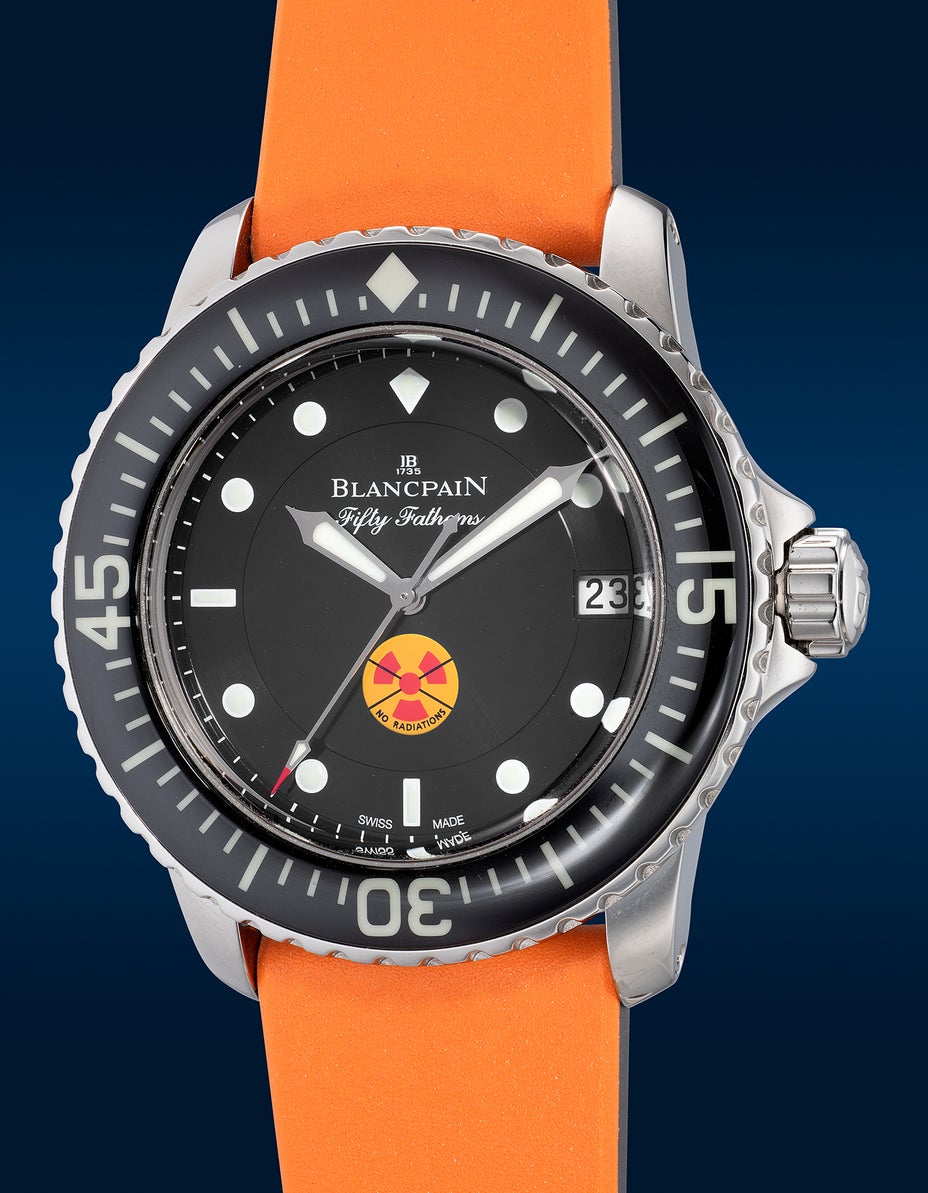
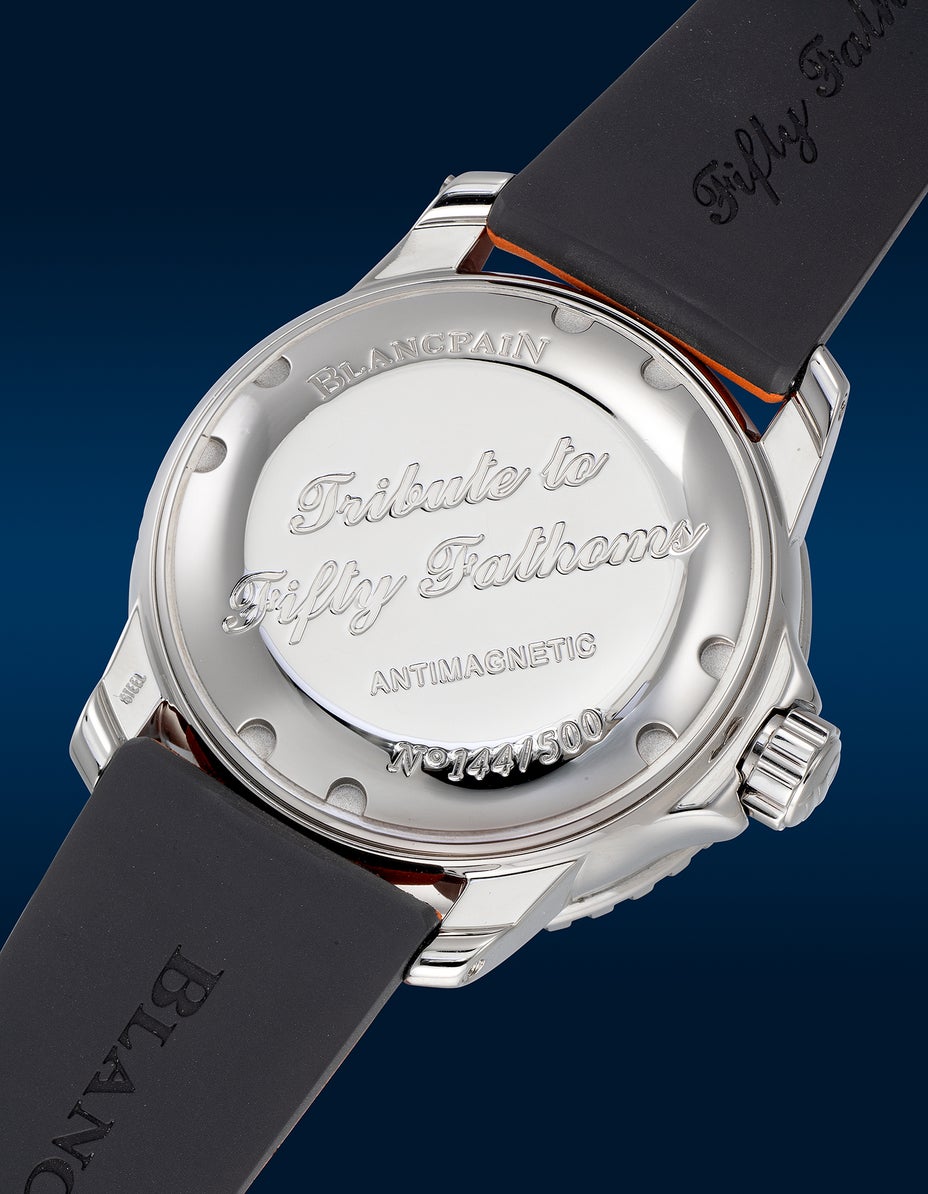
Tribute To Fifty Fathoms No Rad
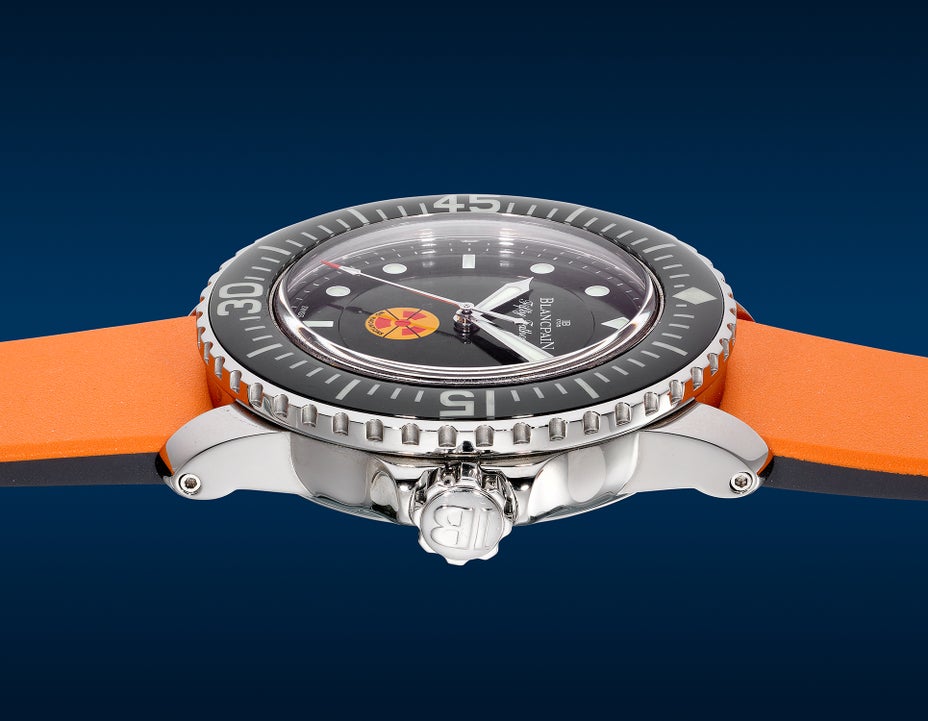
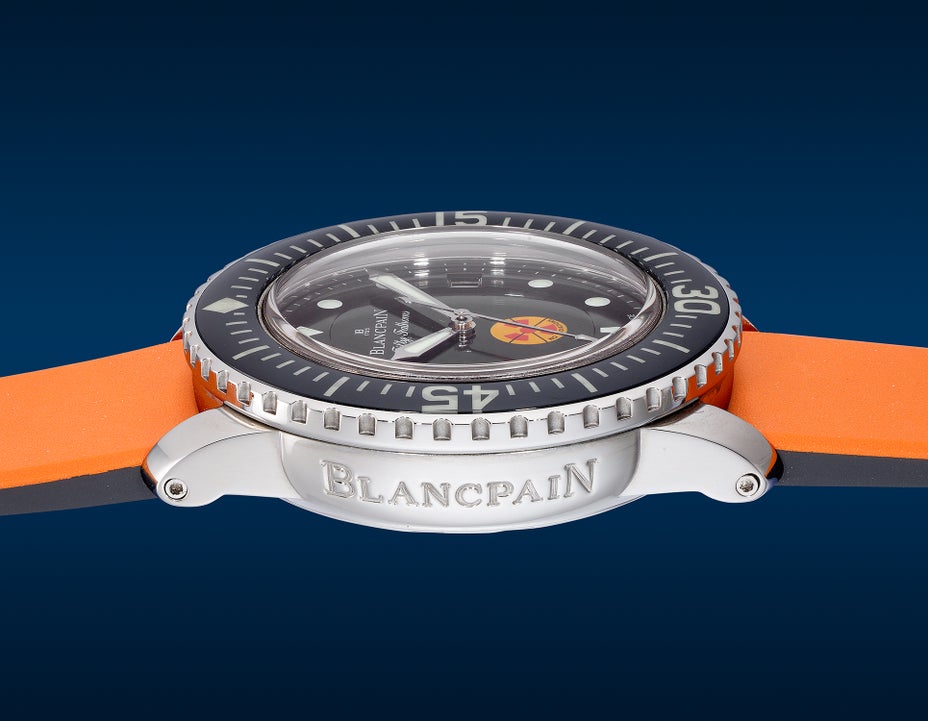
A fine and rare limited edition stainless steel diver’s wristwatch with center seconds, date, warranty and presentation box, numbered 144 of a limited edition of 500 pieces
Full-Cataloguing
- In 1953, the Fifty Fathoms was released as a 41mm dive watch. It featured a rotating Bakelite bezel and luminous markers on the dial and bezel to ensure readability in the darkness of deep dives.
- However, in the early 1960s, new regulations mandated a change in the luminous materials used, replacing radium with a less radioactive alternative. Ever since, Blancpain incorporated the universal symbol for radioactivity with a cross mark labeled "No Radiations," indicating to the owner that the luminous bezel and dial were safe.
- To commemorate this coveted model, Blancpain released a re-edition of the "No Rad" version, limited to 500 pieces. It featured a larger 45mm stainless steel case and a black ceramic lumed bezel, paying homage to the original Fifty Fathoms. The watch was also fitted with a vibrant orange strap, which complemented the radiation signage on the dial and added a sporty appeal to the dive watch.
Blancpain
Swiss | 1735As the watchmaking brand with the earliest founding date, Blancpain remains close to tradition, concentrating on classical mechanical watches. Established in 1735 by Jehan-Jacques Blancpain, the Le Brassus manufacturer today continues to innovate with the development of high-quality calibres and is proud of their heritage, having never made quartz watches. One of the firm's greatest successes was the Fifty Fathom wristwatch introduced in 1953 — the vintage models of which are now highly coveted by collectors. The earliest dive watch available to the market, Fifty Fathom came out a year prior to Rolex's Submariner. Another key model is the Air Command from the 1960s, considered one of the most mythical collector's watches due to their extreme rarity. Today, the firm specializes in creative innovated complicated timepieces.