30
Carleton Watkins
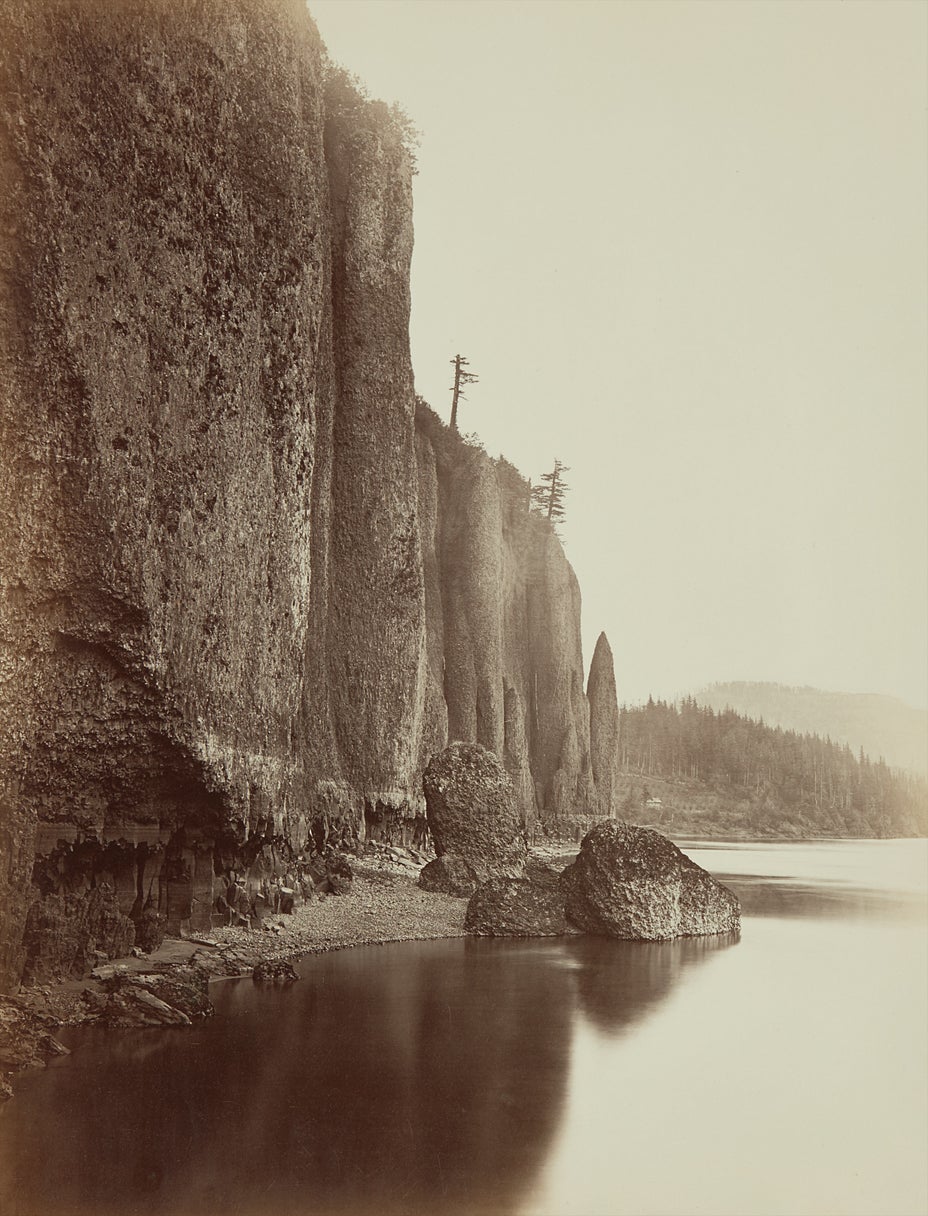
Cape Horn, Columbia River
Estimate
$70,000–90,000
Sold For
$156,250
1867
Mammoth-plate albumen print.
20 3/4 x 15 3/4 in. (52.7 x 40 cm)
Signed, titled and numbered in ink on the mount.
Full-Cataloguing
An additional print of this image is in the collection of The Metropolitan Museum of Art, New York.
The Cape Horn picture offered here is from Watkins’s second great body of work, photographs made along the Columbia and Willamette Rivers in Oregon. In the mid-1860s, Watkins had established his international reputation with photographs of San Francisco and Yosemite, and in 1867, he ventured further afield to the relatively unknown Pacific Northwest. This was essentially virgin territory for a photographer and very different in character from the picturesque landscapes of El Capitan and Half Dome.
The trip may have been made with the Oregon Steam Navigation Company and commercial potential in mind: Watkins’s expedition followed the Company’s navigation routes, taking in the spectacular Northwest scenery along these routes and the corporation’s rail lines. He produced at least 60 mammoth-plate negatives and some 136 stereo views that are more than mere documents, however. His images of the rugged river coasts (see Lot 126), dramatic waterfalls (see Lot 124), and in particular, the views of the present Cape Horn and the Cape Horn near Celilo are among the most aesthetically significant photographs in Western landscape photography of the 19th century.
The photograph offered here is of the unusual basalt rock formations jutting out into the Columbia River from what is now Washington State. In the far distance, the beginnings of a small town or village are just visible. When Watkins returned to Oregon in the 1880s, these towns and villages had grown and much of the landscape had changed. The ever-expanding timber mills, the mining operations and ship landings, and the fast-growing cities of Seattle and Portland were the focus of his “New Series” work. In pictures like Cape Horn, Watkins manages to evoke the feeling of unspoiled territory and the primeval grandeur of the Northwest terrain.
The survival of any mammoth-plate plate photograph from the 19th century is remarkable. The print offered here is a contact print, made from an even larger glass negative and a camera larger still, and with an array of chemicals; all had to be carried into the field in wagons or on horseback. Scarce, and one of the most desirable of Watkins’s Pacific Coast work, the present photograph is believed to be one of only two prints of the image that have appeared at auction in recent years.
The Cape Horn picture offered here is from Watkins’s second great body of work, photographs made along the Columbia and Willamette Rivers in Oregon. In the mid-1860s, Watkins had established his international reputation with photographs of San Francisco and Yosemite, and in 1867, he ventured further afield to the relatively unknown Pacific Northwest. This was essentially virgin territory for a photographer and very different in character from the picturesque landscapes of El Capitan and Half Dome.
The trip may have been made with the Oregon Steam Navigation Company and commercial potential in mind: Watkins’s expedition followed the Company’s navigation routes, taking in the spectacular Northwest scenery along these routes and the corporation’s rail lines. He produced at least 60 mammoth-plate negatives and some 136 stereo views that are more than mere documents, however. His images of the rugged river coasts (see Lot 126), dramatic waterfalls (see Lot 124), and in particular, the views of the present Cape Horn and the Cape Horn near Celilo are among the most aesthetically significant photographs in Western landscape photography of the 19th century.
The photograph offered here is of the unusual basalt rock formations jutting out into the Columbia River from what is now Washington State. In the far distance, the beginnings of a small town or village are just visible. When Watkins returned to Oregon in the 1880s, these towns and villages had grown and much of the landscape had changed. The ever-expanding timber mills, the mining operations and ship landings, and the fast-growing cities of Seattle and Portland were the focus of his “New Series” work. In pictures like Cape Horn, Watkins manages to evoke the feeling of unspoiled territory and the primeval grandeur of the Northwest terrain.
The survival of any mammoth-plate plate photograph from the 19th century is remarkable. The print offered here is a contact print, made from an even larger glass negative and a camera larger still, and with an array of chemicals; all had to be carried into the field in wagons or on horseback. Scarce, and one of the most desirable of Watkins’s Pacific Coast work, the present photograph is believed to be one of only two prints of the image that have appeared at auction in recent years.