US import tariffs: Non-US origin lots in this sale (including watches and timepieces with Swiss-made or non-US made movements) will be subject to special tariffs upon import to the USA, currently ranging from 10% to 39% on the total invoice price (hammer price plus buyer’s premium). Buyers are responsible for paying any applicable tariffs, duties, taxes and charges when importing their purchased lots. Due to the evolving nature of international trade regulations, we recommend clients consult with their local customs office or advisor for up-to-date information on the applicable tariffs.
133
Cartier and Audemars Piguet
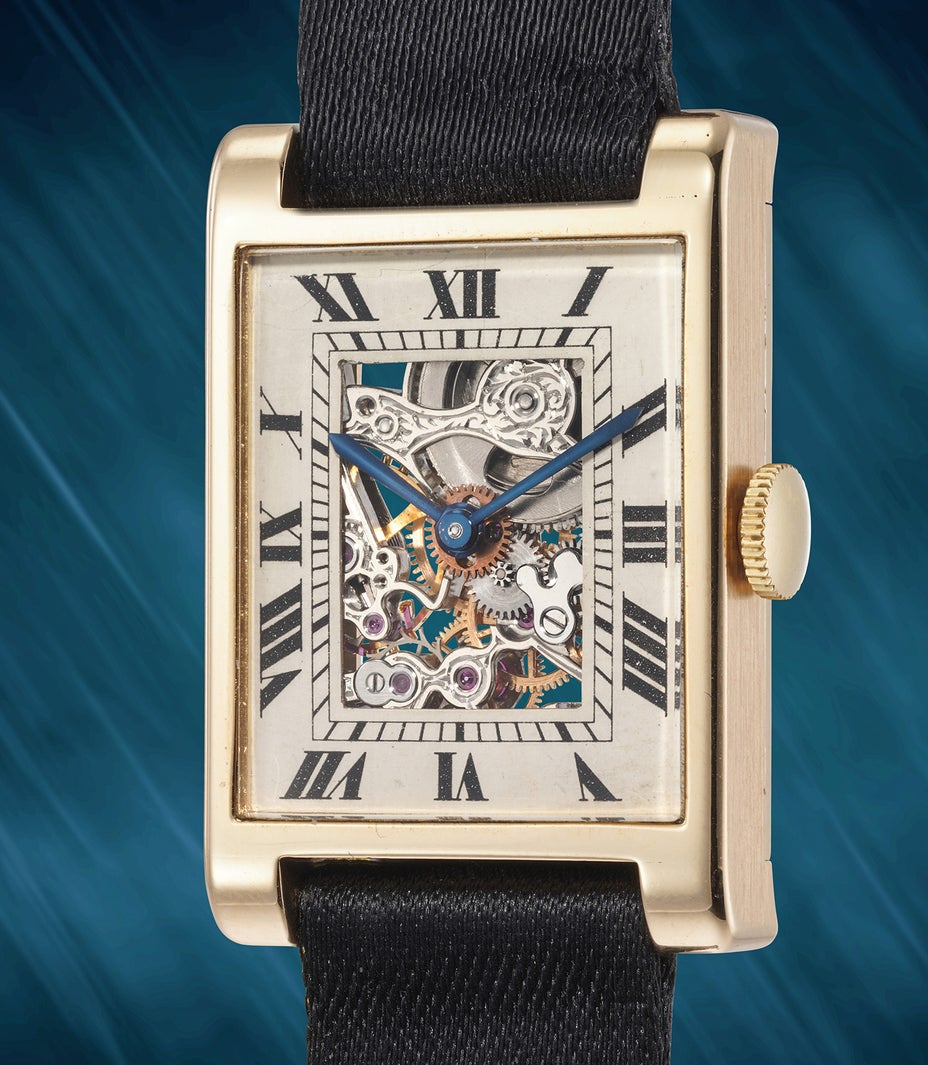
An intriguing and elegant yellow gold special order skeletonized wristwatch, with movement by Audemars Piguet
Estimate
CHF40,000–80,000
€43,200–86,300
$50,200–100,000
Sold For
CHF114,300
Manufacturer
Cartier and Audemars Piguet
Year
1956 and 1968
Movement No
61'328
Case No
48'227 and furthermore with Cartier stock number 014 and 997
Material
18k yellow gold
Calibre
Manual, jeweled
Bracelet/Strap
Fabric
Clasp/Buckle
18k yellow gold Cartier buckle stamped 17802
Dimensions
35mm length and 23.5mm width
Signed
Movement by Audemars Piguet, case and clasp with Cartier hand stamped numbers
Accessories
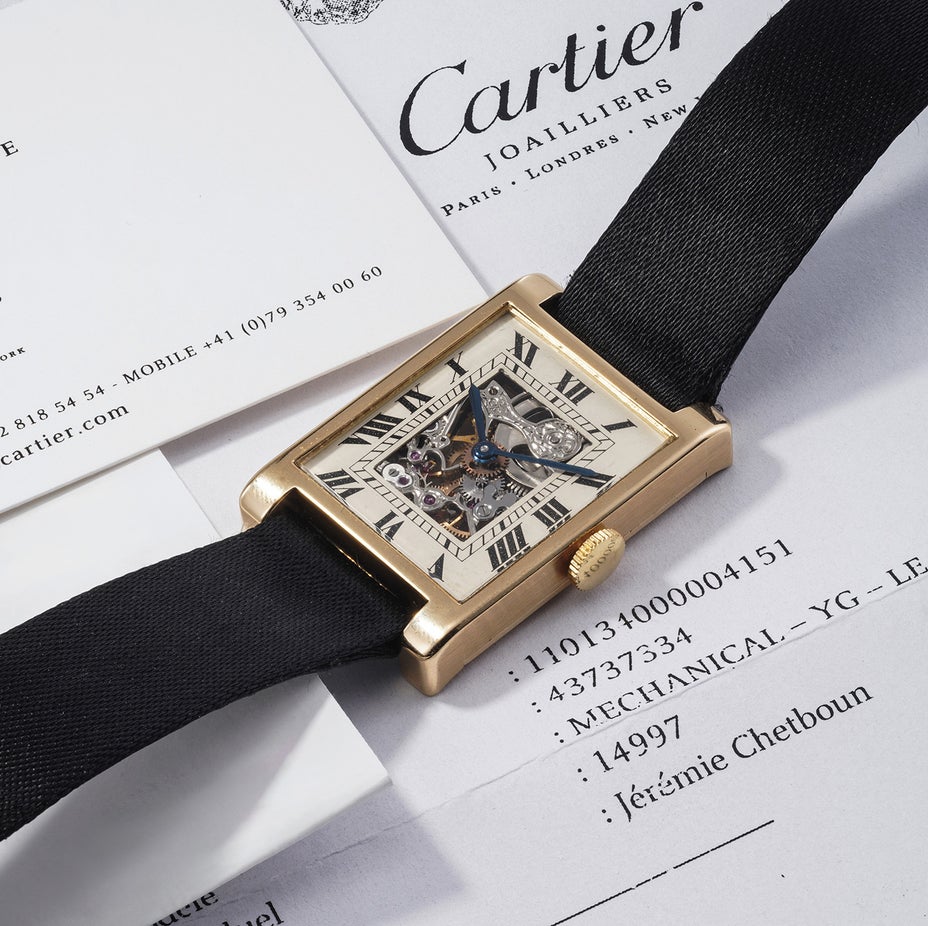
Accompanied by Cartier service invoice.
Full-Cataloguing
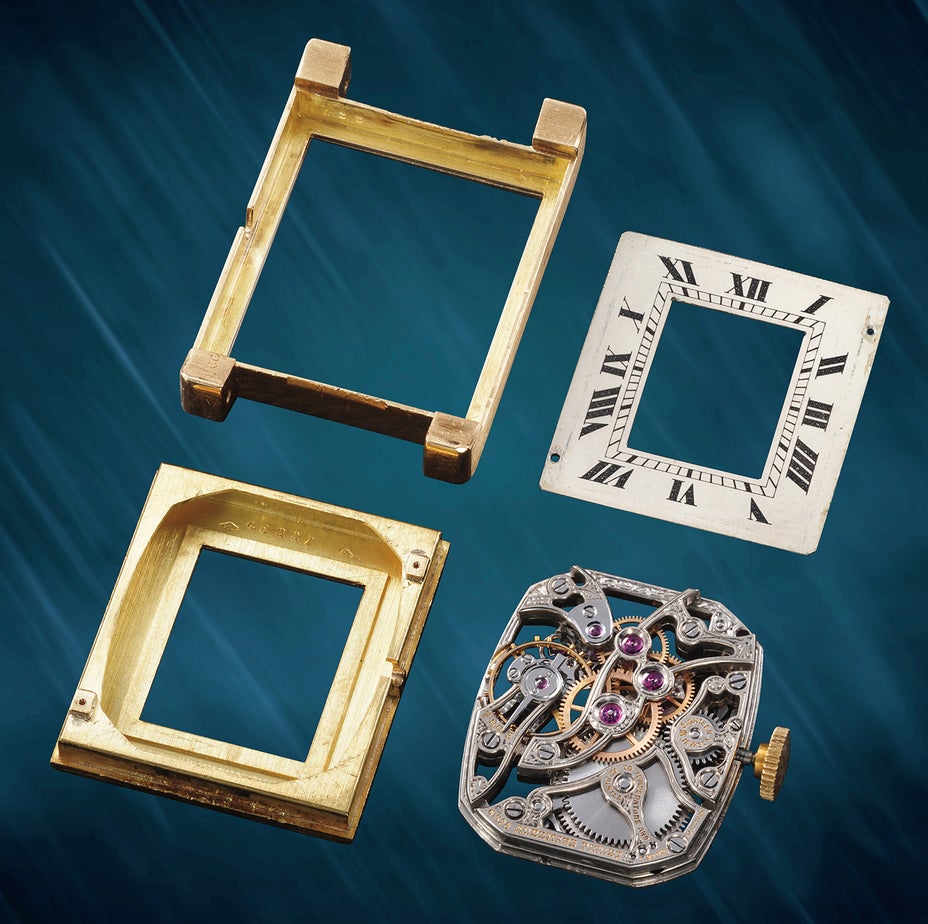
An intriguing and interesting specimen, the present watch is a marriage of two powerhouses: Cartier and Audemars Piguet. This rare wristwatch was originally born as an Audemars Piguet, fitted with the skeletonized movement no. 61328, an elegant caliber 10TS, registered with case no. 7710 and reference 5036BA, and sold in 1956 to Jaeger Paris. The watch was later the subject of an extraordinary transformation: in 1968, Cartier redesigned the case and added the dial, while deliberately leaving the movement visible to highlight the technical refinement of Audemars Piguet.
A drawing preserved in the Cartier archives, shown in the photo, presents the original design of this model/watch describing it as “Bracelet Montre Squelette" 1968.
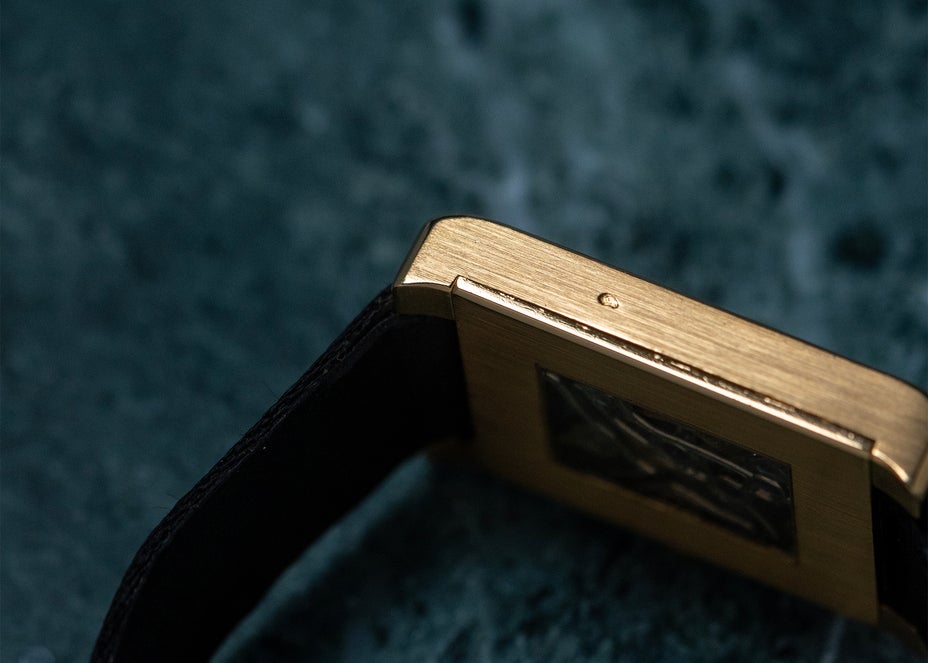
The gold hallmark, not of Swiss origin, confirms the French intervention, most likely executed upon request of a distinguished client. Such a personalisation, unique in its kind, reflects the practice of the period, when great Maisons like Cartier would receive movements from prestigious manufactures and reinterpret them through their own aesthetic vocabulary.
The present watch, recently serviced by Cartier (as documented by the illustrated receipt), thus represents a rare testimony to this encounter between two legendary maisons: a masterpiece that preserves the purity of the Audemars Piguet movement and the unmistakable signature of Cartier, embodying the very essence of Franco-Swiss haute horlogerie of the 1950s and 1960s.
This watch showcases the distinctive "Eagle Beak" case, where the lugs taper into elegant, beak-like points. This sculptural detail lends the piece a striking, architectural presence that collectors find especially captivating.
A drawing preserved in the Cartier archives, shown in the photo, presents the original design of this model/watch describing it as “Bracelet Montre Squelette" 1968.
The gold hallmark, not of Swiss origin, confirms the French intervention, most likely executed upon request of a distinguished client. Such a personalisation, unique in its kind, reflects the practice of the period, when great Maisons like Cartier would receive movements from prestigious manufactures and reinterpret them through their own aesthetic vocabulary.
The present watch, recently serviced by Cartier (as documented by the illustrated receipt), thus represents a rare testimony to this encounter between two legendary maisons: a masterpiece that preserves the purity of the Audemars Piguet movement and the unmistakable signature of Cartier, embodying the very essence of Franco-Swiss haute horlogerie of the 1950s and 1960s.
This watch showcases the distinctive "Eagle Beak" case, where the lugs taper into elegant, beak-like points. This sculptural detail lends the piece a striking, architectural presence that collectors find especially captivating.