180
Cartier
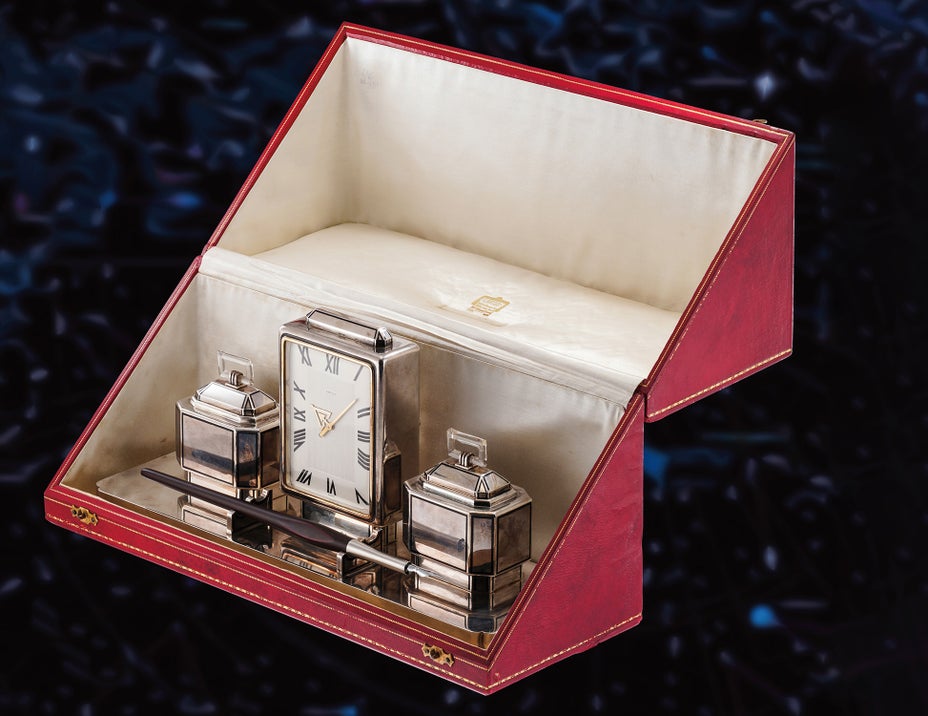
An elegant silver, enamel and rock crystal desk compendium with clock
Full-Cataloguing
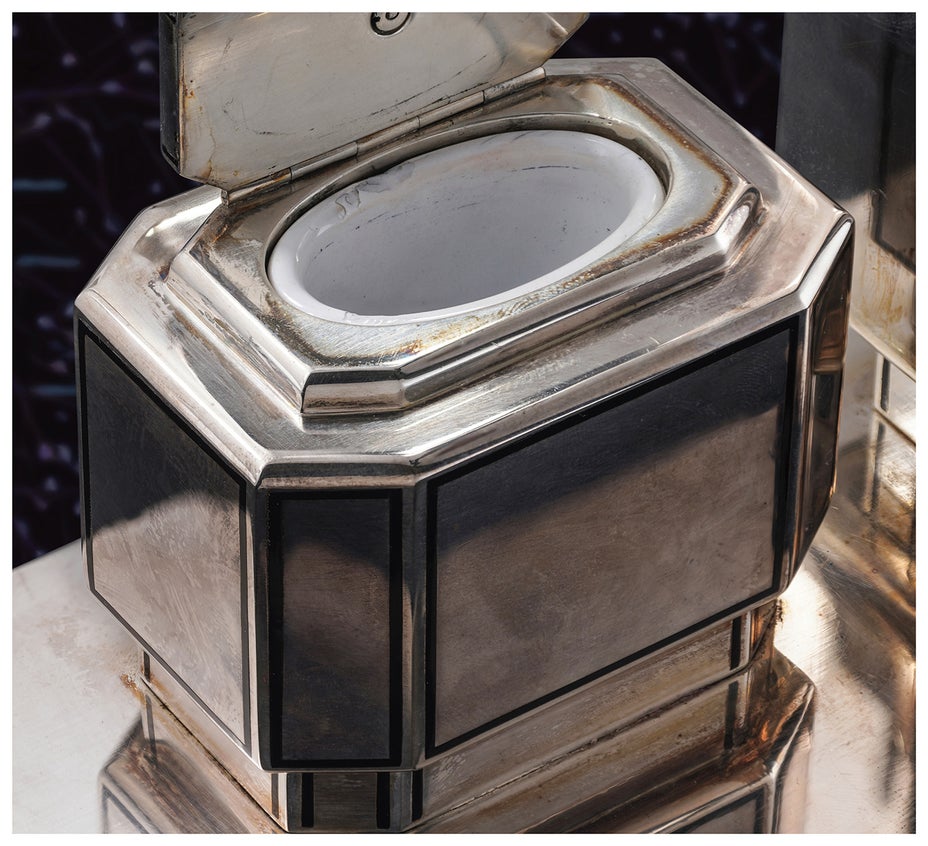
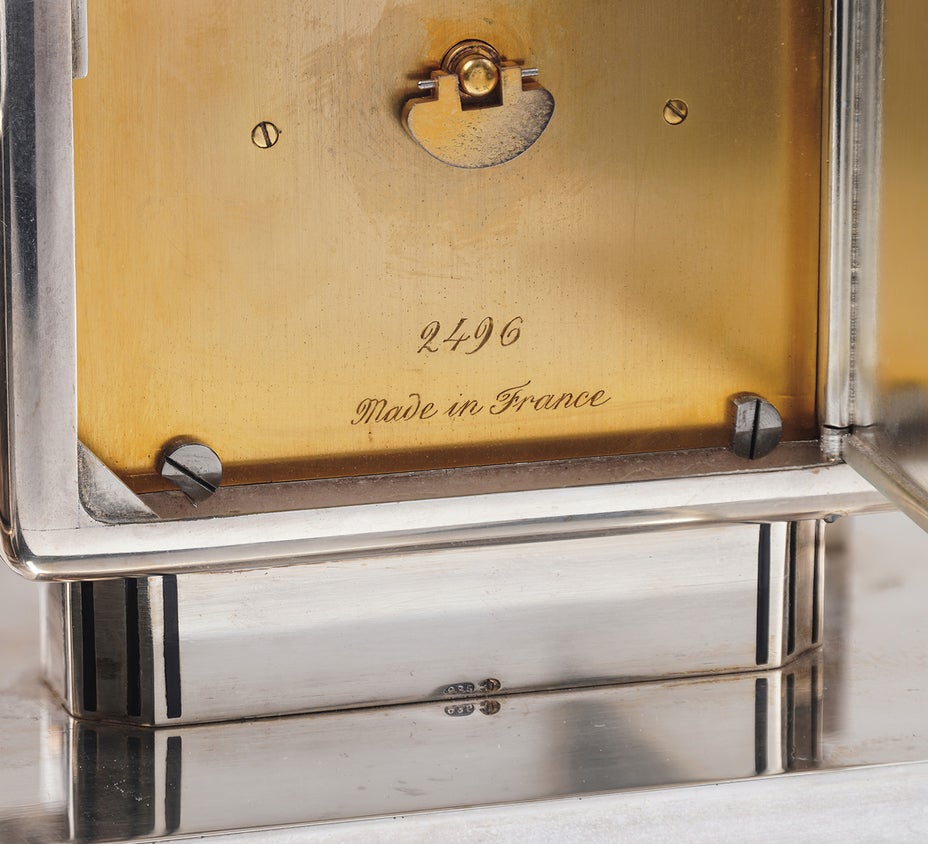
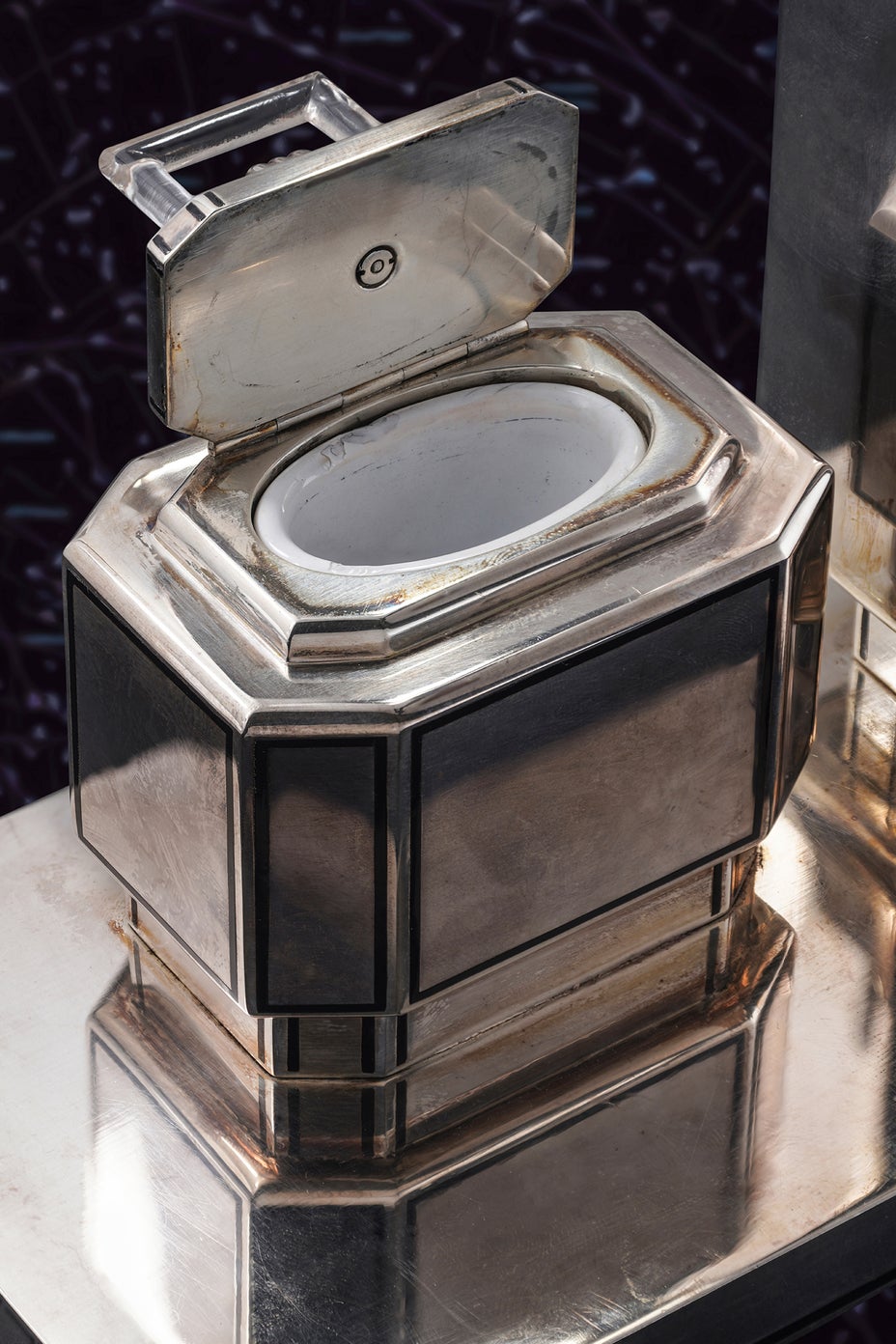
The present silver and enamel clock with inkwell and pen may seem somewhat restrained compared to the more lavish and flamboyant designs to have come from Cartier’s workshops during the Roaring Twenties. Yet the angular shapes, rock crystal handles of the inkwells and subtle touch of color with the clock’s gold graphic hands provide the set with incredible charisma and elegant Parisian flair.
Cartier
FrenchWith the Constitution of 1848 came a new standard for luxury in France. Founded one year prior by Louis-Francois Cartier, the house of Cartier was one of the first to use platinum in jewelry making. This incredibly expensive material became the stepping-stone for Cartier to experiment in form, mechanisms and attitude. It helped men move from pocket watches to wristwatches, effectively making the watch much more functional and prominent in a man's overall wardrobe.
Cartier did not only touch on functionality. Inspired by a commissioned painting by George Barbier featuring a black panther at the feet of an elegantly bejeweled woman, Cartier began incorporating wild animals in his designs—most notably, Cartier Panthère rings, bangle bracelets and watches. Yet it wasn't until the late 1960s that the house of Cartier debuted their iconic yellow and rose gold LOVE collection, which includes the famous bracelet that only a special screwdriver can open.