811
Cartier
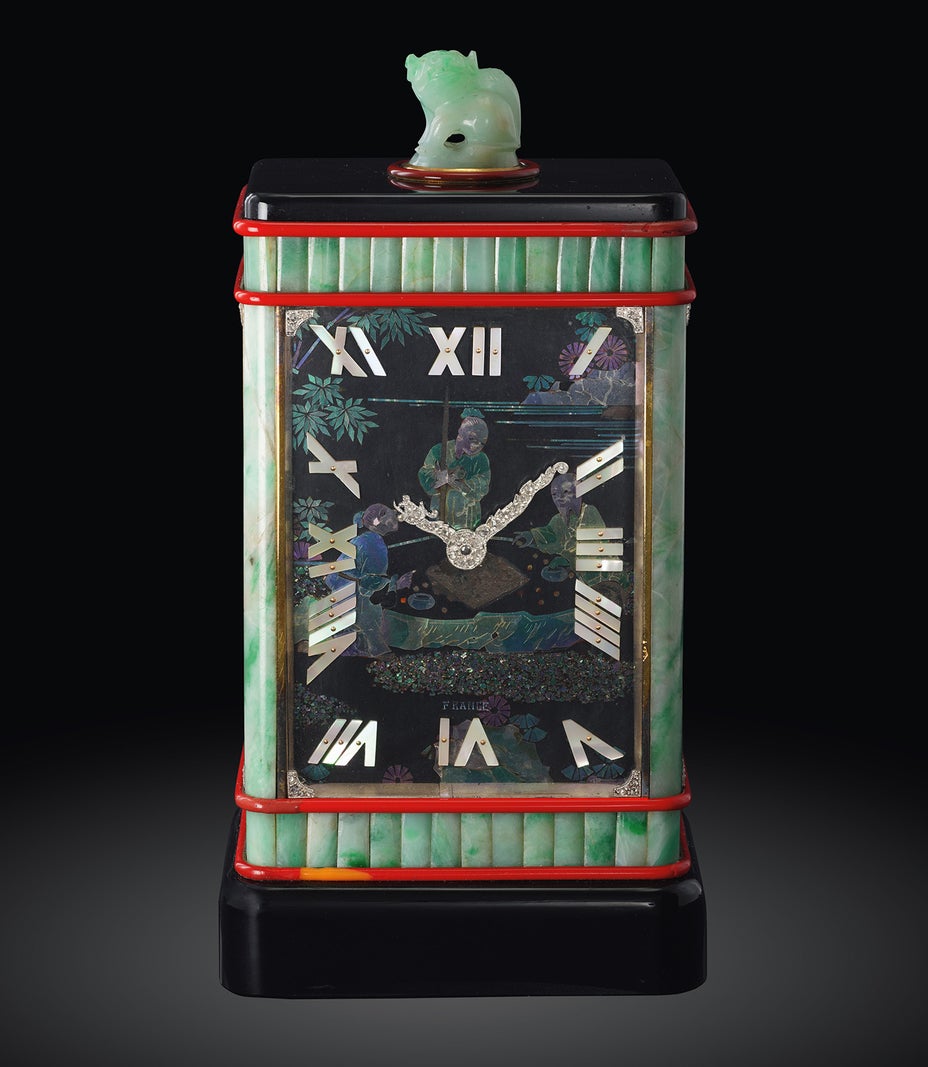
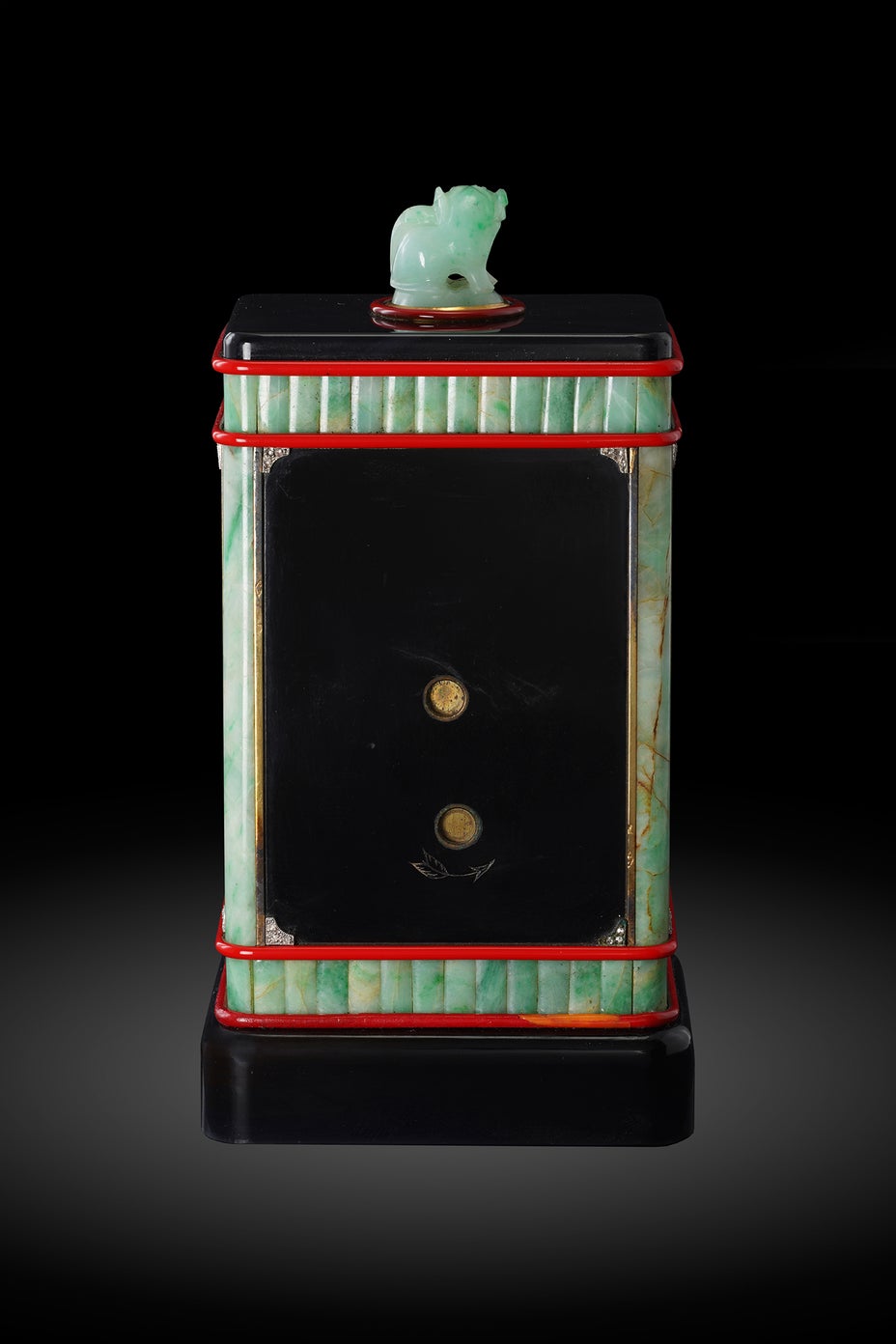
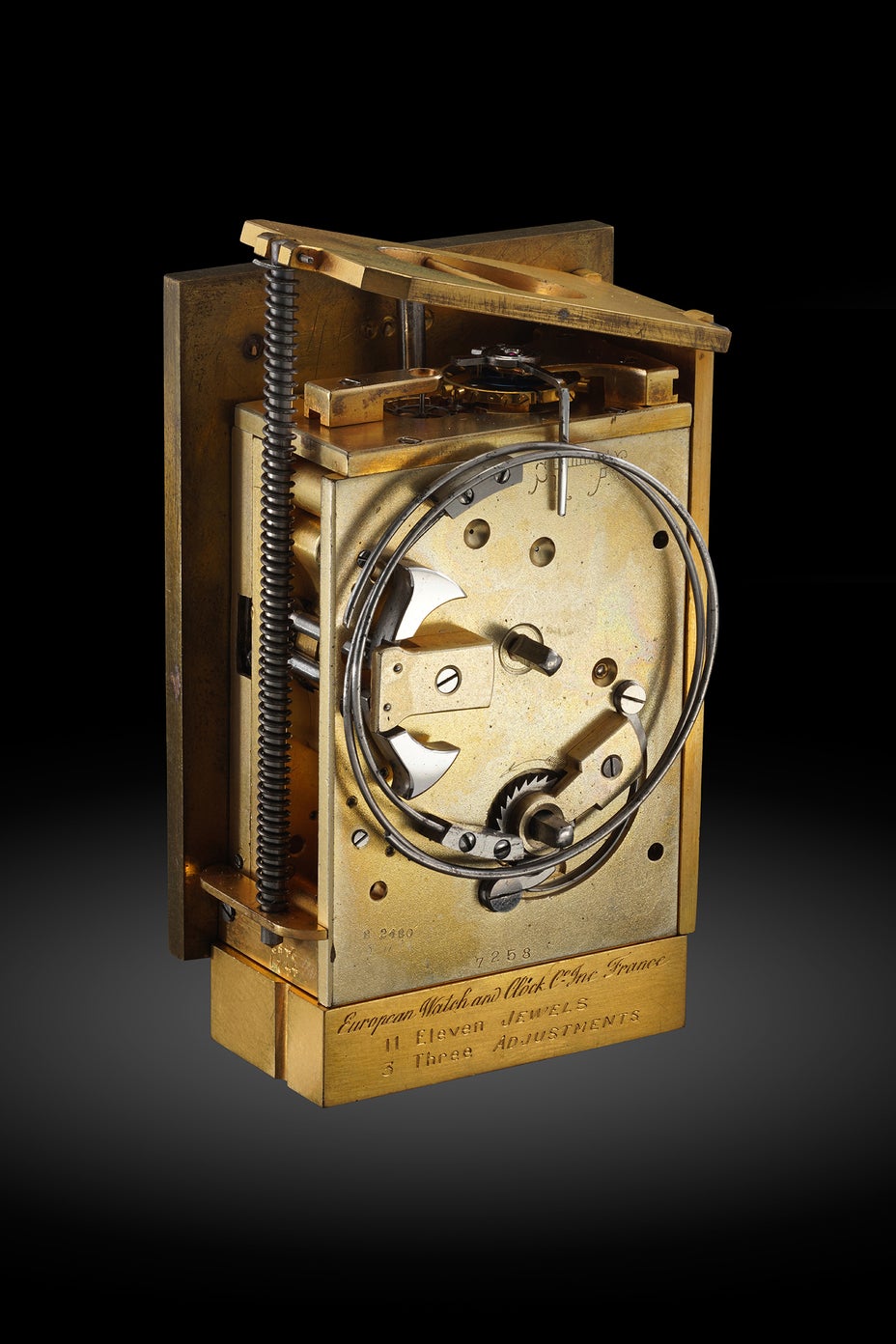
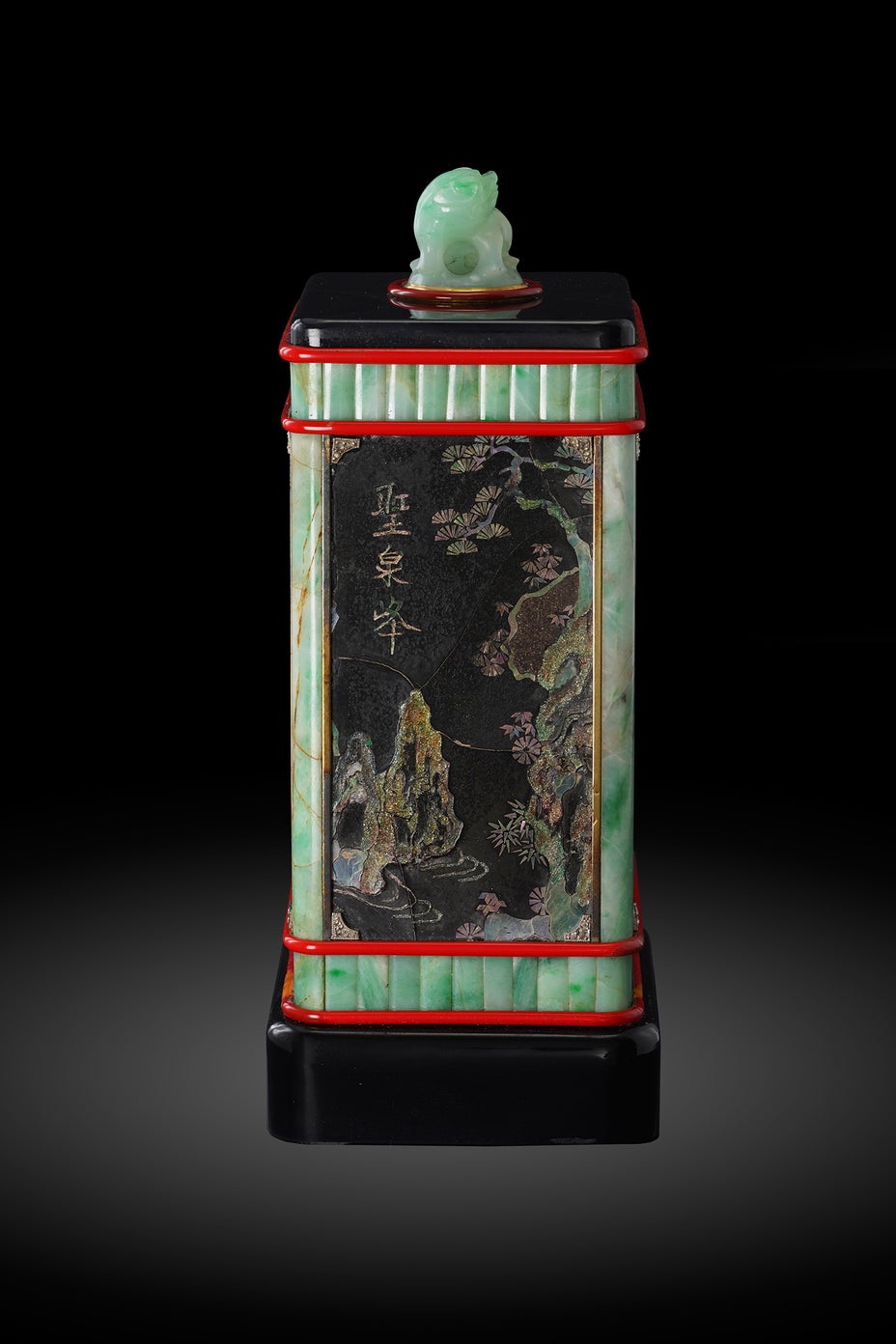
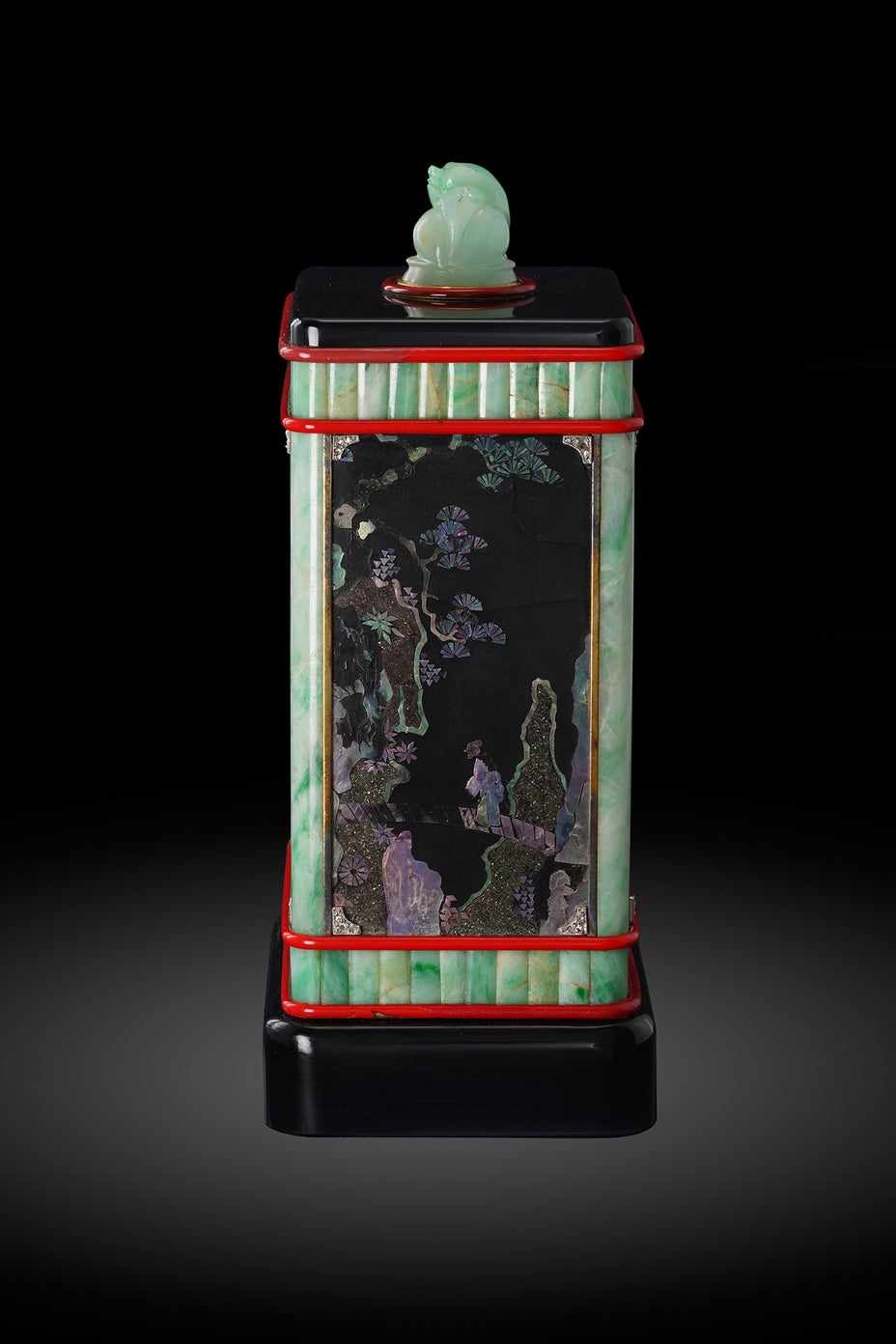
A unique and important yellow gold, nephrite, jade, onyx and lacquer minute repeating desk clock with “Laque Burgauté” panels, mother-of-pearl numerals and key
Full-Cataloguing
The present clock also known as the Pendulette à Répétition a Minutes is from 1929 and is inspired by the Far East. It is fitted with striking nephrite panels throughout the edge of the case and sides – an obvious nod to the Asian influence on design – designed to look like bamboo marshes enclosing the scene on each panel. A nephrite “Fu Dog”, representing protection, sits on top of the clock and activates the minute repeater. To date, we only know of a few timepieces in this design and style, with each piece depicting a unique scene, with one example in the permanent Cartier Collection.
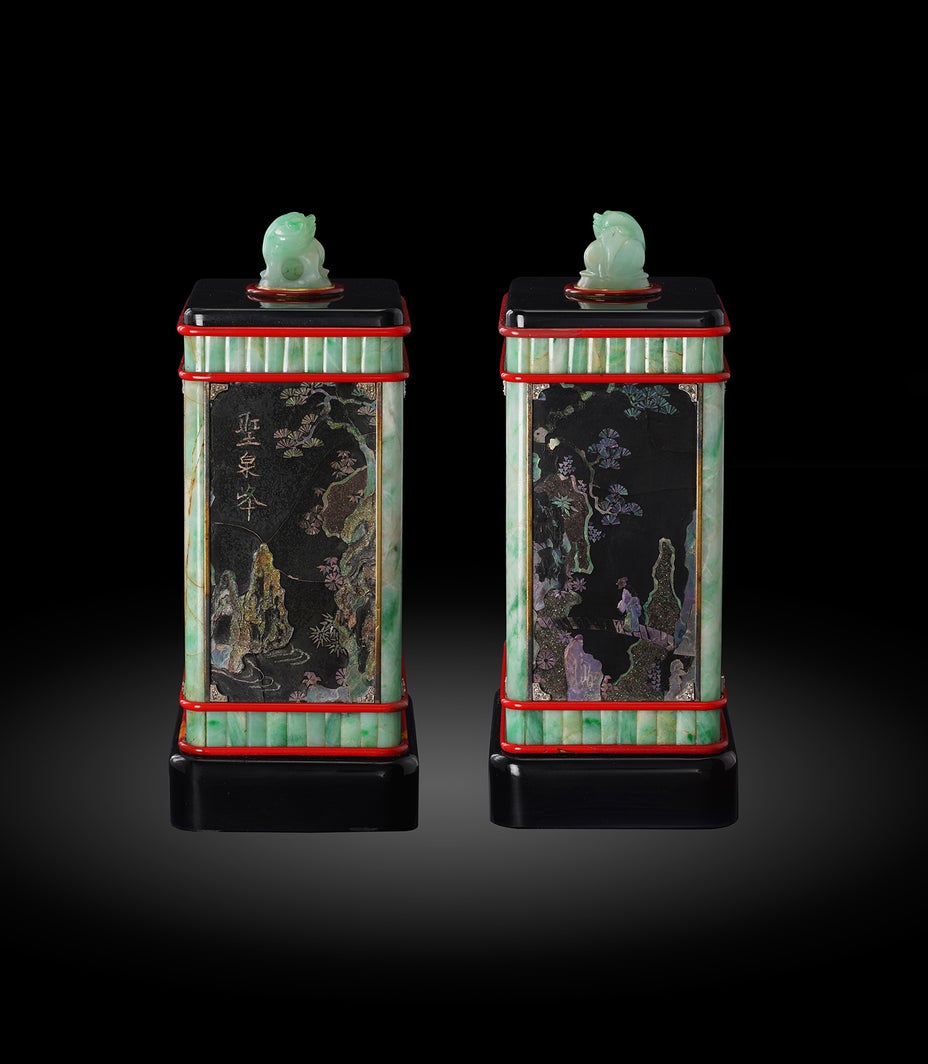
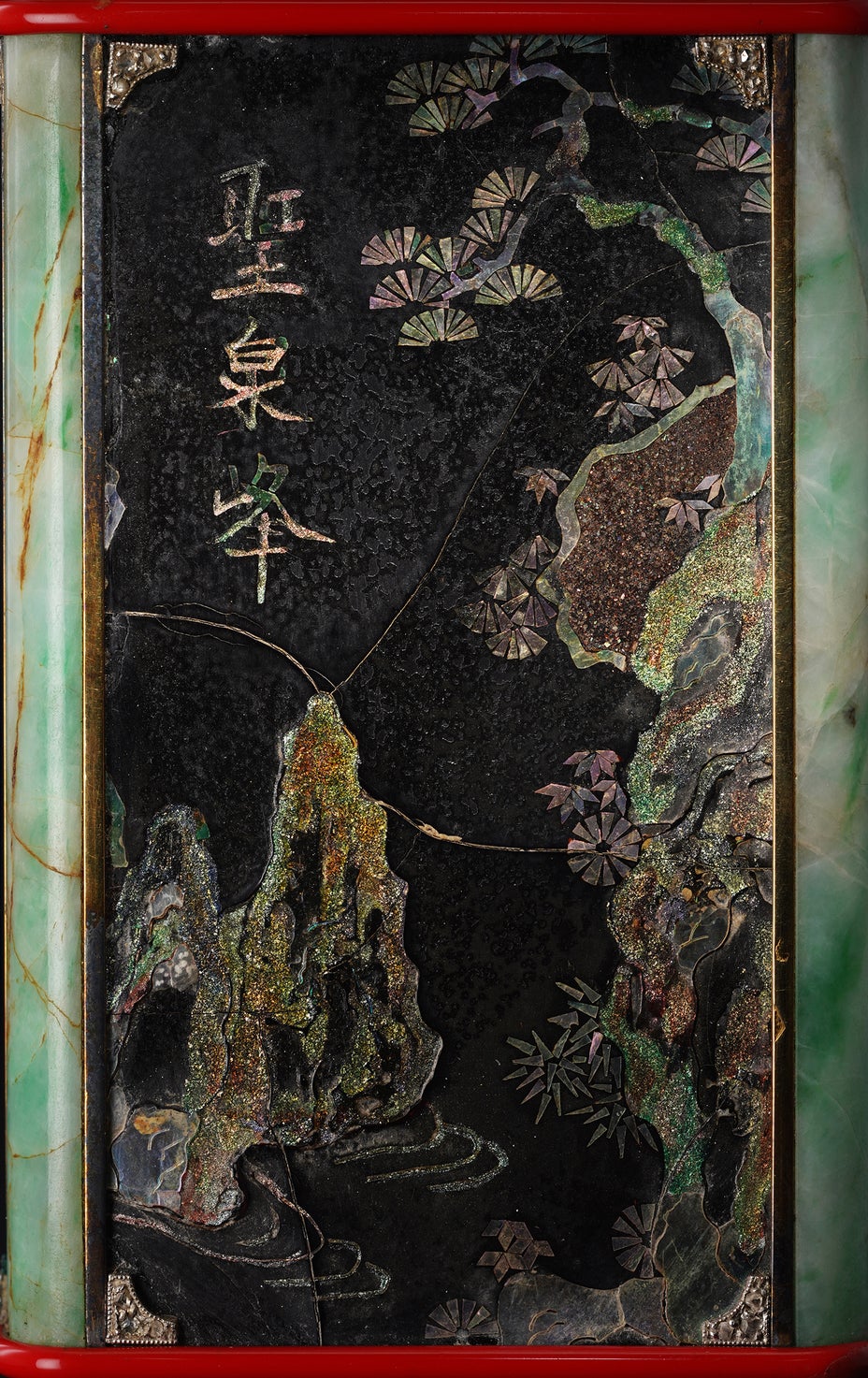
The panels provide the perfect canvas for an artisan to showcase his or her ability to create exquisite motifs - in this case, in the technique of Laque Burgauté. The latter refers to the exquisite East Asian technique of decorating lacquer with intricate inlays of tinted mother-of-pearl. This technique was often used between China and Japan, as early as the Ming Dynasty (1368-1644) and reached peak popularity during the Qing Dynasty (1644 - 1911/12). Its popularity spread to the Ryukyu Islands between China and Japan and thence to Japan itself. In China the technique is called 'lo tien' 螺鈿 and in Japan 'aogai'青貝塗. The mother-of-pearl was usually tinted in purple or green, and a layer of lacquer was applied on top and later rubbed with pumice stone to create a smooth and unblemished surface. Like similar examples of the period, these panels were based on poetry or nature scenes, and were used as a means of meditation or reflection. Here, mountains and a river are depicted in green and purple, while a group play a game on the dial of the timepiece. To apply lacquer or enamel on the panels requires extreme delicate handling, technical virtuosity, and artistic sensibility. Making this timepiece even more striking is the addition of mother-of-pearl Roman numerals on the dial.
One of the panels is inscribed with the Chinese characters 聖泉峰. According to research, it could refer to one of the two sacred mountain ranges:
1.Shengquan Peak, translates to Sacred Spring Peak
The Sacred Spring Peak is located in the Baiyun Scenic Area of Huangshan, Anhui Province, in the southwest of Huangshan, north of Taohua Peak, and separated from Lianrui Peak by just a gully. Historically, atop the central peak of Mount Yushu, lies a hot spring whose taste is sweet and can be used for refining elixirs and boiling stones. The term "hot spring" here refers to this spring. Because the spring is located at the peak and is inaccessible to people, it has given rise to mysterious legends, hence the name 'Sacred Spring' Peak.
2. Shengquan Peak, one of 12 famous peaks of Wushan
The Twelve Peaks of Wushan are located on both banks of the Yangtze River in the eastern part of Wushan County. The Twelve Peaks boast a myriad of stunning forms, beautiful as a painting, admired throughout history. The ancient phrase "Setting sail down Wuxia, my heart is in the Twelve Peaks" expresses people's admiration for these peaks. In addition to their graceful and varied shapes, the peaks are unpredictable and elusive; the clouds and rain of Wushan greatly enhance their mysterious allure.
The unparalleled quality and creativity of the present desk clock underlies its importance. It was during the 1920s and 1930s that Cartier was arguably at its most productive, manufacturing pieces of unsurpassed quality and ingenuity.
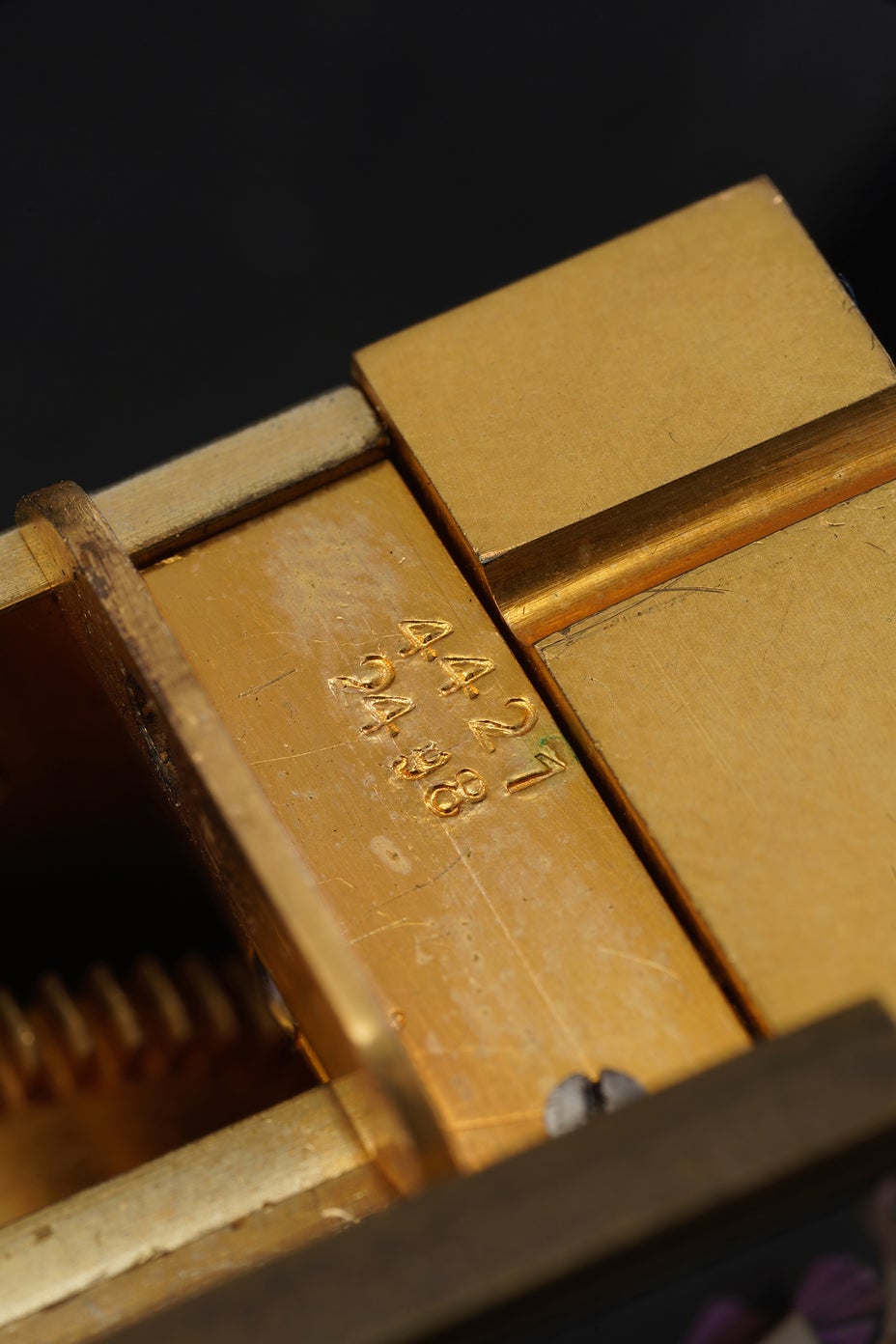
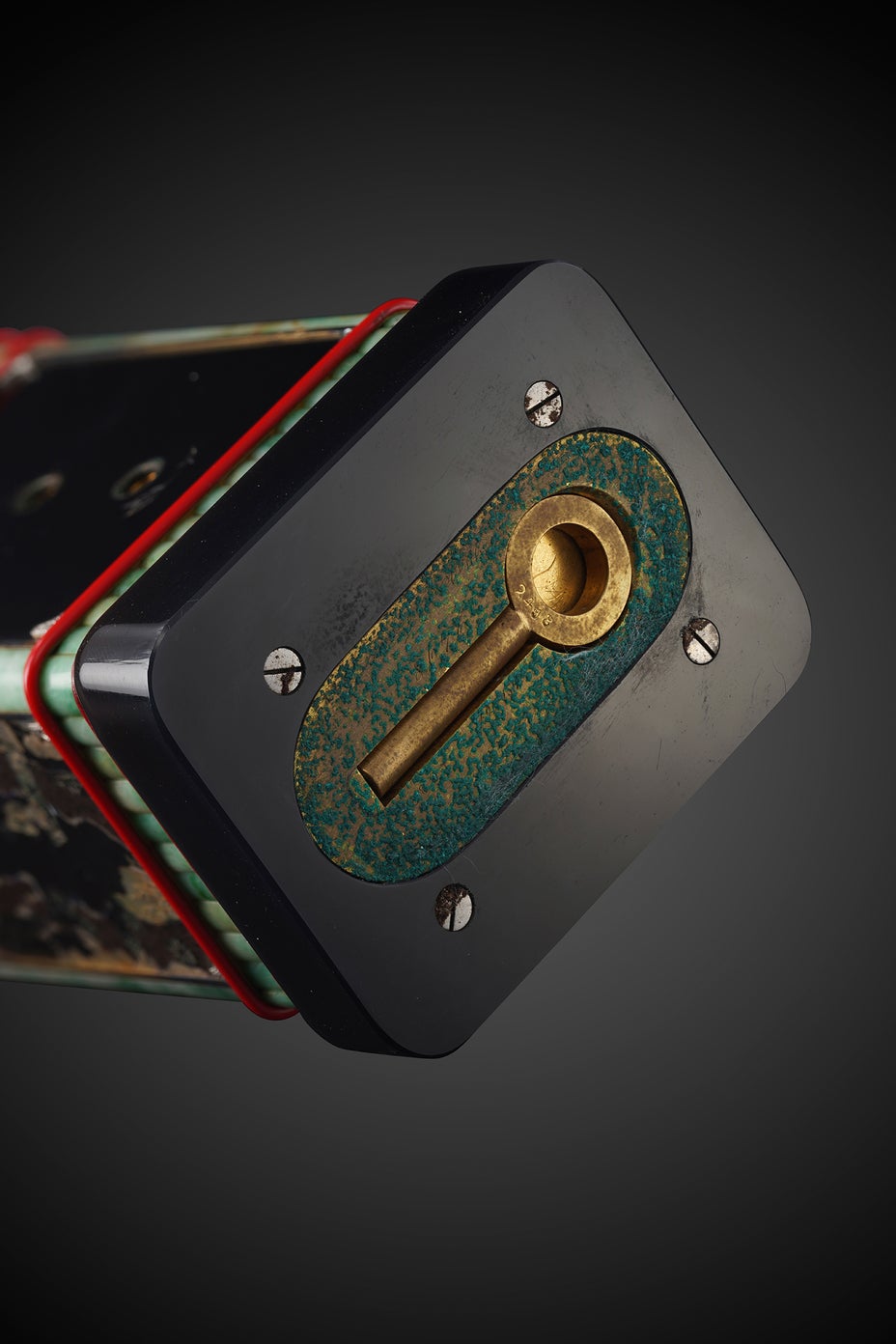
As an even nicer touch, both the key and case are stamped with Cartier hand stamped number 2498, meaning they were born together. The key is furthermore imbedded within the case, showing Cartier’s design ingenuity.
Cartier
FrenchWith the Constitution of 1848 came a new standard for luxury in France. Founded one year prior by Louis-Francois Cartier, the house of Cartier was one of the first to use platinum in jewelry making. This incredibly expensive material became the stepping-stone for Cartier to experiment in form, mechanisms and attitude. It helped men move from pocket watches to wristwatches, effectively making the watch much more functional and prominent in a man's overall wardrobe.
Cartier did not only touch on functionality. Inspired by a commissioned painting by George Barbier featuring a black panther at the feet of an elegantly bejeweled woman, Cartier began incorporating wild animals in his designs—most notably, Cartier Panthère rings, bangle bracelets and watches. Yet it wasn't until the late 1960s that the house of Cartier debuted their iconic yellow and rose gold LOVE collection, which includes the famous bracelet that only a special screwdriver can open.